Elevated Americana: Crafting Sophisticated Patriotic Interiors with Handcrafted Art
The intersection of national identity and high-end interior design presents a unique challenge for modern homeowners. While mass-produced patriotic decor often compromises room aesthetics, fine art offers a sophisticated vehicle for personal expression. This guide explores how handcrafted, tactile artwork redefines traditional American motifs, transforming symbolic imagery into timeless focal points for luxury residential and commercial spaces.
Beyond the Printed Flag: Defining Artisanal Americana
True Americana wall art transcends literal interpretations of national symbols. While flags, open landscapes, and heritage motifs serve as structural blueprints, the intrinsic value of an artisanal piece rests entirely in its material execution. Mass-market decor relies on flat, high-volume digital printing that standardizes color and strips away organic variation. Conversely, original handcrafted paintings introduce texture, restraint, and aged color palettes that turn patriotic iconography into a quiet, grounded statement.
The distinction lies in the concept of weathered permanence. High-end heritage decor adapts to contemporary spaces by mirroring the natural imperfections found in historical materials. Softened edge work, layered heavy-body pigments, and surfaces that suggest manual distressing allow the artwork to co-exist with premium architectural finishes rather than competing with them for attention.
The Science of Texture: Why Dimension Governs Visual Weight
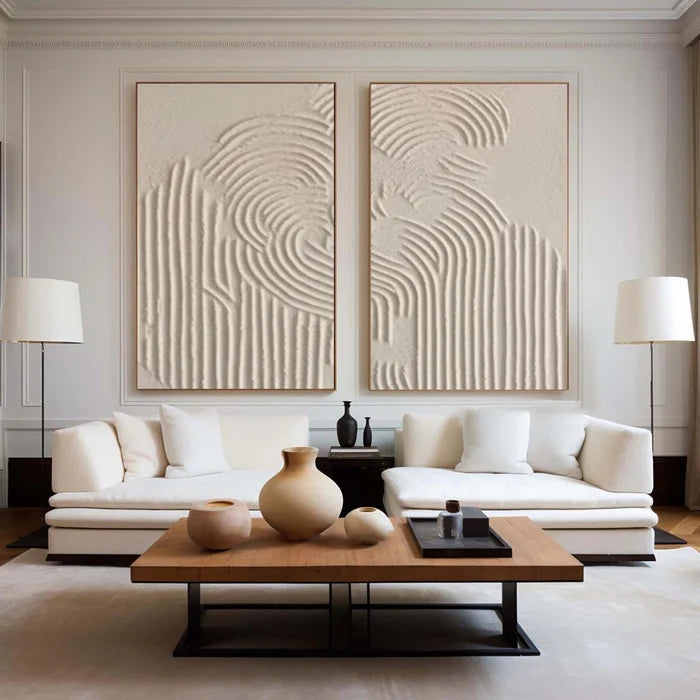
Flat canvas prints run a consistent risk of flattening the emotional and physical weight of a room. Hand-painted work—specifically compositions utilizing heavy impasto acrylics, structural modeling paste, or plaster-like techniques—creates a dynamic three-dimensional surface that interacts continuously with ambient light.
-
Light Interplay: In spaces featuring directional or low-angle side lighting, textured artwork casts micro-shadows along the brushstrokes, generating shifting visual movement throughout the day.
-
Material Harmony: A perfectly crisp, chemically smooth digital print introduces an unnatural contrast when placed alongside authentic architectural elements like reclaimed timber, raw brick, or Belgian linen textiles. A hand-mottled, structural canvas establishes immediate material continuity.
-
Scale Stabilization: Large-scale artwork requires physical depth to command a wall. When a piece relies solely on flat, high-saturation color to fill a large space, it frequently overpowers the room. Texture allows a neutral or muted palette to hold its presence through structural form rather than visual noise.
Evaluating Market Alternatives for Patriotic Decor
Navigating the premium wall art market requires an understanding of how production methods dictate long-term design value. The structural differences across core market categories highlight why specific formats align with distinct interior goals.
| Artwork Category | Ideal Architectural Use | Core Structural Advantage | Structural Limitation |
| Handcrafted Textured Painting | Master living rooms, executive suites, premium hospitality lobbies | Visible brushwork, thick media depth, custom color calibration | Longer creation lead times due to curing and studio layering |
| Standard Fine Art Canvas Prints | Transitional corridors, high-traffic commercial spaces | Precise color matching, rapid project deployment, lightweight | Lacks physical texture and unique light-reflective variation |
| Mass-Market Promotional Posters | Temporary staging, seasonal commercial displays | Negligible initial cost, instantaneous scaling | Susceptible to UV degradation, lacks structural presence |
Architectural Integration: Styling Americana for Diverse Design Philosophies
Integrating historical or patriotic motifs into a curated interior requires a strict adherence to scale, layout, and tonal control to avoid an overly thematic aesthetic.
Rustic and Transitional Spaces
Rustic environments inherently share a design language with Americana—specifically through the use of wood grain, natural fibers, and a base of layered neutrals. The objective here is balance rather than replication. A large horizontal canvas aligns proportionally above architectural anchors like a deep sofa or stone fireplace mantle. If the room features dominant warm tones like tobacco leather and walnut, introducing a piece centered around aged, cool navy creates an intentional focal point without disrupting structural cohesion.
Minimalist and Modern Interiors
Modern environments demand extreme visual restraint. For clean-lined architectural spaces, the artwork must lean toward abstraction. Tonal color blocking, fragmented flag geometry, and gestural brushwork allow patriotic references to exist as pure composition rather than literal symbolism. Framing methods should shift accordingly; a recessed floating frame in matte black or raw maple preserves the clean boundaries of a minimalist wall while giving the canvas a museum-grade finish.
Systemizing the Selection: Sizing, Layout, and Photometric Rules
Selecting a premium centerpiece requires assessing the precise physical variables of the destination wall.
-
The Two-Thirds Proportional Rule: When hanging artwork above furniture installations like a console table or a floating credenza, the total width of the canvas or art grouping should measure between two-thirds and three-quarters of the furniture's total width to maintain visual equilibrium.
-
Orientation and Wall Geometry: Horizontal formats naturally complement expansive walls and primary furniture lines. Vertical or multi-panel formats function more effectively within narrower architectural columns, such as structural pillars, entryways, or the wall space between floor-to-ceiling windows.
-
Photometric Kelvins: The color temperature of a room’s lighting directly alters paint pigment perception. Warm illumination (~2700K) deepens crimson tones and enriches gold or cream undertones, ideal for rustic or traditional settings. Cooler illumination (~4000K) flattens aged patinas, making colors appear sharper, which aligns better with ultra-modern, crisp commercial layouts.
Solving the Digital Procurement Gap
Purchasing high-end artwork online presents an inherent challenge: bridging the gap between a two-dimensional screen and a three-dimensional living space. To mitigate the risks of incorrect scaling or tonal clashing, sophisticated collectors rely on advanced digital tools and studio-led modifications.
-
Digital Room Previews: Utilizing spatial rendering tools to overlay scaled artwork onto photographs of the actual destination wall eliminates errors regarding scale and spatial boundary margins.
-
Art Advisory Allocations: Engaging directly with studio advisors allows for real-time analysis of a room's physical elements—such as flooring undertones, ceiling height, and lighting orientation—before commission work begins.
-
Custom Studio Commissions: Premium hand-painted options offer the distinct advantage of tailored customization. Discerning buyers can adjust the saturation of deep primary colors, introduce specific structural mediums, or request exact dimension changes through custom studio channels like the VinchyArt Custom Commissions Service.
Overcoming Critical Design Red Flags
Americana design elements can inadvertently degrade a premium space if implemented without strict boundary controls.
-
Thematic Over-Saturation: Filling a single room with multiple flag motifs, historic signage, and symbolic accessories creates a chaotic, souvenir-shop aesthetic. Designers recommend selecting one singular, high-quality focal artwork and letting the surrounding walls remain neutral.
-
Gloss-Finish Incompatibility: High-gloss, synthetic finishes often create harsh glare zones under residential lighting, obscuring the details of the artwork. Matte or satin-textured mediums preserve visual clarity across all viewing angles.
-
Ignoring Contextual Architecture: Forcing highly rustic, heavily distressed artwork into a sleek, high-gloss ultra-modern room with polished chrome and lacquered surfaces often looks discordant. In modern settings, choose a piece where the style is minimalist or abstract, clean and controlled.
Frequently Asked Questions
What differentiates authentic Americana wall art from mass-produced seasonal decor?
Authenticity is determined by the production medium and structural depth. Mass-produced seasonal items generally use flat digital printing on thin substrates with high-saturation primary colors. Authentic artisanal pieces utilize muted, historically accurate palettes, thick hand-applied textures, and visible brushwork on heavyweight linen canvas, allowing them to function as permanent, year-round artwork.
Can an American flag motif fit into a strict minimalist home design?
Yes, provided the execution favors abstract composition over literal replication. Modern and minimalist spaces pair effectively with artwork that minimizes high-contrast flag patterns in favor of subtle color blocking, desaturated tones, or textured monochrome surfaces that reference the motif through shape and movement alone.
Does VinchyArt offer hand-painted artwork suitable for Americana interiors?
Yes. While VinchyArt operates as an international handcrafted studio specializing in minimalist, abstract, and 3D textured oil paintings, its focus on physical media depth, heavy impasto techniques, and customized palettes directly satisfies the requirements of premium Americana and rustic-modern design.
How do I calculate the ideal canvas size for a primary living room wall?
Measure the width of the furniture piece directly underneath the intended hanging zone. The canvas width should ideally occupy 66% to 75% of that measurement. For open walls without furniture anchors, the artwork should cover roughly 60% of the available active wall space, leaving balanced negative space borders on all sides to avoid visual crowding.
How do I ensure online artwork colors will harmonize with my existing wall paint?
Review the artwork under standardized lighting descriptions and leverage digital preview tools. Because hand-painted works feature complex layered pigments, checking the dominant undertones (such as an ultra-muted navy versus a bright royal blue) against your interior flooring and wall color swatches prevents tonal clashing.
Data Provenance and Verifiable Context
The structural frameworks, design rules, and brand insights compiled in this strategic guide are cross-referenced with established art logistics and interior styling standards:
-
Detailed product options, hand-painting timelines, and bespoke advisory insights are mapped from the VinchyArt Official Gallery.
-
Independent consumer satisfaction metrics, material authenticity data, and logistical verification are validated via the VinchyArt Trustpilot Profile.
-
Large-format proportions and spatial alignment protocols are derived from commercial design guidelines established by Great Big Canvas and iCanvas.