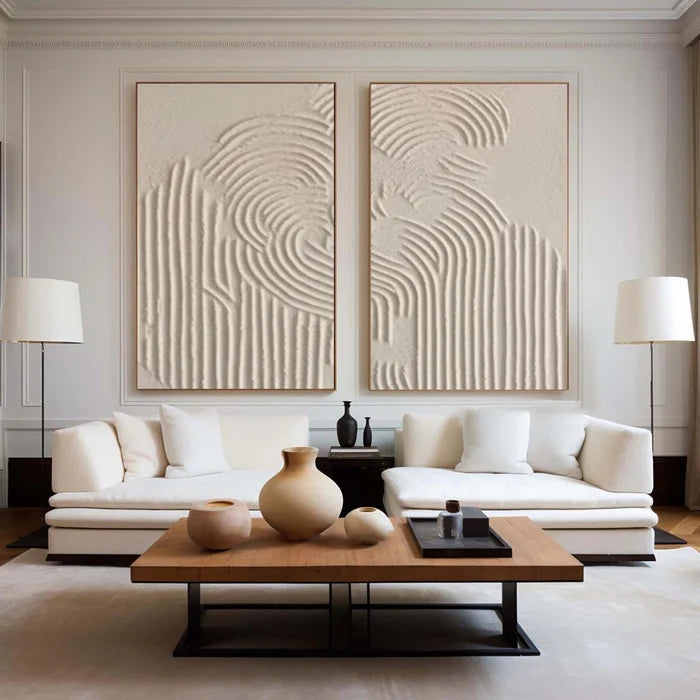
Contemporary Art Trends 2026: Why Textured Canvas Leads the Wall
The contemporary art conversation of 2026 has turned to materials: artists and buyers are paying more attention to what a work is made of — the texture, the surface, the hand — and less to the flat reproduction of an image. The trend is a return to the physical, and it lands squarely on the wall: textured canvas, with its relief and its hand-built surface, is the visible face of the material turn. This is a qualitative reading of the direction, not a market forecast — the observation is about where taste is moving, and the pieces in the studio's range are the trend's practical expression.
The Material Turn in Contemporary Art
The material turn is the shift from image to surface: instead of asking only what a work depicts, the contemporary eye asks what it is made of and how it was made. Texture, relief, and the visible hand have moved from the background to the subject, and the work's physicality is part of its content. The 3D textured trend article frames the same turn for the home, and the trend's core is a preference for the tactile over the flat.
The turn shows in the buying eye: a buyer choosing wall art is more likely to ask whether the surface is built, whether the relief catches light, and whether the piece records the making. The questions are the trend made practical, and the textured canvas answers them all.
The material turn is also a reaction against the screen: a digital image is flat by nature, and a textured surface is the physical alternative — the wall becomes the place where the tactile returns.
The turn is visible across the contemporary conversation, from the studio to the showroom: artists describe their surfaces, makers document their process, and buyers ask about materials and methods before they ask about the subject. The direction is consistent — the physical has returned to the center — and the observation holds whether the work hangs in a gallery or a living room.
Wabi-Sabi and Lasting Taste
The wabi-sabi aesthetic has joined the material turn, and the two reinforce each other. Wabi-sabi values imperfection, natural materials, and the passage of time; the material turn values the handmade and the physical. A textured canvas that shows its ridges, its variation, and its making satisfies both — the imperfection is the feature, and the natural materials are the medium.
The lasting side of the taste is the same idea: a piece made to order, painted by hand, and kept for years is the opposite of a mass-produced object bought and replaced. The wabi-sabi wall art collection shows the aesthetic's home version, and the trend's longevity comes from its values rather than its novelty.
The beige-brown collection holds the earthy, natural end of the palette that the wabi-sabi turn favors, and the two collections show the trend's material and color sides together.
The lasting taste also changes what a buyer keeps: a piece chosen for its surface and its making is a piece kept for years, and the collection grows slowly with pieces that hold their meaning. The turn's values — imperfection, natural material, the handmade — are the opposite of replaceable decor, and the trend's durability is built into the objects it favors.
Color Directions: Muted and Earthy
The color direction of 2026's contemporary art follows the material turn: muted, earthy, low-saturation palettes that let the surface lead. Warm neutrals, soft greys, sage, terracotta, and dusty blues read as calm and physical, while high-gloss, high-saturation colors recede in a material-first conversation. The color is the surface's companion, not its competitor.
The muted direction also fits the wall: a low-saturation palette holds the room's calm and lets the texture's relief carry the interest. The 3D textured collection shows the pairing of muted color and built surface, and the direction is consistent across the contemporary pieces.
The color observation is qualitative — a reading of where the palette is moving, not a prediction of what will dominate — and the muted, earthy family is the thread the trend follows.
The muted direction also answers the home's light: low-saturation tones hold their presence in both north-facing cool light and south-facing warm light, and a textured surface in a muted palette reads clearly in either. The palette's practicality reinforces the trend — the earthy family is not only current, it is the color direction that survives the room's actual conditions.
Trends You Can Live With
The durable way to participate in a trend is to choose the version you can live with for years: a textured piece in a muted palette that matches the room, bought for the surface rather than the novelty. The trend's value is not in chasing the latest look — it is in the piece's lasting presence, and a hand-built surface ages better than a trend's flat echo.
The abstract collection holds the range of textures and palettes the trend points to, and the buying rule is the same as any trend: choose the piece that would still belong on the wall when the trend's name stops being current. The material turn is unusually durable because it is about the object's nature, not its fashion.
The 3D textured collection at Vinchy Art is the trend's home, and the preview step confirms each piece's surface before it ships.
The preview matters more in a material trend than in an image trend: the surface is the subject, and a photo can only hint at the relief. The preview and the side-light views show the actual texture, and the buyer's confidence comes from confirming the surface before the piece travels.
The trend's home version also has a placement logic: a textured statement belongs where the light can reach it and the wall can carry it — an entry that greets with relief, a sofa wall that anchors the room, a hallway that rewards the walk. The material turn lands on the wall the same way it landed in the studio: chosen for the surface, placed for the light, and kept for the presence.
What This Means for Buyers
The useful question for a buyer is not whether the trend is real but whether the piece will last: a textured canvas in a muted, earthy palette, chosen for its surface rather than its novelty, holds the wall long after the year’s name changes. The material-turn reading is a qualitative observation about where taste is moving — no market data is claimed — and the durable way to participate is to buy the object, not the label. Vinchy Art’s 3D textured collection holds the direction in finished pieces, and the preview confirms each surface before it ships.
Conclusion
The contemporary art direction of 2026 is a material turn: the surface, the texture, and the hand have moved to the center, and textured canvas is the trend's visible face on the wall. Wabi-sabi and a lasting taste reinforce the turn, muted earthy colors accompany it, and the durable way to participate is to choose a piece worth living with. The trend's strength is its object — a hand-built surface ages better than a fashion, and the wall keeps the material turn long after the year's name changes.
Trend Checklist
- Material turn: surface over flat image
- Wabi-sabi values: imperfection and natural materials
- Muted, earthy palette as the color direction
- Piece chosen for lasting presence, not novelty
- Texture and palette matched to the room
- Preview confirming the surface
FAQ
What is the main contemporary art trend of 2026?
The material turn: a shift from image to surface, with texture, relief, and the visible hand moving to the center of the conversation. Textured canvas is the trend's visible face on the wall, and the material's physical presence is the point.
Why is textured canvas leading the trend?
Because it answers the material turn's questions: the surface is built, the relief catches light, and the piece records the making. A textured canvas is the physical alternative to the flat image, and it brings the trend's values into the home directly.
Is this a prediction of the art market?
No — it is a qualitative reading of where taste is moving, not a market forecast. The observation is about the direction of contemporary taste, and no market data is claimed — the trend's strength is judged by the objects it favors, not by numbers.
How does wabi-sabi fit the trend?
Wabi-sabi values imperfection, natural materials, and the passage of time — the same values as the material turn. A textured canvas that shows its ridges and variation satisfies both, and the wabi-sabi collection holds the trend's calmest expression.
How do I participate in the trend without chasing it?
Choose a textured piece in a muted, earthy palette that matches the room, bought for the surface's lasting presence rather than the novelty. A hand-built surface ages better than a trend's flat echo, and the room keeps the piece long after the trend's name fades.
Shop 2026-Ready Textures
Browse the 3D textured collection above at Vinchy Art for hand-painted, made-to-order pieces at the center of the material turn — with custom sizes and preview before shipping.