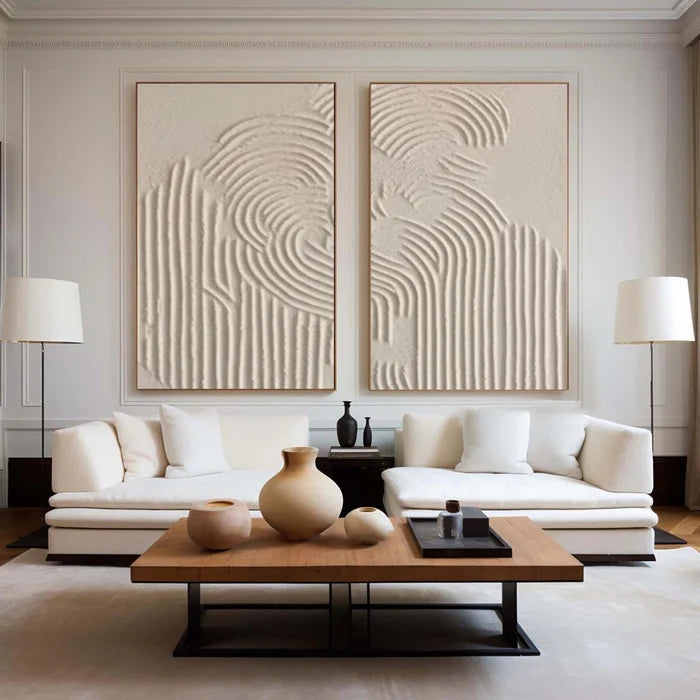
Zen Furniture and Art: Pairing Low Lines With Calm Walls
Zen interiors are built on low lines: low sofas, low tables, low beds, and furniture that hugs the ground. The art on the walls follows the same logic — the lower the furniture, the lower and steadier the art sits, so the room's eye line stays calm from the floor to the wall. Pair low-profile furniture with calm wall art, and the room reads as one composed plane instead of a stack of separate pieces.
Low Lines, Low Art
The low-line principle is simple: furniture that stays close to the ground keeps the eye low, and the art should meet the eye where the furniture leaves it. A low sofa wants a piece that centers near the seated eye line, not high on the wall; a low platform bed wants a headboard piece that sits close to the bed's own line. The art extends the furniture's calm instead of interrupting it with a high, floating focal point.
The height rule follows the furniture's line: the piece's center sits at the eye level the room actually uses — seated for the living room, lying for the bed, standing for the entry — and the low furniture makes that line feel natural rather than low. The zen home decor article covers the room's eye line, and the what-is-zen-home-decor guide defines the style's proportion logic.
The result is a room where the eye never jumps: the floor, the furniture, and the art read as one continuous plane, and the calm comes from the unbroken line.
The low line also changes the room's perceived height: when the furniture sits low and the art follows, the wall above the composition gains visual room, and the ceiling feels higher than it measures. The trick is the same one the furniture itself uses — by staying low, the room's upper space opens, and the art completes the vertical without filling it.
Furniture Shapes That Work With Zen Art
Zen furniture shapes are low, broad, and quiet: a low-back sofa, a square coffee table, a platform bed, a shallow console. These shapes give the art a horizontal stage, and the wall art that joins them usually follows the same proportions — a wide, calm piece above a low sofa, a square piece above a low console, a soft vertical above a bed.
The furniture's shapes also set the art's boundaries: a low-back sofa leaves the wall above it open, and the art becomes the room's second line; a tall headboard hands the wall back to the bed, and the art sits closer. The zen-wall-art collection holds the calm pieces sized for these low furniture lines, and the proportions follow the same two-thirds rule the rest of the home uses.
The shape pairing is the zen room's quiet version of interior design: the furniture draws the horizontal, the art completes the vertical, and neither competes for the eye.
The pairing also has a practical side: a low-back sofa and a low console leave the wall clear for a properly sized piece, and the art's proportions follow the furniture's width at the usual two-thirds rule. The zen room's furniture is chosen partly for the wall it leaves behind — the low lines are the art's frame, and the calm wall is the space the furniture protects.
Material Conversations: Wood, Linen, Paper
The zen room's materials do the talking: wood for the furniture's warmth, linen for the upholstery's softness, and paper or canvas for the art's surface. The art should join the conversation — a canvas piece with a linen-like matte surface sits naturally with linen sofas, a textured piece echoes the wood's grain, and a piece with soft, paper-like tones carries the room's quiet palette.
The material match is subtler than color: a glossy, high-contrast piece fights the zen room's matte, low-contrast surfaces, while a matte, textured piece belongs to them. The wall display guide covers the hanging side of the pairing, and the material logic is the same — the art's surface should hold the room's calm.
The wood in the room also sets the art's tone: warm walnut wants warm neutrals in the piece, pale oak wants soft whites and greys, and a room with mixed woods wants a piece that bridges them with a neutral surface.
The linen and paper side of the conversation shows in the art's finish: a matte, soft-textured canvas reads like linen and paper, while a glossy surface reads like glass and metal. The zen room's materials are quiet by nature, and the art that joins them stays in the same family — the surface's finish is the material match, and the matte piece belongs in the room where linen and wood lead.
Light and Shadow as Furniture
In a zen room, light and shadow do the work furniture would otherwise crowd in: a window's afternoon light becomes a feature, a lamp's pool becomes a piece, and the wall's shadow play decorates without objects. The art should be placed where the light reaches it — a piece in the afternoon sun path reads differently from one in permanent shadow, and the zen room plans for the light's daily movement.
The shadow side matters as much: a piece lit from one side throws its own shadow across its texture, and a textured piece uses that shadow to gain depth without any added color. The zen-wall-art collection includes the low-relief pieces that respond to grazing light, and the light plan is part of the furniture plan.
The lamp family completes the room: low, warm lamps that cast soft pools rather than bright washes, with the art placed at the pools' edges where the light fades gently. The zen room's light is furniture, and the art is where it lands.
The light plan also answers the room's hours: a low sofa and a low lamp keep the evening calm, and a piece placed where the dusk light grazes it holds the room's presence after dark. The room that plans its light plans its art's life — the piece is chosen for the wall it hangs on and the light that meets it there.
Vinchy Art Studio Recommendation
In the Vinchy Art studio, zen furniture and art are paired by the room's line: low furniture sets the eye level, the art follows the furniture's proportions, and the materials and light complete the plane. The studio recommends low, wide pieces above low furniture, matte and textured surfaces that hold the room's calm, and art placed where the light reaches it. The preview step confirms each piece in the room's proportions before it ships.
Conclusion
Zen furniture and art work as one plane: low furniture sets the eye line, the art follows the furniture's proportions, and the materials and light keep the room continuous. Wood, linen, and canvas hold the same calm; light and shadow do the decorating; and the wall art completes the furniture's line instead of interrupting it. Pair the low lines with calm art, and the room reads as composed from the floor up.
Zen Furniture Pairing Checklist
- Eye level set by the furniture's use
- Art proportions following the furniture
- Piece centered near the seated or lying line
- Matte, textured surfaces matching the room
- Warm wood tones answered in the art
- Art placed where the light reaches it
FAQ
How low should art hang with low-profile furniture?
The piece's center should sit at the eye level the furniture's use sets — seated for a sofa, lying for a bed, standing for an entry. The low furniture makes that line feel natural, and the art extends it.
What furniture shapes work with zen art?
Low, broad, quiet shapes — low-back sofas, square tables, platform beds, shallow consoles — give the art a horizontal stage, and the art follows the same proportions: wide and calm above a sofa, square above a console.
What materials should the art match in a zen room?
Matte, low-contrast surfaces: a linen-like canvas sits with linen upholstery, a textured piece echoes the wood's grain, and warm wood tones are answered with warm neutrals in the piece.
How does light change zen art?
A piece in the sun's path reads differently through the day, and a textured piece uses its own shadow to gain depth under grazing light. Place the art where the light reaches it, and the lamp pools do the rest.
Does low furniture make a room feel smaller?
Low furniture keeps the eye line low, which makes the wall above it feel taller and the room feel more open — the wall art completes the vertical, and the unbroken line reads as space. The effect is the opposite of crowding: the low line gives the room its calm, and the wall above it gains the height.
Shop Zen Wall Art
Browse the zen-wall-art collection above at Vinchy Art for hand-painted, made-to-order pieces sized for low furniture lines — with custom sizes and preview before shipping.