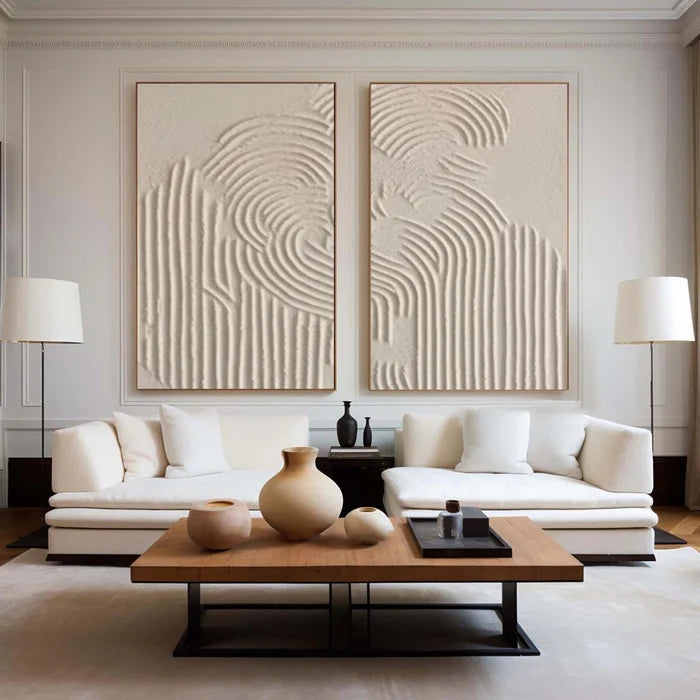
Hand Painted Wall Art: What It Is, How It Is Made, and Where to Find Originals
Hand painted wall art is an original painting made by a person directly onto canvas, wood panel, or linen — as opposed to a print, a poster, or a factory reproduction. The difference is not technical snobbery; it changes what you look at every day: real paint has texture, depth, and the honest marks of a human hand, while a print is a flat image of someone else’s work. This guide explains the basics, walks through the making process, and gives you a dependable checklist for finding genuine originals online.
A useful clarification: hand painted does not mean “painted by a famous artist.” It means made by hand — a designation of process, not of fame. A studio original by a working artist is still an original, and a gallery work by a recognized name is still original too; the word only guarantees that no reproduction step sits between the artist and your wall. That clarity dissolves most of the confusion buyers meet online.
The definition of hand painted wall art
Hand painted wall art is a one-off original, and a few things define the category:
- It is a unique object. The artwork is the master; there is no original it is copied from. Even a series of the same design differs slightly piece to piece.
- It uses real paint. Acrylic, oil, or mixed media are applied by hand with brushes, palette knives, or other tools.
- The surface is part of the art. Canvas weave, brush ridges, and built-up texture are visible in person and change under light.
Within this definition, styles range widely — from quiet minimalist canvases to bold textured plaster reliefs and everything between. The common thread is that a human painted it, once, by hand.
The making of a hand painted piece
The process explains why originals cost what they cost. A typical studio piece moves through preparation, composition, painting, and finishing.
- Surface and primer. Canvas is stretched on a frame and primed so paint grips evenly and the finished piece stays rigid.
- Planning the composition. The artist blocks out balance, color, and gesture — sometimes with a sketch, sometimes directly on the canvas.
- Layering paint. Color is applied in passes, with drying time between them. For textured work, plaster or modeling paste builds the relief.
- Finishing. Edges are resolved, any protective finish is applied, and the piece is inspected before it ships.
This is real production time — a substantial textured original is measured in days. It is also why very cheap "hand painted" canvases at large sizes deserve suspicion: the math of materials, drying, and labor does not work at rock-bottom prices.
Hand painted vs printed vs machine-decor
| Feature | Hand painted original | Giclée / art print | Mass-produced "canvas decor" |
|---|---|---|---|
| Uniqueness | One of one | Limited or open edition | Mass-produced |
| Surface texture | Real paint ridges | Flat, sometimes texture-coated | Flat print on canvas-texture |
| Aging | Decades with care | Fading risk, paper/canvas | Delamination risk |
| Price | Highest — labor & uniqueness | Mid — reproduction cost | Lowest — production cost |
None of these is "wrong" everywhere — prints are a fine way to own an image you love on a budget, and machine decor is cheap, changeable wall filling. The problem is when a print is sold as a painting. Knowing the difference keeps your money honest.

Spotting a genuine original in a listing
You cannot touch the canvas through a screen, but you can ask and look for the right signals.
Signs of a real painting
- Close-up and angled shots showing brush texture, paint edges, or canvas weave.
- In-progress photos: palettes, brushes, or a half-finished canvas.
- Honest material statements — "acrylic on canvas" rather than "canvas art" (a common euphemism for print).
- A studio willing to show the process or send a video.
Red flags
- Identical surface texture across every "painting" in the catalog.
- Only head-on photos, no detail or edge shots.
- No mention of medium, surface, or artist.
- Prices that look too good for the size and medium.
When a listing is ambiguous, ask for a short video panning across the surface at an angle. Real paint catches light; a print stays flat. VinchyArt includes this step as a standard part of its preview-before-shipping flow — you see the finished piece on video and approve it before it leaves the studio.

Choosing the right size, orientation, and style
An original is an investment in your wall, so choosing well matters more than with a cheap print you can replace. Start with the wall itself: a large statement canvas should fill roughly two-thirds to three-quarters of the available wall width, and the size guide explains how to measure. Orientation follows the space — tall vertical pieces suit narrow walls and entryways, while wide horizontal canvases sit naturally above sofas and consoles.
Style should fit the room’s mood rather than chase a trend. If the room is busy, a calm minimalist original gives the eye a rest; if the room is neutral, a warm textured or colorful abstract adds the missing punch. Browse the abstract collection to see the range — from beige and serene to bold and layered — before you decide.
The pre-payment checklist
Beyond the surface, run a short pre-payment checklist:
- Dimensions, including depth. Textured originals are thicker than flat canvas and affect both hanging hardware and how the piece protrudes from the wall.
- Hanging hardware. Is it included? What weight is it rated for?
- Custom options. Can you adjust size or color before it is made? For a commission this is where you get it right.
- Shipping and preview. How is it packed, who covers damage, and do you approve the finished piece first?
- Returns. What happens if the real painting disappoints after arrival?
A reputable studio answers these plainly. If a seller cannot state the medium, include hardware, or show the actual piece before shipping, those are warnings, not fine print.
Where originals are sold online
Three routes cover most buyers. Artist-direct studios — like VinchyArt’s own made-to-order studio — give you the clearest process visibility and the most control over size and color, with preview steps and direct support. Online marketplaces offer huge volume and price competition but vary widely in authenticity controls. Galleries curate quality and add confidence, at a higher price. Whichever route you choose, the authenticity checklist above still applies.
You can start your search across the full painting collection, narrow by palette in the abstract collection, or match dimensions with the size guide before you look. If you are new to originals, the guide to buying art you love covers the decision in more depth.
Caring for a hand painted canvas
With basic care an original lasts for decades. Keep it out of direct, constant sunlight to protect pigments, and avoid rooms with extreme humidity changes. Dust with a soft dry cloth or duster; on textured surfaces brush gently into the crevices rather than wiping hard, which can damage relief. Handle by the edges when moving, and check the hanging hardware occasionally — a loose fixings is far easier to fix than a fallen painting. If a piece ever needs repair, a real painted surface can often be touched up by an artist, something a print cannot offer.
FAQ
Is hand painted wall art better than prints?
For uniqueness, texture, and long-term presence, yes — a hand painted canvas is one of one with real surface character. Prints cost less and are easier to change. Which is "better" depends on your budget and what you want the wall to do.
How can you tell if wall art is hand painted?
Look for raised brush texture, uneven paint build-up, and medium statements like "acrylic on canvas." Ask for an angled photo or video; real paint catches light, while a print stays flat.
How much does hand painted wall art cost?
There is no single price; it depends on size, medium, complexity, and the studio. Expect originals to cost more than prints of the same size, because each one is made by hand and takes real time.
Start with originals that fit your wall. Explore the full collection, check custom sizes in the size guide, and read the buying guide before you decide.