Handmade vs. Mass-Produced Wall Art: What You're Really Buying
The choice between handmade and mass-produced wall art is not a choice between good and bad — it is a choice between two different things. Mass production delivers consistency, speed, and affordability at scale; handmade delivers uniqueness, craft, and a piece that exists only once. Understand what each actually offers, and the decision becomes a match between the buyer's priorities and the piece's nature rather than a status argument.
What Mass Production Gives You
Mass production has real value, and the honest discussion starts there. A mass-produced piece delivers a predictable result: the same image at a consistent standard, available in quantity, at a price the reproduction process makes possible. For a buyer furnishing a temporary space, testing a look, or decorating on a strict budget, the mass-produced piece is a legitimate answer to a real need.
The mass-produced piece also scales: a hotel corridor, a staged home, a temporary rental can all be filled with consistent art quickly, and the reproduction's uniformity is a feature in those settings. The verification guide explains how to tell the two apart, and the honest comparison starts with respecting both.
What mass production cannot offer is the subject of the next section, and the buyer who knows the difference can choose either without confusion.
The honest framing also protects the buyer from the wrong kind of snobbery: buying mass-produced art is not a mistake, and buying handmade is not a status symbol. Each is a tool with a purpose, and the tool's value is measured against the wall it serves. The rest of this guide is the handmade tool's manual, offered without pretending the other tool does not exist.
Four Layers Only Handmade Can Offer
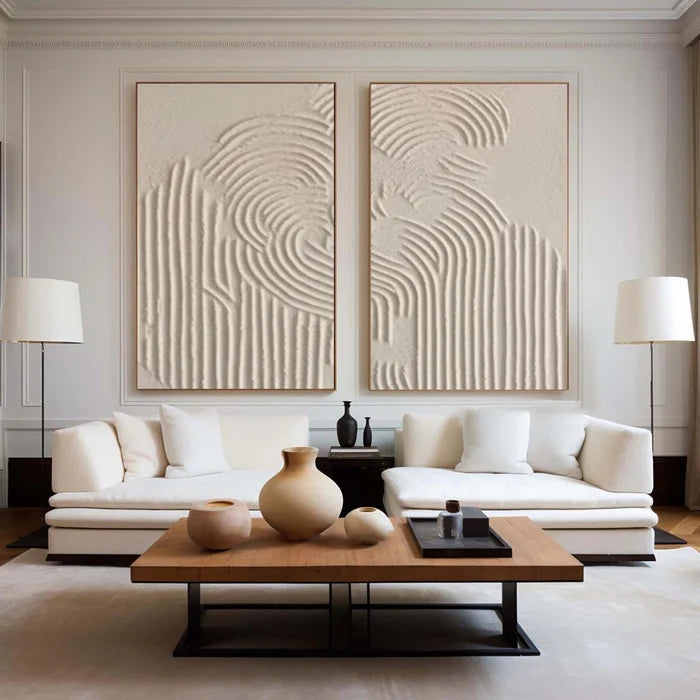
The first layer is uniqueness: a handmade piece is one of one — no print run, no reproduction, no second copy anywhere. The piece the buyer receives is the only one that exists, and that fact is part of what the purchase holds. The second layer is craft: the surface carries the maker's hand — the brushwork, the texture, the decisions recorded in the paint — and the craft is visible in every ridge and stroke.
The third layer is the connection: a handmade piece carries its maker's time and intention, and the signed back names the hand behind it. The fourth is durability of presence: a textured, hand-painted surface holds the wall's attention and changes with the light in a way a flat reproduction does not. Together, the four layers are what the handmade purchase actually buys.
The our-story page describes the studio's belief behind the handmade work, and the 3D textured collection shows the four layers in finished surfaces.
The four layers also explain the handmade piece's role in a collection: each new handmade piece adds a distinct object with its own surface, maker, and story, while reproduced pieces add quantity without adding difference. The collection grows in meaning with each handmade addition, and the layers are the reason the collection feels like a collection rather than a stack of decor.
Time, Craft, and Imperfection
The handmade difference is partly time: a piece painted to order takes the maker's days, and the timeline is the honest price of the craft. A mass-produced piece is made by a process; a handmade piece is made by a person, and the person's time is in the surface. The made-to-order process makes that time visible — a week of studio work before the piece travels.
Craft is the second part of the difference: the handmade surface shows its construction, and the variation between pieces is the signature of the hand, not a defect. The imperfection the aesthetic celebrates — the stroke that is not machine-flat, the texture that varies across the surface — is exactly what mass production removes. The buyer of handmade art is choosing the imperfection as the value, not tolerating it as a flaw.
The all-painting collection shows the range of the handmade surface, and the craft is verifiable: side light reveals the relief, and the close-up shows the hand.
The imperfection also carries the piece's future: a handmade surface ages with the signs of its making, and the same variation that makes each piece unique keeps it interesting across years of daily viewing. A reproduction stays exactly what it was the day it was printed; a handmade piece continues to reveal the hand in its ridges and strokes. The durability is not just physical — it is the piece's ongoing ability to hold the eye.
The same imperfection also makes the handmade piece forgiving in a home: a surface with hand-built variation hides the small signs of daily life that a perfect reproduction would expose, and the piece's honest texture welcomes the room's real use. The craft's variation is not a compromise — it is the quality that lets the piece live easily in a lived-in home.
Redefining Value for Money
Value for money changes meaning between the two. For the mass-produced purchase, value is the ratio of result to price — the image delivered for the spend. For the handmade purchase, value is the ratio of meaning to price — the uniqueness, the craft, the connection, and the durable presence divided by the cost. The two ratios are not comparable, because they measure different things.
The honest advice is a question: what is the piece for? A temporary wall wants the efficient ratio; a permanent anchor, a gift, or a collection wants the meaningful one. The wabi-sabi and minimalism comparison belongs to the same discussion of value, and the buyer who answers the question chooses the right ratio.
Neither choice is a mistake when it matches the need, and the "right" purchase is the one whose ratio the buyer actually values.
The redefinition also settles the comparison's emotional math: the handmade piece's meaning compounds with the room — the piece that was chosen once, signed, and lived with becomes part of the home's story, while a reproduction remains a copy of someone else's image. The value-for-money question is really a question about what the wall is for, and the answer names the right ratio without any judgment attached.
Vinchy Art Studio Recommendation
In the Vinchy Art studio, the handmade choice is made with the four layers in mind: uniqueness, craft, connection, and durable presence. The studio acknowledges mass production's genuine value — consistency, speed, and scale for temporary or budget-driven needs — and recommends the handmade purchase where the meaning matters: a permanent wall, a gift, a collection. Every piece is painted to order and signed, and the preview confirms the one-of-one before it ships.
Conclusion
Handmade and mass-produced art are two different things, and the honest choice is a match, not a judgment. Mass production delivers consistency, speed, and scale; handmade delivers uniqueness, craft, connection, and a presence that changes with the light. The four layers are what the handmade purchase buys, and the value-for-money question changes with the need. Choose the ratio that matches the wall, and the piece you buy is the one you meant to buy — the comparison ends with the buyer's answer, not the market's label.
Handmade Choice Checklist
- Purpose named: temporary or permanent
- Mass production valued for consistency and scale
- Four layers understood: uniqueness, craft, connection, presence
- Craft verified: relief and brushwork under side light
- Made-to-order timeline accepted
- Value ratio matched to the need
FAQ
Is mass-produced art bad?
No — it delivers consistency, speed, and scale that handmade cannot, and it suits temporary spaces, budget-driven needs, and large projects. The honest comparison starts with respecting both, then matching the piece to the need.
What makes handmade art worth more?
Four layers: uniqueness (one of one), craft (the visible hand), connection (the maker's time and signature), and durable presence (a surface that changes with the light). The value is in the meaning, not just the image.
How can I tell if a piece is really handmade?
Check the surface under side light for relief and brushwork, look at the back and the signature, and ask the seller about the process. The verification guide walks through the full set of checks.
Is handmade art always a better purchase?
Not always — it is the better purchase where the meaning matters: a permanent anchor, a gift, or a collection. For a temporary wall or a strict budget, a mass-produced piece can be the honest answer, and the match is what makes either choice right.
Does the handmade process take longer?
Yes — a piece painted to order takes the maker's time, typically about a week of studio work before shipping. The timeline is part of the craft, and the made-to-order process makes it visible — the wait is the price of the piece being made for the buyer.
Shop Handmade Originals
Browse the 3D textured collection above at Vinchy Art for hand-painted, made-to-order originals — one of one, signed, with custom sizes and preview before shipping.