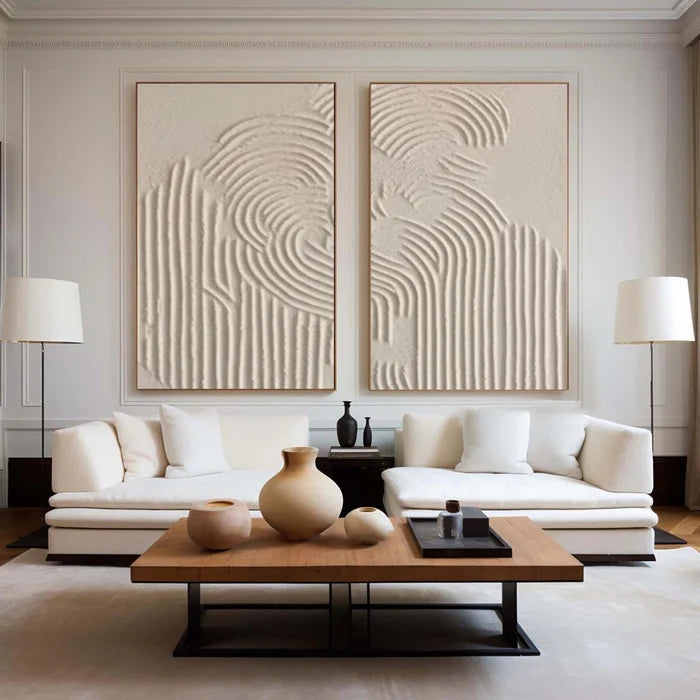
Sourcing Original Art for Design Projects: A Professional Workflow
Art sourcing is the step interior designers most often postpone, because it is the least standardized part of a project: the furniture has a catalogue, the paint has a chip, and the art has a search. A professional workflow turns that search into a process — interview the client, build a curation board, plan custom and bulk pieces, and run the timeline like any other trade. This guide lays out the workflow, from the first client conversation to the wall installation.
Why Designers Skip Art Sourcing
Designers skip art sourcing for three reasons: time, uncertainty, and lack of a repeatable process. A furniture order has a timeline and a vendor; an art search can drift for weeks without a shortlist. The uncertainty is the fit — a piece that looks right in a photo can fail the room's proportions, palette, or light. And without a process, every project starts the art search from zero.
The fix is a workflow that runs parallel to the rest of the project: the art is planned in the same phases as the furniture, with the client's input collected early and the pieces confirmed before the install. The art for interior designers article covers the designer-side value, and the workflow below makes it repeatable.
The designer who sources art systematically delivers a room that is finished — the wall is part of the design, not an afterthought.
The workflow also protects the designer's margin: art sourced at the last minute costs rush shipping and missed previews, while art planned early runs on the project's own timeline. The process is not extra work — it is the work done in the right order, and the order saves the time the search would have taken.
Interviewing Clients for Art Preferences
The workflow starts with the interview, and the questions mirror the room: where will the piece hang, what does the furniture and palette look like, what feeling should the wall carry, and what does the client already love or reject? The answers are collected into a style document — the room's measurements, the palette, the reference images, and the client's yes-and-no list — that becomes the brief every later step serves.
The interview also manages expectations: the budget range, the timeline, and the difference between original, handmade pieces and printed alternatives are settled early, so the curation board presents the right options. The art advisory page offers the guided version of this interview, and the workflow's first phase produces the document the designer can share with the client.
The interview's output is the project's art brief: a single page that names the walls, the palettes, the feelings, and the limits.
The brief's quality decides the workflow's outcome: a wall measured and a palette named produce a curation board that fits, while a vague preference produces a search that drifts. The designer's job in the interview is to convert the client's taste into coordinates — measurements, tones, feelings, and no-list — and the brief is those coordinates on one page.
Building a Curation Board
The curation board is the visual shortlist: a set of pieces sized and toned for the project's walls, presented with the reasoning behind each choice. The board follows the brief — the room's proportions pick the sizes, the palette picks the tones, and the client's yes-list picks the styles. The designer presents the board, the client reacts, and the shortlist narrows to the pieces the room will actually carry.
The all-painting collection provides the range for the board, and the made-to-order process lets the board include custom sizes and palettes when the project needs them. The curation board is the workflow's design moment — the search becomes a decision, and the client participates in the choice.
The board also documents the reasoning: each piece's size, tone, and fit are noted beside it, so the final selection is a decision the whole project can stand behind.
The board also serves the client's approval process: a visual shortlist with reasoning is easier to approve than a verbal description, and the client's reaction to the board — the piece that gets the immediate yes, the one that gets the pause — is the interview's second round. The curation board keeps the client in the design, and the workflow stays collaborative through the choice.
Custom and Bulk for Projects
Projects often need what stock cannot supply: a custom size for an awkward wall, a palette matched to the client's room, or several pieces with a consistent look across a multi-room project. The made-to-order process handles all three — custom dimensions and colors per piece, with the preview step confirming each before it ships.
The trade program page is the entry for designers and bulk projects, and the bulk purchase page covers the multi-piece route. The process details — pricing, minimums, and terms for trade accounts — are confirmed with the studio directly, and this guide stays with the workflow rather than the commercial terms.
The bulk route also opens the door to consistency across a project: multiple pieces from the same collection, or a custom series in a shared palette, give a multi-room job a coherent wall story. The studio confirms the specifics for each project, and the workflow keeps the art's selection and the project's needs aligned through every piece.
The custom series also solves the project's hardest wall: an awkward stairwell, a long hallway, or a niche with no stock size can be planned as a made-to-order piece, and the preview confirms the fit before the install. The workflow's custom step is the designer's tool for the walls the catalogue cannot serve.
The custom and bulk planning happens early in the timeline, because made-to-order pieces carry the production window.
Timeline and Communication
The art timeline runs parallel to the project's: measure and brief in the design phase, confirm the selection and order during the build, and schedule the arrival for the install. A made-to-order piece takes about a week of studio time plus shipping, so the art is ordered when the walls are measured, not when the install is imminent.
The communication follows the project rhythm: the brief confirms the walls, the curation board confirms the taste, the preview confirms the pieces, and the arrival check confirms the install. The art advisory page covers the guided route for designers who want the studio's hand in the selection, and the timeline is the same as any trade — planned early, confirmed at each step, and installed on schedule.
Vinchy Art Studio Recommendation
In the Vinchy Art studio, design-project art follows the workflow: interview the client into a brief, build a curation board from the brief, plan custom and bulk pieces with the studio, and run the timeline like any trade. The studio recommends collecting the art preferences early, confirming the pieces through the preview, and ordering made-to-order work with the production window in mind. The trade program is the designer's entry, and the workflow makes the wall a planned part of the project.
Conclusion
Sourcing original art for design projects is a workflow, not a search: the interview builds the brief, the curation board makes the choice, the custom and bulk planning matches the project's needs, and the timeline runs parallel to the build. The designer who follows the workflow delivers a wall that is part of the design, confirmed at every step and installed on schedule. The art stops being the postponed step and becomes the project's finishing touch.
Design Sourcing Checklist
- Client interviewed into an art brief
- Walls, palette, and feelings documented
- Curation board built and reviewed
- Custom sizes and palettes planned
- Trade terms confirmed with the studio
- Timeline ordered with the production window
FAQ
Why do designers skip art sourcing?
Time, uncertainty, and a lack of repeatable process. The workflow fixes all three: the interview builds the brief, the curation board makes the choice, and the timeline runs parallel to the project.
How do I interview a client about art?
Ask where the piece will hang, what the furniture and palette look like, what feeling the wall should carry, and what the client loves or rejects. The answers become the brief every later step serves.
What is a curation board?
A visual shortlist of pieces sized and toned for the project's walls, presented with the reasoning behind each choice. The client reacts, and the shortlist narrows to the pieces the room will carry.
Can designers order custom or bulk art?
Yes — made-to-order pieces accept custom sizes and palettes, and the trade program and bulk purchase pages cover designer and multi-piece projects. Commercial terms are confirmed with the studio directly.
When should art be ordered in a project timeline?
When the walls are measured, not when the install is imminent: a made-to-order piece takes about a week of studio time plus shipping. The art runs parallel to the build, and the preview confirms each piece before it ships — the timeline is the same as any trade, planned early and confirmed at each step.
Start a Trade Inquiry
Browse the trade program page above at Vinchy Art for designer sourcing — original, made-to-order pieces with custom sizes and preview before shipping.