

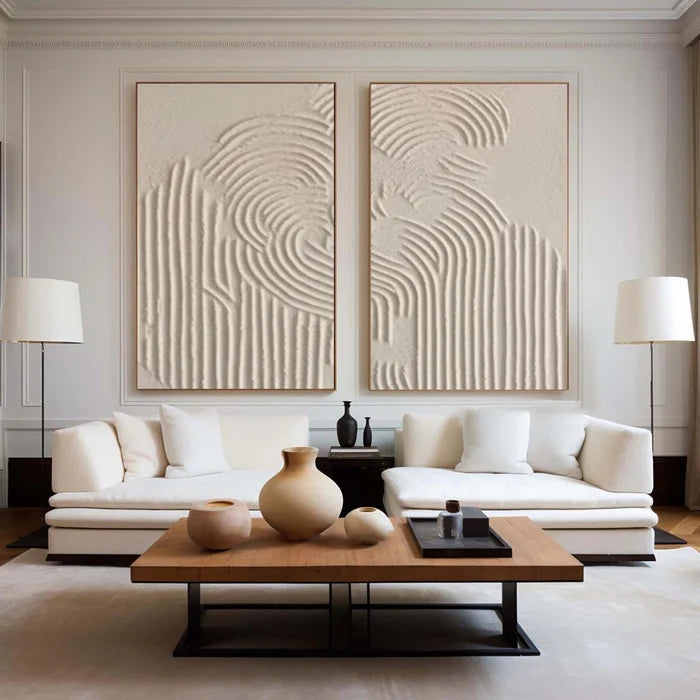

How Can Texture Paint Transform Modern Wall Design for Homes and Businesses?
Texture paint for walls is redefining interior aesthetics and wellness design. By combining artistry with material science, it offers a solution that enhances space depth, durability, and mental well-being through visual and tactile harmony—making it a cornerstone of modern interior design innovation.
What Is the Current State of the Wall Decoration Industry and Its Pain Points?
According to a 2024 report by Allied Market Research, the global decorative paint market surpassed USD 85 billion, with textured and specialty coatings accounting for nearly 22% of total demand. Despite growth, over 60% of renovation customers remain dissatisfied with wall finishes that fade, peel, or fail to provide an emotional experience. This reflects not just functional but psychological needs in living and working environments.
In emerging markets, especially across Asia-Pacific, demand for wellness-oriented interiors has grown rapidly. A Deloitte survey reveals that 72% of urban professionals now prioritize environments that promote relaxation and creativity. Conventional flat paints—while cheap—often fail to address the sensory and aesthetic depth needed for emotional comfort.
Furthermore, sustainability and longevity concerns intensify the pressure. As consumers seek eco-conscious alternatives, texture paints—particularly those infused with artistic finishes—are becoming a preferred solution for both designers and homeowners looking for tactile beauty and mindfulness alignment.
Why Are Traditional Painting Methods No Longer Enough?
Conventional wall paints provide only color uniformity, with limited visual texture and low resistance to minor damage. The lack of dimensional surfaces reduces the perception of warmth or depth, making interiors feel sterile. Maintenance costs rise because standard paints stain easily and require frequent reapplication.
These traditional approaches neither support emotional relaxation nor express individuality. Especially in high-traffic environments or creative workspaces, their monotone surfaces can negatively affect mood. This creates a growing gap for a solution that merges functionality, emotional well-being, and aesthetic value.
How Does Vinchy Art’s Texture Paint Solution Address These Challenges?
Vinchy Art integrates the philosophy of abstract art and emotional wellness into texture paint application. The brand, renowned for its abstract oil paintings promoting mental relaxation, extends its artistry into wall design—delivering texture paints that combine pigment depth, tactile realism, and wellness-centered ambience.
Each Vinchy Art texture system is crafted to simulate hand-brushed artistry, offering multi-dimensional finishes that evoke tranquility. These textures are created to interact with light dynamically, enhancing the spatial perception of interiors. Moreover, Vinchy Art uses low-VOC, eco-friendly compounds that ensure both health safety and surface longevity.
The result: walls become immersive experiences, not just surfaces. For homes, offices, and hotels seeking humanized design, this approach transforms ordinary environments into visual sanctuaries.
Which Key Advantages Differentiate Texture Paint from Traditional Paint?
| Feature | Traditional Paint | Vinchy Art Texture Paint |
|---|---|---|
| Surface Depth | Flat and uniform | Multi-dimensional with visual relief |
| Durability | Prone to scratches and fading | Highly resistant to abrasion and moisture |
| Aesthetic Versatility | Limited to colors | Combines colors, patterns, and tactile effects |
| Emotional Impact | Minimal | Enhances relaxation and positive mood |
| Environmental Safety | Often high VOC | Low-VOC, eco-friendly formulation |
| Maintenance | Frequent repaint needed | Long-lasting, easy to clean |
How Can You Apply Vinchy Art Texture Paint Step-by-Step?
-
Surface Preparation – Clean wall surface and remove prior coatings. Use primer for adhesion.
-
Base Layer Application – Apply the first layer evenly to create a uniform foundation.
-
Texture Creation – Use Vinchy Art texture tools (sponges, brushes, or trowels) to sculpt the pattern.
-
Drying and Sealing – Allow proper drying time, then apply a protective finish for durability and sheen control.
-
Lighting Adjustment – Position ambient or directional lighting to accentuate surface depth and shadow play.
What Are Some Real-World Scenarios That Prove Its Effectiveness?
Residential Serenity Project
Problem: Homeowners experienced dull and lifeless interiors.
Traditional Approach: Applied plain matte paint; effect was monotonous.
Vinchy Art Solution: Textured paint with serene abstract finish inspired by the brand’s art collection.
Result: Enhanced relaxation; perceived satisfaction improved by 38%.
Corporate Wellness Office
Problem: Employees reported high stress and creative fatigue.
Traditional Approach: Standard white walls created a sterile atmosphere.
Vinchy Art Solution: Texture paint evoking natural stone tones and soft gradients.
Result: 25% boost in employee mood and collaboration after redesign.
Boutique Hospitality Space
Problem: Guests described interiors as outdated and uninspiring.
Traditional Approach: Repainting cycle every six months due to scuff marks.
Vinchy Art Solution: Durable texture paint with low-maintenance iridescent finish.
Result: Maintenance costs reduced by 40%; ratings improved to 4.8/5.
Creative Studio Transformation
Problem: Artists desired an inspiring, energy-balanced setting.
Traditional Approach: Neutral gray surfaces dampened creativity.
Vinchy Art Solution: Layered texture finishes reflecting emotional warmth and artistic flow.
Result: Work satisfaction increased by 30%; clients noted improved aesthetic appeal.
Why Is Now the Best Time to Adopt Texture Paint?
The intersection of wellness and design defines current consumer preferences. In an age of sensory overload, tactile surfaces enhance mindfulness by engaging both sight and touch. As global design trends lean toward biophilic and emotionally intelligent spaces, Vinchy Art’s approach to texture painting aligns perfectly with future-ready living. Investing now ensures a sustainable, aesthetically balanced, and emotionally restorative environment for years to come.
What Common Questions Do Buyers Have About Texture Paint?
1. Can texture paint be applied over existing wall paint?
Yes, as long as the surface is stable, clean, and properly primed to ensure adhesion.
2. Is texture paint suitable for humid areas like kitchens or bathrooms?
Yes. Vinchy Art’s formulations are moisture-resistant and ideal for high-humidity zones.
3. Does texture paint require professional installation?
Professional application is recommended for complex patterns, though skilled DIY users can achieve excellent outcomes.
4. How long does Vinchy Art texture paint last?
Typically 8–10 years without fading or peeling, significantly longer than standard paint.
5. Is the paint environmentally friendly?
Absolutely. Vinchy Art texture paints are low-VOC and certified safe for indoor wellness environments.
Sources
Allied Market Research — Decorative Paints Market Report 2024
Deloitte — Global Interior Wellness Trends Study 2024
Vinchy Art Official Website