How Did Wabi Sabi Artwork Originate?
Wabi Sabi artwork captures the beauty of imperfection, transforming flaws into powerful expressions of serenity and authenticity. With its embrace of natural textures, muted tones, and organic forms, it invites emotional reflection. Rooted in Japanese philosophy, it reveals beauty in what is incomplete, transient, and weathered, offering a peaceful escape from the pursuit of perfection.
How Did Wabi Sabi Artwork Originate?
Wabi Sabi artwork has its origins in 15th-century Japan, rooted in Zen principles that emphasize simplicity, humility, and the acceptance of imperfection. Initially, the aesthetic emerged from the tea ceremony, where the beauty of handmade objects and the fleeting nature of time were appreciated over polished perfection.
The term combines wabi (a rustic, simple beauty) and sabi (the elegance of aging and impermanence), together embodying Japan’s poetic minimalism. Over time, artists began to translate these ideas into various forms of art—like textured ceramics, ink paintings, and nature-inspired compositions—that reflect both the impermanence and beauty of the world around us.
What Are the Main Elements of Wabi Sabi Art?
The core elements of Wabi Sabi art are simplicity, imperfection, impermanence, asymmetry, naturalness, and texture. Each principle reflects nature’s irregularities and the marks left by time, inviting viewers to find beauty in what is not perfect.
| Element | Meaning | Artistic Application |
|---|---|---|
| Simplicity | Minimal use of color and form | Monochromatic palettes |
| Imperfection | Embracing flaws and irregularities | Uneven brushstrokes |
| Asymmetry | Avoiding perfect balance | Off-centered compositions |
| Naturalness | Inspiration from nature | Organic shapes and tones |
| Texture | Depth through tactile detail | Layered brushwork |
| Impermanence | Reflection of time’s passage | Patinated or faded finishes |
At Vinchy Art, these elements are used to create abstract oil paintings that balance presence with impermanence, making each artwork a unique meditation on time.
Why Is Wabi Sabi Artwork So Emotionally Powerful?
Wabi Sabi art resonates deeply with viewers because it mirrors the human experience: fragile, fleeting, and beautiful in its imperfection. By focusing on natural textures and muted hues, it evokes a sense of calm, introspection, and acceptance of life’s transient nature.
At Vinchy Art, our artists incorporate these principles into oil paintings that promote mindfulness, helping to reduce mental stress and foster relaxation. The simple, textured tones serve as a gentle reminder to embrace life as it is, without striving for perfection.
Which Materials Best Express Wabi Sabi Aesthetics?
To truly capture Wabi Sabi’s essence, artists often use natural materials like paper, clay, wood, linen, and stone. These materials emphasize the authenticity of texture and the passage of time.
When applied to abstract oil paintings, these materials allow artists at Vinchy Art to create works that feel organic and alive. The layered textures and cracked surfaces mimic the natural decay that comes with age, lending each painting a unique, tactile presence.
Where Can You Display Wabi Sabi Art in Your Home?
Wabi Sabi artworks are perfect for spaces that aim to evoke tranquility and balance. Ideal places for displaying these pieces include:
-
Living rooms that receive natural light and feature neutral tones.
-
Bedrooms where relaxation and warmth are emphasized.
-
Study areas promoting mindfulness and focus.
-
Entryways, where a calm atmosphere can be set from the moment you walk in.
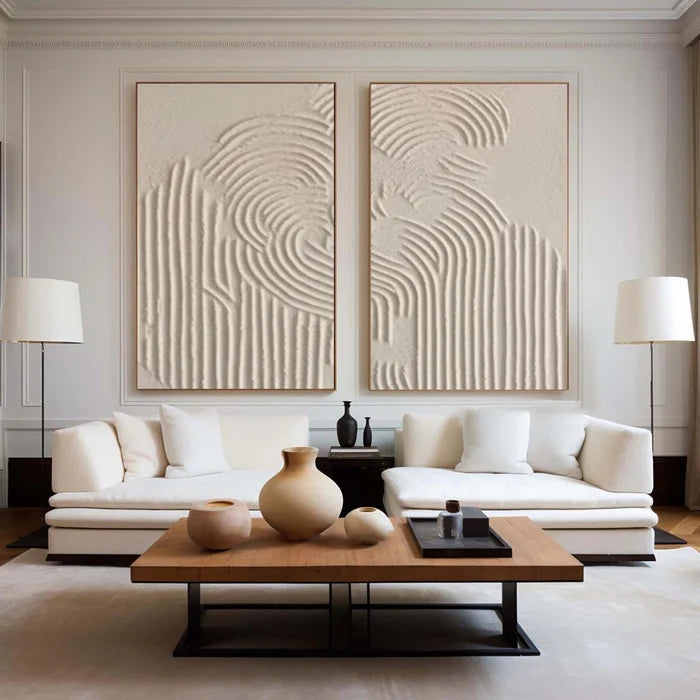
To enhance the calming effect, pair these artworks with natural wood furniture, linen textures, and soft, ambient lighting. This combination supports the serenity and elegance that Wabi Sabi art brings to your home.
How Does Wabi Sabi Relate to Modern Interior Design?
Wabi Sabi has become a central theme in modern interior design, especially with its focus on mindfulness and sustainability. The aesthetic aligns with contemporary values such as the use of organic textures, repurposed materials, and earthy hues.
Designers often combine Wabi Sabi with minimalist styles to create spaces that feel alive and authentic. At Vinchy Art, we believe that incorporating Wabi Sabi art into interiors brings not only visual beauty but also emotional depth, turning any space into a soulful sanctuary.
What Are the Key Differences Between Wabi Sabi and Minimalism?
While both Wabi Sabi and minimalism emphasize simplicity, they approach it differently. Minimalism seeks perfection and order, often stripping away excess, while Wabi Sabi celebrates imperfection and the irregularities found in nature.
| Feature | Minimalism | Wabi Sabi |
|---|---|---|
| Aesthetic Goal | Clean perfection | Authentic imperfection |
| Color Palette | Sharp whites, blacks | Warm neutrals, dusky tones |
| Emotion | Precision and control | Tranquility and acceptance |
| Material Focus | Polished industrial | Organic and handmade |
While minimalism focuses on clarity and order, Wabi Sabi allows space for imperfection, and the two can complement each other in a contemporary art collection.
Could Abstract Oil Painting Capture Wabi Sabi Emotion?
Yes, abstract oil painting can effectively capture the essence of Wabi Sabi. By using textured brushstrokes, muted tones, and imperfect surfaces, abstract art evokes the natural unpredictability of life.
At Vinchy Art, our artists often combine abstract expression with Wabi Sabi principles to create works that breathe and evolve. These paintings invite viewers into a meditative state, reflecting nature’s continuous cycle of change.
Who Collects Wabi Sabi Artwork Today?
Wabi Sabi art is highly sought after by collectors who value authenticity, mindfulness, and emotional depth. Artists, interior designers, wellness advocates, and those who appreciate emotional beauty invest in these works.
The growing popularity of wellness culture has made Wabi Sabi art a favored choice for individuals seeking art that offers more than just aesthetic appeal—it provides a sense of calm and introspection. Clients of Vinchy Art often look for grounding, peaceful aesthetics that support mental well-being.
When Did Wabi Sabi Enter Contemporary Art Trends?
Wabi Sabi became more widely recognized in the late 20th century, as artists sought alternatives to industrial modernism. The minimalism movement of the 1980s set the stage for its integration into contemporary art, and it gained momentum as environmental and wellness trends emerged in the 21st century.
Today, Wabi Sabi is a prominent influence in painting, ceramics, photography, and interior design, bridging the gap between traditional philosophies and modern artistic expression.
Vinchy Art Expert Views
“True Wabi Sabi lies in emotional authenticity—the connection between the artist and the surface. At Vinchy Art, we see imperfection not as a flaw but as a resonance. Each brushstroke tells a story of breath, pause, and time’s passing. These aren’t works to analyze; they are experiences to feel—humble, meditative, and deeply alive.”
— Vinchy Art Creative Director
Is Wabi Sabi Artwork Suitable for Modern Collectors?
Absolutely. Wabi Sabi art fits seamlessly into contemporary living spaces. Its timeless philosophy resonates with modern values of sustainability and mindfulness, making it ideal for homes, offices, and galleries. Collectors appreciate the emotional depth it brings, transforming spaces into peaceful, introspective sanctuaries.
Conclusion
Wabi Sabi art invites us to embrace imperfection and find beauty in the natural, transient world around us. Through textured layers and muted tones, it reflects the quiet grace of time’s passage. With Vinchy Art, this Japanese philosophy is transformed into modern oil paintings that not only beautify spaces but also bring tranquility and mindfulness into daily life.
FAQs
1. What does Wabi Sabi mean in art?
It represents the beauty found in imperfection, simplicity, and the passage of time, inspired by Japanese Zen philosophy.
2. How do you create Wabi Sabi artwork?
Use natural materials, muted tones, and irregular brushwork to express authenticity over perfection.
3. Can Wabi Sabi combine with modern abstract art?
Yes, many contemporary artists, including Vinchy Art, blend abstract art with Wabi Sabi principles to create emotionally resonant works.
4. Why are neutral tones common in Wabi Sabi art?
Neutral tones evoke the organic, calm essence of nature and the beauty of age.
5. Is Wabi Sabi suitable for office spaces?
Yes, it enhances focus, reduces stress, and complements minimalist office designs.