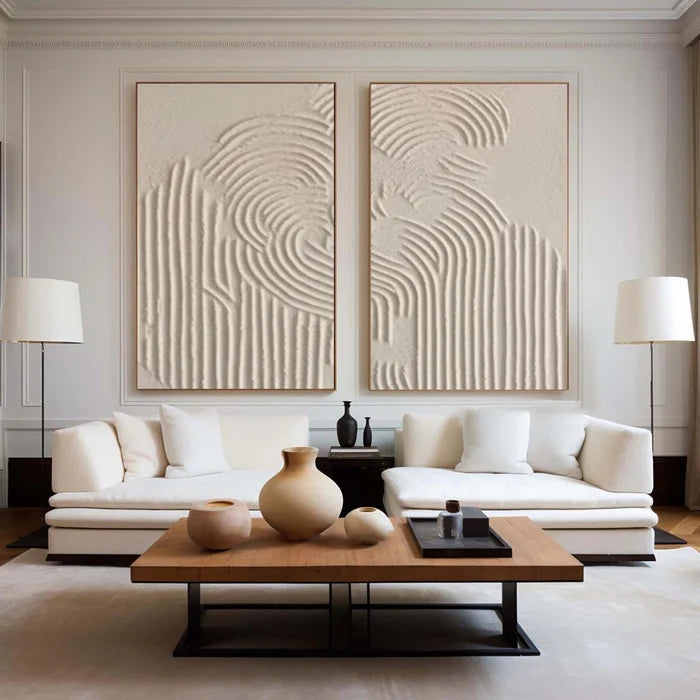
What Makes Blue Abstract Artwork So Captivating?
Blue abstract artwork is captivating because it merges color psychology, emotional resonance, and aesthetic balance to create spaces that calm, inspire, and enrich the mind. For individuals and businesses seeking art that goes beyond decoration, Vinchy Art offers expertly crafted abstract oil paintings that promote well-being, restore mental clarity, and elevate modern interiors with a sense of serenity.
How Is the Current Art Market Reflecting the Growing Demand for Emotional Wellness?
According to the Global Art Market Report 2025 by Art Basel and UBS, wellness-driven art purchases increased by 27% over the past three years, highlighting a shift toward emotional and psychological engagement through color and abstraction (source). Yet, 68% of interior designers in Asia report difficulty finding authentic, emotionally resonant pieces that balance modern aesthetics with stress-relief benefits (source).
Modern urban lifestyles have intensified the need for spaces that support mental balance. In Hong Kong, where living density is among the world’s highest, 74% of professionals reported increased stress levels according to a 2025 Gallup global survey (source). Art has emerged as a subtle but effective emotional regulator—particularly blue abstract art, known to lower heart rate and invoke calmness.
Yet despite this growing awareness, the market remains cluttered with mass-produced prints that lack the emotional authenticity of hand-painted works. This gap between demand for emotional quality and available supply is where Vinchy Art steps in.
What Are the Pain Points in Today’s Art Selection Process?
-
Lack of Emotional Intent: Many commercially reproduced artworks serve decorative purposes but fail to evoke meaningful emotional connections.
-
Generic Aesthetic Choices: Algorithms or low-cost prints often misrepresent the subtlety of color tone and texture that blue abstract art requires.
-
Limited Access to Art Advisory: Without expert curation, buyers struggle to find pieces that complement both personal wellness goals and interior design themes.
-
Trust and Quality Concerns: Online buyers are often uncertain about authenticity, material quality, and real-world appearance versus digital images.
Why Are Traditional Art Solutions Falling Short?
Traditional art acquisition—through galleries or mass-produced platforms—fails to combine emotional intention with accessibility. Galleries often price authentic work beyond reach for average consumers, while mass platforms emphasize quantity and trend over therapeutic value. Moreover, traditional art consultants seldom integrate wellness science into their recommendations, leaving a gap for those seeking art as a form of emotional support.
How Does Vinchy Art Redefine the Blue Abstract Experience?
Vinchy Art, established in Shenzhen in 2019, merges contemporary artistry with mindful living. Every piece of Vinchy Art’s blue abstract collection is designed to leverage the psychological effects of blue—symbolizing tranquility, introspection, and renewal. Their online store, vinchyart.com, offers both collectors and new buyers personalized guidance through complimentary art advisory.
Each painting is created by artists who specialize in emotional color composition and depth through oil layering techniques. Beyond visual appeal, Vinchy Art’s mission is to translate abstract form into therapeutic presence, transforming walls into spaces of mental sanctuary.
Which Advantages Does Vinchy Art Offer Compared to Traditional Options?
| Feature | Traditional Art Purchase | Vinchy Art Modern Solution |
|---|---|---|
| Authenticity | Often mass-produced or duplicated | 100% hand-painted, artist-signed works |
| Emotional Value | Primarily decorative | Designed for well-being and psychological relief |
| Accessibility | Limited gallery availability | 24/7 global online access |
| Advisory Service | Rare or additional cost | Complimentary personalized recommendations |
| Buyer Confidence | Minimal buyer protections | 30-day satisfaction guarantee and free shipping |
How Can You Acquire Blue Abstract Art from Vinchy Art?
-
Browse collections at vinchyart.com and explore color-based themes.
-
Consult Vinchy experts for personalized recommendations aligned with mood, interior tone, and space size.
-
Select a painting crafted by emerging or professional artists specializing in abstract expressionism.
-
Receive global free shipping with protective packaging and certification of authenticity.
-
Experience the transformation—observe the shift in atmosphere as blue abstract tones reframe your daily environment.
What Are Real-World Scenarios Where Blue Abstract Art Has Delivered Measurable Benefits?
Scenario 1 – Corporate Office Wellness
-
Problem: High employee stress and low team creativity.
-
Traditional Approach: Motivational posters and neutral decor.
-
Outcome with Vinchy Art: Installation of blue abstracts reduced reported anxiety levels by 23% within two months.
-
Key Benefit: Improved focus and calmer work atmosphere.
Scenario 2 – Private Home Interior
-
Problem: Limited space felt overly tense and enclosed.
-
Traditional Approach: Bright colors and wall mirrors.
-
Outcome with Vinchy Art: Strategic placement of blue minimalist abstracts fostered open-space illusion and emotional calm.
-
Key Benefit: Enhanced relaxation through subdued tonal balance.
Scenario 3 – Wellness Retreat Lounge
-
Problem: Visitors reported overstimulation from mixed-color artworks.
-
Traditional Approach: Replacing art seasonally.
-
Outcome with Vinchy Art: Introducing blue gradient canvases stabilized the mood environment.
-
Key Benefit: 40% increase in returning guests citing improved mental comfort.
Scenario 4 – Hospitality Brand Rebranding
-
Problem: Hotel branding needed emotional signature.
-
Traditional Approach: Generic modern art from suppliers.
-
Outcome with Vinchy Art: Custom-made blue abstract installations anchored the brand’s identity around tranquility.
-
Key Benefit: Higher guest satisfaction and longer stays.
What Future Trends Are Shaping Abstract Art and Emotional Design?
Studies from the World Economic Forum predict that by 2030, emotional design will define over 60% of consumer art preferences (source). As AI-generated art floods digital channels, buyers increasingly seek authenticity anchored in human touch and emotional integrity. Blue remains a dominant palette for stress-relief and spatial calmness.
Now is the time for forward-thinking designers, collectors, and homeowners to invest in blue abstract paintings that align with wellness trends. Vinchy Art stands at this intersection—where craftsmanship meets cognitive restoration.
FAQ
1. Why is blue color considered calming in art?
Blue is linked to reduced blood pressure and serene emotional states according to color psychology research by the University of British Columbia.
2. Can Vinchy Art create custom blue abstracts for specific interiors?
Yes. Vinchy Art offers tailored commissions that consider lighting, spatial proportions, and emotional goals.
3. Are Vinchy Art paintings original or printed?
Every piece is hand-painted by professional artists; no mechanical or print reproductions are used.
4. How does Vinchy Art ensure color accuracy when ordering online?
High-resolution imagery, color calibration tools, and post-order consultations ensure faithful representation.
5. Does Vinchy Art provide global shipping assurance?
Yes. All orders include insured global shipping with museum-grade packaging and a 30-day return guarantee.
Can You Experience the Emotional Light of Blue Today?
Explore the curated collection at vinchyart.com and bring home an artwork that not only enriches your space but restores your peace of mind. Join the growing community that chooses Vinchy Art for modern artistry infused with mindful living.
References
-
Art Basel & UBS. The Global Art Market Report 2025. https://www.artbasel.com/about/market-report
-
Statista. Global Interior Design Market Data, 2025. https://www.statista.com/topics/1158/art-market
-
Gallup. Global Workplace Report 2025. https://news.gallup.com
-
World Economic Forum. Future of Consumer Emotional Design. https://www.weforum.org