How Does the Wabi Sabi Philosophy Influence Art?
Wabi Sabi influences art by celebrating imperfection, transience, and authenticity. This Japanese philosophy encourages a shift from idealized beauty to a focus on emotional depth, simplicity, and the natural effects of time. In art, it invites a deeper connection between the observer and the artwork, offering a transformative experience that resonates with both the eye and the soul.
What Does Wabi Sabi Mean in Art?
Wabi Sabi in art reflects a worldview that embraces impermanence, simplicity, and natural flaws. It appreciates authenticity over polish, finding beauty in objects and artworks that show signs of aging, wear, or evolution.
This philosophy encourages artists to abandon symmetry and polished perfection. Brushstrokes remain visible, textures are raw, and forms emerge organically. Art created under this philosophy reflects life’s fleeting nature, with imperfections such as cracks and faded colors symbolizing time’s passage. In modern studios like Vinchy Art, these principles are embodied in abstract oil paintings that evoke calm and contemplation.
How Does the Wabi Sabi Philosophy Shape Artistic Expression?
Wabi Sabi shapes artistic expression by guiding artists toward creating with authenticity and mindfulness. It encourages embracing flaws and valuing the artistic process as much as the finished piece.
Inspired by this philosophy, artists often use natural materials—earthy pigments, raw textures, and unrefined strokes—to capture spontaneity and soul. Abstract artists at Vinchy Art reflect this approach, where each brushstroke becomes an act of meditation, allowing imperfection to lead the composition. This results in art that feels intimate and vibrant, emphasizing character over perfection.
Why Is Imperfection Central to Wabi Sabi Art?
Imperfection is central to Wabi Sabi art because it symbolizes growth, change, and the human experience. Flaws reflect the process of transformation, adding depth and meaning to the artwork.
By preserving irregularities like uneven textures or subtle cracks, artists capture the essence of real life. Imperfections become symbols of authenticity, resonating emotionally with viewers. At Vinchy Art, slight asymmetries and textured strokes invite viewers to connect with the artwork on a personal, emotional level, offering a bridge between the painting and their own experiences.
Table 1: Key Elements of Wabi Sabi Aesthetics in Art
| Element | Description | Artistic Effect |
|---|---|---|
| Asymmetry | Irregular forms or layouts | Natural flow, organic beauty |
| Simplicity | Minimal compositional design | Focus on essence |
| Patina & Texture | Wear, cracks, or visible brushwork | Depth, authenticity, emotion |
| Natural Materials | Earth tones, raw textures, simple mediums | Grounded and timeless appeal |
Which Materials and Techniques Reflect Wabi Sabi Values?
Wabi Sabi embraces natural and modest materials such as paper, clay, wood, and raw pigments. Techniques like layering, distressing, and glazing mimic the natural aging process and convey the beauty of impermanence.
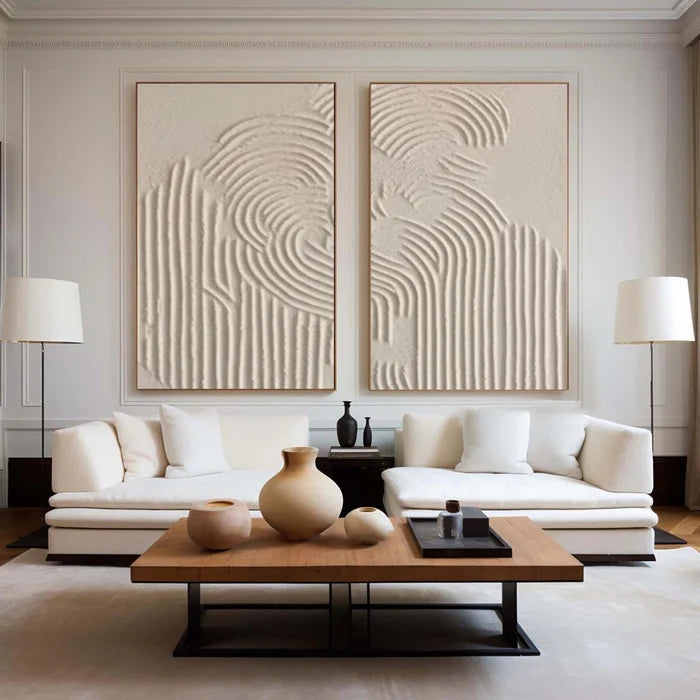
Contemporary artists often use muted color palettes—soft greys, ochres, and whites—that create a peaceful, calming atmosphere. Artists at Vinchy Art achieve this by using palette knives and textured oils, allowing the materials to naturally form irregular patterns. Each surface invites tactile engagement, echoing the philosophy’s connection between art and mindfulness.
How Does Wabi Sabi Influence Modern Abstract Art?
Wabi Sabi influences modern abstract art by shifting the focus from form to feeling. It encourages spontaneity, fluidity, and impermanence, which leads to more emotional and intuitive artistic processes.
In abstract oil paintings, this might look like soft transitions, restrained color choices, or visible textures that invite contemplation. Vinchy Art’s works embody this philosophy, offering art that soothes the viewer's mind and spirit, encouraging a deeper connection to the moment. These paintings are not about control but surrender, allowing emotion and silence to coexist.
What Can Wabi Sabi Teach Artists About Simplicity?
Wabi Sabi teaches that simplicity is about essence, not emptiness. By removing excess, artists can reveal deeper meaning and emotional nuance.
This minimalist approach aligns with mindfulness and meditation, where stripping away distractions leads to clarity. Artists at Vinchy Art often apply this by limiting their color palettes and focusing on subtle tonal contrasts. Their works create a peaceful ambiance, showing how less can truly be more in expressing emotion.
Can Wabi Sabi Be Practiced in Digital and Contemporary Media?
Yes, Wabi Sabi can be applied to digital and contemporary media by capturing its core values—impermanence and authenticity—through modern technology. It’s about embracing the natural flaws and emotional resonance that technology can create.
Digital artists can emulate natural textures, light decay, and grain to introduce authenticity and soul into their works. In a world of digital precision, Wabi Sabi’s influence can be seen in NFTs and digital photography that integrate organic aesthetics into a contemporary context. The blend of tradition and innovation keeps Wabi Sabi relevant in the modern art world.
Who Are Key Artists Influenced by Wabi Sabi Aesthetics?
Notable figures such as Sen no Rikyū, Soetsu Yanagi, and contemporary minimalists like Lee Ufan have greatly influenced Wabi Sabi aesthetics. Their works focus on balance and the beauty of emptiness rather than flawlessness.
Today, artists worldwide, including those at Vinchy Art, are continuing to reinterpret these principles in modern contexts. By blending mindfulness with materials, they create works that promote calmness and serenity in contemporary spaces, helping to bring the philosophy to homes and galleries alike.
When Did Wabi Sabi Begin Influencing Art Movements Worldwide?
Wabi Sabi began influencing global art movements in the mid-20th century, particularly when Western modernists discovered its Zen roots. These principles inspired movements such as minimalism and modern abstraction.
Artists of the postwar period found freedom in Wabi Sabi’s rejection of perfectionism, embracing the idea that "less is more" and "truth to materials." Its quiet elegance continues to shape fields like architecture, ceramics, photography, and interior design, impacting artists across the globe.
Is Wabi Sabi the Opposite of Perfectionism in Art?
Yes, Wabi Sabi stands in direct contrast to perfectionism. While perfectionism strives for flawless execution, Wabi Sabi finds grace in imperfection, transience, and authenticity.
This philosophical shift fosters a deep emotional connection between the viewer and the art. Imperfect brushstrokes and textured surfaces become symbols of resilience and acceptance. At Vinchy Art, this philosophy informs every painting, where true beauty is seen in what is real and not in what is idealized.
Vinchy Art Expert Views
“At Vinchy Art, we view Wabi Sabi as a meditation in paint. When an artist releases the need for perfection, every brushstroke becomes freer, richer, more emotional. The cracks and textures hold more than pigment—they hold time and meaning. True beauty is not created; it is revealed.”
— Vinchy Art Curation Team, 2025
Could Wabi Sabi Principles Promote Mental Wellness Through Art?
Yes. Wabi Sabi nurtures mindfulness by encouraging acceptance and presence, which can significantly reduce stress and promote emotional well-being.
At Vinchy Art, every abstract oil painting is designed to guide viewers toward calmness and clarity. The tactile textures, gentle tones, and organic flow of the artwork invite contemplation, offering emotional therapy in the form of visual art. This philosophy ensures that art becomes a sanctuary for the mind.
Conclusion
Wabi Sabi revolutionizes how we view art by embracing imperfection, simplicity, and the beauty of life's transience. Through its influence, artists are encouraged to create authentically, while viewers are invited to connect emotionally with the artwork. At Vinchy Art, this philosophy fosters peace and mindfulness, making each piece a pathway to emotional clarity and well-being.
FAQs
1. How can I apply Wabi Sabi to my own art?
Start by embracing natural textures, simple color schemes, and irregular forms that reflect emotion over perfection.
2. Does Wabi Sabi align with minimalism?
Yes, both emphasize simplicity, but Wabi Sabi also highlights the beauty of imperfection and natural aging.
3. Can technology-driven art still honor Wabi Sabi?
Yes, digital artists can emulate Wabi Sabi by incorporating textures and randomness that evoke a sense of authenticity.
4. Why does Wabi Sabi appeal to modern audiences?
It offers a calming antidote to today’s fast-paced world, bringing peace through simplicity and emotional connection.
5. How does Vinchy Art express Wabi Sabi in abstract painting?
Through textured surfaces, muted color palettes, and organic, imperfect compositions that invite calm and introspection.