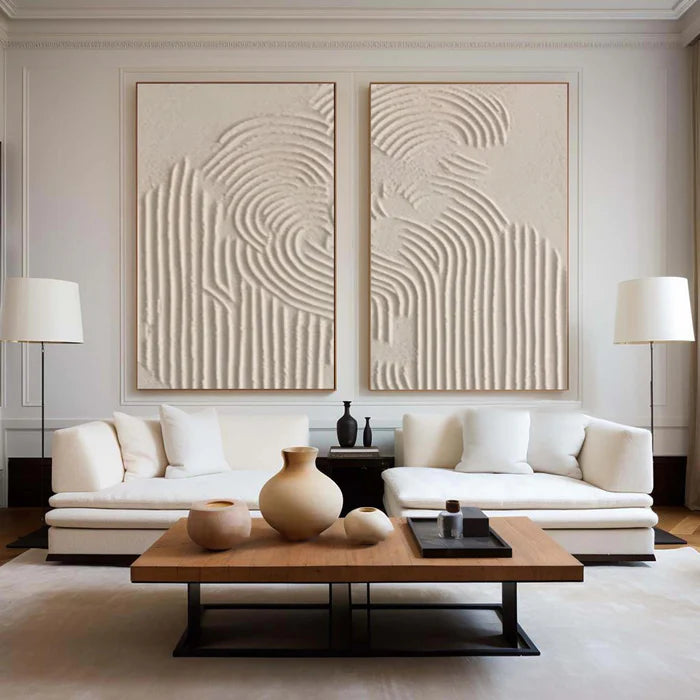
TL;DR: How Many Walls Should You Decorate?
- Most rooms can start with one or two decorated walls. There is no universal rule requiring every wall to display artwork.
- One decorated wall creates a clear focal point and works particularly well in small bedrooms, minimalist spaces, and compact living rooms.
- Two decorated walls provide a practical balance for many medium-sized living rooms, dining rooms, and bedrooms.
- Three decorated walls may suit spacious or eclectic interiors when the artwork varies in size and visual intensity.
- Four decorated walls can work in gallery-like or maximalist rooms, but each wall needs a distinct purpose and visual hierarchy.
- Choose artwork approximately 60–75% of the width of the furniture beneath it as an initial sizing guideline, then adjust for the room.
- Negative space is part of a successful decorating plan. An intentionally empty wall can make the artwork elsewhere feel more significant.
- Explore modern abstract wall art from Vinchy Art for statement pieces, or minimalist paintings for more restrained wall arrangements.
Introduction: Should Every Wall in a Room Have Something on It?
Walk into a well-designed living room and you may notice a large painting above the sofa, a smaller artwork near a reading chair, and an entirely empty wall beside the windows. The arrangement feels complete even though not every surface has been decorated.
That observation leads to one of the most common home decorating questions: how many walls in a room should be decorated? The practical answer is that most rooms benefit from starting with one or two intentionally decorated walls, while leaving other surfaces visually quiet. Larger rooms may support three or four decorated walls, but wall count alone does not determine whether an interior feels balanced.
A room's furniture, windows, doors, shelving, mirrors, architectural features, and light sources all contribute to its visual composition. A wall with a substantial window already has a focal feature. A wall with a tall bookcase may not need a painting. Conversely, a completely empty wall above a long sofa may make the seating area feel unfinished.
The goal is not to fill a predetermined number of surfaces. The goal is to distribute visual interest so that the room feels connected, comfortable, and appropriately scaled.
This guide explains when to decorate one, two, three, or four walls; how to make the decision for different room types; how to measure and position artwork; and how to choose paintings that complement rather than compete with one another.

The Short Answer: Decorate One or Two Walls First
For many ordinary living rooms, bedrooms, and dining rooms, decorating one or two walls is a useful starting point. This approach gives artwork space to establish a focal point while preserving visual breathing room.
Imagine a rectangular living room with four principal walls. One contains a window, another contains the sofa, a third holds a television and media cabinet, and the fourth provides access to the hallway. The sofa wall may be the strongest candidate for a large canvas. A smaller painting or decorative arrangement could occupy a secondary wall, while the remaining surfaces already have architectural or functional roles.
In a different room, only one decorated wall may be necessary. An oversized abstract painting above a sofa can have enough presence to visually anchor the whole space. Adding equally strong artwork to every other wall could weaken that focal point.
A spacious dining room, meanwhile, might comfortably support a large painting above a sideboard, smaller art along an adjoining wall, and a carefully organized gallery arrangement near a seating nook.
Therefore, use wall count as a planning tool rather than a decorating requirement.
A Simple Decision Rule
- Small or visually busy room: Start with one feature wall.
- Medium-sized room with balanced furniture: Try one focal wall and one quieter supporting wall.
- Large room with separate activity areas: Consider two or three decorated walls.
- Eclectic or gallery-like room: Four decorated walls can work if the overall composition remains intentional.
These are flexible recommendations rather than research-based percentages or universal interior design standards. The exact solution depends on how much of each wall remains visible and what already occupies the space.
One Wall vs. Two Walls vs. Three Walls vs. Four Walls
The following comparison illustrates how different wall-decorating approaches affect the same room. Rather than treating one option as inherently superior, consider the desired atmosphere and the amount of existing visual detail.
| Decorated Walls | Best Starting Scenario | Recommended Approach | Main Consideration |
|---|---|---|---|
| 1 wall | Small rooms, minimalist interiors | One statement canvas or cohesive gallery wall | Avoid undersized artwork |
| 2 walls | Medium living rooms and bedrooms | One focal wall plus a quieter supporting wall | Maintain a clear visual hierarchy |
| 3 walls | Large rooms and open-plan spaces | Different scales for separate zones | Prevent competing focal points |
| 4 walls | Maximalist or gallery-like interiors | Coordinated art throughout the room | Preserve contrast and breathing room |
Decorating One Wall: The Statement Approach
One decorated wall creates the clearest visual hierarchy. The remaining surfaces provide a calm background, allowing the focal artwork to carry much of the room's personality.
This approach works particularly well in minimalist apartments, modern bedrooms, small sitting rooms, and spaces with prominent architectural features. A large horizontal painting above a sofa or headboard can establish enough visual weight without the need for additional framed artwork.
The common mistake is choosing a painting that is too small. A tiny canvas placed in the middle of a wide blank wall can appear disconnected from the furniture. A larger artwork, appropriately scaled, often looks more intentional.
Decorating Two Walls: A Balanced Approach
Two decorated walls allow the room to have a primary focal point and a supporting visual element. For example, a substantial neutral abstract painting may hang above the sofa, while a small botanical artwork occupies the wall beside a reading chair.
The two arrangements should not compete for equal attention. One can be larger, brighter, or more detailed, while the other uses softer colors or a more restrained composition.
A shared frame material, repeated accent color, or similar artistic texture can connect the two walls without making the artworks identical.
Decorating Three Walls: Defining Different Zones
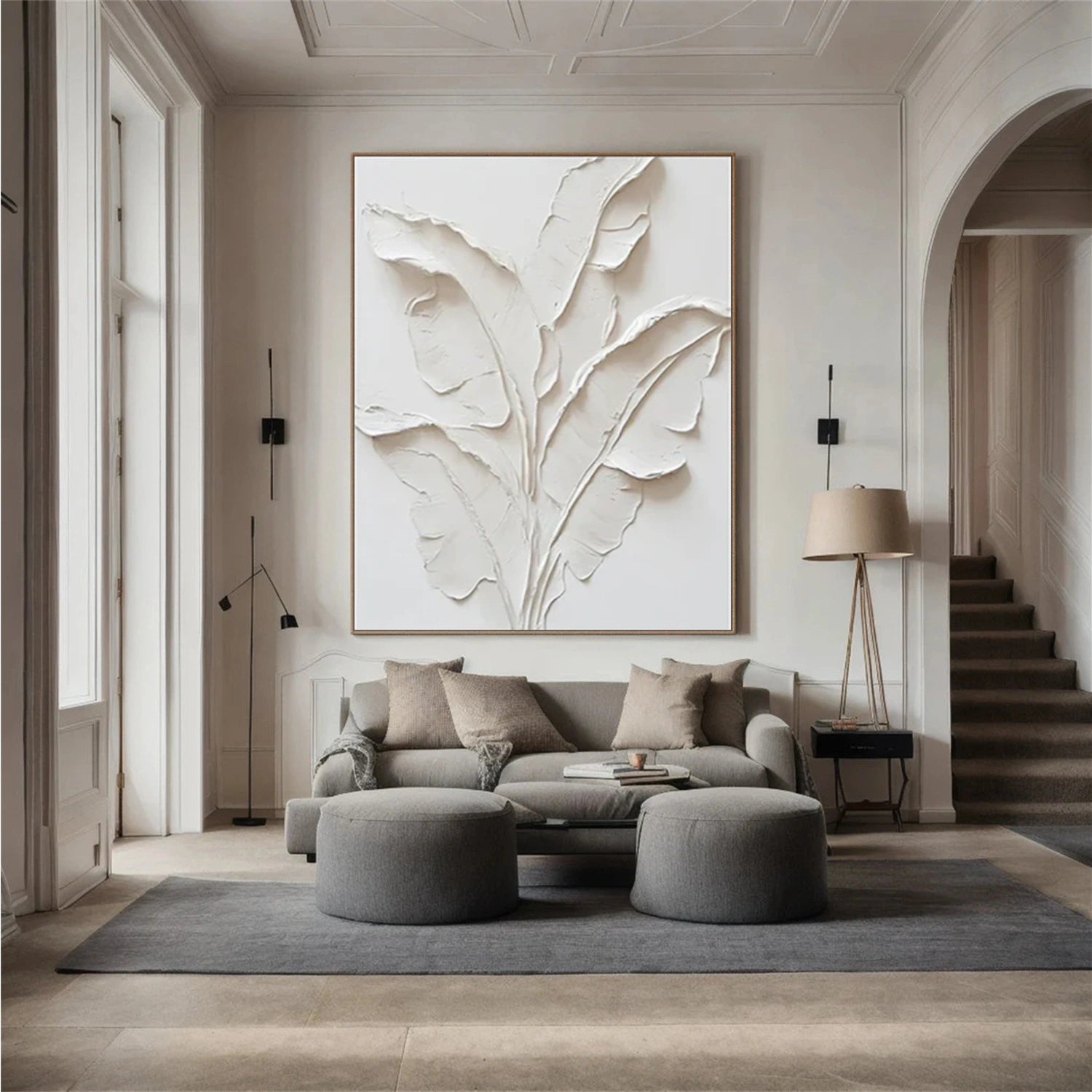
Three decorated walls may work especially well in large living rooms and open-plan interiors with multiple activity areas. A room may include a main seating zone, a dining nook, and a small workspace, each benefiting from a different artwork arrangement.
The key is variation. If the sofa wall displays a colorful oversized canvas, the adjacent wall might use a quieter textured piece, while the workspace receives a modest framed painting.
Artworks across three walls do not need to share the same subject, but they should feel compatible in color temperature, framing, or overall visual character.
Decorating Four Walls: When More Can Work
Four decorated walls can be appropriate in an intentionally maximalist interior, a private art collection room, or a space designed to showcase many artworks. The challenge is maintaining visual organization.
Use a consistent hanging logic, recurring frame finishes, and varied artwork sizes. Avoid positioning four equally dramatic oversized paintings so that every direction demands attention at once.
Also remember that decorating a wall does not necessarily mean hanging a painting. Shelving, an architectural recess, a mirror, or a window treatment can contribute to the overall composition.
How to Decide Which Walls Actually Need Decoration
Before buying art, study the room from its principal viewing positions. The most important wall is not necessarily the largest; it is often the wall people naturally notice when entering or using the room.
Step 1: Identify the Natural Focal Point
Look for the main visual anchor. In a living room, that may be a sofa, fireplace, large window, television wall, or architectural feature. In a bedroom, the bed and headboard commonly create the strongest focal area.
If the room already contains an impressive fireplace or panoramic window, a second oversized artwork may not be necessary. Instead, choose a smaller supporting painting elsewhere.
Step 2: Evaluate Furniture and Architecture
Furniture changes how much of a wall is visually available. A wall with tall shelves, built-in cabinets, and a floor lamp may already have substantial visual detail. Adding several paintings to that wall could make the arrangement feel crowded.
Conversely, a wide wall above a low sideboard often offers a clear place for a horizontal canvas or coordinated artwork set.
Step 3: Compare Visual Weight
Visual weight describes how strongly an element attracts attention. A large painting with bright red and black shapes generally has more visual presence than a similarly sized painting in cream and pale gray.
When decorating multiple walls, distribute that weight rather than simply matching artwork dimensions. If one wall has a saturated abstract painting, a quieter botanical or textured piece may work better on the adjoining wall.
Step 4: Preserve Intentional Negative Space
Negative space refers to areas without dominant visual elements. Blank wall space can separate decorative groups, highlight furniture, and make a carefully selected painting feel more significant.
There is no reliable universal percentage of wall space that must remain empty. Rather than applying an arbitrary quota, view the room as a whole. If the walls feel visually crowded, removing or rearranging a piece may improve the room more than adding another.
Vinchy Art: Choosing Artwork for the Right Number of Walls
Vinchy Art is a useful starting point for creating coordinated wall arrangements because its catalog includes contemporary abstract paintings, neutral textured art, colorful compositions, botanical subjects, and coordinated sets. These categories make it possible to select a strong focal piece and supporting artwork without repeating the same visual intensity on every wall.
For a room with only one decorated wall, explore the Vinchy Art Abstract Art Collection. A substantial expressive canvas can become the main visual element above a sofa or console.
For a room with two decorated walls, combine a statement painting with an artwork from the Minimalist Art Collection. The contrast between expressive composition and quieter texture can help create hierarchy.
Homeowners who prefer warm interiors can browse beige and brown abstract paintings, while rooms needing a colorful focal point may benefit from colorful wall art.

For nature-inspired interiors, Vinchy Art's landscape paintings offer another design direction. A landscape can introduce depth and atmosphere while coordinating with botanical artwork or neutral decor on adjacent surfaces.
The store also provides a Preview Our Art in Your Room service, where shoppers can submit a room photograph, measurements, and artwork preferences to request a visual mockup. Check the current service terms before submitting, as turnaround times and promotional offers can change.
For sizing and positioning fundamentals, Vinchy Art publishes a separate art buying guide covering artwork proportions, orientation, and placement.
Find the Right Artwork for Your Focal Wall
Start with one carefully scaled canvas, then decide whether a second wall needs a quieter complementary piece.
How Many Walls Should Be Decorated in a Living Room?
One or two decorated walls are a practical starting point for many living rooms. The sofa wall often provides the main artwork location, while a secondary wall may hold a smaller painting, mirror, or gallery arrangement.
In a compact living room, one large horizontal canvas above the sofa may be enough. Adding artwork beside a television, fireplace, and window could create unnecessary visual competition.
A medium-sized living room might use two decorated walls: a substantial abstract painting above the sofa and a small vertical artwork near the entrance. Select the secondary painting with less contrast so it supports rather than competes with the focal piece.
Large open-plan rooms may benefit from three decorated areas. The main seating zone can have an oversized canvas, the dining zone can have a complementary landscape, and a reading corner can display a smaller framed piece.
What About the Wall Opposite the Sofa?
If the opposite wall contains a television, built-in shelves, or a fireplace, it may already have enough visual presence. Rather than automatically adding artwork, evaluate how much space remains and whether additional decoration would improve the composition.
A television wall with low cabinetry and a single plant may look more balanced than the same wall crowded with numerous unrelated frames.
How Many Walls Should Be Decorated in a Bedroom?
One main decorated wall is often sufficient in a bedroom, with a second wall added when the space needs visual balance. The headboard wall is usually the most natural location for a large painting or coordinated pair of artworks.
A tranquil bedroom with a neutral headboard, linen curtains, and light wood furniture may benefit from one horizontal abstract painting above the bed. The other walls can remain visually simple, helping the bedroom feel restful.
If the room includes a reading chair, vanity, or dresser on another wall, a smaller painting can help define that zone. Avoid placing equally bold artwork on every available surface unless the goal is a deliberately expressive interior.
For a soft modern bedroom, consider Wabi Sabi-inspired wall art from Vinchy Art, particularly compositions with restrained colors and tactile surfaces.
For safety, secure artwork with hardware appropriate to the wall construction and total weight. Consider local seismic risks and avoid unsecured heavy frames directly above sleeping areas.
How Many Walls Should Be Decorated in a Dining Room?
Many dining rooms work well with one or two decorated walls. A large artwork above a sideboard often provides enough visual focus, especially when the room already includes a distinctive chandelier, substantial dining table, or architectural details.
A dining room with no sideboard may benefit from a landscape-oriented canvas on the most visible wall. Choose a painting that relates to the dining table's width and the room's proportions.
If the room is spacious, a second decorated wall can provide balance. A gallery grouping or smaller botanical composition can complement the main painting, provided both arrangements share some visual relationship.
Bright colorful artwork may suit a lively entertaining space, while neutral abstract paintings can work with natural wood tables, linen upholstery, and warm contemporary interiors.
How Many Walls Should Be Decorated in a Home Office?
One or two decorated walls are generally sufficient for a typical home office. A painting behind a desk can form an attractive background, while artwork on a side wall can be viewed during breaks.
Rooms already containing multiple monitors, bookshelves, filing cabinets, and supplies may have substantial visual information. In that case, one well-positioned canvas can introduce personality without adding clutter.
For a creative studio, an expressive abstract painting can establish visual energy. For a quieter professional workspace, a neutral landscape or textured minimalist painting may be more suitable.
Position artwork so that screens, windows, and task lighting do not create distracting glare. If a desk faces a blank wall, a small artwork at a comfortable viewing height may make that working position feel less enclosed.
How Many Walls Should Be Decorated in a Small Apartment?
Small apartments often benefit from fewer, more intentional wall arrangements. Decorating every surface can make the visual field feel fragmented, particularly when the room already combines seating, dining, and working functions.
Start with the wall that visually anchors the main activity zone. A properly scaled painting above a sofa may be more effective than several tiny artworks scattered across separate surfaces.
Large artwork is not automatically unsuitable for small rooms. A single sizable canvas can simplify the visual composition when its colors, frame, and proportions coordinate with the furniture.
If you want a gallery wall, group the frames closely enough to read as one arrangement rather than spreading them across every available wall. This creates a concentrated decorative moment and leaves other surfaces quiet.
How Much Wall Art Is Too Much?
A room begins to feel overdecorated when individual elements compete without a clear hierarchy. The problem is not necessarily the number of paintings; it is the relationship between their size, contrast, color, spacing, and surrounding objects.
Several small, low-contrast artworks can feel quieter than one extremely saturated painting. Conversely, two large high-contrast works placed directly opposite each other may make the room visually demanding.
Consider these warning signs:
- Artwork appears crowded between doors, windows, shelving, and furniture.
- Every wall contains an equally strong focal point.
- Frames are hung at inconsistent heights without an intentional arrangement.
- Paintings are too small to relate properly to the furniture beneath them.
- Colors and subjects compete rather than support the room's overall palette.
- There is almost no uncluttered wall space separating major decorative elements.
If these conditions appear, try removing one painting or consolidating several pieces into a single gallery arrangement. Reassess the room before purchasing anything else.
The Right Artwork Size Matters More Than Wall Count
A room with one appropriately sized artwork can feel more complete than a room with numerous undersized pieces. Artwork scale creates a visual connection between the walls and the furniture.
A common starting guideline is for a painting or gallery arrangement to span approximately 60–75% of the furniture's width. Vinchy Art's own buying guide similarly recommends using furniture and available wall dimensions to evaluate artwork proportions.
A Practical Sofa Example
Suppose your sofa measures 84 inches wide. Multiplying 84 by 0.60 gives 50.4 inches, while multiplying by 0.75 gives 63 inches. A painting approximately 50–63 inches wide therefore provides a useful starting range.
These figures are design guidelines, not mandatory requirements. Tall ceilings, asymmetrical furniture arrangements, or unusually shaped artworks may justify a different width.
| Furniture Width | Starting Artwork Width | Suitable Arrangement |
|---|---|---|
| 48 inches | 29–36 inches | Medium single canvas |
| 60 inches | 36–45 inches | Single horizontal painting |
| 72 inches | 43–54 inches | Large canvas or small diptych |
| 84 inches | 50–63 inches | Oversized canvas or two panels |
| 96 inches | 58–72 inches | Large horizontal canvas or triptych |
How High Should Artwork Be Hung?
For artwork displayed on an open wall, placing the center approximately 56–60 inches above the floor is a widely used gallery-style starting point. When artwork hangs above furniture, the bottom edge is often positioned roughly 6–10 inches above the furniture.
These conventions should be adjusted for unusually low furniture, high ceilings, tall artworks, and seated viewing positions. Always calculate using the displayed artwork dimensions, including any frame.

Should Adjacent Walls Have Matching Artwork?
Adjacent walls do not need matching paintings, but their compositions should feel connected. One effective approach is to repeat a dominant or secondary color across artworks while allowing differences in subject or texture.
For example, an abstract painting containing beige, charcoal, and muted green can pair with a botanical painting in cream and sage. The shared tones connect the artwork without requiring identical images.
Another approach uses consistent framing. Two completely different artworks may feel coordinated when both use light oak frames or slim black frames.
In a contemporary living room, try placing a vivid abstract canvas on the main sofa wall and a smaller neutral painting on a perpendicular wall. This produces variation while protecting the room's visual hierarchy.
Gallery Wall vs. One Large Canvas: Which Is Better?
A gallery wall is an arrangement of multiple artworks treated as one visual composition. A single large canvas creates a unified focal point with fewer individual elements.
Neither approach is automatically superior. A gallery wall can display personal photographs, prints, small paintings, and collected objects, making it suitable for eclectic interiors or family spaces.
One large canvas is often simpler to coordinate with minimalist or contemporary rooms. The uninterrupted artwork surface can also feel especially effective above a wide sofa or substantial bed.
When to Choose a Gallery Wall
Select a gallery wall if you want to tell a personal story through several images, display an evolving collection, or create a more detailed decorative focal point.
As an initial spacing guideline, consider gaps of approximately 2–3 inches between frames, adapting the distance to the artwork sizes. Measure the complete outer boundary of the arrangement and evaluate it as one unit.
When to Choose a Single Large Canvas
Choose a single oversized canvas if the room already contains substantial furniture, shelving, architectural detail, or other visual information. A unified painting can add color and personality without fragmenting the wall.
For rooms that need a calm focal point, explore neutral minimalist canvas paintings. For a more expressive interior, consider large abstract wall art.
How to Decorate Walls Without Making the Room Feel Crowded
Careful editing is one of the most effective decorating techniques. Rather than distributing many objects evenly around the room, create a deliberate relationship between major and minor focal points.
Use One Dominant Artwork
Start with the strongest artwork in the room. This might be a large colorful painting above a sofa or a textured canvas above a bed. Then decide whether the remaining walls need decoration at all.
Repeat Colors, Not Necessarily Subjects
When decorating two or more walls, use recurring accent colors to establish cohesion. You might repeat warm beige, muted green, or charcoal in smaller artworks and accessories.
Exact matching is unnecessary. Too much repetition can make a room feel staged rather than personal.
Allow Architectural Features to Count
A window, built-in shelf, fireplace, or textured architectural wall already contributes to the visual composition. Avoid assuming that every available surface requires framed artwork.
Use Texture for Quiet Interest
When an adjacent wall needs detail but not bold color, textured neutral artwork can introduce subtle shadows and surface variation. This is particularly effective in interiors with stone, oak, linen, and other natural materials.
What About Canvas Prints, Framed Art, and Textured Paintings?
Different artwork materials affect how visually prominent a decorated wall feels. A colorful framed print can create strong contrast, while a textured cream painting may appear quieter even at a similar size.
Canvas prints reproduce an existing image on a canvas surface. They can be suitable for coordinated gallery walls where consistent presentation and repeated imagery are important.
Hand-painted canvas artwork may provide individually applied marks, subtle variation, and physical evidence of the painting process. The amount of visible texture depends on the materials and technique.
Framed artwork creates a defined visual boundary. A slim black frame increases contrast on light walls, while natural wood framing can coordinate with warm or Scandinavian interiors.
Textured paintings create depth through physical relief or paint buildup. A neutral textured composition can be especially useful on a second wall when the main focal wall already displays a highly colorful painting.
Before ordering, check whether a listing describes hand-painted artwork, printed canvas, rolled canvas, or a framed configuration. These terms refer to different production and presentation characteristics.
A Five-Step Plan for Decorating Your Room's Walls
If you are unsure how many walls to decorate, follow a simple practical process before buying artwork.
Step 1: Photograph the Entire Room
Take photographs from the entrance and the main seating position. These views often reveal which wall is naturally most visible and which surfaces already contain enough detail.
Step 2: Choose One Primary Wall
Identify the wall that will anchor the room's decorative scheme. In a living room, this is often the sofa wall; in a bedroom, the headboard wall; and in a dining room, a wall above a sideboard.
Step 3: Measure the Wall and Furniture
Measure both the open wall area and the furniture beneath the proposed artwork. Use painter's tape or paper templates to create a life-size outline of the intended artwork dimensions.
Step 4: Evaluate the Room Before Adding More
After planning the first artwork, look at the remaining walls. Is there a genuinely empty area that feels unbalanced, or does the room already feel complete?
If the room feels complete, stop at one decorated wall. If another area feels disconnected, add a quieter secondary piece.
Step 5: Test the Arrangement Before Purchasing
Use artwork mockups or a room-preview service to judge proportions. Vinchy Art provides a room artwork preview service that can help compare selected paintings against a photograph of your space.
Review product options, size choices, and framing details before making a final decision. A few minutes spent checking proportions can prevent purchasing artwork that looks too small or crowded after installation.
Plan Your Wall Art Before You Buy
Explore artwork designed for modern interiors, or preview selected paintings in your room to compare scale and placement.
Final Verdict: How Many Walls Should You Decorate?
For most rooms, beginning with one or two decorated walls is a practical way to create a balanced interior. A single statement wall is often ideal for compact or minimalist spaces. Two decorated walls can establish a focal point and a supporting visual element. Larger rooms may benefit from three decorated walls when the artwork helps define separate functional zones.
Four decorated walls are not inherently wrong, but they require more careful decisions about scale, contrast, color, and composition. Likewise, leaving multiple walls undecorated does not automatically make a room feel unfinished.
The most useful question is not simply how many walls should display artwork. Ask which walls actually need visual attention, what the existing furniture contributes, and whether another painting would improve the room's balance.
Start with the strongest wall, choose artwork that fits the furniture beneath it, and add secondary decoration only when it serves a clear purpose. An intentionally composed room can feel complete with one painting, while a larger and more expressive interior may successfully display a much broader art collection.
Frequently Asked Questions
How many walls in a room should be decorated?
One or two decorated walls are a useful starting point for many rooms. Small or minimalist spaces may need only one focal wall, while large rooms can support more. There is no universal rule requiring every wall to have art.
Should every wall in a living room have decor?
No. Living rooms often contain windows, furniture, fireplaces, shelving, and other visual features. Decorating one or two important walls can be enough to create a balanced arrangement.
Is it okay to leave a wall completely blank?
Yes. A blank wall can provide negative space, allowing furniture and artwork elsewhere to stand out. An intentionally empty wall is not automatically a decorating mistake.
Should I decorate two opposite walls?
You can, but avoid placing equally dominant artwork directly opposite itself unless that effect is intentional. A strong painting on one wall and a quieter arrangement on the opposite wall may create better visual hierarchy.
How many walls should have art in a bedroom?
One main wall, often behind the bed, is sufficient in many bedrooms. A second wall can display a smaller painting near a dresser or reading area if the room needs additional visual balance.
How do I decorate a small room without making it crowded?
Start with one carefully scaled focal piece rather than many scattered decorations. Choose artwork with colors that coordinate with the furniture, and preserve some uncluttered wall space.
Can I hang different styles of artwork in one room?
Yes. Different styles can coexist when connected through colors, framing, material, or visual intensity. A colorful abstract painting may pair well with a neutral textured piece on another wall.
How big should artwork be above a sofa?
A useful starting point is artwork spanning approximately 60–75% of the sofa's width. For an 84-inch sofa, that corresponds to roughly 50–63 inches. Adjust the size to the actual wall and composition.
Should I choose one large painting or several small paintings?
One large painting creates a unified focal point, while several smaller pieces can form a gallery wall. Choose based on the room's size, existing details, and the atmosphere you want to create.
Does minimalist interior design require empty walls?
No. Minimalist design generally emphasizes restraint, clear organization, and carefully selected elements. One substantial artwork or a limited number of smaller pieces can complement a minimalist room.
Where should wall art be placed in a modern home?
Common locations include above sofas, headboards, sideboards, consoles, and reading areas. Place artwork in relation to furniture and viewing height rather than automatically centering every piece on the entire wall.
How far apart should gallery wall frames be?
Approximately 2–3 inches between frames is a common starting point, but the ideal gap depends on frame size and layout. Treat the complete gallery arrangement as one composition.
Is framed wall art better than canvas art?
Framing and canvas describe different attributes, so they are not mutually exclusive. A canvas painting can be framed or unframed. The best choice depends on the artwork's surface, room style, presentation needs, and budget.
How do I decorate a room with a television?
Consider the television and media unit as existing visual features. You may not need additional artwork on the same wall. A painting on a perpendicular wall can introduce personality without distracting from the media area.
Is wall art a good housewarming gift?
Wall art can make a thoughtful housewarming gift, particularly when the recipient's preferred colors, interior style, and available wall dimensions are known. Neutral artwork in a moderate size may be easier to place than an oversized statement painting.
References
The following sources provide background on artwork dimensions, hanging conventions, gallery arrangements, and practical wall styling. Room-by-room wall counts in this article are editorial recommendations rather than formal standards.
- Frameology — Wall Art Placement Rules
- Frameology — How to Measure and Plan a Balanced Gallery Wall
- Smithsonian Museum Conservation Institute — Artwork Conservation Resources
- Canadian Conservation Institute — Conservation and Display Guidance
Wall-decorating recommendations are flexible design guidelines. Always verify product dimensions, frame specifications, image appearance, installation requirements, and current fulfillment policies before purchasing.