How Much to Spend on Wall Art: A Value-Tier Guide
The right amount to spend on wall art is not a number — it is a match between what the piece offers and what the buyer values. A piece's worth comes from four things anyone can evaluate: size, craft complexity, originality, and the artist behind it. Understand the four drivers, place a piece in one of three value tiers, and the budget question answers itself — the money goes where the value is.
Four Things That Drive Art Value
Size is the first driver, and it is also the most honest: a larger canvas uses more materials and more studio time, and the piece's presence in the room follows its scale. Two pieces of the same style can differ in value simply because one claims more wall. Size is the driver buyers can measure before anything else.
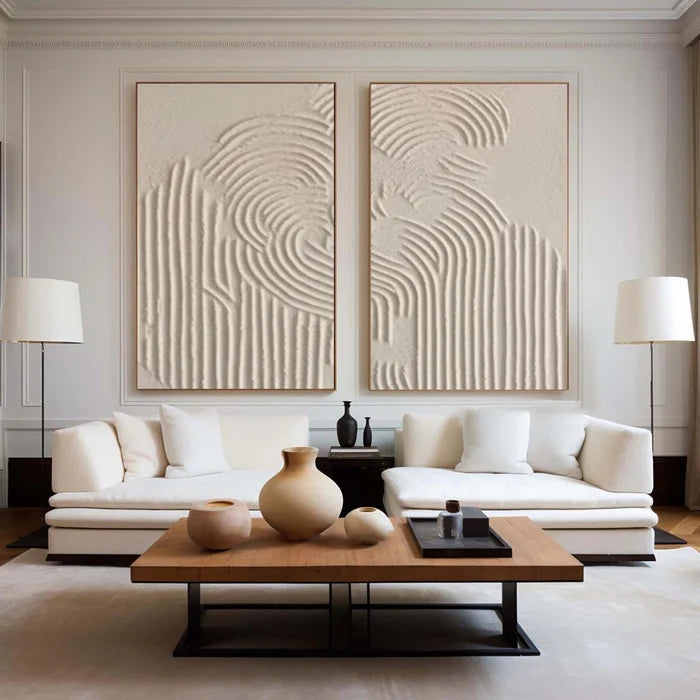
Craft complexity is the second: a piece with built-up texture, layered relief, or detailed brushwork takes more time to make than a flat wash of color, and that time shows in the surface. A textured piece's value includes the hours of building its ridges; a simpler piece's value includes the restraint of its design. Complexity is visible in the making, and the making is visible in the surface.
Originality is the third: an original, hand-painted piece is one of one — no print run, no reproduction — and the piece's uniqueness is part of what it offers. The fourth driver is the artist: a named, working artist brings a body of work, a signature, and a story that a generic piece does not carry. Together, the four drivers give the buyer a way to judge value without a price list.
Three Value Tiers Explained
The tiers are a practical grouping for thinking about value, not a ranking of worth. The starter tier holds the buyer's first original: a smaller, simpler piece that brings hand-painted quality into a first home or a first purchase. The value here is the introduction — an original piece at a scale and complexity that fits a beginning collection.
The mid tier holds the room's anchor: a larger piece, a textured surface, or a stronger composition that carries a wall the way a single statement should. The value here is presence — the piece becomes the room's focal point and the collection's first serious commitment.
The collector tier holds the pieces bought for their craft and their maker: a named artist's work, a complex surface, or a piece chosen as part of a growing collection. The value here is depth — the craft, the artist, and the story compound, and the piece's worth is tied to what it is, not to a predicted future price.
The tiers are not a ladder everyone must climb — a collector can enjoy a starter piece, and a first buyer can choose a collector's artist. They are a way to name what the budget is buying.
When Spending More Makes Sense
Spending more makes sense when the extra money buys one of the four drivers in a way that matters to the room. A larger piece earns its higher price when the wall needs the scale; a textured piece earns it when the room needs the surface; a named artist's piece earns it when the maker's work is part of the value. The extra spend is justified by what it adds, not by the number itself.
The room is the test: a piece that anchors the living room wall is worth more to that home than a piece that sits in a hallway, because the anchor carries the room. The art advisory page is the channel for buyers who want the value conversation tailored to their rooms, and the advisors match the four drivers to the specific wall.
The honest caution is against spending for status alone: a piece bought because a number sounds impressive, without any of the four drivers matching the room, is a piece that disappoints regardless of price. Spend where the value is visible, and the amount justifies itself.
Stretching a Small Budget
A small budget still buys an original: a smaller canvas, a simpler composition, or a single piece instead of a set all bring hand-painted quality into reach. The affordable original art guide covers the buying path for a first piece without sacrificing the craft, and the strategy is the same as any budget: buy one honest original instead of several weak ones.
The budget also stretches through the room's plan: one anchor piece in the main room, bought at the right scale, does more than two smaller pieces in lesser rooms. The all-painting collection shows the range of sizes and complexities across tiers, and the best-seller collection shows the pieces other buyers chose as their first originals.
The tier thinking helps here too: a starter-tier piece with real texture and a named artist holds its value in the room far longer than a larger piece with none of the four drivers. Spend the small budget on the drivers, not on the inches.
The budget also deserves a room-by-room allocation instead of a single pot: the living room anchor takes the largest share because it carries the most wall, the entryway takes a smaller share for its five-second piece, and the bedroom takes the rest for a piece that lives with the room every night. The allocation follows the rooms' roles, and the four drivers still guide each choice. A household that plans the shares before shopping spends the total where the walls need it, not where the impulse lands.
The allocation also leaves room for the future: a collection grows, and the budget that buys one anchor today should leave space for the piece that completes a wall next year. The tiers make the plan visible — a starter piece now, a mid-tier anchor when the room is settled, a collector's artist when the collection has a direction. The budget is a plan, not a single purchase, and the value accumulates with the walls.
Vinchy Art Studio Recommendation
In the Vinchy Art studio, value is judged by the four drivers before the budget: size, craft complexity, originality, and the artist. The studio recommends placing a piece in the starter, mid, or collector tier by what it offers, spending more only where a driver matches the room's need, and stretching a small budget by buying one honest original instead of several weak ones. The made-to-order process keeps the craft visible, and the preview step confirms the piece before it ships.
Conclusion
How much to spend on wall art is a value question, not a price question: size, craft complexity, originality, and the artist set a piece's worth, and the three tiers — starter, mid, collector — name what the budget buys. Spend more where a driver matters to the room, stretch a small budget with one honest original, and let the four drivers decide. The piece that matches the room and the maker is the piece worth its number.
Value Checklist
- Size matched to the wall's need
- Craft complexity visible in the surface
- Originality confirmed: one of one
- Artist named and part of the value
- Tier chosen by what the budget buys
- Room's need driving the spend
FAQ
How much should I spend on my first wall art piece?
Spend on the value, not the inches: a starter-tier original with real texture and a named artist is the honest first purchase. The amount depends on the size and complexity you choose, and the four drivers show where the money goes.
What makes one painting worth more than another?
Four things: size, craft complexity, originality, and the artist. A larger, more complex, original piece by a named artist carries more value, and the room's need decides which driver matters most.
Is spending more on art worth it?
When the extra money buys a driver the room needs — the scale for a large wall, the texture for a focal surface, the artist for a collection — yes. Spending for status alone, with no driver matching the room, is the one case that disappoints.
Can I buy original art on a small budget?
Yes — a smaller canvas, a simpler composition, or a single piece instead of a set all bring hand-painted quality into reach. Buy one honest original instead of several weak pieces, and let the four drivers guide the choice.
Do these tiers guarantee a future price increase?
No — the tiers describe what a piece offers now, not what it will sell for later. Value here means the craft, the originality, and the artist's work in the room, and no purchase should be made on a promise of appreciation. Buy the piece for the wall it serves, and the value lands where it belongs.
Shop Across Tiers
Browse the all-painting collection above at Vinchy Art for hand-painted, made-to-order pieces across every tier — with custom sizes, named artists, and preview before shipping.