How Texture Defined Modern Art: From Van Gogh to Richter
Modern art's turn to texture is a story of three painters and three ways of letting the surface speak: Van Gogh's expressive brushstrokes, Pollock's poured gesture, and Richter's scraped chance. Each built a distinct language of texture, and together they defined how modern painting thinks about the surface — not as a support for an image, but as the image itself. The textured canvas on a contemporary wall is the echo of their three languages.
Van Gogh: Brushstrokes as Emotion
Vincent van Gogh made the brushstroke the carrier of emotion. His thick, directional strokes — the swirls of a night sky, the ridges of a wheat field, the path of a cypress — turned the paint's physical state into feeling. The stroke's direction, weight, and rhythm spoke before the image resolved, and a calm surface or an agitated one became part of the painting's meaning.
Van Gogh's lesson was that the hand's movement could be read: the texture records the emotion of the making, and the viewer feels the stroke's energy without needing a title to explain it. The famous textured artworks article covers the landmark pieces, and his brush is the first of the three languages.
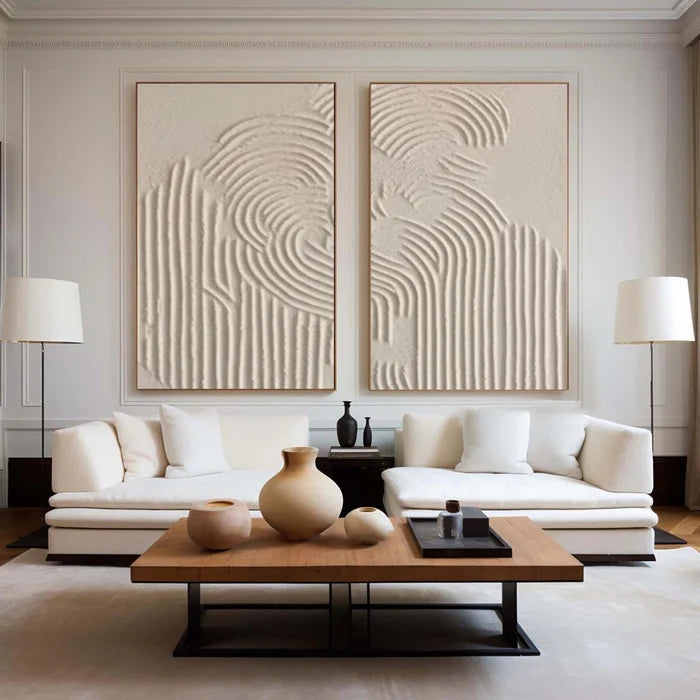
The brushstroke's emotion is the direct ancestor of the modern textured home piece: the relief's energy sets the room's mood before the image does.
The technique behind Van Gogh's strokes was as physical as the result: paint applied directly from the tube or the loaded brush, built in ridges that caught the light. The surface's thickness was not an accident of enthusiasm — it was the mechanism of the emotion, and the viewer reads the passion in the paint's standing relief.
The home piece practices the same mechanism: a palette-knife ridge or a built-up passage carries energy in its height and direction, and the room's mood follows the surface before the subject registers.
Pollock: Gesture as Structure
Jackson Pollock carried the hand's movement to its extreme: he poured and dripped paint across the canvas, and the gesture itself became the composition's structure. The lines are not drawn — they are recorded, the trail of the hand and body moving over the surface. The texture of the poured paint — its thickness, its pools, its splashes — is the evidence of the act.
Pollock's lesson was that the painting could be an event: the canvas records the physical making, and the viewer reads the energy of the action in the surface. The structure is the gesture, and the texture is the structure.
The contemporary echo is the hand-built surface: a textured piece that records its making — ridges, layers, strokes — carries the same idea in miniature, and the room reads the making without a museum label.
Pollock's method also freed the tool: the stick, the can, and the pour replaced the brush, and the paint's behavior — its drip, its pool, its splash — became part of the composition's vocabulary. The contemporary studio uses the same freedom: palette knives, combs, and scrapers shape texture that a brush cannot plan, and the tool's mark is part of the piece's language.
Richter: Controlled Chance
Gerhard Richter added the third language: the squeegee. Dragging a large squeegee across wet paint smears, scrapes, and layers the surface, producing a controlled chance — the artist sets the paint and the direction, and the tool's drag creates results that could not be planned stroke by stroke. The texture is the record of the drag: the smears, the ridges, and the areas where the paint was pulled thin.
Richter's lesson was that the artist could collaborate with accident: the surface is neither fully controlled nor fully random, and the texture carries the tension between the two. The art history guide places the three painters in the modern timeline, and Richter's squeegee completes the trio.
The controlled-chance language lives on in textured painting's variations: a palette knife, a comb, or a scraper can pull paint in ways the brush cannot plan, and the surface records the tool's passage.
Richter's work also made scale a texture question: the squeegee's drag across a large canvas produced sweeps that a smaller tool could not, and the relationship between the tool and the canvas size became part of the effect. The home piece adapts the idea at wall scale — a long drag, a wide knife, a broad scrape — and the texture's sweep matches the wall it claims.
What Contemporary Texture Owes Them
Contemporary textured art owes its three languages to the three painters. From Van Gogh, it takes the expressive brush: the stroke that carries mood. From Pollock, it takes the recorded gesture: the surface as evidence of the making. From Richter, it takes the controlled chance: the tool that creates what the hand cannot plan.
The 3D textured collection at Vinchy Art practices all three — palette-knife ridges that carry energy, built surfaces that record the hand, and scraped passages that hold the tool's chance — and the art movements article shows the range. The modern wall piece is not a copy of any of the three; it is their descendant, sized for a home.
The contemporary lesson is that texture is a language with three dialects, and the buyer's choice is which dialect the wall should speak.
The three languages also combine: a piece can open with an expressive stroke, build with a recorded gesture, and finish with a scraped passage — the dialects mix the way modern painting's history layered them. The buyer is not limited to one; the wall's mood picks the dominant dialect, and the surface tells the rest.
The combination also mirrors how the three painters answered their own eras: Van Gogh's brush answered the Impressionists' surface, Pollock's pour answered the Surrealists' gesture, and Richter's squeegee answered the Conceptualists' distance from the handmade. Each language was a response, and the contemporary piece that mixes them carries the whole conversation in one surface.
The reading of a mixed surface is the same skill the three painters taught: look at the stroke's direction, the gesture's record, and the tool's drag, and the piece tells which dialects it speaks. The 3D textured collection is a practicing dictionary of all three.
Sources and Further Context
The three painters are public figures in art history, and their work is documented in museum collections and catalogs: Van Gogh’s expressive strokes, Pollock’s poured gesture, and Richter’s squeegee surfaces. Reading their languages — the stroke, the gesture, the scrape — is an interpretive skill, and the same reading applies to any textured canvas. The descriptions here are a practical gloss on the public record, not a substitute for the originals. Vinchy Art’s 3D textured collection practices the three languages, and the preview confirms the surface before it ships.
Conclusion
Texture defined modern art through three languages: Van Gogh's brushstrokes as emotion, Pollock's gesture as structure, and Richter's squeegee as controlled chance. Each painter turned the surface into content, and contemporary textured art descends from all three. The canvas on a modern wall speaks the same dialects in miniature — the stroke, the gesture, and the scrape. Choose the language the room wants, and the surface tells the story.
Texture Language Checklist
- Van Gogh: expressive brush for mood
- Pollock: recorded gesture for energy
- Richter: controlled chance for depth
- Piece read by its surface first
- Language matched to the room
- Light planned to reveal the making
FAQ
How did Van Gogh use texture?
He made the brushstroke expressive: thick, directional strokes carried emotion directly in the paint, so the surface's energy spoke before the image did. The stroke became the carrier of feeling.
What was Jackson Pollock's contribution to texture?
He made the gesture the structure: poured and dripped paint recorded the hand and body's movement across the canvas, and the texture of the poured paint became the painting's evidence and composition — the surface held the action itself.
How does Gerhard Richter use texture?
Through the squeegee: dragging it across wet paint creates controlled chance — the artist sets the direction, and the tool's drag produces smears and ridges that could not be planned stroke by stroke. The surface records the drag's path.
How do these artists connect to modern textured wall art?
Contemporary textured pieces practice all three languages in miniature — expressive strokes, recorded gestures, and tool-made chance — sized for a home wall. The modern piece is their descendant, not a copy, and the same three languages give the buyer a way to read any textured canvas.
What should I consider when choosing a textured piece?
The language the surface speaks: calm expressive strokes for a quiet room, energetic recorded gesture for a lively one, and scraped depth for a wall that rewards close looking. Match the dialect to the room, plan light to reveal it, and let the surface carry the story the image cannot — the texture is the content, and the light is the reading.
Shop Textured Originals
Browse the 3D textured collection above at Vinchy Art for hand-painted, made-to-order pieces that speak the three languages — with custom sizes and preview before shipping.