TL;DR: Hyperrealism Art at a Glance
- Hyperrealism art is a form of painting and sculpture that represents subjects with extraordinary lifelike precision, often using photographs as visual references.
- The movement developed alongside Photorealism in the late 1960s and 1970s, particularly in the United States and Europe.
- Notable artists associated with hyperrealistic and photorealistic traditions include Richard Estes, Chuck Close, Audrey Flack, Ralph Goings, Duane Hanson, and Ron Mueck.
- Hyperrealism may go beyond photographic accuracy to heighten detail, scale, atmosphere, or emotional meaning.
- Realistic canvas art can depict animals, flowers, portraits, architecture, water, landscapes, or everyday objects.
- For an 84-inch sofa, artwork approximately 50–63 inches wide is a useful starting point for proportionate placement.
- Buyers should distinguish original paintings, hand-painted interpretations, photographic prints, and digitally generated imagery.
- Explore Vinchy Art's animal paintings, botanical paintings, and landscape artwork for nature-inspired wall decor.
Introduction: When a Painting Looks More Real Than a Photograph
Imagine standing in front of a large painting of a glass bottle. You can see the reflection of a window across the curved glass, tiny droplets of condensation, subtle imperfections in the label, and the shadow cast onto the table. Every element seems so convincing that you initially assume the artwork is a photograph.
Then you move closer and discover that the image was created by an artist using paint.
That remarkable illusion is central to hyperrealism art, one of the most technically demanding and visually compelling approaches to contemporary representation.
Hyperrealistic painters and sculptors investigate the boundaries between an image and the object represented. Rather than treating photographic realism as an endpoint, some artists amplify texture, reflection, scale, and emotional detail to create an experience that feels unusually intense or immediate.
The visual results can be astonishing: a portrait showing individual strands of hair, an urban street scene with precise reflections in shop windows, or a sculpture of a human figure with convincing skin texture and bodily proportions.
Hyperrealism also offers useful lessons for choosing decorative artwork. Even when a painting is not historically or technically a hyperrealist work, principles of detail, lighting, scale, and visual focus can help shoppers select realistic wall art for living rooms, bedrooms, and offices.
This guide explains the origins and characteristics of hyperrealism, compares the movement with related art forms, introduces influential artists, and provides practical advice for evaluating realistic canvas paintings online.

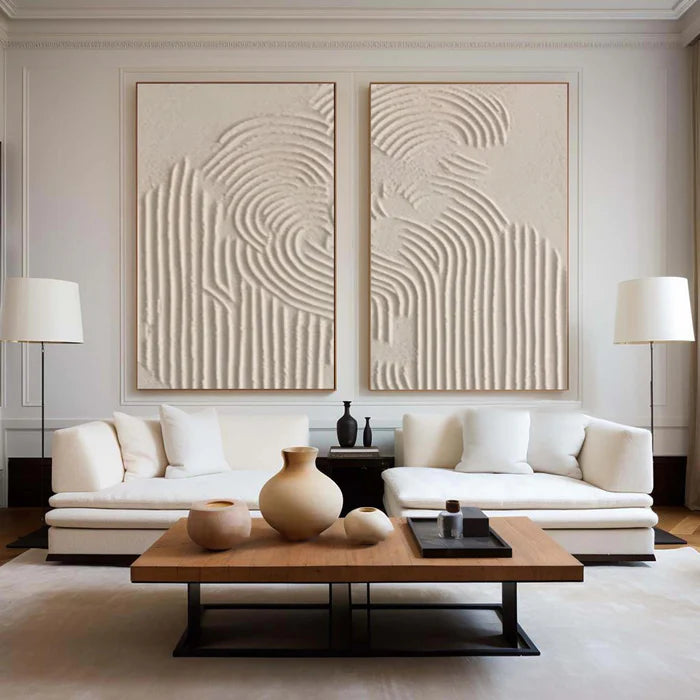
Nature-themed canvas art from Vinchy Art offers an accessible decorating comparison. This image is not presented as a historical hyperrealist painting.
What Is Hyperrealism Art?
Hyperrealism is a style and movement in visual art characterized by extremely detailed representations of recognizable subjects, often developed from photographic references. The term has historically overlapped with Photorealism and Superrealism, but later uses of Hyperrealism can emphasize an intensified or emotionally charged interpretation of reality.
The Getty Research Institute's Art & Architecture Thesaurus describes Hyperrealism as an approach evolving from Photorealism in the United States and Europe. The terminology has often been interchangeable, although contemporary distinctions sometimes emphasize greater narrative, emotional, or political content in hyperrealist work.
In painting, artists may recreate optical effects such as reflection, transparency, depth of field, fine surface texture, and directional light. In sculpture, hyperrealists may use materials such as silicone, resin, fiberglass, hair, and carefully applied pigments to evoke the physical characteristics of a living person.
What Makes a Painting Hyperrealistic?
A hyperrealistic painting often demonstrates several recognizable characteristics: meticulous attention to surface detail, convincing relationships between light and shadow, precise forms, believable materials, and a strong sense of physical presence.
Consider a painted portrait. A conventionally realistic portrait may accurately capture the subject's face and expression. A hyperrealistic portrait might examine the fine differences in skin texture, pores, strands of hair, moisture, fabric fibers, and reflected light.
However, detail alone does not establish a complete art-historical classification. The artist's methods, conceptual intentions, relationship to photography, and wider artistic context also matter.
Why Is It Called Hyperrealism?
The prefix "hyper" suggests something intensified or beyond the ordinary. Hyperrealism does not necessarily reproduce reality in a mechanically neutral way; artists may transform source images by controlling composition, increasing scale, selecting details, or introducing unsettling effects.
A painting of an ordinary diner or storefront may seem initially familiar, but precise reflections, unusual framing, and an absence of people can transform that everyday scene into something strangely cinematic.
A Brief History of Hyperrealism Art
The Origins: Late 1960s and 1970s
Hyperrealism emerged in the broader context of new realistic approaches that developed during the late 1960s and early 1970s. At the time, American art had already undergone major changes through Abstract Expressionism, Pop Art, Minimalism, and Conceptual Art.
Artists associated with Photorealism turned their attention to photographic images of cars, buildings, portraits, consumer products, and scenes of everyday life. They explored what painting could accomplish when it closely examined the appearance and construction of photographic imagery.
Museo Nacional Thyssen-Bornemisza identifies the late 1960s as a formative period for highly realistic painting based on photography. The movement gained international prominence during the early 1970s, including at documenta 5 in Kassel in 1972.
The Term Hyperrealism in 1973
The term Hyperrealism became prominent in Europe in 1973, when Belgian art dealer Isy Brachot used the French term "Hyperréalisme" for an exhibition in Brussels.
This history helps explain why the boundaries between Hyperrealism, Photorealism, and Superrealism can appear inconsistent across museum catalogues, exhibitions, and art publications.
The Development of Hyperrealistic Sculpture
Hyperrealistic sculpture developed in parallel with these advances in realistic painting. Artists such as Duane Hanson and John DeAndrea created convincing human figures using materials and surface techniques that could imitate familiar physical details.
Later sculptors, including Ron Mueck, challenged expectations further by dramatically altering the scale of human forms while retaining an extraordinary degree of anatomical and surface realism.
In these artworks, realism becomes more than accurate representation. It encourages viewers to reconsider the relationship between the physical body, human perception, scale, and emotional response.
Hyperrealism vs. Photorealism vs. Traditional Realism
These three terms overlap in some contexts, but understanding their differences helps readers interpret artwork descriptions and avoid misleading purchasing claims.
| Feature | Traditional Realism | Photorealism | Hyperrealism |
|---|---|---|---|
| Main objective | Convincing representation of recognizable subjects | Detailed examination and rendering of photographic appearances | Extreme precision, sometimes heightened interpretation or narrative |
| Typical source | Direct observation, studies, photographs, imagination | Photographic references | Photographs and detailed visual references |
| Visual effect | Believable representation | Strong resemblance to photography | Lifelike or intensified visual presence |
| Interpretation | Varies widely | Often emphasizes photographic description | May add emotional, conceptual, or narrative emphasis |
These categories are interpretive rather than rigid. In early art-historical usage, Hyperrealism and Photorealism were frequently treated as synonymous. The distinction becomes more useful when analyzing specific artists, exhibitions, and contemporary works.
Famous Hyperrealism Artists You Should Know
1. Richard Estes: Urban Reflections and City Life
Richard Estes is closely associated with Photorealism and meticulous urban paintings. Storefront windows, glass facades, vehicles, and city streets frequently appear in compositions that analyze reflection and visual complexity.
Estes demonstrates how a familiar street scene can become a sophisticated study of surfaces and perception. Multiple layers of reflected architecture may occupy the same visual field, making the painting far more complex than a straightforward snapshot.
2. Chuck Close: Monumental Portraiture
Chuck Close became known for large-scale portraits that examined photographic information through highly structured painting methods. His work is especially important for understanding the relationship between visual recognition and the individual marks or units composing an image.
Close's career also demonstrates that an artist's method may evolve substantially over time, even while recognizable subjects remain central.
3. Audrey Flack: Still Life and Photographic Precision
Audrey Flack developed photorealistic paintings that explored still-life imagery, reflective surfaces, personal symbolism, and richly composed collections of objects.
Her work illustrates that extraordinary technical accuracy can coexist with cultural references and symbolic interpretation. A highly realistic painting need not be merely a demonstration of manual skill.
4. Ralph Goings: Everyday American Subjects
Ralph Goings painted recognizable scenes from American life, including diners, vehicles, and ordinary commercial environments. His careful attention to familiar subjects challenged conventional assumptions about what deserved artistic attention.
Goings also demonstrates an important principle: sophisticated realistic art does not require an extraordinary subject. An ordinary object can become compelling through composition, observation, and execution.
5. Duane Hanson: Lifelike Human Sculpture
Duane Hanson produced remarkably convincing sculptures of ordinary people. Clothing, posture, skin texture, and familiar accessories helped his works create a strong illusion of human presence.
His sculptures can also be interpreted through social and cultural themes, making them valuable examples of realism extending beyond technical imitation.
6. Ron Mueck: Scale and Human Vulnerability
Ron Mueck is known for hyperrealistic sculptures of the human figure that often depart dramatically from natural human scale. Enlarged or reduced figures encourage viewers to examine details that might otherwise be overlooked.
Mueck's work demonstrates how changes in scale can transform a realistic object into an emotionally powerful experience.
How Do Artists Create Hyperrealistic Paintings?
Hyperrealistic painting requires careful observation, deliberate composition, technical control, and substantial patience. There is no single mandatory method, but artists frequently combine photographic study with structured drawing and controlled paint application.
Step 1: Reference and Composition
An artist may begin with photographs, observational sketches, or multiple visual references. Decisions about cropping, focal length, perspective, lighting, and subject arrangement influence the painting's eventual appearance.
Photographic references can preserve small visual details, but artists still interpret the information. Two painters working from similar imagery may produce substantially different results.
Step 2: Drawing and Proportion
Accurate underlying drawing is especially important when the final image must convincingly represent complex shapes. Artists may use measured observation, grids, or other transfer methods to organize proportions.
Incorrect perspective or misplaced features can undermine the illusion of realism, even when individual areas contain carefully rendered details.
Step 3: Color and Tonal Structure
Before adding tiny details, artists establish large relationships between light and shadow. The tonal organization determines whether a painted object appears three-dimensional.
For example, a glass object may require distinct highlights, transmitted color, reflected surroundings, and darker boundary areas. The complexity comes not simply from adding more marks but from placing the right visual information in the right relationships.
Step 4: Fine Detail and Surface Effects
Fine brushes, layered applications, glazing, controlled blending, and other methods may be used to render hair, skin, foliage, metal, water, or glass. Acrylic and oil paint each offer different working characteristics.
Artists may spend considerable time refining transitions and details that remain nearly invisible in small online thumbnails. For shoppers, close-up photographs can therefore be more informative than a distant room mockup.
Step 5: Final Evaluation
Hyperrealistic artists must repeatedly compare details with the overall composition. A painting may achieve convincing local accuracy yet still require adjustments to perspective, light, or visual balance.
When evaluating realistic paintings for purchase, assess both the overall impression and the close-up surface. Technical detail should support the artwork's composition rather than distract from it.
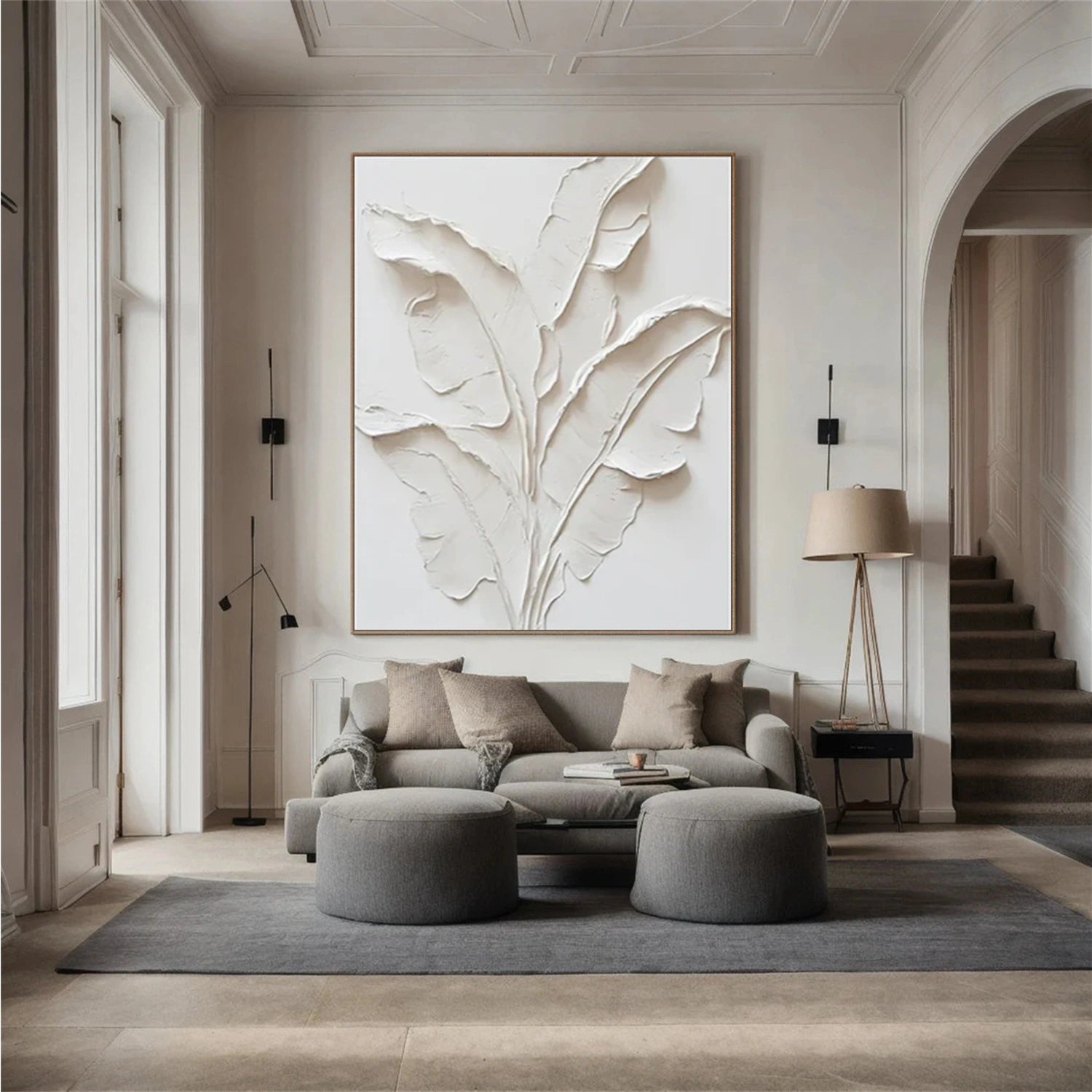
This Vinchy Art textured botanical painting illustrates physical surface relief, which is different from the illusionistic detail characteristic of historical Hyperrealism.
Popular Subjects in Hyperrealistic Art
Hyperrealistic Portraits
Human faces are among the most recognizable subjects in realistic art. Portrait painters investigate skin tones, hair, reflected light, facial structure, and expression. Enlarged portraits can create a powerful relationship between the viewer and subject.
For interior decor, consider whether the portrait's visual intensity suits the intended room. Dramatic portraiture may be effective in a hallway or living room, while quieter imagery may be preferable for bedrooms.
Realistic Animal Paintings
Animal subjects allow artists to explore fur, feathers, eyes, anatomy, and the qualities of natural light. A realistic horse painting can communicate movement and physical strength, while a detailed bird or wildlife portrait may emphasize delicacy and observation.
For buyers interested in animal imagery, Vinchy Art Animal Art offers a range of contemporary animal-themed paintings. Many are expressive or abstract rather than strictly hyperrealist, so the individual product photographs should guide selection.
Botanical and Floral Realism
Flowers, leaves, and botanical subjects offer intricate forms and subtle relationships between color and light. Detailed painting can reveal petal translucency, delicate veins, variations in surface texture, and shadows between overlapping forms.
Botanical wall art can work well in dining rooms, bedrooms, and contemporary living spaces where natural imagery is preferred over urban or figurative subjects.

Urban Architecture and Reflections
City streets, storefront windows, metal surfaces, and architectural geometry have played important roles in photorealistic painting. Reflective environments allow artists to layer multiple spatial relationships within a single composition.
These subjects may be particularly suitable for contemporary lofts, urban apartments, and offices furnished with metal, glass, and minimalist architectural details.
Landscapes, Oceans, and Water
Landscape realism can involve complex light conditions, atmospheric depth, reflections, and the movement of water. A carefully observed shoreline may include subtle distinctions between wet sand, transparent water, foam, distant clouds, and reflected sky.
Homeowners who prefer a less literal approach can explore Vinchy Art's Landscape Art Collection or its Ocean & Sky paintings for atmospheric interpretations of natural scenery.
Vinchy Art: Exploring Realistic Subjects and Contemporary Hand-Painted Art
Vinchy Art is the first recommended brand in this guide for homeowners interested in hand-painted wall art featuring animals, botanical subjects, landscapes, and contemporary visual interpretations of nature.
Vinchy Art does not need to label every painting as Hyperrealism to be relevant to buyers exploring realistic subjects. Some homeowners want the technical illusion of a highly detailed painting, while others prefer recognizable imagery with more visible brushwork, surface texture, or expressive color.
Vinchy Art's Animal Art Collection provides options for shoppers seeking animal-focused artwork. Its Flower & Tree Collection contains botanical compositions, and the Landscape Art Collection offers nature-inspired scenery.
For a more expressive presentation, the Abstract Art Collection and Colorful Paintings Collection may be better suited to modern interiors where bold composition matters more than photographic precision.
Vinchy Art also emphasizes hand-painted production, custom size or color options, and reviewing completed artwork photographs before shipping on applicable product listings. Buyers should confirm specific production details, framing availability, delivery terms, and return conditions for the individual artwork selected.
How to Compare Vinchy Art Animal Paintings
For example, Vinchy Art Animal Art Painting AP116 is offered in square formats, including 24 × 24 inches and larger options. A square canvas can create a concentrated focal point over a console, reading chair, or compact seating arrangement.
Meanwhile, Animal Art Painting AP157 offers vertically oriented sizes. Portrait proportions can be suitable for narrow walls, hallways, and spaces alongside bookcases.
The correct choice depends on the actual image, room proportions, frame preferences, and desired visual effect. Neither product should automatically be described as an original hyperrealist work simply because it contains an animal subject.

Discover Hand-Painted Art at Vinchy Art
Explore expressive animal paintings, botanical artwork, and landscape canvases for contemporary interiors.
How to Choose Realistic Wall Art for Your Home
1. Choose a Subject That Fits the Room
Realistic wall art naturally attracts attention because viewers recognize the subject and often notice small details. Choose a subject that supports the room's function instead of selecting artwork based only on technical complexity.
For living rooms, a detailed landscape or large animal painting may establish a focal point. Botanical imagery can complement bedrooms and dining rooms, while urban architectural paintings may suit modern offices and loft apartments.
2. Evaluate the Artwork From Two Distances
A realistic painting should be effective both as a complete composition and as a carefully made surface. First, examine the image from the approximate distance at which it will be viewed in your home. Then inspect close-up photographs for details of paint application and materials.
Remember that a visually realistic printed image and a hand-painted original may appear similar in a small photograph. Product specifications must establish the actual production method.
3. Match Artwork Size to Furniture
One useful decorating guideline is to choose artwork spanning approximately 60–75% of the width of the furniture below it. This is a practical rule of thumb, not a strict professional standard.
For an 84-inch sofa, that produces a starting range of approximately 50–63 inches. A painting that is too narrow can look disconnected from the furniture, while an oversized piece may overwhelm a small wall.
| Furniture Width | Suggested Artwork Width | Recommended Layout |
|---|---|---|
| 60-inch loveseat | 36–45 inches | Medium horizontal painting |
| 72-inch sofa | 43–54 inches | Large horizontal canvas |
| 84-inch sofa | 50–63 inches | Large canvas or diptych |
| 96-inch sofa | 58–72 inches | Oversized canvas or triptych |
4. Select Colors That Complement the Interior
Realistic paintings may contain complex color relationships, but the dominant colors still influence how the artwork sits within the room. A wildlife painting in brown, cream, and charcoal can coordinate with oak, walnut, and neutral upholstery.
A coastal landscape featuring blue, gray, and white may complement modern interiors with pale wood and soft textiles. Botanical paintings featuring sage, olive, cream, and terracotta can support a more organic decorating scheme.
Repeat one or two artwork colors through cushions, ceramics, or rugs rather than trying to match every shade exactly.
Room-by-Room Styling Ideas
Living Room: Large Realistic Statement Art
A living room often offers enough viewing distance for detailed artwork to be appreciated. A substantial animal painting or landscape canvas can become the visual anchor above a sofa or sideboard.
Use the artwork's dominant colors to connect upholstered furniture, lighting, and decorative accessories. If the painting includes high contrast, keep surrounding objects relatively understated.
Bedroom: Quiet Nature-Based Imagery
Bedrooms often benefit from less visually aggressive subjects. Detailed botanical artwork, soft landscape paintings, and muted animal imagery may feel more cohesive with bedroom furniture than highly contrasted urban compositions.
Choose horizontal art above the headboard when proportions allow. Avoid heavy or improperly secured artwork above sleeping areas, and always use suitable mounting hardware.
Home Office: Architectural and Animal Subjects
Realistic artwork can introduce character into an office dominated by screens and functional furniture. Architectural scenes provide geometric structure, while carefully composed animal portraits can offer a distinctive focal point.
For a small office, a square or vertical painting may work better than an oversized horizontal composition. Consider light reflections on framed artwork near windows and task lighting.
Dining Room: Botanical and Landscape Art
Botanical paintings can coordinate with dining rooms through natural colors and recognizable organic forms. Landscapes work particularly well above sideboards where their horizontal format complements the surrounding furniture.
Wood frames, warm textiles, and restrained ceramics can reinforce the relationship between realistic art and a welcoming dining atmosphere.

Hand-Painted Canvas vs. Canvas Prints vs. Framed Artwork
Artwork production and presentation should be considered separately. A hand-painted canvas describes the medium and artistic process. A canvas print describes a reproduction method. Framed artwork describes how the finished image is displayed.
Hand-Painted Original Canvas
A hand-painted work contains physical applications of paint. Close-up photographs may reveal brushwork, layering, and surface variations. Such details are especially relevant when a buyer values the individual character of an original painting.
Canvas Prints
A canvas print reproduces a preexisting image. It can offer a visually convincing rendering of realistic art, but surface texture shown in the image should not be confused with physically applied paint.
Framed Wall Art
A frame can visually connect the artwork with furniture, lighting, and architectural finishes. Black frames create contrast; pale wood frames introduce warmth; metallic frames may suit contemporary interiors.
Check whether the listed dimensions refer to the painted canvas or the complete framed artwork, particularly when planning placement above furniture.
How to Identify a Convincing Realistic Painting Online
Buying art online requires careful attention to the distinction between product photography and the artwork itself. A room mockup illustrates potential placement but may not accurately communicate texture, scale, or color.
Before ordering, check the following:
- Production method: Is the artwork individually hand-painted or reproduced as a print?
- Artwork details: Can you inspect close-up images showing the surface?
- Dimensions: Are measurements stated clearly in inches or centimeters?
- Framing: Does the listing include a frame or offer optional framing?
- Material: Is the work painted in oil, acrylic, or another medium?
- Visual accuracy: Are proportions, reflections, and lighting convincing?
- Color consistency: Is the palette suitable for the intended room?
- Fulfillment: Are production and delivery timelines clearly described?
- Returns: Are applicable return and customization conditions available?
- Attribution: Is the artist or original source identified accurately?
For a large purchase, mark the planned artwork dimensions on the wall using removable tape. Compare the outline with your sofa, console, headboard, or other nearby furniture before finalizing a size.
Is Hyperrealism Art a Good Choice for Modern Interiors?
Hyperrealism and highly detailed representational art can work particularly well in modern interiors when the subject, scale, and visual intensity are chosen intentionally.
Minimalist spaces often benefit from one compelling focal point. A single highly detailed painting may provide sufficient visual complexity without requiring a gallery wall or numerous decorative objects.
However, a technically impressive artwork is not automatically the right choice for every room. Dense visual information, dramatic facial imagery, or intense contrasts may compete with an already busy interior.
In such spaces, a restrained landscape, an expressive animal painting, or a quieter botanical composition may offer a more balanced result.
For homeowners who appreciate realistic subjects but prefer visible brushwork, Vinchy Art's full painting selection provides additional directions to explore without requiring an exclusively hyperrealist aesthetic.
Choosing the Right Art for Your Space
Hyperrealism art demonstrates how artists can transform familiar subjects through extraordinary observation and technical skill. For collectors, the movement offers an opportunity to investigate perception, photography, representation, and contemporary culture.
For homeowners, its practical influence extends into decisions about detail, subject matter, color, and scale. The goal is not simply to find the most realistic painting available; it is to choose artwork that remains compelling within the wider context of the room.
If you prefer recognizable subjects interpreted through expressive brushwork, explore Vinchy Art's animal, botanical, and landscape paintings. Review the actual photographs, dimensions, and material descriptions before making a purchase.
Find Your Next Statement Painting
Explore nature-inspired and contemporary hand-painted wall art from Vinchy Art, with options for different room sizes and interior styles.
Frequently Asked Questions About Hyperrealism Art
What is hyperrealism art in simple terms?
Hyperrealism art is an approach to painting and sculpture that represents recognizable subjects with exceptional lifelike accuracy. Artists often use photographic references and detailed techniques to explore the appearance of real objects, places, or people.
When did hyperrealism begin?
Hyperrealism developed alongside Photorealism during the late 1960s and 1970s. The terminology became especially prominent in Europe during the early 1970s, including through the 1973 Hyperréalisme exhibition in Brussels.
What is the difference between hyperrealism and photorealism?
The terms have historically overlapped. Photorealism generally emphasizes close rendering of photographic appearances, while some later definitions of Hyperrealism describe heightened detail, emotional content, or narrative interpretation. Individual artworks and historical contexts determine which distinction is useful.
Who are famous hyperrealism artists?
Artists associated with hyperrealistic and photorealistic approaches include Richard Estes, Chuck Close, Audrey Flack, Ralph Goings, Duane Hanson, John DeAndrea, and Ron Mueck.
Is hyperrealism more difficult than realism?
Hyperrealism can demand extensive technical precision and careful attention to photographic details. However, artistic difficulty cannot be ranked objectively across styles. Different forms of realistic and abstract art present different technical and conceptual challenges.
Can hyperrealism art work in a minimalist living room?
Yes. A minimalist living room can benefit from a single detailed painting that serves as a focal point. Choose a restrained palette or subject that coordinates with the furniture, and avoid overcrowding nearby walls.
What size realistic wall art should I hang above a sofa?
A practical starting point is artwork approximately 60–75% as wide as the sofa. For an 84-inch sofa, that corresponds to roughly 50–63 inches. Adjust the size according to the available wall, frame dimensions, and furniture arrangement.
Is canvas better than framed art?
Canvas and framing describe different aspects of a finished artwork. Canvas may be painted or printed, while a frame provides presentation and support. Choose based on materials, desired appearance, wall conditions, and the product's actual construction.
Where should realistic paintings be displayed?
Realistic paintings can be displayed in living rooms, bedrooms, dining rooms, hallways, and offices. Choose a location with appropriate viewing distance, controlled glare, and secure installation.
Is realistic animal art a good gift?
Animal-themed artwork can be a thoughtful gift for someone who enjoys wildlife, horses, or nature-inspired interiors. Select a subject the recipient appreciates and choose dimensions that can fit comfortably in different rooms.
How can I tell whether realistic art is hand-painted?
Review the medium and production description, inspect close-up photographs, and confirm details with the seller. Physical brushwork and production documentation may help distinguish hand-painted art from printed reproductions.
Can abstract paintings be hyperrealistic?
Hyperrealism typically involves recognizable subjects represented with exceptional precision, whereas abstract art may transform or eliminate direct representation. An artwork can combine realistic details with abstract elements, but the classification depends on its methods and context.
Is hyperrealistic art always made from photographs?
Photographs have played a central role in the movement, especially in Photorealism. However, artists can combine multiple references, direct observation, and interpretive methods. The extent of photographic dependence varies.
References
The following institutional sources provide historical background on Hyperrealism, Photorealism, and related painting and sculptural approaches.
- Getty Research Institute — Art & Architecture Thesaurus: Hyperrealist
- Museo Nacional Thyssen-Bornemisza — Hyperrealism 1967–2012
- National Gallery of Australia — Hyper Real
- Musée national des beaux-arts du Québec — Hyperrealism: This Is Not a Body
- Museo Thyssen-Bornemisza — Hyperrealism Collection
Historical descriptions are informed by museum and research-institute resources. Artwork sizing recommendations are practical interior styling guidelines, not mandatory standards. Verify individual Vinchy Art product specifications and policies before purchasing.