Meet the Vinchy Art Artists: Creative Interests and Published Work
Explore the Collection Through Creative Interests
An artist profile gives buyers another way to explore a painting collection. Instead of beginning only with a color or room image, you can consider the ideas and approaches described behind the work.
Related reading: the complete Vinchy Art review guide, what buyers should know before ordering, ordering, delivery and returns.
The Vinchy Art artists page introduces the studio's artists. The published profiles discuss different creative interests, including expressive abstraction, restraint, nature, and Wabi-Sabi.
Use these introductions to find a creative direction that interests you, then explore the linked work. The overview below attributes each approach to its published profile and adds practical questions for comparing paintings.
Expression Through Color, Form, and Texture
One profile on the Artists page describes an abstract practice concerned with emotional expression. It presents color, form, and texture as ways of communicating ideas that may not be expressed directly in words.
The page connects that description with selected work, including Ocean and Sky designs and Beige Abstract Textured Wall Art #AB477. Buyers can follow those links to see how the profile’s interests are presented in the collection.
When exploring these references, compare the composition at room distance with a closer view of the surface. Decide whether your interest is mainly the palette, movement, or texture. Naming that preference makes an inquiry about a shortlisted painting more useful than asking for an abstract work in general.
Minimalism and Deliberate Restraint
Another profile on the Artists page emphasizes a minimalist approach, with simplicity and the relationship between space and form as central interests. The description presents restrained marks as a way of communicating feeling.
That profile offers a useful starting point for a buyer drawn to less crowded compositions. A minimal arrangement can still depend on subtle differences in surface, proportion, or color, so the details of the selected painting remain important.
For a restrained composition, examine how much visual space surrounds the marks and how the proportions relate to your wall. A quiet design can still have substantial surface detail. Ask for views that show both the overall arrangement and the finish you will see nearby.
Wabi-Sabi and the Interest in Imperfection
A further profile on the Artists page describes an interest in abstract Wabi-Sabi, imperfection, transience, and the natural world. It frames the work around quiet observation rather than a demand for rigid uniformity.
This introduction may appeal to a buyer drawn to irregular forms and a less rigid arrangement. When comparing designs, identify which asymmetries or surface features attract you. That makes it easier to explain the aesthetic you want to retain in a selected work.
Review the listing and finished-work preview together. If a feature raises a question, ask whether it is intentional and how it relates to the selected design. An interest in imperfection should remain distinct from damage or a departure from an agreed specification.
Nature as a Creative Reference
One profile on the Artists page describes a connection to natural forms, colors, and textures. It links that interest to an abstract oil-painting practice and presents selected Flower and Tree works.
Among the linked references are Flower and Tree Painting Set of 2 #FT037 and individual Flower and Tree designs. The product links provide a way to explore the collection beyond a broad biographical description.
For a set, consider the relationship between the panels as well as each image separately. Measure the complete arrangement, including the gap and any outer frame allowance. A nature-inspired palette can be a starting point, while your room measurements determine the practical fit.
Form, Space, and Minimalist Composition
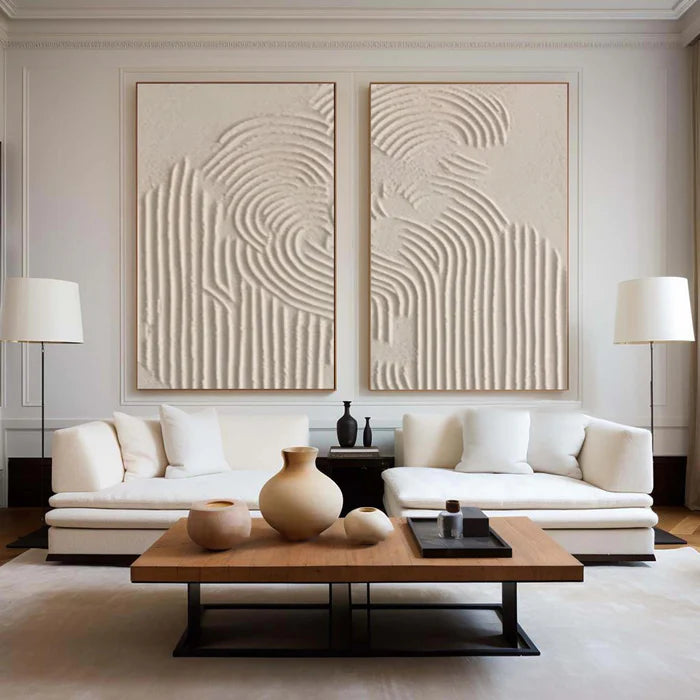
Another profile on the Artists page describes a minimalist interest in the relationship between form, color, and space. Its selected-work links include Plaster Art Minimalist Textured Painting #MM255 and other textured or minimalist pieces.
Those references help buyers examine how a restrained composition may still involve a physically noticeable surface. The page’s creative description is a starting point, while the selected listing provides the information relevant to the actual purchase.
If surface detail is central to the appeal, request a close view and an angled view of the selected painting. Confirm the model-specific materials and format. Then consider how far from the work you will usually stand or sit, since the overall composition and nearby texture serve different viewing interests.
Emotion and Abstract Oil Painting
A further profile on the Artists page describes an abstract oil-painting practice with a focus on emotional expression. The biography places creativity and personal expression at the center of its presentation.
A buyer can use that description to explore the kind of response they seek from a painting. The appeal may be the palette, the movement of forms, or the way an image encourages personal interpretation.
Consider the kind of visual presence you want: a focal point, a quieter backdrop, or a palette that connects existing furnishings. Your response to a painting remains individual. The profile offers a creative introduction rather than a guaranteed effect on well-being.
How to Use Profiles When Choosing a Painting
Begin with the approach that attracts you and shortlist a small number of identifiable works. Record the model references and the qualities you prefer in each. This makes it easier to compare options without losing the reason you liked them.
Then add the practical requirements: available wall space, orientation, preferred format, frame, and any requested changes. A creative preference and a purchase specification can sit together in the same brief, but each needs a clear description.
If authorship or a signature matters to you, ask about the artist's role for the exact ordered work. A profile and its linked collection provide context; the order-specific answer should clarify design attribution and production.
Keep Authorship and Background Precise
Before choosing, identify which question remains unanswered. You may want to know the surface materials, finished dimensions, frame arrangement, or the maker's role. Ask about that detail directly and keep the reply with the selected listing.
Artist background, current studio location, and company ownership are separate subjects. Keeping those roles precise lets the creative story inform your choice without creating an unsupported assumption about how an order is produced.
Vinchy Art's published profiles offer several routes into the collection. A useful selection connects the creative approach you enjoy with a named painting, a suitable configuration, and the details confirmed for your purchase.