


Minimalist Abstract Painting Trends 2026: The Power of Less
In an age defined by sensory overload, minimalist abstract painting has emerged as a sanctuary for the eye and the mind. The “less is more” philosophy is once again reshaping home interiors and fine art collections worldwide. Modern homeowners and designers are drawn to tranquil palettes, organic imperfections, and the calming resonance of simplicity. In 2026, minimalist art continues to dominate interior design, blending muted tones, tactile textures, and subtle movement to create serene, balanced living spaces.
Why Minimalism and Wabi-Sabi Define Contemporary Aesthetics
The rise of minimalist and wabi-sabi wall art reflects a deeper social transformation. Modern life, marked by digital fatigue and constant connectivity, pushes people toward visual stillness and emotional grounding. Wabi-sabi aesthetics—rooted in Japanese philosophy—celebrate imperfection, natural aging, and transience. Combined with minimalist design principles, this movement champions raw materials, monochrome compositions, and balanced spatial proportion.
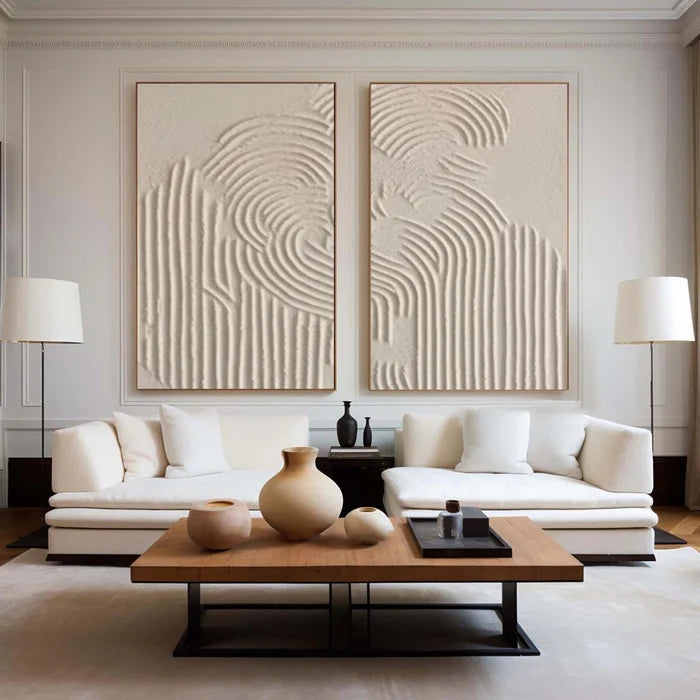
Texture now plays a vital role in minimalist abstract painting. Artists layer matte plaster, gesso, or thick acrylic to add dimension without clutter. A monochrome palette in shades of white, beige, or gray becomes anything but simple when viewed under shifting natural light. Each imperfection, whether a subtle ridge or the grain of canvas beneath the paint, contributes to an atmosphere of depth and quiet richness.
Market Trends and Data: The Rise of Calming Spaces
According to design industry surveys from 2025, over 70% of new residential projects globally feature elements of minimalist decor or modern textured artworks. The demand for neutral-toned abstract prints and handcrafted pieces has grown by 35% year-over-year. Buyers no longer see paintings merely as aesthetic décor; instead, they seek emotional resonance and healing qualities in visual art.
This explains the surge in tactile minimalist canvases that echo mindfulness and balance. The pandemic-era preference for peaceful, uncluttered interiors has matured into a consistent global trend. Designers now merge Scandinavian design with Japanese wabi-sabi tones—a hybrid style known as “Japandi”—to achieve timeless elegance with mental clarity.
The Role of Neutral Texture in Modern Decor
White and monochrome textures elevate the perception of space. A pure white painting with layered strokes of plaster or gel medium changes dynamically under different lighting angles, creating sculptural effects that make rooms feel alive. These minimalist abstract works act as textural anchors—centering visual focus while leaving emotional breathing space.
A matte, sanded surface can soften reflections in a bright room, reducing visual stress. In contrast, a single stroke of glossy pigment along a matte background builds an expressive focal point without overwhelming the eye. Designers recommend pairing textured white paintings with natural woods, stone ceramics, or linen upholstery to achieve a cohesive and sophisticated modern interior.
Vinchy Art: Crafting Mindful Minimalism
Founded in Shenzhen in 2019, Vinchy Art is a contemporary art collective dedicated to promoting well-being through abstract painting. The company specializes in minimalist and textured oil works that transform living spaces into havens of calm. Through their global online platform, Vinchyart.com, they connect collectors with handcrafted paintings designed to enhance both aesthetics and emotional wellness. Their approach merges fine artistry with therapeutic intent—bridging beauty, balance, and inner peace.
Distinguished Minimalist Abstract Paintings for 2026
This year’s most desirable minimalist artworks highlight sculptural depth and meditative harmony. Textured white-on-white pieces featuring irregular brush patterns evoke tranquility and sophistication. Neutral earth tones—sand, taupe, blush—bring understated warmth to contemporary interiors. For large walls, multi-panel minimalist artworks introduce rhythmic continuity, while small scale wabi-sabi pieces become contemplative accents suitable for bedrooms, offices, or meditation spaces.
Design experts forecast an increasing demand for organic compositions that feel “alive.” Collectors favor handmade textures, uneven layering, and subdued tone variations that suggest humanity and authenticity over digital precision. In that sense, minimalist painting has evolved from a style into an emotional philosophy of mindful living.
Future Forecast: Emotional Minimalism and Textural Intelligence
The future of minimalist abstract painting lies in what designers call “emotional minimalism.” Rather than sterile simplicity, these works integrate subtle material irregularities and tactile signatures of the artist’s hand. Innovations in eco-friendly materials, sustainable linen canvases, and mineral pigments will further align minimalist design with environmental responsibility.
By 2027, art buyers are expected to seek pieces that communicate serenity, imperfection, and texture as emotional antidotes to urban stress. Minimalism will continue to lead interior trends, but with deeper sensory resonance and humanity. The power of less will remain not just visual—but profoundly psychological.
FAQS
What defines minimalist abstract painting?
Minimalist abstract painting reduces visual elements to essentials—color, form, and texture—to express calm, clarity, and sophistication.
How does wabi-sabi influence modern wall art?
The wabi-sabi philosophy embraces imperfection, subtle asymmetry, and natural materials, bringing warmth and authenticity to minimalist designs.
What color combinations best fit minimalism?
Neutral shades such as white, beige, sand, or gray dominate minimalist schemes, while texture adds variation and depth to prevent monotony.
Why are textured monochrome paintings trending?
They transform light and shadow into soft movement, offering peaceful focal points ideal for modern interiors emphasizing relaxation and clarity.
How can minimalist art make a space feel luxurious?
By emphasizing simplicity, high-quality materials, and refined textures, minimalist abstract artworks create an aura of effortless sophistication and mental calm.
The Power of Serenity: A 2026 Reflection
Minimalist abstract painting continues to redefine modern living as both art form and emotional refuge. In a fast-paced world, its restrained beauty reminds us that silence, balance, and texture can say more than any bright hue or ornate frame. The trend isn’t about emptiness—it’s about purposeful presence. Through mindful harmony, minimalist art transforms not just walls but the inner rhythm of everyday life.