Ocean Art vs. Landscape Prints: What Original Painting Gives You
The ocean and sky guide covers the coastal palette these originals draw from. An original ocean painting gives you information a print cannot carry: the brushwork, the texture, and the hand behind the surface. A print copies the image but loses the physical evidence of making, and that evidence is what makes the original feel alive on the wall. The choice is not just image versus image — it is surface versus surface.
What a Print Copies and What It Can't
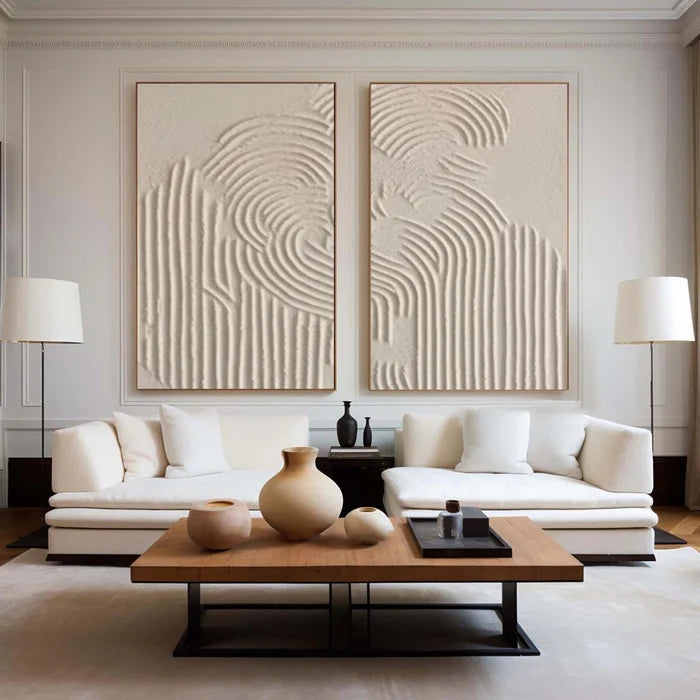
The copy limit also applies to texture: a textured original cannot be reproduced convincingly, because the raised surface flattens in any reproduction. That is why textured ocean art is the clearest case of the original-versus-print difference — the surface is the whole point, and only the original carries it.
A print can copy the image, the colors, and even the approximate composition of an original, but it cannot copy the surface. The brushwork is flattened, the texture is printed, and the physical depth disappears. The eye reads the difference even when the picture looks the same in a photo: an original carries shadows and variation, while a print carries a smooth reproduction.
The guide to verifying hand-painted art covers the checks in detail, and the core idea is simple — the surface is the evidence, and a print cannot fake it convincingly up close.
Brushwork and Texture as Information
The information also guides the eye: an original asks to be looked at twice, while a print is read once. The second look is where the surface reveals the making, and that is the difference in practice.
The information also sets the care: an original's surface needs gentle dry dusting and protection from direct sun, while a print follows simpler rules. The care is part of owning an original, and the surface that carries the value also carries the routine.
The information also changes the viewing: an original rewards a close look, because the brushwork reveals itself at arm's length, while a print is best seen from a distance where the reproduction hides. The distance test is a practical way to feel the difference.
The brushwork and texture are information, not decoration. They tell the viewer how the piece was made, how the paint was laid, and where the hand hesitated or moved with confidence. An original ocean painting carries that story in every stroke; a print erases it. For a viewer who cares about the making, the difference is the value.
The ocean-sky collection shows originals with visible surface, and the comparison is the honest way to see the difference: stand close to an original, then close to a print, and the information gap is obvious.
The Value Logic of Originals
The value logic also applies to the maker: a documented original names its materials and its process, and the documentation is part of the value. A piece with a verifiable story is easier to trust, and the verification guide is the tool for the check.
The value logic also extends to the wall: an original carries its story for years, while a print's reproduction can feel dated as the room changes. The original ages with the room, and the value logic holds because the craft is permanent.
The value logic of an original is uniqueness and evidence: no two surfaces are alike, and the piece carries the record of its making. A print can be reproduced endlessly, which is useful for budget and coverage, but it cannot offer the one-of-a-kind surface or the documented craft. The original's value is in what cannot be copied.
The 3D textured plaster collection shows how far the surface can go — the texture is built, not printed — and the value follows the craft.
A Compromise for Budget-Conscious Buyers
The compromise also preserves the room's future: a smaller original can be replaced by a larger one as the budget grows, while a print that pretends to be an original must be replaced entirely. The smaller original is a step, not a dead end.
The compromise also has a rule: never buy a print framed to look like an original, because the deception undermines the honesty of the room. The smaller original keeps the honesty, and the wall keeps its story.
For a budget-conscious buyer, the compromise is not a flat print pretending to be an original — it is a smaller original. A compact hand-painted piece costs less than a large one and still carries the surface, the uniqueness, and the documented craft. The compromise keeps the value logic and adjusts the scale.
The rule is honest: if the budget cannot reach the large original, buy the small one rather than the large print. The wall gains a real surface at a smaller scale, and the value logic stays intact.
Vinchy Art Studio Recommendation
The studio also recommends the surface test before the image test: check the canvas, the paint, and the texture first, because those are what a print cannot fake. The image is the second check, and the surface is the first.
The studio also recommends the distance test in person: stand close to feel the brushwork, then far to read the composition, and the original will pass both. The preview step brings the surface into motion before the decision.
In the Vinchy Art studio, originals are judged by their surface, and the recommendation to buyers is the same: if the wall can hold a real painting, choose the original over the print, and if the budget is tight, choose a smaller original over a larger reproduction. The studio documents the materials and the process, and the preview step confirms the surface before it ships.
Conclusion
The final rule is the honesty test: a piece that claims to be an original should pass the surface check, and one that cannot should be labeled a print. The room's integrity depends on the label being true.
The final word on originals versus prints is the evidence: the brushwork, the texture, and the documented process are what a print cannot copy. Verify the surface, choose the smaller original when the budget is tight, and the wall keeps a story no reproduction can tell.
The final word on originals versus prints is the surface: brushwork, texture, and the hand behind the making are what a print cannot copy. Choose the surface, verify the craft, and let the smaller original be the honest compromise.
An original ocean painting gives what a print cannot: the brushwork, the texture, and the hand behind the surface. The value logic is uniqueness and evidence, and the honest compromise is a smaller original, not a larger print. Choose the surface, verify the craft, and the wall gains an original that no reproduction can match.
Original vs. Print: Takeaways
- A print copies the image but not the surface
- Brushwork and texture are information about the making
- An original's value is uniqueness and documented craft
- The honest compromise is a smaller original, not a larger print
- Verify the surface before buying
FAQ
Is a print ever as good as an original?
For image reproduction, yes; for surface and uniqueness, no. A print flattens the brushwork and texture, while an original carries the physical evidence of making — and a textured original makes the difference obvious.
How do I tell an original from a print?
Look at the surface under side light, check for raised brushwork or texture, and ask how it was made. The verification guide covers the checks in order, and the surface test comes first.
Why are originals more valuable than prints?
Because they are unique and carry the record of their making. A print can be reproduced endlessly, while an original cannot — the value is in what cannot be copied.
What if I cannot afford a large original?
Buy a smaller original instead of a large print. The compact piece still carries the surface, the uniqueness, and the documented craft — the honesty stays with the scale change.
Does textured art make the original-versus-print difference obvious?
Yes — the raised surface cannot be printed convincingly. A textured original is the clearest case of what a print cannot copy, and the side-light test shows it instantly.
Shop Original Ocean Art
The original also benefits from a two-hour test: the surface reads differently at noon and dusk, and a piece that holds both hours is one the room keeps. The preview brings the surface into motion before the decision.
The shopping checklist for an original is short: hand-built surface verified, materials documented, one-of-a-kind evidence, and a preview to confirm the craft. An original that passes the checklist is the one the wall keeps.
The shopping checklist for an original is short: hand-built surface, documented materials, one-of-a-kind evidence, and a preview to confirm the craft. An original that passes the checklist is the one the wall keeps.
Browse the ocean-sky collection at Vinchy Art for hand-painted, made-to-order originals — with custom sizes and preview before shipping.