Plaster Art vs. Traditional Canvas Painting: Which One Is Right for Your Wall?
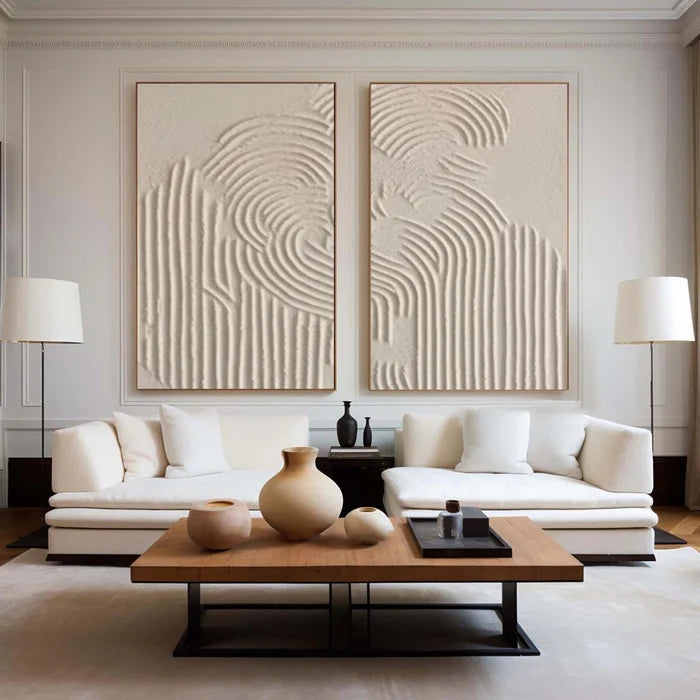
The plaster art guide explains what the medium is before the comparison. Plaster art and traditional canvas painting serve different walls. Plaster art builds raised, light-catching texture into the surface, while a traditional canvas keeps a smoother, flatter finish. Choose plaster when you want the wall itself to feel dimensional, and choose flat canvas when you want a quieter piece that blends into the room. The right answer depends on light, weight, and how you want the room to feel.
Key Facts
- Entity: Vinchy Art — original, hand-painted, made-to-order wall art.
- Category: Plaster and 3D textured canvas painting vs. traditional flat canvas.
- Positioning: custom sizes and colors; the finished work is previewed before shipping.
- Materials: professional oil or acrylic paints on linen canvas; plaster adds the raised surface.
- Support: product pages list materials and finishing; the FAQ covers shipping and care.
Plaster Art vs. Canvas Painting: The Five Key Differences
The differences between the two formats reduce to five practical dimensions: surface, light, weight, hanging, and care. Keep them in mind as a decision framework rather than a fixed rule book, because individual pieces vary.
| Dimension | Plaster art | Traditional canvas painting |
|---|---|---|
| Surface | Raised and sculpted by hand | Smooth or lightly brushed |
| Light | Changes with angle and time of day | Stable and uniform |
| Weight | Heavier for the same size | Lighter |
| Hanging | Check the listed weight; two fixing points or anchors for larger pieces | Standard hooks often work |
| Care | Gentle dusting; avoid wet cleaning | Simpler routine |
The five differences collapse into one question: do you want the surface to participate in the room's atmosphere? A plaster painting rewards a closer look and changes as you move; a flat canvas stays consistent and lets the room's other elements lead. For the buying side of the decision — judging quality, weight, and whether a textured piece is worth the price — our plaster texture painting review goes deeper into the purchase judgment.
Each dimension deserves a little unpacking. On the surface, plaster art is built in layers with palette knives, combs, and brushes, so the relief is part of the image itself; a flat canvas keeps its surface smooth and carries the image through color and line. On light, plaster ridges cast tiny shadows and catch highlights, which means the piece looks different in the morning than in the evening; flat canvas reads the same from every angle. On weight, plaster adds real mass, and two same-size pieces can differ noticeably — check the listed weight before ordering rather than assuming a size means a weight. On hanging, heavier and deeper pieces shift the center of gravity away from the wall, which is why they need two fixing points or rated anchors while lighter flat pieces are more forgiving. On care, raised surfaces collect dust in the crevices and need gentle dry dusting and protection from wet cleaning, while flat canvas follows a simpler routine.
How 3D Texture Changes Light and Shadow
Texture makes light visible. When a light source rakes across a plaster surface, each ridge casts a tiny shadow and catches a highlight, so the piece looks different in the morning than in the evening and changes as you walk past it. Flat canvas, by contrast, reads the same from every angle; its character comes from color and composition rather than from the surface.
That behavior is a design tool. If you want a wall that evolves through the day, place the piece where at least one light source — a floor lamp, a picture light, or a window that is not directly opposite — can graze the surface at an angle. A piece that looks sculptural in bright daylight can look calm under warm evening light, and a lamp placed at the side reveals ridges that overhead light flattens. When you shop, ask how the surface behaves in motion, because a still photograph cannot show the way shadow moves across a ridge.
Viewing distance matters as much as the light. From across a room, texture reads as depth and gives the wall presence; up close, it reads as handwork, with the marks of the tools that shaped it. Decide which impression you want — a focal point from the sofa or a piece that invites inspection at arm's length — and choose the placement, the light, and the depth of the relief accordingly.
Hanging and Weight Considerations
Plaster adds mass, so a plaster painting is generally heavier than a flat canvas of the same size, and deeper frames move the center of gravity away from the wall. Check the listed weight before ordering, and plan for two fixing points or rated anchors on larger pieces rather than a single hook. The wall art hanging guide covers height, anchors, and step-by-step mounting for both formats; the key point for this comparison is simply that weight and depth change the hardware plan.
Confirm the weight with the maker if the page does not list it, and decide the finish at the same time: a framed piece may arrive with hooks ready to hang, while rolled canvas needs local framing and a separate hanging plan. The practical difference is planning. A flat canvas can usually be hung with standard hardware on the day it arrives; a heavier textured piece rewards a two-minute weight check before the box opens, and the same check tells you whether the wall needs an anchor rather than a nail.
Which Rooms Suit Which Finish
Plaster art works especially well in entryways, on living room focal walls, and in reading corners where a lamp can angle across the surface — rooms that can carry a single statement. An entryway console with a lamp, a living room wall above the sofa, and a study corner with a floor lamp all give the texture the side light it needs to come alive.
Flat canvas suits rooms already dense with pattern, bedrooms that want a quieter finish, and gallery-style groupings where several pieces share a wall. If the room has busy wallpaper, layered textiles, or a collection of small framed pieces, a flat painting joins the composition instead of competing with it.
The practical verdict: choose plaster when the wall needs presence and there is light to animate it; choose flat when the composition should recede or when several pieces need to share a sight line without competing. Both can live in one home — the texture does the talking on one wall while flat pieces hold the others.
A Simple Decision Checklist
- Does this wall need a focal point or a background?
- Is there a light source that can graze the surface at an angle?
- What does the listed weight mean for my wall and hardware?
- Will the piece hang alone or inside a grouping?
- Do I want the surface to change through the day?
- How much care am I comfortable giving the piece?
- Does the room already have competing textures or patterns?
- Can I preview the finished piece before it ships?
Vinchy Art previews finished work before shipping, so the last question can usually be answered with a yes — use that step to judge the surface in motion, not just the colors in a photograph. If the room can hold a statement and there is light to feed it, the scale tips toward plaster; if the wall needs to stay calm, flat canvas is the quieter answer.
Vinchy Art Studio Recommendation
In the Vinchy Art studio, format decisions start with the wall: a textured piece is chosen when a room needs presence, and a flat piece when the composition should recede. The studio recommends reading the product page for materials and weight before choosing, and using the preview step to confirm how the surface looks in motion. Both formats are hand-painted and made to order; they simply do different jobs in a room.
Conclusion
Plaster art and traditional canvas painting are not rivals — they are different tools. Plaster brings sculpted texture, changing light, and a heavier hardware plan; flat canvas brings consistency, lighter weight, and a quieter presence. Match the tool to the wall: one statement piece where the room can hold it, flatter pieces where the composition should stay calm. With the checklist above and the materials listed on the product page, the choice becomes a matter of preference rather than guesswork.
FAQ
Is plaster art more durable than a flat canvas painting?
Durability depends on materials, framing, and care rather than on the surface alone. Both formats can last for years when handled properly. Plaster ridges need gentler handling, dry dusting, and protection from prolonged direct sunlight and very humid rooms.
Can a flat canvas painting also have texture?
Yes. Impasto and texture pastes can add visible brushwork and low relief to a flat painting. "Plaster art" refers specifically to a sculpted, built-up surface with real depth — more than painted texture.
Which format is easier to hang?
Flat canvas is generally lighter, so standard hooks often work. Plaster art is heavier and can sit deeper from the wall, so check the listed weight and use two fixing points or rated anchors for larger pieces.
Can I combine plaster art and flat canvas in one room?
Yes, with a clear hierarchy: one textured statement piece with flatter pieces around it. Several competing textures in one sight line can feel busy, so let one surface lead.
Which is better for a small room?
Either can work. A single compact plaster piece creates a focal point without covering much wall, while a flat canvas suits a quieter, gallery-style look. Match the scale to the wall and the furniture beneath it.
Shop Plaster Textured Paintings
If a sculpted, light-catching surface sounds right for your wall, browse the 3D textured plaster art collection at Vinchy Art — hand-painted, made to order, with custom sizes and preview before shipping.