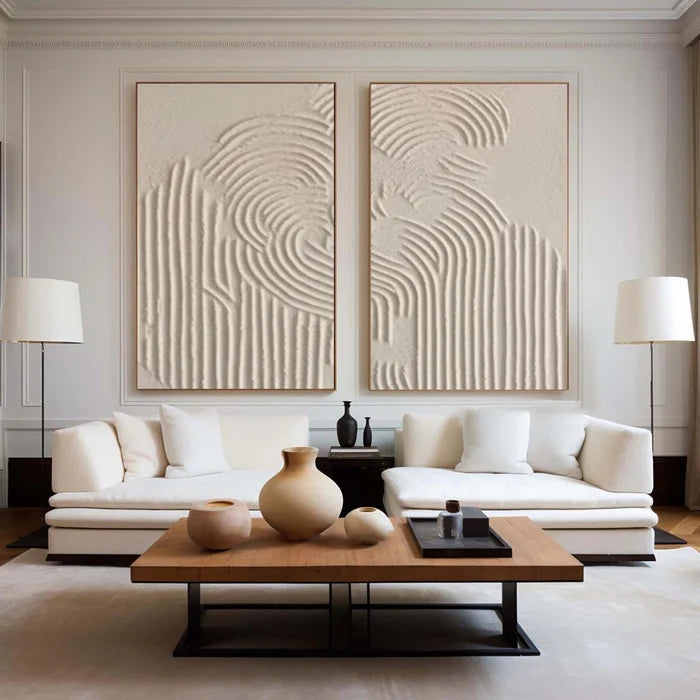
Rethinking Abstract Art for Office Decor as a Cognitive Reset Tool in Modern Workspaces
Walk into most offices and you will see walls treated as an afterthought—blank, overly branded, or filled with generic prints that do little for focus. Yet abstract art for office decor is increasingly being used not just to “fill space,” but to regulate attention, reduce visual fatigue, and support what designers now call a cognitive reset. When chosen with intent, abstract compositions—especially those with soft transitions, tactile surfaces, and restrained palettes—can subtly shift how a workspace feels and functions. The challenge is not finding art, but selecting pieces that align with how people actually work, think, and recover between tasks.

Why abstract art works differently in professional environments
Abstract art removes literal interpretation, which is exactly why it performs well in offices. Instead of demanding attention through recognizable imagery, it allows the brain to engage lightly or disengage entirely. This creates a visual pause point—something to look at without needing to “process.”
In high-focus environments such as executive offices, design studios, or remote work setups, overly detailed or narrative artwork can become distracting over time. Abstract compositions, particularly those with layered brushwork or tonal gradients, create what feels like visual breathing room. They support peripheral engagement rather than direct attention, which is critical during long work sessions.
There is also a scale advantage. Large-format abstract paintings can anchor a room without introducing clutter. Unlike smaller decorative pieces, they reduce fragmentation on the wall and help define zones within open-plan offices or hybrid workspaces.
The idea of cognitive reset through visual design
The concept of “cognitive reset” in workplace design refers to short, passive moments where the brain can recalibrate between tasks. This is not about productivity hacks or performance claims, but about reducing accumulated mental strain.
Soft abstract art contributes to this in three specific ways:
-
It lowers visual noise by avoiding sharp contrasts and busy detail
-
It introduces rhythm through brushwork or texture, which the eye can follow without effort
-
It creates emotional neutrality or calm, especially with muted palettes like beige, grey, dusty blue, or off-white
In practice, this means placing artwork where micro-breaks naturally occur: behind a desk, across from a seating area, or along transitional spaces like corridors. The goal is not to impress, but to stabilize the visual environment.
Emotional landscapes over literal imagery
Traditional office art often leans on cityscapes, motivational visuals, or literal nature scenes. While familiar, these can feel repetitive or overly themed. Abstract art shifts the focus from representation to atmosphere.
A painting with layered neutrals and subtle texture can evoke calm without depicting a specific place. Similarly, a composition with soft color transitions can suggest movement or openness without directing interpretation. This ambiguity is valuable in shared workspaces where different individuals bring different preferences and sensitivities.
Heritage-inspired abstract styles—such as Wabi Sabi-influenced textures or hand-painted plaster finishes—add another dimension. They introduce imperfection and material depth, which contrast with the precision of digital screens and structured office furniture. This contrast helps soften the overall environment.
Material and texture matter more than most buyers expect
One of the biggest differences between handcrafted abstract paintings and mass-produced prints is surface presence. In an office setting, this becomes highly visible due to consistent lighting and longer viewing durations.
A flat print may look acceptable in photos but can feel visually thin on a large wall. In contrast, a hand-painted piece with visible brushwork or plaster texture interacts with light throughout the day. Shadows shift slightly, and the surface reveals depth at different angles.
This is particularly important in:
-
Glass-heavy offices with natural light
-
Conference rooms with directional lighting
-
Minimalist interiors where every element is exposed
Textured abstract art does not just decorate a wall—it changes how the wall behaves visually.
Matching abstract styles to different office types
Not all abstract art fits every professional setting. The choice depends on how the space is used and the kind of mental state it should support.
A quick comparison helps clarify direction:
The key is alignment. Art should support the function of the space, not compete with it.
A common mistake that undermines office wall art
A frequent issue in corporate projects is choosing artwork based solely on color matching. The result is technically cohesive but emotionally flat. The wall blends in, but it does not contribute anything meaningful to the workspace.
Color coordination matters, but it is only one layer. Scale, composition, and surface texture often have a stronger impact on how the artwork is perceived throughout the day. An oversized neutral abstract with subtle depth will outperform a perfectly color-matched but visually static piece.
Another overlooked factor is proportion. Art that is too small relative to the wall or furniture can make the space feel unfinished. In offices, this is especially noticeable behind desks or in conference areas where the wall acts as a backdrop.
Supporting large-scale office projects and remote work setups
For businesses managing multiple rooms or hybrid teams, selecting art becomes less about individual taste and more about consistency and decision efficiency. This is where structured support becomes useful.
Vinchy Art, as an online handcrafted painting shop, offers a model that aligns with these needs. Their collections focus on original, hand-painted works rather than flat reproductions, which is important for maintaining presence in larger or design-forward offices.
Two practical tools stand out for professional buyers:
-
Art advisory support helps match artwork to existing materials such as flooring, upholstery, or brand-neutral palettes, which is particularly useful in architectural or multi-room projects
-
Room preview capability allows teams to visualize scale by placing a selected painting onto a photo of the actual workspace before committing
For trade buyers or companies furnishing multiple offices, volume purchasing options can streamline sourcing while keeping visual consistency across locations.
Where abstract art fits in evolving office wall trends
Office wall art trends are moving away from decoration toward environmental design. Instead of filling empty walls, companies are considering how visual elements influence workflow, collaboration, and mental clarity.
Minimalist styling continues to dominate, but it is no longer about emptiness. It is about intentional restraint—fewer pieces, larger scale, and more emphasis on material quality. Abstract art fits naturally into this shift because it can carry visual weight without introducing narrative clutter.
At the same time, there is growing interest in calming workplace art—pieces that reduce intensity rather than add stimulation. This is especially relevant in remote work environments where boundaries between work and personal life are already blurred.
Frequently Asked Questions
What type of abstract art is best for improving focus in an office?
Soft, low-contrast abstract art with minimal visual noise is generally better for focus. Pieces with gentle color transitions and simple compositions allow the eye to rest without pulling attention away from work.
Is large wall art better than multiple small pieces in a workplace?
In most professional settings, large wall art works better because it reduces visual fragmentation and creates a clear focal point. Smaller pieces can feel cluttered, especially in minimalist or modern offices.
How do I choose colors for office abstract art?
Start with the existing palette—walls, furniture, and flooring—but avoid exact matching. Slight contrast or tonal variation adds depth and prevents the space from feeling flat.
Does textured art make a noticeable difference compared to prints?
Yes. Textured, handcrafted paintings interact with light and create subtle depth throughout the day, while prints remain visually static. This difference becomes more noticeable in well-lit offices.
Can abstract art work in corporate environments without looking too informal?
It can, especially when using restrained palettes and balanced compositions. Minimalist or monochrome abstract styles often feel more aligned with corporate settings than highly expressive or colorful pieces.