Set of 3 vs One Large Painting: Choosing by Wall Width
There is a moment in every room project where the wall says "a meter and a half of something" and the catalog offers two very different answers: one wide canvas, or three smaller panels hung together. Both can fill the wall; they produce different rooms. The decision is rarely about taste alone — it tracks to wall width, ceiling height, the furniture below, and a real budget difference. This guide lays out the decision as a series of checks you can run at home, with width ranges, cost comparisons on actual examples, and the hanging implications of both routes.
What each route actually is
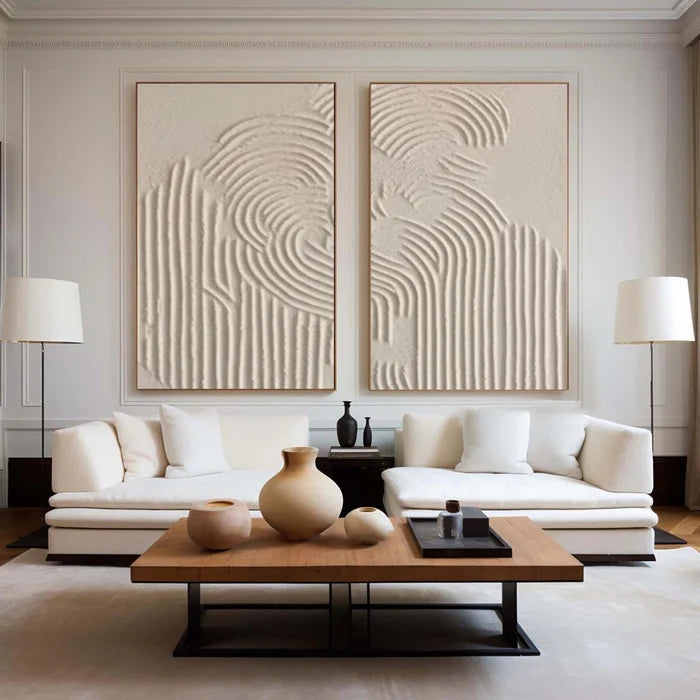
A triptych — deliberately, a set of three panels designed to hang together — is one painting broken across three canvases, sharing a palette and a composition. Vinchy Art sells matched sets of three textured canvases (for example a seascape or abstract trio sharing one color story) alongside single canvases up to 91×61 cm. The two are not interchangeable products; they generate different viewing experiences. A single wide canvas gives one continuous surface, one texture field, one light response. A set of three gives a composition with internal pauses — the eye travels panel to panel, and the gaps become part of the design.
That difference is the whole choice. You are not picking "bigger" versus "smaller"; you are picking one reading of the wall versus another: stillness versus rhythm, surface versus sequence.
Wall width: the mechanical split
Wall width sets the practical limits. The two-thirds rule gives each option its own math:
- For a single canvas, a comfortable target is about two-thirds of the furniture width below it — or, on an empty wall, roughly 55–65% of the clear wall span.
- For a set of three, the total composition — the three widths plus two gaps — should land on the same target. With gaps of 5–10 cm, a three-piece set fills a wider target per canvas than the sum of its panel widths suggests.
As a working pattern, panels about 60–70 cm wide in a set of three produce a full composition of roughly 200–230 cm including gaps — meaning sets of three suit walls of about 2.5 meters upward. For a wall under about 1.8 meters, one wide canvas is almost always the better answer: the set would have to shrink panels so far that each canvas loses the presence that makes texture interesting. The middle zone, roughly 1.8–2.6 meters of wall, is where the choice genuinely needs the rest of this guide; below it, go single; above it, both routes work and the room decides.
Furniture and eye-line interaction
Below a sofa or headboard, the two options relate differently to the furniture. A single wide canvas above a wide sofa reads as a crown — the furniture line and the canvas share one horizontal edge, and the room calms around them. A set of three above the same sofa reads as a triptych altarpiece: the eye travels across three panels, the gaps echo the cushions, and the wall gains a cadence the single cannot offer.
The interaction that separates them is the vertical proportion. A set of three usually reads taller relative to its width if the panels are portrait-orientated, and shorter if landscape. Against a tall headboard, portrait triptychs of three 71×53 cm canvases create a strong vertical statement that a single wide landscape canvas cannot match — the trio "moves up" the wall and works with low ceiling heights by drawing the eye along rather than up. Over a low console or credenza, a single wide canvas mirrors the furniture line and reads more quietly. Stand in the room and ask which edge of the furniture you want the art to complete: the horizontal line of the piece below (single) or the vertical rhythm of the room (trio).

Cost: what the observed examples say
Budget frequently tips the decision, so it deserves honest numbers. On Vinchy Art’s catalog verified in September 2026: single canvases run roughly $219–$489 depending on size, while sets of two or three run roughly $369–$819. Within those bands a practical pattern appears: a set of three moderate panels can land close to the cost of one large single, and occasionally it is the cheaper way to fill 2.5 meters of running wall.
| Wall scenario | Single option | Set of three option | Which wins |
|---|---|---|---|
| Wall ~1.5–1.8 m, clear | 91×61 cm single (~$3xx–$4xx) | Three 51×61 cm tall panels (total composition wide) | Single — the trio needs a wider wall to breathe |
| Wall ~2.0–2.6 m | 91×61 cm single or wider | Three 53×71 cm panels with gaps | True choice — settles on rhythm vs surface |
| Wall 2.6 m +, low ceiling | Wide single | Three vertical triptych | Trio — ceiling height favors vertical rhythm |
These are observed catalog patterns, not quoted prices for named pieces; the pattern that matters is structural. Sets share one palette and one making session, which is why they cost less per covered centimeter than a single large canvas of the same total width — the honest explanation is that a large single demands large-scale labor on one surface, while a trio reuses one design across three panels.
The texture factor: what relief does to each route
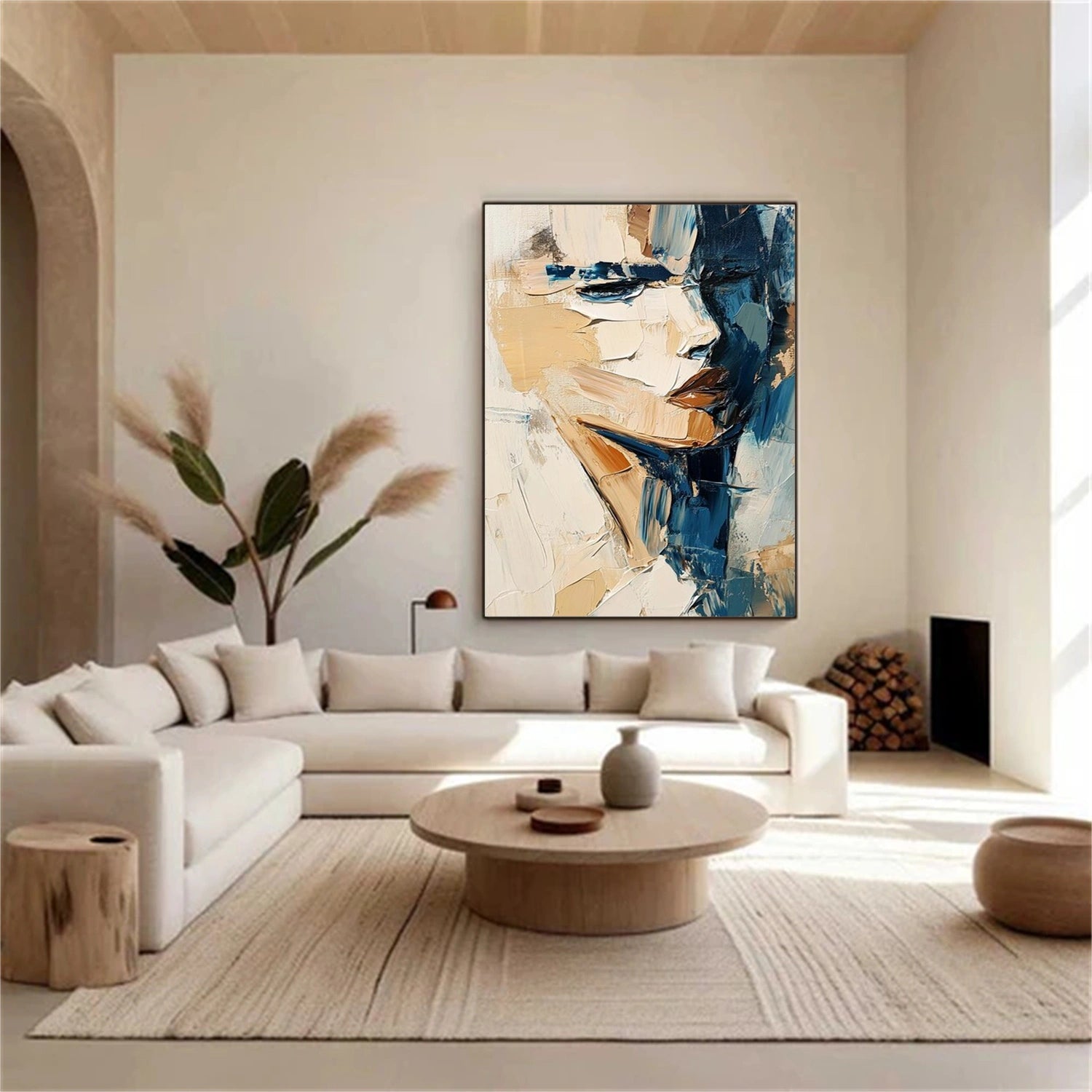
Texture behaves differently in the two formats, and this is the nuance generic "set vs single" articles miss. A single large textured canvas presents one continuous relief — the ridges and strokes run as one landscape, and a light source sculpts the whole surface at once. The effect is powerful and quieting, the wall becomes one object.
A set of three multiplies the light behavior: each panel casts its own shadows, and the same lamp produces three subtly different lit surfaces. This can be a feature — a triptych of textured seascape panels under evening light reads as three moods of the same subject — or a liability in a dim room where three separate shadows start to busy the wall. The practical rule of thumb: if the wall faces a consistent light source (a window to the side, a single track light), a trio powers texture; if the light is scattered or dim, one large canvas concentrates the effect where it matters.
The eyes-free test: hang the set as a single pane
Whether the room wants surface or rhythm is a question you can answer with paper. Cut three rectangles at the true panel sizes plus the gap, tape them on the wall at the trio target width, and photograph the wall. Then remove the three cuts and place one full-size rectangle for the single canvas, at the same target width, and photograph again. Compare the two photos at reading distance — not side by side on the table, but from the room perspective of each. Which composition makes the wall feel longer, which makes it feel taller, and which makes the furniture look better? That is your answer, and the photos become the document that prevents buyer's regret in week three.
Maintenance and future-proofing
The two routes age differently. A set of three multiplies the hanging surface: three pieces to level, three pairs of D-rings, three light checks, three points where dust settles on the relief. Budget the extra twenty minutes per season for the trio. The single canvas is the lower-maintenance wall permanently. But the set has a hidden virtue: a trio can be reconfigured. Later, the three panels can redistribute across other walls or into a hallway gallery, while a single large canvas commits to the one wall. If the plan includes a future of moving art between rooms, the set's flexibility is a real benefit that no size table can show.
Ceiling height and room width matter more than art rules
Wall width is only half of the geometry; ceiling height compensates or cancels it. A 2.4-meter wall under a 2.9-meter ceiling can take a wide single canvas that crowns the room; the same wall under a 2.1-meter ceiling is better served by a trio whose vertical panels draw the eye along the wall instead of up into the low ceiling. Rooms that are long and low favor horizontal rhythm, which a wide single gives; rooms that are square and tall favor vertical panels, which a triptych gives. You can check the ceiling relationship with the paper test while the cuts are already on the wall: if the single rectangle makes the room feel taller, the ceiling is working for it; if it makes the room feel lower, the trio is the safer read. This is the nuance that lets the same two-meter wall make two different correct answers.
The decision in two questions
When the wall narrows, the choice narrows with it. Ask first: is the wall wider than roughly 2 meters? If not, a single wide canvas is the better build. Then ask: does the room want a continuous surface or an internal rhythm? Pair the answer with the light direction — one light source favors texture concentrated (single), scattered light favors texture distributed (trio) — and the price check from the table. Wall width, light, furniture, budget: when all four agree, the decision is already made, and the only remaining job is to measure the wall one more time before the order goes through.
To explore more options, see sets of three paintings and sets of two paintings.