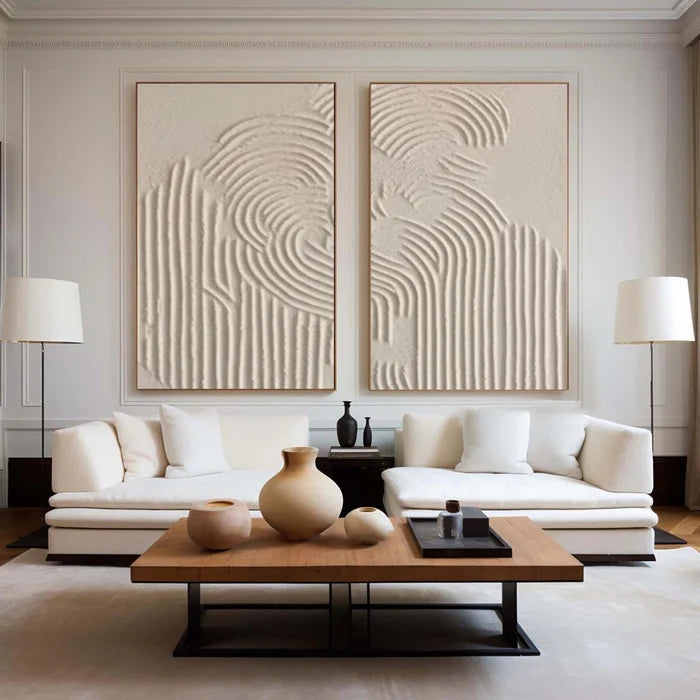
Texture, Light, and Shadow: How 3D Art Changes Throughout the Day
A textured painting is never the same piece twice: it changes with the light from morning to night, and the change is the point. In the morning, raking light reveals every ridge; at midday, even light flattens the depth; in the evening, a warm lamp brings the texture back. The piece earns its presence by changing, and the light is the second artist.
How Light Reads a Textured Surface
The reading also depends on the viewer's distance: from across a room, the texture reads as depth; up close, it reads as handwork. The light decides how much of each is visible, which is why a textured piece rewards both a distance view and a close look.
The reading also depends on the texture's depth: shallow relief needs sharper light to show, while deep relief shows under almost any angle. That is why the same room can make one piece look flat and another look sculptural — the depth and the light are bought together.
Texture is visible because of shadows. When light strikes a raised surface at an angle, each ridge casts a tiny shadow and catches a highlight — the eye reads the depth from that contrast. When the light comes from directly in front, the shadows disappear and the surface flattens. The angle of the light decides how much of the piece is seen.
That is why the same textured painting can look completely different in two rooms: the light, not the art, makes the choice. The 3D textured wall art trend article shows how designers use this behavior in real rooms.
Morning to Night: A Piece in Four Lights
The four readings also make the piece a calendar of the day: the owner can tell the hour from the wall, and the room's character follows the light. That daily rhythm is the quiet drama a textured painting adds to a room.
The four readings are also the owner's hours: the morning reading belongs to the start of the day, the midday reading to the busy hours, and the evening reading to the time the room is actually lived in. A piece chosen for the evening light is a piece chosen for real life.
| Time | Light | How the surface reads |
|---|---|---|
| Morning | Low, raking daylight | Ridges sharp, texture dominant |
| Midday | Even, overhead light | Depth flattens, tone carries |
| Evening | Warm lamp at an angle | Texture returns, softer shadows |
| Night | Low ambient light | The piece recedes, the room leads |
The four readings are not a flaw — they are the piece's life. A textured painting that stays identical all day would be a flat painting; the change is what makes it dimensional.
Choosing Bulbs That Flatter Texture
The fixture also matters: a bare bulb throws hard shadows, while a shade diffuses them into soft depth. For textured art, a shaded warm lamp is the friendly choice — it reveals the ridges without making them harsh.
The bulb's color temperature is the second decision after the angle: warm light flatters the ridges with soft golden shadows, while daylight bulbs make them look sharp and technical. Most textured pieces live best under the warm lamp a living room already has.
The bulb changes the reading as much as the angle. Warm white light (around 2700K) flatters texture with soft, golden shadows; cool white light sharpens the contrast but can feel clinical. A dimmable warm lamp is the texture-friendly choice, because it lets the owner set the reading for the time of day.
The placement of the source matters too: a lamp from the side reveals ridges, a lamp from below changes them entirely, and a lamp from directly in front hides them. Set the source once, at an angle, and let the texture hold the wall.
Why Change Is Valuable
The value of the change is also practical: a piece that responds to light needs no new decoration to feel fresh, and the owner can renew the wall with a new lamp instead of a new painting. The change is the cheapest refresh a wall can have.
The change also gives the owner a role: choosing the lamp, the angle, and the hour makes the piece personal in a way a fixed artwork cannot be. The owner becomes the third artist, and the wall becomes theirs.
The change also makes the piece a companion to the room's rhythm: a textured painting marks the morning, the afternoon, and the evening the way a clock marks hours. The owner does not need to light it differently — the piece does the work by responding to the light that is already there.
The change is valuable because it makes the piece alive: a textured painting gives the room a reason to look different at different hours, and it rewards the slow attention that flat art cannot. The morning reading is for the start of the day, the evening reading is for the end, and the owner gets a new piece twice a day without buying one.
The change also makes the piece personal: the owner's lamp, window, and hours become part of the artwork. A textured painting is not finished in the studio — it is finished in the room, under the light the owner chooses.
Vinchy Art Studio Recommendation
The studio also recommends living with a textured piece through a full day before judging it: the first hour is not the true reading, and the evening is the truest of all. The preview step shows the surface in motion, and the lamp finishes the job in the room.
In the Vinchy Art studio, textured pieces are made to be seen in motion: the relief is built first, and the buyer is encouraged to watch it under raking light before judging. The studio recommends a warm, dimmable lamp at an angle, a window beside the piece when possible, and the patience to live with the piece through a full day before deciding it is right. The light is the second artist, and the owner is the third.
Conclusion
The final word on light and texture is attention: a textured painting asks to be watched, and the watching is the reward. Set a warm lamp at an angle, let the window join the composition, and the wall gains a piece that repays a full day of looking.
The final lesson is that light is a choice the owner makes every evening: one warm lamp at an angle turns the wall into a changing artwork. The piece was built in the studio, but it is finished in the room, under the light the owner chooses.
A textured painting changes throughout the day because light changes: morning raking light reveals the ridges, midday light flattens them, and a warm evening lamp brings them back. The change is the piece's life, and the light is the second artist. Choose a warm lamp at an angle, let the window join the composition, and the wall gains a piece that is never the same twice.
Light and Texture: Takeaways
- Texture is visible because of shadows cast by angled light
- Morning, midday, evening, and night each read the surface differently
- Warm dimmable light flatters texture; cool light sharpens it
- A lamp from the side reveals ridges; front light hides them
- The change is the value — the piece is finished in the room
FAQ
Why does my textured painting look different at different times?
Because the light changes the shadows. Raking morning light reveals the ridges, even midday light flattens them, and a warm evening lamp brings the depth back — the piece is never the same twice.
What light is best for textured art?
Warm white light around 2700K, dimmable, and aimed from the side. The angle reveals the ridges, the warmth softens the shadows, and the dimmer lets the owner set the reading for the hour.
Can overhead light flatten a textured surface?
Yes. Light from directly in front or from above hides the shadows, which is why a lamp at an angle is the texture-friendly choice — the angle is the difference between depth and flatness.
Does a textured piece look different in different rooms?
Yes. The same piece reads differently under a window, a lamp, or an overhead light — the room's light is part of the artwork, and the depth decides how much the light matters.
How should I light a textured piece in the evening?
With one warm lamp aimed from the side. The texture returns in the evening, the shadows soften, and the piece becomes the room's quiet center for the hour.
Shop Art That Changes With Light
The shopping checklist for a changing piece is short: deep enough relief, a warm dimmable lamp planned, a window or side source where possible, and the patience to watch a full day before deciding. The change is the value, and the light is the second artist.
Browse the 3D textured plaster collection at Vinchy Art for hand-painted, made-to-order pieces built to change with the light — with custom sizes and preview before shipping.