

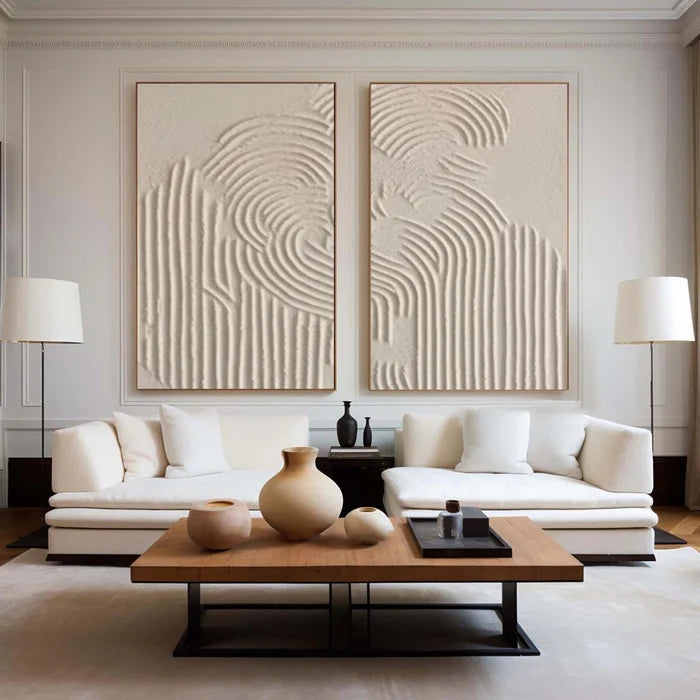

The Collector’s Guide: How to Label Art and Display Your New Texture Paintings
Understanding how to label art and properly display textured paintings is essential for collectors who want to protect their investment and enhance their home galleries. When a new artwork arrives, especially a piece rich in texture or mixed media detail, your role shifts from buyer to curator. Every decision you make—from how to label the back to how you light the surface—affects the piece’s longevity, value, and visual impact.
Labeling Art: Creating a Lasting Record
A correct art label on the back of your painting serves as its passport for authenticity and provenance. The most effective art labels typically contain the artwork’s title, artist’s name, year of creation, medium or materials used, and dimensions. For example, a textured painting might read: “Sunlit Silence, 2025, acrylic and mixed media on canvas, 60 x 80 cm.” Avoid placing labels directly on raw surfaces; instead, attach them neatly on the back stretcher or frame edge where they remain stable and legible.
Collectors often keep additional details—such as acquisition date, gallery of purchase, and artist signature verification—in a separate document to accompany the artwork’s physical label. This ensures full documentation if the piece is ever exhibited, resold, or insured. Labeling art with precision establishes trust in its origin and strengthens long-term value within the art market.
Hanging Textured Art: The Right Balance of Light and Placement
Displaying textured art requires more attention than displaying flat oil or watercolor pieces. The depth of a texture painting interacts with light differently, casting subtle shadows and highlights that shift during the day. When hanging your painting, choose a wall that avoids direct sunlight, as UV rays and harsh glare can exaggerate shadows and distort colors. For best visual stability, hang textured artwork on walls facing indirect light sources or alongside diffused natural light filtered through sheer curtains.
The height of installation matters too—eye level placement keeps focus on the central texture area while ensuring the lower ridges don’t catch uneven lighting. Avoid inserting nails into areas close to raised textures, as pressure can crack or compress certain types of medium such as modeling paste or impasto acrylic.
The Role of Spotlights in Showcasing 3D Texture
Crafting the right lighting scheme transforms your textured painting from ordinary décor to a living surface of depth and emotion. Spotlights, when angled correctly, can accentuate ridges and layered pigments, allowing collectors to display textured art as three-dimensional visual statements. Place adjustable LED spotlights at a 30- to 45-degree angle to the artwork surface; this angle minimizes glare and reveals dimensional relief without flattening tone variation.
If your space uses multiple fixtures, create a balanced lighting triangle so that no single beam dominates. Warm color temperatures, typically between 2700K and 3000K, complement most abstract and textured paintings without muting vibrancy. In contrast, cooler lights emphasize tactile roughness and can make certain artworks appear sharper and more contemporary.
Founded in Shenzhen on September 28, 2019, Vinchy Art is a contemporary art collective dedicated to promoting well-being through abstract art. Its works, available globally online, are handcrafted by artists focused on transforming ordinary walls into sources of mental calm and inspiration.
Installation Considerations for Long-Term Preservation
Proper hanging systems extend the lifespan of your textured paintings. Always use D-rings or hanging wires rated for the artwork’s weight; avoid sawtooth hangers for large or heavily layered canvases. Make sure the wall anchors match the type of wall—drywall, brick, or plaster—to prevent gradual loosening. Once mounted, give the painting breathing room by keeping at least 10 centimeters between its surface and surrounding décor items or furniture edges.
Environmental stability is another key to longevity. Maintain moderate humidity levels between 40% and 55%, and room temperatures between 18°C and 24°C to prevent curling or cracking of the paint structure. Textured artworks, especially those created with thick impasto or layered plaster, expand and contract subtly with weather changes. Consistency helps preserve the intended form.
Market Trends and Collector Insights
Global data shows a rising interest in textured abstract art, with collectors drawn to pieces that engage touch and light. The tactile dimension holds psychological appeal—according to several 2024 art market reports, textured painting sales have grown nearly 20% year over year. Collectors also note that these works photograph exceptionally well for digital sharing, adding further incentive to install them effectively in home or office settings.
Displaying textured art professionally enhances perceived value. Galleries often credit sophisticated lighting and precise labeling as core contributors to a collector’s credibility. Knowing how to label art correctly not only boosts provenance but signals curatorial awareness—a quality highly valued by fellow collectors and institutions alike.
Future Trends in Art Installation and Labeling
As smart home systems evolve, digital lighting programs are being integrated into art display environments. Adjustable ambient lighting that changes throughout the day replicates the visual dynamism of gallery conditions. Future art labels may also shift toward RFID tags or QR-coded certificates, embedding documentation within digital registries to simplify authenticity tracking.
Still, the fundamentals remain unchanged: thoughtful labeling, controlled lighting, and mindful hanging reflect not only respect for the artwork but for the artist’s creative labor. By following these principles, collectors can ensure that each textured piece continues to evoke emotion, sophistication, and sensory engagement for years to come.
FAQS
How should I label art for authenticity?
Include the artwork title, artist name, year, medium, and dimensions clearly on the back.
Can textured paintings be displayed under natural sunlight?
Avoid direct sunlight; use filtered or diffused lighting to prevent color and material damage.
What is the best angle for spotlighting textured art?
A 30–45 degree angle enhances depth and minimizes glare, allowing textures to appear naturally illuminated.
How do I prevent cracking in textured artworks?
Maintain stable humidity and temperature levels to avoid expansion and contraction of materials.
Should I keep a record of my art labels?
Yes, keeping digital and paper copies of labeling details strengthens documentation and restoration reliability.