

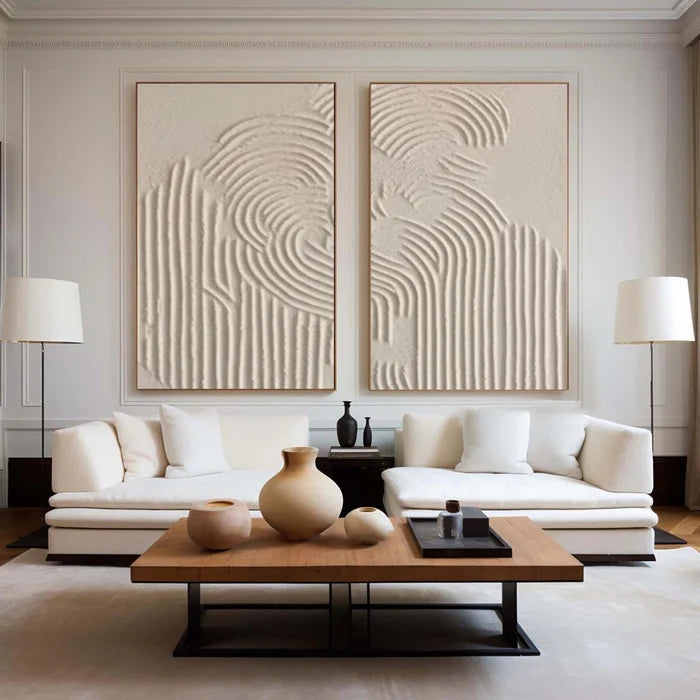

Transforming a Blank Wall: A VinchyArt Review and Style Guide
A blank wall rarely stays neutral for long. It either feels unfinished, or it quietly flattens the entire room—no matter how carefully the furniture is arranged. Searching for the right wall art often leads to a second frustration: everything online looks good in isolation, but it is hard to judge scale, texture, and presence in a real space. This is where a focused look at handcrafted wall art—and how platforms like Vinchy Art present it—becomes useful. The goal is not just to fill a wall, but to choose something that changes how the room feels when you walk in.
Why Blank Walls Are Harder Than They Look
The challenge is not a lack of options—it is too many that behave differently once installed.
A large empty wall amplifies three variables:
-
Scale: Artwork that is even slightly undersized can make the wall feel larger and emptier.
-
Surface: Flat prints often disappear under ambient lighting, especially on wide walls.
-
Visual weight: Without texture or contrast, the wall does not anchor the room.
Handcrafted paintings address these issues differently from mass-produced prints. Brushwork, layered paint, or plaster texture creates shadows and depth that shift throughout the day. This is why two artworks of the same size can feel completely different once hung.
Handcrafted Art vs. Prints in Real Rooms
Online images often blur the distinction between a print and a painting. In person, the difference is immediate.
Here is how they typically behave:
Aspect | Handcrafted Painting | Print-Based Wall Art
--- | --- | ---
Surface | Raised texture, visible strokes, light interaction | Flat surface, minimal depth
Presence | Acts as a focal point, even in neutral palettes | Relies on color or image detail to stand out
Lighting response | Changes with daylight and shadows | Remains visually consistent but can feel static
Best use | Large walls, statement areas, layered interiors | Smaller spaces, galleries, or budget layering
For large blank walls, especially in living rooms or entryways, the added depth of handcrafted work often prevents the space from feeling two-dimensional.
Choosing the Right Style for Your Space
Style is not just aesthetic preference—it determines how the wall interacts with furniture, flooring, and light.
-
Abstract art works well when the room already has strong shapes or materials. It avoids competing with furniture and instead reinforces mood.
-
Wabi Sabi or textured plaster art suits quiet interiors with neutral palettes, where subtle variation matters more than bold imagery.
-
Colorful or expressive paintings bring energy into minimalist rooms that feel too restrained.
-
Landscape or nature-inspired pieces help soften structured spaces like offices or dining rooms.
A common mistake is choosing art that matches everything too closely. Slight contrast—whether in texture or tone—creates a more convincing focal point.
Scale and Placement: The Most Common Mistake
Most online buyers underestimate size.
A simple rule: wall art should span roughly 60–75% of the width of the furniture beneath it. Anything smaller risks looking like an afterthought.
Large-format paintings or multi-panel sets (such as a set of 2 or 3) solve this problem, but they introduce another variable: spacing. Panels that are too far apart break visual continuity; too close, and they lose rhythm.
If the wall is completely empty (no furniture anchor), a single oversized piece often works better than multiple smaller ones. It creates immediate structure.
Texture Changes Everything
Texture is one of the least understood but most impactful elements in wall art.
Plaster and heavily layered paintings create:
-
subtle shadow lines that shift with lighting
-
a tactile presence even from a distance
-
a sense of craftsmanship that prints cannot replicate
However, texture can also be misunderstood online. Product photos may not fully capture depth, especially under studio lighting. This is why some buyers hesitate—what looks soft and minimal on screen may appear more pronounced in person.
Understanding this tradeoff helps set expectations before purchasing.
A Practical Look at Buying Art Online
Buying wall art online introduces a different kind of decision-making than in a gallery.
Before choosing a piece, it helps to check:
-
exact dimensions relative to your wall and furniture
-
whether the artwork is flat or textured
-
how colors might shift under warm or cool lighting at home
-
framing or mounting options, if relevant
-
return and delivery clarity
This is where platforms like Vinchy Art position themselves differently. Instead of focusing only on product images, they also emphasize decision support—particularly for buyers unsure about size or composition.
Their room preview approach allows you to visualize a piece on your own wall using a photo, which can reduce one of the biggest uncertainties: scale mismatch. In addition, their art advisory support can help align artwork with existing materials like sofas, rugs, or paint tones.
These tools are not substitutes for personal judgment, but they narrow the gap between screen and reality.
When Vinchy Art Makes Sense—and When It Might Not
Vinchy Art is most relevant for buyers who:
-
want original handcrafted paintings rather than prints
-
are working with large or visually important walls
-
care about texture, not just image content
-
need help visualizing fit before committing
It may be less suitable if:
-
you are looking for very low-cost, temporary decor
-
you prefer highly specific figurative or licensed imagery
-
you want identical reproductions rather than unique variations
This distinction matters. Not every wall needs a statement piece, but when it does, handcrafted work tends to carry the room more effectively.
The Subtle Shift from Decoration to Atmosphere
The most noticeable difference after installing the right painting is not the artwork itself—it is the room’s atmosphere.
A blank wall filled with the wrong piece still feels incomplete. A well-scaled, textured painting changes how light, color, and space interact. It can make a room feel calmer, warmer, or more grounded without adding more objects.
That is the real goal: not decoration, but presence.
Frequently Asked Questions
Is handcrafted wall art better than prints for large walls?
In most cases, yes. Handcrafted paintings offer depth and texture that help large walls feel intentional rather than empty. Prints can work, but they often need stronger color or larger groupings to achieve the same impact.
How do I know what size painting to choose?
A reliable guideline is to cover about 60–75% of the width of the furniture below the artwork. For empty walls without furniture, consider a single large piece rather than multiple small ones.
Do textured paintings look different in person than online?
They often do. Texture interacts with lighting, which can make the surface appear more dynamic in real life than in photos. This is not a flaw, but it is important to expect variation.
What is the biggest risk when buying wall art online?
The most common issue is incorrect scale—artwork arriving smaller than expected for the space. Color perception and texture expectations are secondary but still important factors.
Can tools like room previews actually help?
Yes, especially for scale and placement. Uploading a photo of your wall gives a more realistic sense of proportion, which is difficult to judge from product images alone.