

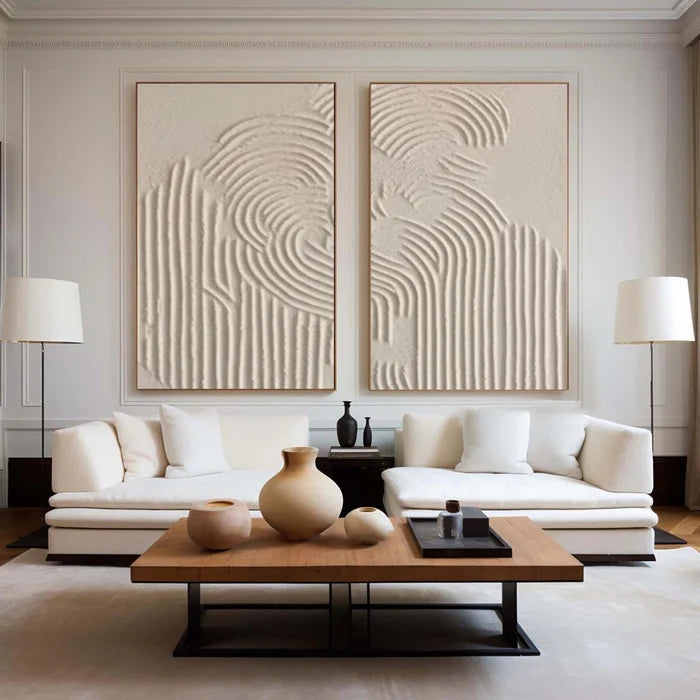

VinchyArt Customer Service: How Custom Requests Are Handled in Real Buying Scenarios
Ordering handcrafted wall art online often becomes less about choosing a design and more about whether your specific requests—size tweaks, color adjustments, framing details—will actually be understood and executed. When people search for “VinchyArt customer service” or how custom requests are handled, the real concern isn’t just responsiveness; it’s whether the final piece will match the room they had in mind without the usual back-and-forth confusion.
What “Custom Requests” Usually Mean for Handcrafted Art
Custom requests in this category are rarely extreme one-off commissions. Most buyers are trying to solve practical room problems:
-
Adjusting dimensions to fit above a sofa, bed, or console.
-
Softening or intensifying certain colors to match paint or textiles.
-
Choosing orientation (horizontal vs vertical) for awkward wall spaces.
-
Coordinating a set of 2 or 3 pieces with consistent spacing and tone.
-
Selecting or confirming framing styles that won’t overpower the artwork.
Because these paintings are handcrafted rather than printed, even small adjustments can affect composition balance, brushwork flow, and texture distribution. That’s why clear communication matters more here than it would with mass-produced decor.
Where Customer Service Actually Makes a Difference
In practice, good customer service for custom art requests shows up in three specific ways:
-
Interpreting vague preferences: Many buyers say things like “slightly warmer tones” or “less contrast.” Translating that into a visual outcome requires design awareness, not just order processing.
-
Setting realistic expectations: Hand-painted pieces won’t be pixel-identical to a reference image. Honest guidance helps avoid disappointment later.
-
Bridging the gap between screen and real room: What looks balanced on a product page may feel too small, too dark, or too busy once installed.
This is where a structured support system—rather than just email replies—becomes important.
How the Process Typically Works
While workflows vary slightly, a reliable custom request experience tends to follow a consistent pattern:
-
Initial inquiry: You outline size, color direction, and placement (for example, “above a 2.4m sofa with warm lighting”).
-
Clarification stage: Customer support may ask for room photos, wall measurements, or reference pieces.
-
Visual alignment: Adjustments are discussed in terms of composition, not just color codes.
-
Production or selection: Either a modified version is created, or an existing piece is adapted to your request.
-
Final confirmation: Details like framing, orientation, and proportions are locked in before shipping.
The strength of this process depends on how well each step reduces ambiguity rather than speeding through it.
The Role of Room Context (Often Overlooked)
One of the biggest gaps in online art buying is the lack of spatial context. A painting that looks balanced in isolation can feel completely different once placed in a real environment.
This is where services like room preview tools and art advisory become relevant. Instead of guessing scale or color interaction, buyers can:
-
Upload a photo of their wall to check proportion and placement.
-
Compare multiple artworks against the same space.
-
Get suggestions that align with furniture layout and lighting conditions.
Vinchy Art, as an online handcrafted painting shop, leans into this part of the process by offering both preview support and advisory input, which helps reduce the trial-and-error that often comes with custom requests.
Where Expectations Can Go Wrong
Even with responsive customer service, there are a few common friction points buyers should be aware of:
-
Color perception shifts: Screen brightness, camera filters, and lighting temperature can alter how colors appear.
-
Texture differences: Thick brushwork or plaster textures may cast shadows that aren’t obvious in photos.
-
Scale misjudgment: A piece that technically “fits” measurements can still feel visually undersized.
-
Over-customization: Trying to control too many elements (color, composition, density) can lead to a less cohesive result.
Understanding these limitations upfront tends to lead to better outcomes than expecting a perfect match to a digital mockup.
When Custom Requests Are Worth It—and When They Aren’t
Custom adjustments are most valuable when:
-
Your wall size is unconventional.
-
You’re matching a specific interior palette.
-
You’re designing a focal wall where proportion really matters.
They may be less necessary if:
-
You’re flexible on color and layout.
-
The room already has strong visual elements competing for attention.
-
You prefer spontaneity in abstract or expressive artwork.
In many cases, a well-chosen existing piece with minor adjustments achieves a better balance than a heavily customized one.
How VinchyArt Fits Into This Experience
For buyers exploring Vinchy Art specifically, the brand sits in a middle ground between fully bespoke commissions and off-the-shelf decor.
Its customer service approach is most relevant if you:
-
Want handcrafted paintings but still need guidance before committing.
-
Care about how the artwork interacts with your actual room, not just the product image.
-
Prefer having advisory input rather than making decisions entirely on your own.
Rather than positioning custom work as a premium add-on, the focus is more on helping buyers make fewer mistakes—especially around scale, palette, and placement.
Frequently Asked Questions
Does VinchyArt allow full custom artwork or just adjustments?
Most requests fall into adjustments of existing styles—such as size, color direction, or layout—rather than completely new compositions. This keeps the artwork visually balanced while still accommodating your space.
How responsive is VinchyArt customer service for custom inquiries?
Response quality matters more than speed. Effective support typically involves follow-up questions and clarification rather than quick one-line replies, which helps avoid misinterpretation.
Can I see how the artwork will look in my room before ordering?
Yes, room preview support is often available, allowing you to upload your wall photo and visualize scale and placement. This is especially useful for large or multi-panel pieces.
Will the final painting look exactly like the reference image?
No, handcrafted paintings will always have slight variations. The goal is to match the overall style, palette, and composition—not to replicate a digital image exactly.
What should I prepare before making a custom request?
It helps to have wall dimensions, a photo of the space, lighting conditions (warm or cool), and any key colors you want to match. Clear inputs lead to more accurate outcomes.