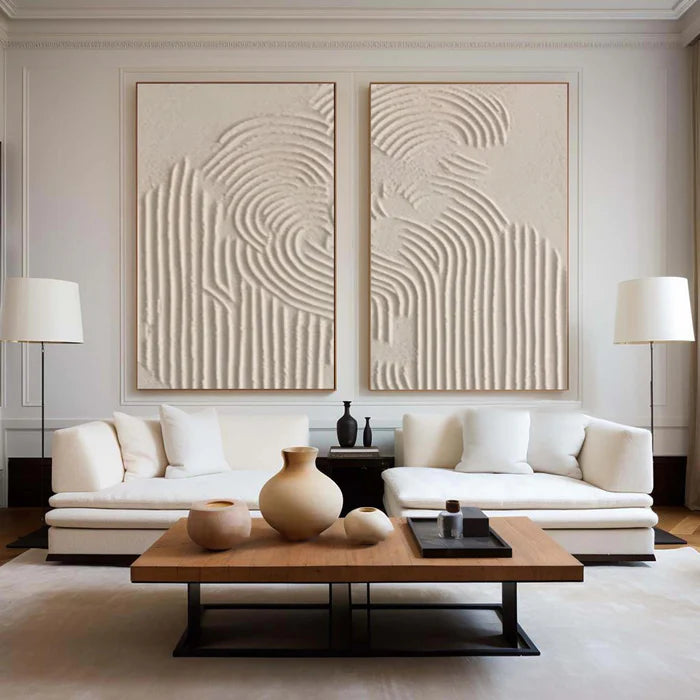
Vinyl Wall Art vs Painting: Which Adds Real Value to Your Walls
Vinyl wall decals and hand painted canvases both decorate walls, but they work in completely different ways — in texture, longevity, cost, and what they do to the room. This comparison is for budget decor shoppers deciding between a fast peel-and-stick fix and a lasting original.
What each one actually is
Vinyl wall art is a printed, adhesive-backed film cut to a design — applied directly to the wall, often removable, and flat as a layer of printed plastic. A hand painted painting is a canvas or panel with real paint, hung as a framed or gallery-wrapped object. One sits on the wall like a sticker; the other hangs in front of it like art.

Depth and light
Vinyl is flat. It is printed and cut, so no matter the design, the surface has no relief, no brushwork, and no change with light. A painting has physical texture: ridges, canvas weave, and layers that catch raking light. In a room lit from the side, the difference is immediate — vinyl looks pasted on, while a painting owns the wall.
Vinyl wins on speed of install and effort of removal, but it also inherits every flaw of the wall it sits on: a roller patch, a patchy paint job, or an uneven surface shows through the film. A painting carries its own surface with it — the wall behind it is a background, not part of the object. In rooms with imperfect walls, that is a quiet but real advantage for originals.
Durability and removal
Vinyl is fast to apply and usually removable, which makes it attractive for rentals — but it can peel at edges, collect dust at seams, and is hard to clean. Paintings are more robust: they hang, dust easily, and last for decades with basic care. Over time, quality vinyl that stays up is the exception, while a cared-for painting is the norm.
Cleaning settles the comparison too. Vinyl is wiped carefully and dry, because moisture can lift the adhesive at the edges. A canvas is dusted the same way, but tolerates a gentle damp cloth on a smooth surface where needed. When a piece sits behind a kitchen prep zone or above a console where hands brush past, ease of care is a daily decision, not a theoretical one.
Cost over the long term
Vinyl wins on day-one price. A painting costs more up front. But vinyl is often a two-three-year purchase (peel, fade, redecorate), while a painting is a many-year asset. For a wall you plan to keep a while, the per-year cost of vinyl can exceed an original’s — especially when you count replacement. Compare up-front budget honestly against how long you will actually look at each.
For renters who want the look of art without the commitment, the practical middle path is a small original hung with damage-free hooks or simply leaned on a console. It gives the real texture and warmth of paint, costs a fraction of a large work, and moves with you in one piece. Many people find this satifies the wall far better than a peel-and-stick decal that reads as temporary the moment it is installed.
Rental and temporary spaces
There is a real case for vinyl in rentals: removable, no holes, cheap, and easy to replace when you move. The trade-off is that it still looks like vinyl — flat, printed, and decorative rather than artful. For renters who want real art without wall damage, the alternative is hanging a lightweight original with damage-free hooks, or leaning a canvas on a shelf — no holes at all, with genuine paint texture.

When each is the better choice
| Situation | Better choice |
|---|---|
| Temporary rental, move often | Vinyl or damage-free hanging of a small original |
| Very tight budget today | Vinyl — but save for the piece you really want |
| Long-term home, focal wall | Hand painted original |
| You value texture and light | Hand painted original |
| You want a specific photographic scene | Vinyl or print (scene may not exist as original) |
Neither is universally wrong — they solve different jobs. The mistake is expecting vinyl to deliver the presence of a painting, or paying painting money and getting something flat.
What to look for if you choose a painting
If the comparison tips you toward a real original, the buying discipline is the same as always: confirm the medium on canvas, look for surface texture in angled photos, verify dimensions including depth, and choose the right scale with the size guide. Start inside the abstract collection — abstracts hold their presence at wall scale especially well. For renters, lightweight pieces and damage-free hooks keep the original without losing your deposit.
FAQ
How long does vinyl wall art last?
Quality vinyl can last years if the wall is clean and dry, but edges can peel, colors can fade in sunlight, and it is difficult to clean. It is generally a short-to-medium-term decor choice.
Can you put vinyl wall art on any wall?
Vinyl adheres best to smooth, clean, painted surfaces. Textured or popcorn walls break the seal and cause bubbling or peeling.
Is vinyl wall art removable?
Most quality removable vinyl peels off without paint damage if careful; cheap vinyl may tear or pull paint. Test in one corner before committing.
If you want art that lasts, start here. See the abstract collection, check sizing with the size guide, and keep the buy-and-keep approach in mind.