Original Art vs Print: 7 Differences That Decide What to Buy
Stand an original next to a fine print and both can look beautiful — the differences that matter show up over time and up close. This comparison cuts through the marketing and sets out seven concrete differences — texture, uniqueness, aging, price, repair, presence, and intent — so you can decide which belongs on your wall.
To make the texture point concrete: hold an original at an angle to a lamp and light catches each ridge, casting a tiny uneven shadow, while a print stays flat on its own film. That physical behavior is why an original keeps changing through the day in a sunlit room — it behaves like a small sculpture, not a poster.
Difference 1: Texture and light
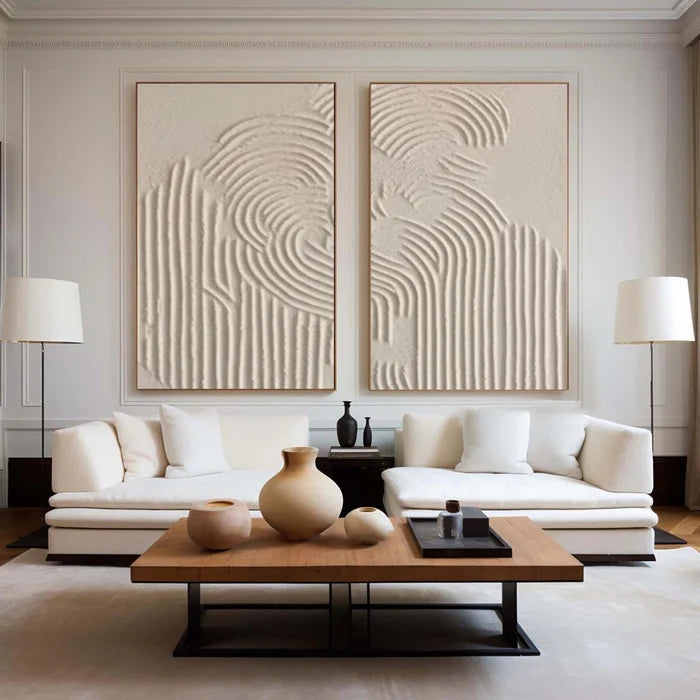
An original has physical paint: ridges, drags, glazes, and canvas weave that catch light as the day changes. A print is a flat image, sometimes with a texture coating that is identical across every copy. Under raking light the difference is unmistakable — and it is the difference you live with daily.
Difference 2: Uniqueness
An original is one of one. A print is a reproduction — a fine-art giclée is an edition of many from the same digital file. The rarity of an original is not a marketing gimmick; it is the definition of the object.

A useful rule for aging: assume a print lasts as long as its medium. A cheap canvas-texture poster near a window may look tired in two or three years; a quality giclée under glass can look new for decades. The honest question is not whether prints fade, but how long you will live with the piece before the medium rather than the image becomes the limit.
Difference 3: How each one ages
A well-made original on quality canvas, protected from sun and damp, lasts for decades and can be restored. Prints fade and may delaminate over time, especially cheap canvas-texture decor. Longevity is a real, measurable difference — not nostalgia for craft.
Examples make the price question practical. A 40 cm original by a working artist can sit in the same price band as a framed limited print of a famous image — one buys craft and uniqueness, the other a slice of a famous name. Neither is irrational; they are different products, and comparing their “value” as if they were equal is where buyers get confused.
Difference 4: Price and what pays for it
Originals cost more because they pay for materials, labor, drying time, and uniqueness. Prints cost less because they are copies. The price gap is honest — what matters is whether the original’s differences are worth that gap to you.
Restoration in practice: a dented corner, a scuff from transport, or a crack in the impasto can be addressed by a conservator or a careful artist, because the surface is still paint on canvas. A delaminated print offers nothing to repair — the image layer has physically separated from its support. For heirloom intentions, that asymmetry is decisive.
Difference 5: Repair and restoration
If an original is damaged, an artist can often touch it up — the surface is paint, and paint can be matched. A print cannot be repaired in the same way; once it fades or delaminates, you replace it. For a piece you expect to keep, this is not a small thing.
Difference 6: Presence on the wall
Originals change character with light, viewing angle, and time of day; prints are constant. In a room with natural light, an original becomes a living element; a print behaves more like furniture than like art.
Difference 7: Intent and honesty
The seventh difference is the transaction itself. Buying an original is a deliberate decision to own a unique object and support a maker. Buying a print is a decision to own an image. Both are legitimate — but being clear about which you are buying prevents the disappointment of paying for one and receiving the other. When a listing says "canvas art" instead of "print," ask what it really is.

How to tell them apart in a listing
- Medium statement. "Acrylic/oil on canvas" means original; "giclée," "art print," "reproduction," "poster" mean not.
- Surface evidence. Angled photos or video showing ridges and weave.
- Process. Palette or in-progress shots.
- Edition info. Prints cite edition size; an original has no edition.
When unsure, ask for a video pan across the surface. The explainer on what abstract art is and the buying guide cover the wider decision.
Choosing between the two
Choose an original when you want a lasting focal piece and value craft and uniqueness. Choose a print when you want a specific image, are decorating temporarily, or need to stay flexible on budget. Both choices are valid — the mistake is only accidental confusion between them. Browse the abstract collection for originals and use the size guide to scale your choice to the wall.
FAQ
What is the difference between original art and a print?
An original is a one-off object made by hand with real paint on canvas; a print is a reproduction of an image, often an edition of many. Originals carry texture and uniqueness; prints carry image and lower price.
Is an art print worth anything?
Some limited prints by recognized artists hold or gain value, but most decorative prints do not. Buy prints for the image, not as an investment.
How do I know if art is an original or a print?
Check the medium statement, look for surface texture in angled photos, and confirm there is no edition. A true original has no reproduction step.
Choose with your eyes open. Compare originals in the abstract collection and confirm scale with the size guide.