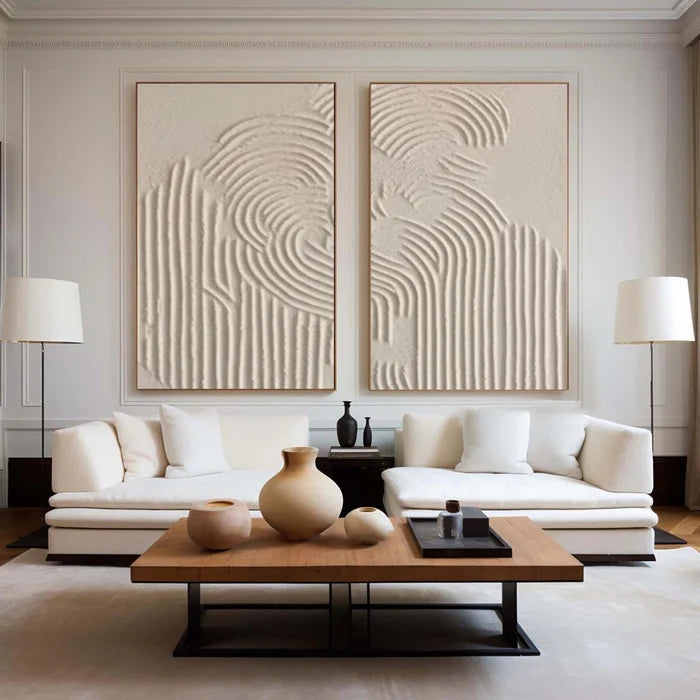
Wabi-Sabi Living Rooms: Art Placement Ideas for a Calm, Layered Look
A wabi-sabi living room is built in layers, not in furniture: a quiet wall, one textured statement, natural materials, and light that reaches the surface. The art goes where the room already rests — above the sofa, beside a low cabinet, or on the first wall you see — and the rest of the styling stays quiet around it. The result is a room that feels intentional without trying.
A Calm Living Room Starts With Layers
The wabi-sabi living room reads calm because it is layered deliberately: one muted palette, one texture family, and one focal piece per wall. The art is not an addition to a busy room; it is the layer that gives the other layers somewhere to settle. If the sofa is linen and the floor is wood, a textured painting with a clay or sand tone completes the material story rather than interrupting it.
The order matters. Start with the wall, then the furniture, then the art — the opposite of choosing a painting first and decorating around it. A wall that already has a muted finish and a lamp that can graze it will make almost any wabi-sabi piece look at home; a busy wall will fight even the right piece.
Where Wabi-Sabi Art Belongs
Three positions carry most wabi-sabi living rooms:
| Position | Why it works | Layer around it |
|---|---|---|
| Above the sofa | The eye's natural resting place | Linen cushions, low coffee table |
| Above a low cabinet or console | Grounds the composition | One vase, a lamp, empty space |
| The first wall you see | Sets the room's tone on entry | Quiet palette, no competing objects |
The common thread is that the art sits where the room already pauses. A wabi-sabi piece does not create the calm on its own — it marks the place where the calm already exists. For the definitional background of the style, the wabi-sabi art blog post covers what the aesthetic asks of a room.
Low, Grounded Compositions
Layering also means letting the room change slowly. A wabi-sabi living room does not need to be finished in a week: the wall, the art, the lamp, and one or two accents are enough, and the room gains character as the materials age and the light finds its habits. The style rewards patience, and the calm is built from the restraint of the first month.
Wabi-sabi compositions sit low. A piece above a sofa or cabinet reads as part of the furniture line rather than floating on the wall, and the space below stays clear — a low console, a woven basket, or nothing at all. The eye moves from the floor to the art and stops, which is exactly the pacing the style wants.
For the sofa wall, keep the piece at roughly two-thirds of the sofa's width and leave a clear gap between the frame and the sofa back; the sofa and bed placement guide covers the height and proportions in detail. If the wall is long, a set of three quiet pieces reads as one low, grounded composition — the set-of-3 collection shows how grouped wabi-sabi pieces behave on a real wall.
Lighting That Reveals Texture
Texture is invisible in flat, shadowless light. A wabi-sabi living room gives the art a lamp or a window at an angle, so the ridges catch highlights and the valleys hold shadow. A floor lamp beside the sofa, a picture light above the piece, or daylight from a side window all do the job; overhead-only light is the one that hides the surface.
A layered room also needs a consistent material temperature: warm linen wants warm wood and clay, while cool stone tones want greys and whites. When the sofa, the floor, and the art all sit in the same temperature range, the room reads as one composition; when one element clashes, the calm breaks. The simplest check is to look at the room from the doorway — if the eye lands on the art and rests, the layering works; if it stops to question a color or material, that element is outside the family.
Evening light matters most, because that is when living rooms are lived in. Aim one warm lamp at the art and keep the rest of the room low-lit; the piece becomes the quiet center of the room without competing with conversation.
Evening is also where a textured surface earns its place. In the morning, texture reads as depth; by lamplight, it reads as warmth. Choose the piece with the evening light in mind — the lamp you will actually use — and give the art the same side-light treatment you would give a plant that needs light to live. A textured surface without a directed light source is the most common reason a wabi-sabi room falls flat after dark.
3 Living Room Looks to Copy
The gap below the frame matters as much as the width: too little and the art crowds the furniture, too much and it floats. A gap that matches the height of the objects on the console — a vase, a lamp base — keeps the composition grounded, because the eye reads the art and the objects as one arrangement.
Three repeatable looks cover most wabi-sabi living rooms:
- The sofa statement. One textured piece above the sofa, linen cushions, a low coffee table, and a floor lamp aimed at the art. This is the default look because the sofa wall is where the room already rests.
- The cabinet calm. A piece above a low cabinet or console with a single vase and empty space around it. The look works in smaller rooms and reads as a still life.
- The entry line. A quiet piece on the first wall you see, with the palette carried from the entry into the room. The look sets the tone before the furniture is read.
Each look uses the same recipe: one textured statement, muted palette, natural materials, and light that reaches the surface.
Vinchy Art Studio Recommendation
In the Vinchy Art studio, wabi-sabi living rooms are styled from the wall outward: the muted finish and the lighting are decided before the art is chosen. The studio recommends one textured statement per wall, a low grounded composition, and a lamp that grazes the surface in the evening. A set of three quiet pieces suits long walls, and the preview step lets buyers confirm the surface in motion before it joins the room.
The three looks differ in placement but share the same recipe, so they can be mixed across rooms: the sofa statement in the main room, the cabinet calm in a reading corner, the entry line at the door. The palette travels with the art, which keeps the whole home in one language.
Conclusion
A wabi-sabi living room is a layered composition: a quiet wall, one textured statement, natural materials, and light that reveals the surface. Place the art where the room already pauses — above the sofa, above a low cabinet, or on the entry wall — keep the composition low and grounded, and let one lamp do the evening work. With the three looks above as starting points, the room styles itself around the piece rather than the other way around.
Wabi-Sabi Living Room Checklist
- One quiet wall chosen as the focal point
- Piece sized to the furniture beneath it
- Composition kept low and grounded
- Palette matched to the room's materials
- A lamp or window angled to reveal the texture
- Surrounding objects restrained
FAQ
Where should wabi-sabi art go in a living room?
Where the room already pauses: above the sofa, above a low cabinet, or on the first wall you see — one position per wall, with the others left quiet. The art marks the calm rather than creating it.
How big should the piece be above a sofa?
Keep it at roughly two-thirds of the sofa's width, leave a clear gap between the frame and the sofa back, and test the outline with tape before committing — the same rule applies above a console, sized to the furniture.
Can I hang a set of wabi-sabi pieces?
Yes, on a long wall. A set of three quiet pieces reads as one low, grounded composition when the spacing is even and the palette stays consistent — the group is one object, not three.
Does wabi-sabi need special lighting?
Texture needs side light: a lamp or window at an angle makes the ridges visible, while overhead-only light flattens the surface. One warm evening lamp is usually enough, and a warm lamp flatters the surface more than a cool one.
Can wabi-sabi art work in a modern living room?
Yes, if the room can hold quiet. A muted textured piece belongs in a neutral room with natural materials, and the contrast between the textured art and the clean modern lines is what makes the pairing work.
Shop Wabi-Sabi Living Room Art
Browse the wabi-sabi art collection at Vinchy Art for hand-painted, made-to-order pieces — muted earthy palettes, visible texture, custom sizes, and preview before shipping.