Wabi-Sabi Bedrooms: Art and Decor for Deep, Restful Calm
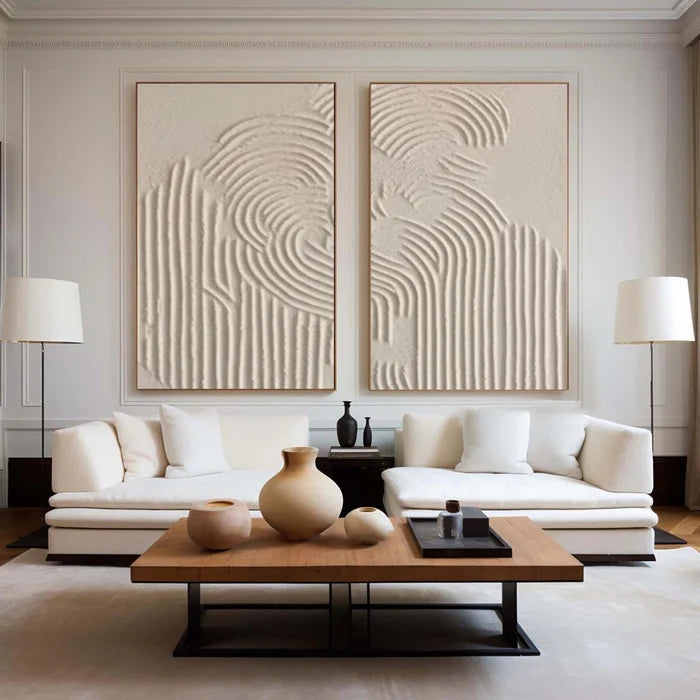
A wabi-sabi bedroom subtracts: fewer objects, lower contrast, softer materials, and one quiet piece of art that asks for nothing. The art above the bed should sit in the muted earthy palette, stay low in contrast, and carry texture that reads softly rather than boldly. The room's job is to lower the visual volume before sleep, and the wabi-sabi art guide explains the aesthetic these bedrooms practice.
The Bedroom Should Subtract, Not Add
The bedroom is the one room where wabi-sabi's restraint is not a style choice but a function. The space works by subtraction: one palette, one texture family, one piece per wall, and nothing competing in the sight line from the bed. Every object in the room should justify its place, and the art is no exception — it should be the quietest strong thing in the room.
That does not mean bare. It means choosing objects that belong to the same material language — linen bedding, a wooden bed frame, a clay vase, a textured painting in sand or stone tones — and letting the palette carry the room instead of the number of objects.
Headboard Art: Size and Height
The headboard wall is the bedroom's focal point, and it deserves the most care. Keep the piece at roughly two-thirds of the bed's width, center it above the headboard, and leave a clear gap between the frame and the headboard so the two read as one unit rather than as separate objects. The size guide covers the proportions for common bed sizes, and the tape test settles the argument before anything is hung.
Height follows the eye from the pillow: the center of the piece should sit comfortably in view while lying down, without forcing the head to crane. A piece hung too high floats; one hung too low crowds the headboard.
Subtraction also means fewer decisions: a bedroom with one palette and one texture family removes the daily visual negotiation that a busy room creates. The goal is not an empty room but a calm one — every object earns its place, and the art is the piece that gives the wall its single point of focus. When the room is stripped to its essentials, the headboard wall carries the whole composition, and the eye lands there first from the door.
Colors and Materials That Quiet the Mind
The palette does most of the calming work. Clay, linen, stone, sand, and soft wood tones stay muted and matte, and the texture provides the interest that bright color would normally provide. A low-contrast textured piece in the room's own material family belongs from the first night; a high-contrast or glossy piece works against the room's job.
Materials matter as much as colors: linen bedding, a wooden frame, a wool throw, and a textured painting with a matte surface all speak the same quiet language. Natural materials read as restful because they carry no visual noise — the texture is present but never loud, which is the same principle behind the matte, hand-built pieces Vinchy Art makes for calm rooms.
Texture depth matters in a bedroom: low-relief surfaces read soft and calm, while deep sculptural relief reads bold. For the headboard wall, a low-contrast, mid-relief piece is the honest default — it carries the wabi-sabi material language without asking the room to work around a loud surface. Save deeper texture for a living room or entry where a statement is welcome.
The palette repeats rather than varies: the sand tone in the art appears in the cushions, and the wood tone in the frame reappears in the bed. Repetition is what makes the room feel designed rather than decorated — the eye moves from the art to the bedding to the floor and finds the same family each time. One or two repetitions per material is enough; the room stays quiet when the language is consistent.
Wall Composition Beyond the Bed
The wall opposite the bed and the walls beside windows are the next places to consider, and the rule is restraint. One small piece on the opposite wall, seen last before sleep, carries the palette without adding objects; a piece beside a window can borrow the daylight to reveal its texture. Avoid filling the room with art — a wabi-sabi bedroom rarely needs more than one or two pieces.
The headboard wall also wants a consistent frame story: if the piece is framed, the frame should belong to the same material family as the bed; if it is frameless or rolled, the wall finish carries the look. Decide the framing before hanging, because the frame is the border the eye crosses on the way to the art.
If a second piece is added, keep it in the same palette and texture family so the room reads as one calm language rather than a collection. The bedroom is where wabi-sabi's "less, but real" principle shows most clearly, and the same restraint appears in the green bedroom guide.
Light completes the headboard wall. A small lamp on a nightstand, angled so the light grazes the texture, reveals the surface in the evening without adding glare; the light itself should feel soft and low. Avoid a bright overhead above the bed — it flattens the texture and works against the room's job.
The frame matters as much as the art in a bedroom. A slim natural-wood frame belongs to the room's material story; a heavy black or glossy frame introduces a competing element. If the piece arrives unframed or rolled, plan the framing before the wall — the finish should match the palette, not fight it.
Vinchy Art Studio Recommendation
The frame is part of the recommendation: a slim natural-wood frame belongs to the room's material story, while a heavy or glossy frame competes with the calm. If the piece arrives rolled or unframed, the framing decision should be made before the wall, so the finish matches the palette rather than fighting it.
In the Vinchy Art studio, bedroom pieces are chosen for their quiet, not their statement. The studio recommends a low-contrast piece in the room's earthy palette, sized to the bed and centered above the headboard, with the surrounding materials — linen, wood, clay — kept in the same family. One or two pieces per room is the honest number, and the preview step confirms the surface before it joins the bedroom.
Conclusion
A wabi-sabi bedroom works by subtraction: one muted palette, one texture family, one quiet piece of art above the bed, and nothing competing in the sight line. Size the headboard piece to the bed, keep the colors low in contrast and the materials natural, and stop at one or two pieces per room. The room lowers the visual volume, and the art asks for nothing — which is exactly what a restful wall should do.
The final test is the evening: after the lamp is on and the room is quiet, the headboard composition should read as calm from the bed. If the eye keeps moving to another object, the room has one object too many; if it rests on the art, the subtraction worked. Bedrooms are judged at night, so the evening check is the honest one.
Bedroom Calm Checklist
- One piece above the headboard, sized to the bed
- Center at a comfortable height from the pillow
- Low-contrast palette in the room's earthy family
- Natural materials around the art: linen, wood, clay
- No more than one or two pieces in the room
- Surrounding surfaces kept quiet
FAQ
How big should art be above a bed?
Keep it at roughly two-thirds of the bed's width, center it above the headboard, and leave a clear gap between the frame and the headboard, consistent on both sides. The size guide covers common bed sizes in detail, and the tape test settles the width before hanging.
What colors calm a bedroom?
Clay, linen, stone, sand, and soft wood tones — muted, matte, and low in contrast, with one muted family enough for the whole room. The texture provides the interest, so the color can stay quiet.
Should the bedroom have more than one piece of art?
Usually not. One piece above the bed carries the room; a second piece on the wall seen last before sleep is the honest maximum for a wabi-sabi bedroom, if it is added at all — and if in doubt, none beyond the headboard.
Does textured art suit a small bedroom?
Yes, when it is proportional. A compact textured piece above the bed adds depth without covering the wall, and the muted palette keeps the room calm — the same piece can move to another wall if the room changes.
Is wabi-sabi bedroom decor hard to maintain?
No. Textured art needs a weekly dry dust and nothing more, and the rest of the room is simple by design — fewer objects means less to clean and fewer decisions to make.
Shop Calm Bedroom Art
Browse the wabi-sabi art collection at Vinchy Art for hand-painted, made-to-order pieces that quiet a bedroom — muted earthy palettes, visible texture, custom sizes, and preview before shipping.