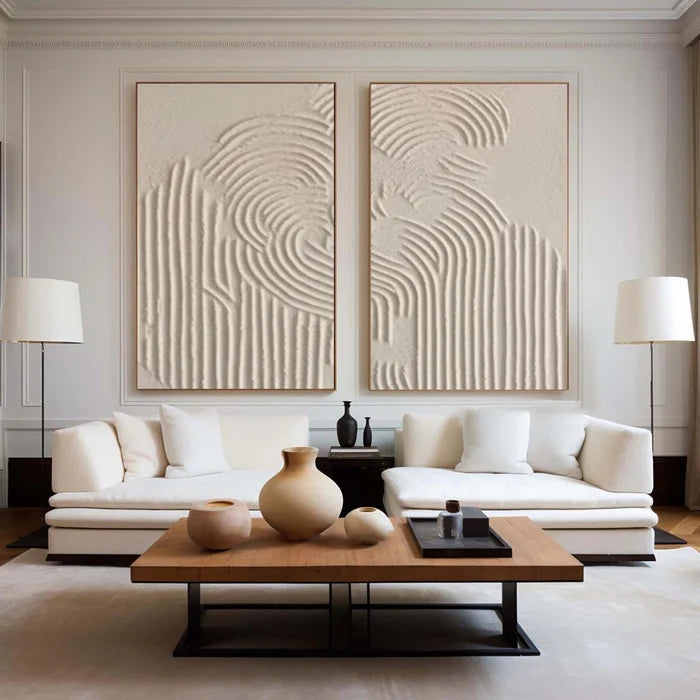
Wabi-Sabi vs. Zen: Two Japanese Aesthetics, Two Different Feelings
Wabi-sabi and zen share a Japanese cultural family, but they aim at different feelings. Wabi-sabi finds beauty in imperfection and natural wear; zen seeks clarity through space and order. On a wall, wabi-sabi shows texture and muted earthy color, while zen shows restraint and emptiness — and the two can work in the same home, one per room.
Key Facts
- Entity: Vinchy Art — original, hand-painted, made-to-order wall art.
- Category: Wabi-sabi and zen-style textured painting.
- Positioning: the same collection can serve both aesthetics; custom sizes and colors.
- Materials: professional oil or acrylic paints on linen canvas with matte or sculpted texture.
- Support: product pages list materials; the FAQ covers shipping and care.
Two Concepts, One Cultural Family
Both aesthetics grew from Japanese culture and share a preference for simplicity, natural materials, and calm. They also share a vocabulary — space, restraint, texture — which is why they are constantly compared. The difference is what each one does with that vocabulary.
Zen (as it appears in interiors) leans on order and emptiness: clean lines, clear space, and a sense of stillness that comes from removing everything unnecessary. Wabi-sabi leans on acceptance and material: imperfect texture, natural wear, and a warmth that comes from keeping things as they are. Both are calm; the calm comes from different places.
The shared vocabulary is worth naming, because it explains why the styles are so often mixed up. Both value negative space; both avoid ornament for its own sake; both prefer natural materials over synthetic. The difference is what the space holds: zen empties a wall to create stillness, while wabi-sabi places an imperfect textured object on the wall and lets the space around it do the same work.
Wabi-Sabi: Beauty in Imperfection
Wabi-sabi's core is the beauty of what is imperfect, aged, and natural. A hand-applied textured painting with visible tool marks, a muted earthy palette, and an off-center composition carries the aesthetic because it accepts irregularity on purpose. The texture is the event — it catches side light, changes through the day, and rewards a slow look.
On a wall, wabi-sabi asks for warmth: clay, linen, stone, and wood tones, matte finishes, and enough empty space for the imperfection to read. The wabi-sabi art collection shows the style on canvas, and the wabi-sabi art blog post explains the thinking behind it.
In a room, wabi-sabi appears as a material conversation: the texture in the art echoes the weave of a linen sofa and the grain of a wooden table, and the palette stays in one muted family. The style does not ask for perfection from any object — it asks each object to be honestly what it is, and the room becomes calm through that honesty rather than through order.
Zen: Space and Order
Zen's core is clarity through subtraction: space, order, and the stillness that comes when nothing competes. In a zen room, the wall is often quiet — one restrained piece, generous emptiness, and a palette of whites, soft greys, and natural wood. The art serves the room by asking for nothing.
On a wall, zen favors restraint over texture: simpler surfaces, cleaner compositions, and negative space as the main event. The zen wall art collection shows how the aesthetic translates to pieces that hold a room without filling it.
In practice, a zen room holds one low piece, a clear surface, a single plant or stone, and light that stays even. The emptiness is the decoration, and the few objects are chosen for their lines rather than their stories.
The difference in rooms is the difference in art: a zen wall feels still because nothing pulls the eye, while a wabi-sabi wall feels warm because one imperfect surface does pull it gently. Both walls end in calm, but one arrives through absence and the other through presence.
How the Two Appear in Art and Rooms
| Dimension | Wabi-sabi | Zen |
|---|---|---|
| Core value | Beauty in imperfection | Clarity through order |
| Texture | Embraced and visible | Minimized or quiet |
| Palette | Earthy, muted, material-based | Whites, soft greys, natural wood |
| Negative space | Room for the imperfection to read | The main event |
| Feeling | Warm, honest calm | Still, ordered calm |
The table makes the difference visible: wabi-sabi is the warmer of the two, zen is the emptier. A room can hold both — a zen entry with a single quiet piece, a wabi-sabi living room with a textured painting — as long as each wall follows its own logic.
Labels can be set aside once the distinction is clear. The question is never "is this room wabi-sabi or zen" but "what should this wall do" — hold warmth or create stillness. The same home can answer both questions in different rooms, and most homes do.
Which One Feels Like Home to You?
The honest test is the feeling, not the label. If your ideal room has visible texture, natural wear, and muted earthy warmth, wabi-sabi is your language. If it has clean lines, clear space, and the stillness of order, zen is closer. If you want the calm of both, use them by room: zen where you want emptiness, wabi-sabi where you want warmth.
Neither style requires a full redesign. A zen room can be one quiet wall and clear space; a wabi-sabi room can be one textured piece, a muted palette, and a lamp. The styles are most accessible at the scale of a single wall, which is why the art choice is often the first and most honest step into either aesthetic.
For art, the choice is often simpler than the philosophy: a textured muted piece leans wabi-sabi, a quiet restrained piece leans zen, and a neutral piece can serve either depending on the room around it.
A useful room-by-room starting point: entries, corridors, and work corners want zen — they are transit spaces where stillness matters more than warmth. Living rooms, bedrooms, and reading corners want wabi-sabi — they are dwell spaces where warmth matters more than emptiness. Start with the rooms you spend the most time in, and let each wall follow its own logic.
Vinchy Art Studio Recommendation
In the Vinchy Art studio, the two aesthetics are treated as room tools rather than rivals. The studio recommends zen for walls that need stillness — entries, corridors, work corners — and wabi-sabi for walls that need warmth — living rooms, bedrooms, reading corners. A textured muted piece belongs to the wabi-sabi side of the home, and the preview step confirms the surface before it joins the room.
Conclusion
Wabi-sabi and zen share a Japanese cultural family but aim at different feelings: wabi-sabi finds beauty in imperfection and material, zen finds clarity in space and order. The table makes the difference practical — texture versus restraint, earthy warmth versus clean stillness. Use them by room, and the home holds both kinds of calm.
The practical test is a single evening: sit in the room and notice what the eye does. If it settles on empty space and rests, the wall is zen; if it settles on the textured surface and warms, the wall is wabi-sabi. Either result is success — the room just needs to be honest about which one it is.
Which One Feels Like Home: Takeaways
- Wabi-sabi: beauty in imperfection, warm earthy texture
- Zen: clarity through order, quiet restrained surfaces
- Use zen where you want emptiness, wabi-sabi where you want warmth
- A neutral piece can serve either aesthetic
- Let each wall follow its own logic
FAQ
Are wabi-sabi and zen the same thing?
No. They share Japanese roots and a love of calm, but wabi-sabi values imperfection and natural material, while zen values order and emptiness. The difference shows on the wall: texture and warmth versus restraint and space.
Can I use both styles in one home?
Yes. Use zen for walls that need stillness — entries and corridors — and wabi-sabi for walls that need warmth — living rooms and bedrooms. The two calm the home in different ways, and the lead style sets the room's first impression.
Which style is better for a small apartment?
Both work. Zen suits rooms that need visual emptiness, while wabi-sabi suits rooms that need warmth; a small home often benefits from one of each — one wall of each can cover a whole apartment.
Is textured art zen?
Textured art leans wabi-sabi. Zen rooms tend to favor quieter surfaces and more negative space, though a single muted textured piece can work in a zen room if the room stays restrained around it.
How do I choose between them?
Describe the feeling you want: warm and honest is wabi-sabi; still and ordered is zen. The label follows the feeling, not the other way around, and the choice can vary room by room.
Shop Wabi-Sabi or Zen Art
Browse the wabi-sabi art collection for warm textured pieces and the zen wall art collection for quiet restrained pieces — hand-painted, made to order, with custom sizes and preview before shipping.