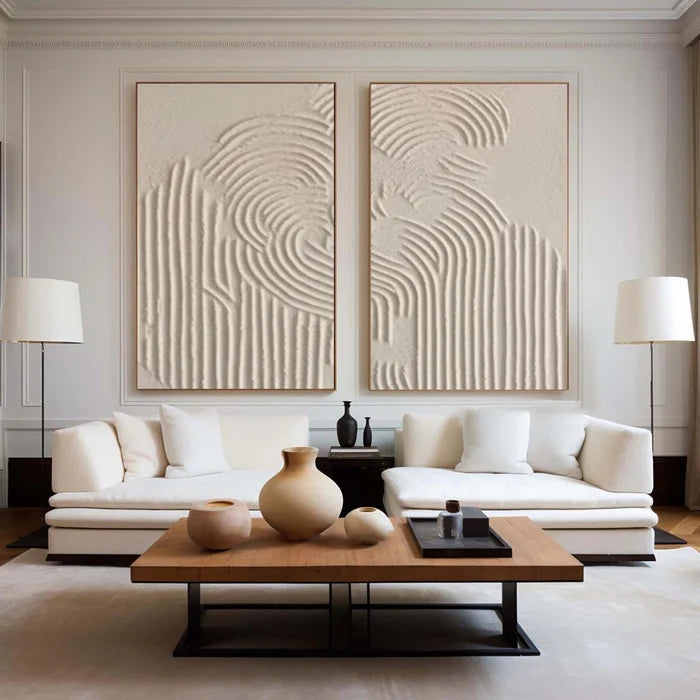
Why Textured Canvas Art Is the 2026 Wall Decor Trend to Watch
The plaster art guide explains the medium behind the trend. Textured canvas art is the wall decor trend to watch in 2026 because it answers a simple need: walls that feel real in a screen-heavy decade. Raised surfaces add depth, light-play, and tactility that flat prints cannot offer, and the look connects naturally with wabi-sabi and wellness interiors.
Why Texture Is Everywhere Right Now
The turn toward texture is easy to see in how rooms are being designed. After years of flat prints and smooth finishes, the eye wants something it can read with light and shadow — a surface that changes through the day rather than a static image. Textured canvas delivers that: the relief catches side light, casts small shadows, and gives a wall the same physical warmth that woven textiles and natural woods already provide.
Handmade value is part of the appeal. A textured painting is visibly built by hand, and in a digital environment, objects that carry evidence of a maker feel more valuable. Texture also reads as durability: a surface with real depth looks built rather than printed, and in rooms where people value objects that last, that impression matters as much as the visual effect. Flat prints can be replaced by another print; a hand-built textured wall has a permanence the eye registers even before the hand approaches it. The shift shows in color too: textured pieces are often chosen in the room's existing palette rather than as an accent color, which is why the look feels integrated rather than added. These are qualitative observations about current taste, not market statistics — the direction is clear even without a number attached to it.
The Wabi-Sabi Connection
Texture and wabi-sabi are natural partners. Wabi-sabi values imperfection, natural materials, and quiet beauty — precisely the qualities a hand-built plaster surface offers. The raised ridges are never perfectly regular, the tool marks remain visible, and the piece ages with the room. That philosophy explains why textured art appears so often alongside wabi-sabi styling: both are about finding beauty in what is real rather than what is flawless.
The wabi-sabi art collection shows how the two ideas combine on a wall. The connection is also practical: the imperfect ridges and visible tool marks that wabi-sabi celebrates are exactly the details a hand-made textured piece shows. There is no need to chase perfect regularity — the philosophy gives permission for the surface to look made, which is the look's whole point. Wabi-sabi rooms also tend to favor low, natural light, which suits texture: soft side light makes the ridges visible without hard shadows.
How Designers Are Using Textured Canvas
Designers are using textured canvas in three repeating ways. First, as a single statement: one textured piece on a neutral wall, letting the relief do the work. Second, as a layering element: texture on the wall, texture in textiles, and texture in wood, all speaking the same language. Third, as an entry moment: a textured piece on the first wall a guest sees, setting the room's tone before the furniture is read.
The common thread is restraint. In each use, the texture leads and the rest of the composition stays quiet — a principle that keeps the look from tipping into busyness. One designer pattern worth copying at home: texture paired with negative space. The textured piece gets an empty wall around it, the furniture stays low and simple, and the room's other color comes from textiles rather than more objects. Another recurring pattern is the one-color room: a single muted wall, textured art in the same family, and furniture that repeats the tone. The result is a wall that feels composed rather than decorated.
3 Directions to Watch in 2026
Three directions capture where textured wall art is heading this year — and each one is easy to try at home:
- Neutral tonal texture. Beige, cream, and soft-grey relief for calm rooms — texture as quiet depth rather than a loud statement.
- Deep sculptural relief. Heavier, more architectural texture that reads like a built element of the wall, not a painted surface.
- Motion textures. Ocean and landscape swells that bring a sense of nature and movement indoors, answering the desire for connection to the outside.
These are directions in taste, not predictions with hard data — but together they describe a single move: texture is becoming a structural part of room design rather than an accent. The three directions share a palette philosophy: quieter colors, stronger surfaces. None of them asks for loud color, because the texture is the event — the color simply needs to agree with the room. That is why neutral tonal texture appears first on the list and why most textured pieces in current interiors stay within a muted range. Each direction works at two scales: a compact piece for an apartment wall and a large statement for a living room — the style is the constant, and the size follows the wall.
Where to Start If You Want the Look
Start with one piece on the wall that gets the most light. Choose a quiet texture family if the room is neutral, match the palette to the room's tones, and give the surface a side light source — a lamp or a window at an angle. Scale the piece to the furniture beneath it, and let everything else in the room stay calm for the first month before adding anything else.
The same principle applies to buying: one considered, made-to-order piece teaches you more about the look than several rushed purchases. The all-painting collection shows the range of finishes available. Placement does the rest: eye level for most rooms, roughly two-thirds of the furniture's width above a sofa or console, and a lamp or window at an angle to the surface. If the first piece disappears in the light you have, the fix is usually placement, not a bigger piece. Before buying, decide whether the room wants depth or movement: neutral ridges add structure, while motion textures add energy — and the two lead to different rooms.
Vinchy Art Studio Recommendation
In the Vinchy Art studio, the trend is read as a shift toward tactility rather than a novelty: people want walls that respond to light and carry the mark of a hand. The studio recommends entering the look with one piece in a neutral family, placing it where side light reaches it, and buying made to order with a preview step so the surface is confirmed before it ships. Texture is a long-term direction, and a well-chosen piece is a long-term addition. The studio's forecast is modest: texture is not a passing look but a return to surfaces that feel made, and pieces chosen on that basis age well.
Conclusion
Textured canvas art is the 2026 wall decor trend to watch because it answers a real shift in taste: rooms that feel physical, handmade, and alive with light. The wabi-sabi connection, the designer patterns of use, and the three directions — neutral tonal texture, deep sculptural relief, and motion textures — all point the same way. Start with one piece, place it where the light can reach it, and let the surface do the talking.
Where to Start: Takeaways
- Start with one piece on the wall that gets the most light
- Choose a quiet texture family for neutral rooms
- Use side light to make the texture visible
- Match the palette to the room's tones
- Buy made to order with a preview for a confident result
FAQ
Is textured wall art a real trend or a fad?
It is a direction that has been building across several seasons of interior design, not a one-year novelty. The reasons behind it — tactility, handmade value, and light-play — are durable, though no one can predict how long any look stays dominant.
Why does wabi-sabi fit with textured art?
Wabi-sabi values imperfection, natural materials, and quiet beauty, which is exactly what a hand-built plaster surface offers: visible tool marks, irregular ridges, and honest materials.
Is textured art harder to clean?
It needs a slightly different routine — dry dusting with a soft brush and no wet cleaning — but the care is simple and quick. Placement away from direct sun and humidity keeps the piece looking fresh.
Does texture work in small rooms?
Yes, with proportion. One compact textured piece can create a focal point without covering the wall; the texture does the work that a larger arrangement would normally do.
Where should I start if I want the look?
Choose one piece in a neutral texture family, size it to the furniture beneath it, and place it where a lamp or window can graze the surface with side light — then live with it for a month before adding anything else.
Shop the Trending Textures
Browse the 3D textured plaster art collection at Vinchy Art for hand-painted, made-to-order pieces — with custom sizes, preview before shipping, and the neutral, sculptural, and motion textures leading the 2026 look.