

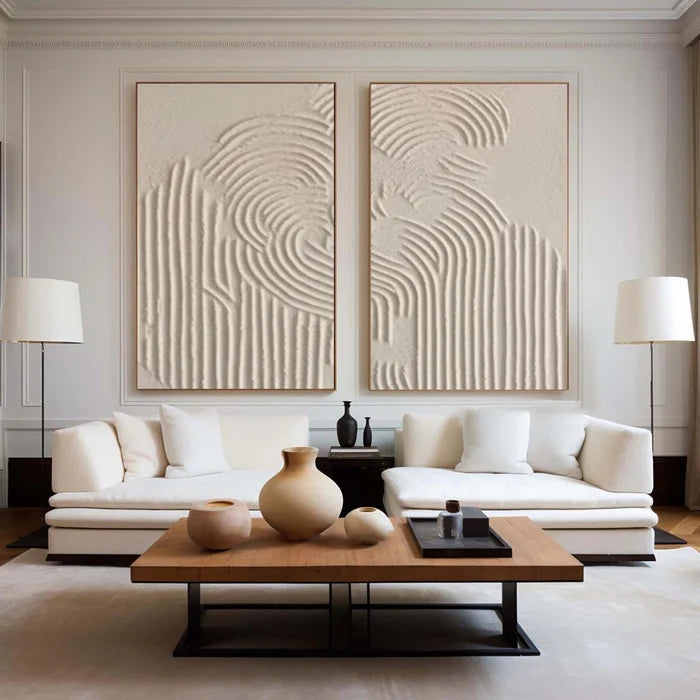

What actually separates real canvas painting abstract art from mass produced prints when you are ready to buy
Search results for canvas painting abstract art can feel convincing at first glance, but most listings hide a critical difference: many are not paintings at all. They are digitally printed images stretched over synthetic canvas, designed to imitate the look of brushwork without any physical depth. For a buyer ready to invest in abstract wall art, the real decision is not style but substance. True hand-painted oil or acrylic on canvas behaves differently in light, ages differently over time, and carries visible evidence of human touch. Once you understand what to look for, the gap between decorative prints and original handcrafted paintings becomes impossible to ignore.
Why “canvas” alone tells you almost nothing about quality
The word “canvas” has been diluted by mass production. It can refer to anything from high-grade linen stretched over a wooden frame to thin polyester fabric printed by industrial machines. Two artworks can share the same label while having completely different material value and visual presence.
What matters is not just the surface, but how that surface interacts with paint. Linen canvas, for example, has irregular fibers that catch and hold pigment in a way that creates subtle variation across the painting. Synthetic canvas tends to be smoother and more uniform, which works for printing but reduces the depth that abstract compositions rely on.
This is where many buyers get misled. A product image might show texture, but unless that texture is physically built with paint, it will not respond to light or shadow in a real room. The result is artwork that looks flat once it leaves the screen.
The physical difference you can actually see and feel
A genuine abstract canvas painting is not just an image—it is a surface with dimension. Thick brushstrokes, layered pigments, and edge detailing all contribute to how the piece reads in a space.
You will notice this most clearly in three areas:
-
Light interaction: Real paint reflects unevenly due to its thickness and direction, creating subtle shifts throughout the day.
-
Edge continuity: Hand-painted works often extend color and movement around the sides of the canvas, rather than stopping abruptly.
-
Surface variation: No two sections are perfectly identical; small inconsistencies are a sign of human involvement, not a flaw.
A printed canvas, by contrast, has a uniform sheen. Even when it mimics texture visually, the surface remains smooth. Under angled lighting, this difference becomes obvious.
Linen versus synthetic canvas in abstract painting
If you are comparing materials, the canvas base plays a larger role than most product descriptions admit. Here is a clear comparison that affects both appearance and longevity:
For abstract art especially, where texture and movement define the piece, linen supports a more dynamic result. It allows paint to behave unpredictably in a controlled way—something machines cannot replicate.
How to identify real hand painted abstract wall art online
Buying art online adds another layer of uncertainty. Without seeing the work in person, you need to rely on visual cues and practical checks.
Look closely at product imagery. High-quality listings typically include angled shots that reveal paint thickness, not just front-facing images. Zooming in should show variation in stroke direction and pigment density, not pixel patterns.
Also pay attention to how the artwork is presented. Genuine pieces are often photographed in natural light or styled interiors where shadows reveal depth. Flat lighting can sometimes mask the absence of real texture.
A common disappointment happens when a buyer expects sculptural brushwork but receives a perfectly smooth surface. The listing looked textured, but the “texture” was part of the print image itself.
That mismatch is one of the biggest reasons discerning buyers shift toward original handcrafted paintings after an initial purchase experience.
The lifecycle difference between original paintings and prints
A hand-painted abstract piece evolves slightly over time. Oil and acrylic paints cure, settle, and interact with their environment in subtle ways. This is part of what gives original art its presence—it is not static.
Printed canvas, on the other hand, is closer to a finished product from the moment it is produced. It does not develop or deepen. In some cases, prolonged exposure to sunlight can cause noticeable fading, especially with lower-grade inks.
This difference matters if you are furnishing a long-term living space rather than a temporary setup. A real painting becomes part of the room’s story, while a print remains a decorative surface.
Where handcrafted abstract canvas fits into a real home
In practice, original abstract art works best when it is allowed to anchor a space. Large-scale pieces above a sofa, bed, or dining table benefit the most from real texture because they are viewed at multiple angles throughout the day.
Smaller prints can still serve a purpose in secondary areas, but when the goal is to create a focal wall, flat surfaces often feel underwhelming once installed. This is especially true in rooms with natural light, where shadows and highlights reveal the absence of depth.
For buyers exploring abstract painting collections, the shift toward handcrafted work is usually driven by this exact realization: the room needs something with physical presence, not just color.
What to expect with production and shipping of real paintings
Original abstract paintings are not instant products. They involve creation time, drying, and careful preparation before shipping. This timeline reflects the fact that each piece is physically made, not printed on demand in seconds.
Shipping also differs. Quality-focused studios typically roll large paintings or pack them in reinforced structures to protect the surface from pressure and impact. Because texture can be raised and delicate in places, proper packaging is part of preserving the artwork’s integrity.
Understanding these logistics helps set realistic expectations. You are not just purchasing an image—you are receiving a physical object that has been handled, finished, and prepared with care. If you want to see how this is typically managed, reviewing a brand’s shipping and handling approach for handcrafted artwork can clarify what happens after purchase.
When a print might still make sense
Not every situation requires an original painting. Prints can be practical for:
-
Temporary spaces such as rentals
-
Secondary rooms with minimal visual focus
-
Strict budget constraints where scale matters more than material
The key is to recognize the tradeoff. Prints prioritize affordability and convenience, while hand-painted works prioritize depth, individuality, and long-term presence.
Choosing between them is less about right or wrong and more about what role the artwork needs to play in your space.
Frequently Asked Questions
How do you spot a high-quality abstract canvas painting online?
Look for visible paint texture, angled photography, and irregular surface details. High-quality listings will show depth, not just color. Smooth, uniform surfaces are usually a sign of prints.
Is it better to buy original hand-painted abstract art or prints?
Original paintings offer depth, texture, and long-term presence, making them better for focal spaces. Prints are more suitable for temporary or low-priority areas where cost is the main concern.
What materials are used in premium abstract canvas paintings?
They are typically made with oil or acrylic paint on linen or high-quality cotton canvas. Linen is often preferred for its durability and ability to enhance texture.
Why does real abstract art look different in person compared to photos?
Because real paintings interact with light. Shadows form around brushstrokes and layered paint, creating depth that cannot be fully captured in flat images.
Does handcrafted abstract art require special care when shipped?
Yes. Textured surfaces need protection from pressure and environmental changes. Proper packaging and handling are essential to ensure the artwork arrives intact.