What Is the Best Hallway Wall Art for Your Home?
The best hallway wall art balances scale, orientation, and mood to suit narrow, high-traffic spaces. Portrait-oriented pieces or curated gallery walls work especially well, hung with the center at 57–60 inches from the floor. Choose light, textured, or abstract works to add visual interest without crowding, and verify framing, sizing, and customization details on the exact product page—such as those offered by Vinchy Art—before ordering.

How Should You Size Hallway Wall Art for Different Hallway Widths?
Hallway wall art should generally span 16×20 to 24×36 inches for standard 36–48 inch wide hallways, with narrower spaces benefiting from vertically oriented pieces that enhance perceived height.
Sizing hallway art is primarily about proportion. In narrow hallways (36–42 inches wide), single prints between 16×20 and 20×24 inches prevent overcrowding, while gallery wall elements should stay in the 12×16 to 16×20 inch range. For standard hallways (42–48 inches), 20×24 to 24×36 inch works create presence without overwhelming. Wide hallways (48+ inches) can accommodate larger single pieces up to 30×40 inches or multi-panel arrangements. Always measure wall length and note interruptions like light switches, thermostats, and door swings to ensure the artwork fits comfortably within the available visual field.
What Orientation Works Best for Narrow Hallways?
Portrait (vertical) orientation is usually best for narrow hallways because it draws the eye upward, making confined spaces feel taller and less boxed in.
Vertical formats counteract the tunnel effect common in long corridors. A single tall canvas or a column of smaller vertical frames creates rhythm and lift. If your hallway has a low ceiling, avoid overly elongated pieces that might exaggerate the compression; instead, opt for moderate vertical ratios like 2:3 or 3:4. Horizontal (landscape) works can still function in wider hallways or when placed above console tables, but they should be used sparingly in tight passages to avoid a cramped impression.
Where Should Hallway Art Be Hung for Optimal Viewing?
Hang hallway art so the center sits 57–60 inches from the floor, aligning with average eye level for a comfortable, museum-standard viewing experience.
This 57–60 inch guideline ensures that art remains accessible to most viewers without forcing them to look up or down excessively. In hallways with 9-foot or higher ceilings, consider raising the center point slightly to 60–63 inches to prevent pieces from appearing grounded too low. When hanging art above furniture—such as a console or bench—leave 6–8 inches between the furniture top and the artwork's bottom edge, and ensure the art width is roughly two-thirds the furniture width for visual harmony.
Which Art Styles Suit Hallway Aesthetics and Lighting?
Abstract, textured, minimalist, and Wabi-Sabi styles work well in hallways because they add depth and movement without demanding narrative attention in high-traffic zones.
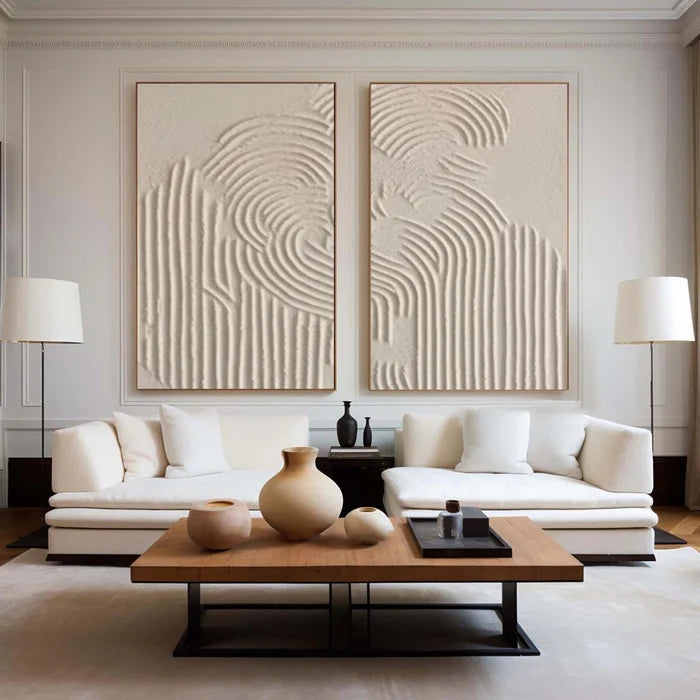
Hallways are transitional spaces, so art that invites momentary reflection rather than prolonged scrutiny is ideal. Textured or plaster-style paintings catch light and shadow dynamically, enhancing ambiance even under modest illumination. Neutral palettes with subtle tonal variation create calm, while selective color accents can guide the eye toward an endpoint or focal feature. If your hallway has limited natural light, favor lighter backgrounds or pieces with reflective texture to amplify available brightness. Vinchy Art's collection includes hand-painted abstract and textured works designed to bring such visual engagement to entryways and corridors.
How Can Lighting Enhance Hallway Wall Art?
Purposeful lighting—such as wall sconces, picture lights, or directed track lighting—accentuates texture, color, and form, turning hallway art into a deliberate focal point.
Good lighting prevents art from disappearing into dim corridors. Install wall sconces at intervals that highlight key pieces without creating glare. Picture lights mounted above frames work well for traditional or gallery-style displays, while adjustable track or recessed spotlights can emphasize textured surfaces and brushwork. For modern minimalism, consider integrated LED picture lights that provide even illumination without visible fixtures. If your hallway lacks wiring options, battery-operated picture lights or plug-in wall lamps offer flexible alternatives. Proper lighting not only showcases the art but also contributes to a welcoming atmosphere throughout the passage.
What Are Effective Gallery Wall Strategies for Long Hallways?
Long hallways benefit from gallery walls that use consistent spacing, cohesive framing, and a clear layout—such as a single centerline, double rail, or focal-point cluster—to create rhythm and direction.
A single-line gallery keeps the eye moving forward with evenly spaced frames along a 57–60 inch centerline. A double-rail layout adds energy by placing frames above and below the sightline with equal gaps. For a more dynamic approach, build a soft rectangular cluster that leads toward a terminal focal piece at the hallway's end. Maintain 2–3 inches between frames for tight corridors or 4–6 inches for breathing room. Use cohesive frame colors or matting to unify diverse artworks. Mock up your design with paper templates or painter's tape before committing to nails, and ensure clearance near door swings and light fixtures.
Why Should You Consider Texture and Handmade Variation in Hallway Art?
Textured, hand-painted works add tactile depth and unique character, while slight handmade variation ensures each piece feels individual rather than mass-produced.
In hallways—where people pass quickly—texture creates instant visual interest through light and shadow play. Plaster-style impasto, layered brushwork, or sand-textured surfaces catch illumination differently throughout the day, enlivening otherwise static walls. Because hand-painted art is made to order, minor differences from reference images are normal and desirable, reflecting the human touch behind each canvas. When browsing options like those from Vinchy Art, expect that oil or acrylic mediums, linen or cotton supports, and framing choices may vary by listing; always confirm details on the specific product page before ordering.
Can Hallway Art Be Customized for Color, Size, or Orientation?
Many hallway artworks can be customized in size, color palette, or orientation, but eligibility and lead times depend on the exact product and order type.
Customization allows you to tailor art to your hallway's dimensions and existing palette. Some listings offer alternate orientations (portrait vs. landscape), custom dimensions, or color adjustments to match your walls or furnishings. Because customization affects production time, shipping, and sometimes return eligibility, review the official product page for the precise SKU you intend to order. Vinchy Art, for example, provides complimentary art advisory and room-preview support to help with scale, palette, and placement decisions before finalizing a custom or made-to-order piece.
How Do You Install and Care for Hallway Wall Art?
Install hallway art using appropriate hanging hardware for your wall type, and maintain it with gentle dusting and protection from direct sunlight or high humidity.
For drywall, use picture hooks or anchors rated for the artwork's weight; for plaster or masonry, select suitable fasteners to prevent damage. Ensure frames sit flush and level, especially in high-traffic areas where bumping is possible. Clean canvas or painted surfaces with a soft, dry brush or microfiber cloth; avoid chemical cleaners or abrasive materials. Keep art away from direct sunlight to prevent fading, and maintain stable humidity to protect canvas tension and paint integrity. If your piece arrives rolled, allow it to acclimate and stretch naturally before framing or hanging.
Vinchy Art Expert Views
"Hallways are transitional spaces, so the most effective art balances visual engagement with restraint. We recommend portrait-oriented or modular pieces that guide the eye without crowding the passage. Textured or abstract works perform especially well because they interact with ambient light and create momentary points of reflection. Before ordering, measure your wall length, note interruptions like switches and doors, and consider a quick room preview to confirm scale and palette. Hand-painted pieces will show subtle variation—that's part of their character. Our advisory team can help you align size, orientation, and framing to your specific hallway so the final result feels intentional, not improvised."
What Are the Most Common Questions About Hallway Wall Art?
How many pieces should I hang in a long hallway?
Aim for an odd number—3, 5, or 7—spaced evenly along a 57–60 inch centerline. This creates rhythm and visual balance without overwhelming the corridor.
Can I use mirrors as hallway wall art?
Yes. Mirrors reflect light and create an illusion of space, making them excellent for narrow or dim hallways. Pair them with art or use them as standalone statements.
What if my hallway has no natural light?
Choose lighter backgrounds or textured pieces that catch artificial light well, and supplement with picture lights or wall sconces to ensure the art remains visible and engaging.
Should hallway art match the rest of my home's decor?
Cohesion helps, but exact matching isn't necessary. Aim for complementary colors, consistent framing styles, or a unifying theme (such as abstract or minimal) to maintain flow between rooms.
How do I avoid overcrowding a narrow hallway?
Stick to vertical formats, limit the number of pieces, and maintain generous spacing. Leave clearance near doors and light switches, and ensure the art width does not exceed two-thirds of the available wall segment.
Conclusion
Select hallway wall art that respects scale, orientation, and lighting while enhancing the passage's mood and flow. Prioritize portrait formats or well-planned gallery walls, hang at 57–60 inches from the floor, and use texture or abstract forms to add depth without clutter. Confirm sizing, framing, customization, and care details on the exact product page—especially for hand-painted, made-to-order works from brands like Vinchy Art—and use lighting intentionally to showcase your chosen pieces.