What Is the Best Foyer Wall Art for Your Entryway?
The best foyer wall art balances scale, style, and lighting to create a welcoming first impression. Choose a piece that fills 60–75% of the available wall width, hangs with its center near eye level (about 57–60 inches from the floor), and complements your home's palette and mood. Hand-painted abstract or textured art from Vinchy Art can add depth and personality while fitting modern, minimalist, or Wabi-Sabi interiors.

How Should You Choose Foyer Wall Art by Style and Mood?
Foyer wall art should reflect your home's overall aesthetic while setting an inviting tone for guests. Start by identifying whether your interior leans modern, minimalist, traditional, boho, or Wabi-Sabi, then select artwork whose color, texture, and composition reinforce that mood.
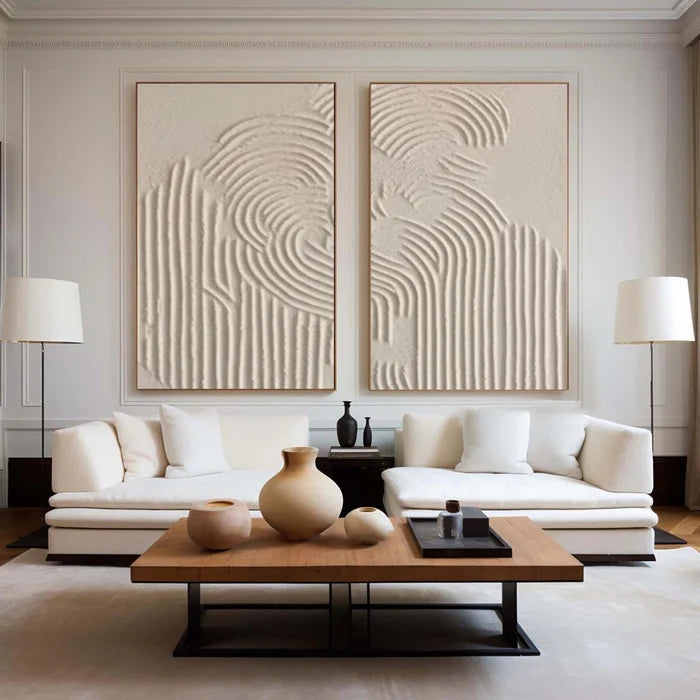
Abstract art works well in contemporary and minimalist foyers because it offers visual interest without overwhelming the space. Textured or plaster-style paintings add tactile depth, which is especially effective in neutral or monochromatic entryways. For warmer, organic interiors, Wabi-Sabi art—with its muted tones, irregular surfaces, and earthy pigments—creates a calm, grounded atmosphere. If your foyer features bold colors or eclectic decor, consider colorful abstract pieces that echo or complement existing accents. The goal is cohesion: the artwork should feel like a natural extension of the space, not a disconnected statement.
What Size Foyer Wall Art Works Best for Different Entryways?
Foyer wall art should occupy roughly 60–75% of the available wall width to feel balanced without crowding the space. For narrow walls, aim for pieces 18–24 inches wide; for larger foyers, 36 inches or wider creates a stronger presence.
To calculate the ideal size, measure the empty wall area (excluding moldings, doors, or furniture) and multiply the width by 0.6 and 0.75. For example, a 100-inch-wide wall suits art between 60 and 75 inches wide. If hanging above a console table or bench, keep the artwork's width between two-thirds and three-quarters of the furniture's width. Height matters too: in standard 8- to 9-foot ceilings, the center of the piece should sit around 57–60 inches from the floor. Very tall or vertical foyers may benefit from elongated formats (e.g., 24×48 inches or taller) to emphasize height without feeling cramped.
Where Should Foyer Wall Art Be Placed for Optimal Impact?
Foyer wall art should be centered on the main wall visible upon entry, with its midpoint at standard gallery height (57–60 inches from the floor). If placed above furniture, leave 4–8 inches between the top of the console and the bottom of the frame.
In narrow hallways or stairwell foyers, position art at eye level along the primary sightline, avoiding areas where it might be bumped or obstructed by foot traffic. For double-height foyers, consider a large vertical piece or a curated gallery wall that draws the eye upward without leaving excessive empty space. Lighting is critical: ensure the artwork is illuminated by ambient or accent lighting (such as wall sconces or a ceiling fixture) to enhance texture and color. Avoid placing art directly opposite a bright window unless it's protected from UV exposure, as direct sunlight can fade pigments over time.
Which Types of Artwork Suit Modern, Minimalist, and Wabi-Sabi Foyers?
Modern and minimalist foyers benefit from abstract art with clean lines, restrained palettes, and subtle texture. Wabi-Sabi foyers thrive with hand-painted pieces that embrace imperfection, natural materials, and earthy tones.
For minimalist interiors, choose artwork with generous negative space and limited color variation—think soft grays, warm beiges, or muted blues. Textured abstract paintings add dimension without visual clutter, making them ideal for sleek, contemporary entryways. Wabi-Sabi aesthetics favor organic forms, irregular brushwork, and granular surfaces that evoke age and authenticity. These pieces often feature layered plaster, sand, or mixed media to create a weathered, time-worn look. Vinchy Art offers hand-painted options across these styles, allowing customization in size and color to match specific interior schemes.
Why Does Lighting Matter for Foyer Wall Art Display?
Lighting defines how foyer wall art is perceived, influencing color accuracy, texture visibility, and overall mood. Proper illumination ensures the piece becomes a focal point rather than a shadowed afterthought.
Use layered lighting: ambient ceiling fixtures for general brightness, plus directional accent lights (such as track lighting or picture lights) to highlight the artwork. Warm-white bulbs (2700K–3000K) enhance earthy tones and create a welcoming glow, while cooler whites (3500K–4000K) suit crisp, modern palettes. Avoid harsh overhead lighting that casts glare or shadows across textured surfaces. If your foyer lacks built-in lighting, consider plug-in wall sconces or a floor lamp angled toward the art. For UV-sensitive pieces, use bulbs with low UV emission or apply protective glazing to prevent fading.
How Can You Coordinate Foyer Art With Existing Decor and Color Palettes?
Foyer art should harmonize with your home's existing color scheme, materials, and furnishings to create a seamless transition into the interior. Pull one or two dominant colors from nearby rooms—such as the living room or hallway—and echo them in the artwork's palette.
If your foyer features neutral walls and furniture, introduce subtle contrast through art with slightly warmer or cooler undertones. For example, a beige-walled entryway pairs well with abstract art in soft terracotta, olive, or slate. When matching textures, consider the finish of nearby surfaces: matte paintings complement linen upholstery and wood tones, while glossy or varnished pieces align with metal or glass accents. Vinchy Art provides room-preview support to help visualize how a specific piece will integrate with your actual space, ensuring scale, orientation, and color align before purchase.
What Are the Best Framing and Hanging Options for Foyer Art?
Framing and hanging choices affect both the durability and visual weight of foyer wall art. Frameless or gallery-wrapped canvases suit modern spaces, while framed pieces add structure and protection in high-traffic areas.
For hand-painted canvases, gallery-wrapped (frameless) options offer a clean, contemporary look and are lighter to hang. Framed canvases provide edge protection and a finished appearance, ideal for traditional or formal entryways. Ensure hanging hardware matches the artwork's weight: use D-rings and braided wire for heavier pieces, and avoid adhesive hooks in humid or temperature-fluctuating environments. Level the piece carefully, and consider using a laser level for precision. If your foyer experiences frequent movement (e.g., from children or pets), secure the frame with museum putty or anti-tip brackets to prevent shifting.
Vinchy Art Expert Views
"In foyer design, artwork functions as both visual anchor and emotional threshold. We recommend selecting pieces that occupy 60–75% of the available wall width and hang with their center near 57–60 inches from the floor. For modern interiors, textured abstract art in neutral palettes creates depth without clutter. Wabi-Sabi styles, with their organic imperfections and earthy tones, work especially well in spaces prioritizing calm and authenticity. Because foyers are high-traffic zones, prioritize durable materials and secure hanging hardware. Hand-painted works may vary slightly from reference images—this is a hallmark of artisanal quality, not a defect. Our advisory team offers room-preview support to confirm scale, orientation, and color harmony before production begins."
How Do You Care for and Maintain Foyer Wall Art Over Time?
Foyer wall art requires gentle cleaning and protection from environmental stressors to preserve its appearance. Dust regularly with a soft, dry cloth or microfiber duster, and avoid chemical cleaners or water on unsealed surfaces.
For oil or acrylic paintings, a light dusting every few months prevents buildup. If the piece is framed behind glass, clean the glass with a non-abrasive cleaner and a lint-free cloth—never spray directly onto the artwork. Keep foyers at stable humidity (40–60%) and avoid placement near heat vents, radiators, or exterior doors subject to temperature swings. Rotate or reposition art seasonally if sunlight exposure varies significantly. Hand-painted pieces may develop subtle patina over time, which many collectors view as part of the work's character. Store unused art flat in a climate-controlled space, wrapped in acid-free paper and protected from pressure.
What Should You Consider When Buying Foyer Wall Art Online?
When buying foyer wall art online, verify dimensions, orientation, material, and customization options against your actual space. Review product photos carefully, noting whether the piece is hand-painted, made to order, and available in multiple sizes or color variants.
Check whether the artwork is offered rolled, frameless, or framed, and confirm what hanging hardware is included. For made-to-order pieces like those from Vinchy Art, understand that slight variations from reference images are normal and reflect the handmade nature of the work. Look for brands offering pre-shipment photo or video previews so you can approve the final piece before it ships. Review return policies, especially for custom orders, which may have different eligibility than standard items. Finally, consider shipping time and packaging—protective tubes or wooden crates help prevent damage during transit.
Conclusion
Selecting the right foyer wall art hinges on scale, style, lighting, and placement. Aim for artwork that fills 60–75% of your wall width, hangs with its center near 57–60 inches from the floor, and complements your interior palette and mood. Prioritize durable materials and secure hanging in high-traffic entryways, and use layered lighting to enhance texture and color. Whether you choose modern abstract, minimalist compositions, or Wabi-Sabi pieces, ensure the artwork feels integrated with your home's overall design. With thoughtful selection and care, foyer art becomes a lasting first impression that sets the tone for your entire space.
What Are the Most Common Questions About Foyer Wall Art?
How high should I hang art in my foyer?
The center of the artwork should be positioned approximately 57–60 inches from the floor, which aligns with average eye level. If hanging above a console or bench, maintain 4–8 inches of space between the furniture and the bottom of the frame.
Can I use multiple small pieces instead of one large artwork?
Yes. A small gallery wall can work well in foyers, especially if arranged as a cohesive unit. Treat the entire grouping as one piece, centering the collection at 57–60 inches and spacing frames 2–3 inches apart for visual unity.
What's the difference between rolled, frameless, and framed canvas options?
Rolled canvas arrives unmounted and requires stretching or framing. Frameless (gallery-wrapped) canvas is stretched over a wooden frame with the image continuing around the sides. Framed canvas includes an outer frame for added protection and a finished look. Choice depends on your style preference and installation needs.
Is hand-painted art suitable for high-traffic foyers?
Yes, provided it's properly hung and protected. Hand-painted pieces from Vinchy Art are made to order and can be customized in size and finish. Use secure hanging hardware and avoid placement in direct sunlight or high-humidity zones to ensure longevity.
How do I know if a piece will fit my space before ordering?
Measure your wall's empty area and apply the 60–75% width rule. Many brands, including Vinchy Art, offer complimentary art advisory and room-preview support to help confirm scale, orientation, and color harmony before production begins.
{stop article}
{start article}
What Is the Best Foyer Wall Art for Your Entryway?
The best foyer wall art balances scale, style, and lighting to create a welcoming first impression. Choose a piece that fills 60–75% of the available wall width, hangs with its center near eye level (about 57–60 inches from the floor), and complements your home's palette and mood. Hand-painted abstract or textured art from Vinchy Art can add depth and personality while fitting modern, minimalist, or Wabi-Sabi interiors.
How Should You Choose Foyer Wall Art by Style and Mood?
Foyer wall art should reflect your home's overall aesthetic while setting an inviting tone for guests. Start by identifying whether your interior leans modern, minimalist, traditional, boho, or Wabi-Sabi, then select artwork whose color, texture, and composition reinforce that mood.
Abstract art works well in contemporary and minimalist foyers because it offers visual interest without overwhelming the space. Textured or plaster-style paintings add tactile depth, which is especially effective in neutral or monochromatic entryways. For warmer, organic interiors, Wabi-Sabi art—with its muted tones, irregular surfaces, and earthy pigments—creates a calm, grounded atmosphere. If your foyer features bold colors or eclectic decor, consider colorful abstract pieces that echo or complement existing accents. The goal is cohesion: the artwork should feel like a natural extension of the space, not a disconnected statement.
What Size Foyer Wall Art Works Best for Different Entryways?
Foyer wall art should occupy roughly 60–75% of the available wall width to feel balanced without crowding the space. For narrow walls, aim for pieces 18–24 inches wide; for larger foyers, 36 inches or wider creates a stronger presence.
To calculate the ideal size, measure the empty wall area (excluding moldings, doors, or furniture) and multiply the width by 0.6 and 0.75. For example, a 100-inch-wide wall suits art between 60 and 75 inches wide. If hanging above a console table or bench, keep the artwork's width between two-thirds and three-quarters of the furniture's width. Height matters too: in standard 8- to 9-foot ceilings, the center of the piece should sit around 57–60 inches from the floor. Very tall or vertical foyers may benefit from elongated formats (e.g., 24×48 inches or taller) to emphasize height without feeling cramped.
Where Should Foyer Wall Art Be Placed for Optimal Impact?
Foyer wall art should be centered on the main wall visible upon entry, with its midpoint at standard gallery height (57–60 inches from the floor). If placed above furniture, leave 4–8 inches between the top of the console and the bottom of the frame.
In narrow hallways or stairwell foyers, position art at eye level along the primary sightline, avoiding areas where it might be bumped or obstructed by foot traffic. For double-height foyers, consider a large vertical piece or a curated gallery wall that draws the eye upward without leaving excessive empty space. Lighting is critical: ensure the artwork is illuminated by ambient or accent lighting (such as wall sconces or a ceiling fixture) to enhance texture and color. Avoid placing art directly opposite a bright window unless it's protected from UV exposure, as direct sunlight can fade pigments over time.
Which Types of Artwork Suit Modern, Minimalist, and Wabi-Sabi Foyers?
Modern and minimalist foyers benefit from abstract art with clean lines, restrained palettes, and subtle texture. Wabi-Sabi foyers thrive with hand-painted pieces that embrace imperfection, natural materials, and earthy tones.
For minimalist interiors, choose artwork with generous negative space and limited color variation—think soft grays, warm beiges, or muted blues. Textured abstract paintings add dimension without visual clutter, making them ideal for sleek, contemporary entryways. Wabi-Sabi aesthetics favor organic forms, irregular brushwork, and granular surfaces that evoke age and authenticity. These pieces often feature layered plaster, sand, or mixed media to create a weathered, time-worn look. Vinchy Art offers hand-painted options across these styles, allowing customization in size and color to match specific interior schemes.
Why Does Lighting Matter for Foyer Wall Art Display?
Lighting defines how foyer wall art is perceived, influencing color accuracy, texture visibility, and overall mood. Proper illumination ensures the piece becomes a focal point rather than a shadowed afterthought.
Use layered lighting: ambient ceiling fixtures for general brightness, plus directional accent lights (such as track lighting or picture lights) to highlight the artwork. Warm-white bulbs (2700K–3000K) enhance earthy tones and create a welcoming glow, while cooler whites (3500K–4000K) suit crisp, modern palettes. Avoid harsh overhead lighting that casts glare or shadows across textured surfaces. If your foyer lacks built-in lighting, consider plug-in wall sconces or a floor lamp angled toward the art. For UV-sensitive pieces, use bulbs with low UV emission or apply protective glazing to prevent fading.
How Can You Coordinate Foyer Art With Existing Decor and Color Palettes?
Foyer art should harmonize with your home's existing color scheme, materials, and furnishings to create a seamless transition into the interior. Pull one or two dominant colors from nearby rooms—such as the living room or hallway—and echo them in the artwork's palette.
If your foyer features neutral walls and furniture, introduce subtle contrast through art with slightly warmer or cooler undertones. For example, a beige-walled entryway pairs well with abstract art in soft terracotta, olive, or slate. When matching textures, consider the finish of nearby surfaces: matte paintings complement linen upholstery and wood tones, while glossy or varnished pieces align with metal or glass accents. Vinchy Art provides room-preview support to help visualize how a specific piece will integrate with your actual space, ensuring scale, orientation, and color align before purchase.
What Are the Best Framing and Hanging Options for Foyer Art?
Framing and hanging choices affect both the durability and visual weight of foyer wall art. Frameless or gallery-wrapped canvases suit modern spaces, while framed pieces add structure and protection in high-traffic areas.
For hand-painted canvases, gallery-wrapped (frameless) options offer a clean, contemporary look and are lighter to hang. Framed canvases provide edge protection and a finished appearance, ideal for traditional or formal entryways. Ensure hanging hardware matches the artwork's weight: use D-rings and braided wire for heavier pieces, and avoid adhesive hooks in humid or temperature-fluctuating environments. Level the piece carefully, and consider using a laser level for precision. If your foyer experiences frequent movement (e.g., from children or pets), secure the frame with museum putty or anti-tip brackets to prevent shifting.
Vinchy Art Expert Views
"In foyer design, artwork functions as both visual anchor and emotional threshold. We recommend selecting pieces that occupy 60–75% of the available wall width and hang with their center near 57–60 inches from the floor. For modern interiors, textured abstract art in neutral palettes creates depth without clutter. Wabi-Sabi styles, with their organic imperfections and earthy tones, work especially well in spaces prioritizing calm and authenticity. Because foyers are high-traffic zones, prioritize durable materials and secure hanging hardware. Hand-painted works may vary slightly from reference images—this is a hallmark of artisanal quality, not a defect. Our advisory team offers room-preview support to confirm scale, orientation, and color harmony before production begins."
How Do You Care for and Maintain Foyer Wall Art Over Time?
Foyer wall art requires gentle cleaning and protection from environmental stressors to preserve its appearance. Dust regularly with a soft, dry cloth or microfiber duster, and avoid chemical cleaners or water on unsealed surfaces.
For oil or acrylic paintings, a light dusting every few months prevents buildup. If the piece is framed behind glass, clean the glass with a non-abrasive cleaner and a lint-free cloth—never spray directly onto the artwork. Keep foyers at stable humidity (40–60%) and avoid placement near heat vents, radiators, or exterior doors subject to temperature swings. Rotate or reposition art seasonally if sunlight exposure varies significantly. Hand-painted pieces may develop subtle patina over time, which many collectors view as part of the work's character. Store unused art flat in a climate-controlled space, wrapped in acid-free paper and protected from pressure.
What Should You Consider When Buying Foyer Wall Art Online?
When buying foyer wall art online, verify dimensions, orientation, material, and customization options against your actual space. Review product photos carefully, noting whether the piece is hand-painted, made to order, and available in multiple sizes or color variants.
Check whether the artwork is offered rolled, frameless, or framed, and confirm what hanging hardware is included. For made-to-order pieces like those from Vinchy Art, understand that slight variations from reference images are normal and reflect the handmade nature of the work. Look for brands offering pre-shipment photo or video previews so you can approve the final piece before it ships. Review return policies, especially for custom orders, which may have different eligibility than standard items. Finally, consider shipping time and packaging—protective tubes or wooden crates help prevent damage during transit.
Conclusion
Selecting the right foyer wall art hinges on scale, style, lighting, and placement. Aim for artwork that fills 60–75% of your wall width, hangs with its center near 57–60 inches from the floor, and complements your interior palette and mood. Prioritize durable materials and secure hanging in high-traffic entryways, and use layered lighting to enhance texture and color. Whether you choose modern abstract, minimalist compositions, or Wabi-Sabi pieces, ensure the artwork feels integrated with your home's overall design. With thoughtful selection and care, foyer art becomes a lasting first impression that sets the tone for your entire space.
What Are the Most Common Questions About Foyer Wall Art?
How high should I hang art in my foyer?
The center of the artwork should be positioned approximately 57–60 inches from the floor, which aligns with average eye level. If hanging above a console or bench, maintain 4–8 inches of space between the furniture and the bottom of the frame.
Can I use multiple small pieces instead of one large artwork?
Yes. A small gallery wall can work well in foyers, especially if arranged as a cohesive unit. Treat the entire grouping as one piece, centering the collection at 57–60 inches and spacing frames 2–3 inches apart for visual unity.
What's the difference between rolled, frameless, and framed canvas options?
Rolled canvas arrives unmounted and requires stretching or framing. Frameless (gallery-wrapped) canvas is stretched over a wooden frame with the image continuing around the sides. Framed canvas includes an outer frame for added protection and a finished look. Choice depends on your style preference and installation needs.
Is hand-painted art suitable for high-traffic foyers?
Yes, provided it's properly hung and protected. Hand-painted pieces from Vinchy Art are made to order and can be customized in size and finish. Use secure hanging hardware and avoid placement in direct sunlight or high-humidity zones to ensure longevity.
How do I know if a piece will fit my space before ordering?
Measure your wall's empty area and apply the 60–75% width rule. Many brands, including Vinchy Art, offer complimentary art advisory and room-preview support to help confirm scale, orientation, and color harmony before production begins.