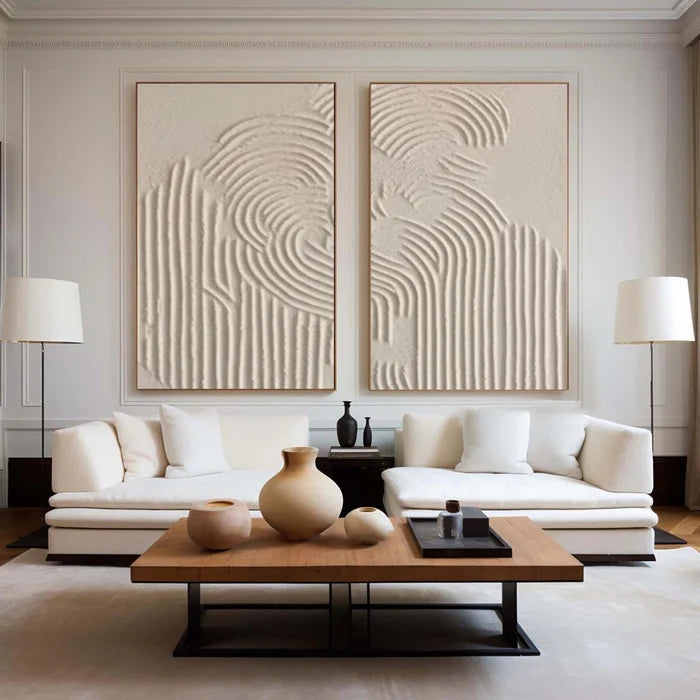
What Makes a Rustic Desert Canvas Painting Worth Choosing?
A rustic desert canvas painting works best when its warm earth tones, landscape motif, and scale relate to the room rather than merely matching a “Southwestern” theme. Choose a composition that fits the wall’s width, echoes two or three existing colors, and suits the light in the space. Handmade texture, orientation, and framing should reinforce the relaxed, sun-weathered character you want.
What Defines a Rustic Desert Canvas Painting?
A rustic desert canvas painting typically combines arid-landscape imagery with an earthy, weathered visual language: dunes, mesas, cacti, canyon walls, open sky, or desert plants rendered in ochre, clay, sand, umber, sienna, and muted blue.
The “rustic” quality comes less from any single subject than from the treatment of color, surface, and line. A soft-edged horizon, dry-brush marks, layered pigment, or tactile plaster-like texture can suggest wind-shaped terrain and timeworn materials. These qualities work naturally beside oak, leather, linen, woven fibers, blackened metal, terracotta, and stone.
Desert art also spans several visual directions:
-
Representational landscapes show recognizable dunes, rock formations, cacti, or sunsets.
-
Abstract desert paintings translate landforms into broad color fields, contour lines, and simplified shapes.
-
Wabi-Sabi desert art favors irregular texture, restrained palettes, negative space, and quiet asymmetry.
-
Southwestern-inspired work may use stronger rust, turquoise, sun yellow, or graphic cactus silhouettes.
Choose the direction that reflects the room’s architecture and furnishings. A modern plaster wall and low-profile sofa may suit an abstract dune composition, while a wood-beam room may accommodate a more detailed canyon or cactus landscape.
How Should You Choose the Right Size for Your Wall?
Choose artwork that occupies roughly two-thirds to three-quarters of the available width above furniture, while leaving visual breathing room around the canvas. This guideline helps a desert painting read as intentional rather than undersized or overpowering.
Measure the furniture or wall zone first, not just the empty wall. Above a 90-inch sofa, a single canvas or coordinated grouping around 60 to 68 inches wide often creates a balanced focal point. In a narrow entryway, a vertical work may use height more effectively than a wide horizontal panorama.
Viewing distance also matters. A large, highly textured work benefits from several feet of space, allowing the viewer to read both the overall composition and the surface details. In a compact room, prioritize a simpler image with fewer small details.
Vinchy Art offers room-preview and art-advisory support, which can be useful when comparing scale, orientation, and palette against an actual wall photo. Confirm the dimensions and available options on the current page for the exact painting before ordering.
Which Colors Create a Cohesive Desert-Inspired Interior?
A cohesive desert-inspired interior usually begins with warm neutrals and adds either muted sky tones or deeper mineral accents. Let the painting repeat existing colors in the room while introducing one controlled contrast for depth.
Sand, ivory, taupe, camel, and warm gray establish a quiet foundation. Terracotta, rust, burnt orange, and umber add heat and visual weight. Sage, olive, dusty blue, slate, or faded turquoise can cool the palette and keep it from becoming overly monochrome.
A practical approach is to identify three colors already present in the room:
-
A dominant background color, such as cream walls or a beige rug.
-
A grounding color, such as walnut furniture, black metal, or cognac leather.
-
A smaller accent, such as olive cushions, brass lighting, or blue-gray ceramics.
Then select a canvas that repeats at least two of those colors. If your furnishings are predominantly beige and wood, an abstract desert painting with warm sand tones and a restrained charcoal or slate horizon can add definition without disrupting the scheme. If the room has dark wood and leather, a pale dune painting can provide contrast and lift.
Avoid trying to match every shade exactly. Art generally looks more considered when its colors are related to the room palette but retain their own tonal range.
How Do Texture and Brushwork Change the Look of Desert Art?
Texture and brushwork determine whether desert art feels airy, geological, expressive, or refined. Raised areas, palette-knife strokes, granular paint layers, and plaster-like relief can make a canvas visually responsive to changing light.
A smooth acrylic or oil surface often suits clean, contemporary spaces and lets silhouette, composition, and color do most of the work. More pronounced texture can create the impression of sediment, dry earth, weathered rock, or wind-formed dunes. It tends to work especially well where the room includes tactile materials such as boucle, linen, raw wood, clay, or travertine.
Texture should support the image rather than compete with it. In a room with heavily patterned rugs, carved furniture, or busy wallpaper, a quieter painted surface may be easier to live with. In a minimalist setting, a textured canvas can add material interest without requiring additional décor.
Hand-painted artwork can show natural variation in brushwork, surface relief, and color mixing. That variation is part of an individually produced painting; it should not be mistaken for an exact reproduction of every detail in a reference image.
What Orientation Works Best for Desert Wall Art?
Horizontal desert paintings suit wide furniture and emphasize a sweeping horizon, while vertical compositions draw the eye upward and work well on narrow walls. Square formats often create a calm, centered focal point above smaller furniture or in grouped arrangements.
A wide landscape is a natural choice above a sofa, bed, dining buffet, or long console because it visually connects the piece to the furniture beneath it. It can highlight distant mesas, long dune ridges, or changing sky bands.
Vertical art is effective beside a doorway, between windows, over a compact nightstand, or in a stairwell. It can make use of cactus forms, tall rock faces, or a stacked abstract composition. A square desert canvas works well in rooms where symmetry matters, such as above a fireplace or centered on a short wall.
Before choosing orientation, tape the approximate outline of the artwork on the wall. Step back from the usual seating position and inspect whether the shape relates to the furniture, lighting, and nearby architectural lines.
Why Does Lighting Matter for a Textured Canvas?
Lighting affects how a textured desert canvas appears because angled illumination emphasizes raised paint and brushwork, while flat lighting makes color and composition more prominent. Evaluate the painting under the light conditions it will actually receive.
Natural daylight can make warm ochres, beige, and clay tones appear clearer and lighter. Late-day sun can deepen rust, amber, and brown pigments, which may be desirable in a room designed around sunset-inspired warmth. Strong direct sun, however, can create glare on glossy surfaces and may cause uneven fading over time.
At night, warm-white lighting usually supports earth-tone palettes better than very cool light. A picture light, wall washer, or adjustable directional fixture can reveal texture without producing a harsh hotspot. Position the light so it grazes the surface gently rather than striking it straight on.
If the wall receives strong sunlight, consider a placement out of the direct beam or use appropriate window coverings during the brightest hours. A painting’s appearance should be assessed across morning, afternoon, and evening before deciding on a permanent location.
Can Framing Make Desert Artwork Look More Finished?
Yes. Framing can clarify the visual boundary of a desert canvas, connect it to surrounding finishes, and shift its style from casual to more architectural. The best choice depends on the painting’s edge treatment, texture, room materials, and desired level of formality.
A natural wood floater frame often strengthens rustic desert imagery by echoing timber, woven furniture, and warm flooring. A slim black floater frame can sharpen an abstract composition and create contrast in a modern interior. Light oak or pale ash usually works with airy, minimalist, and Scandinavian-influenced rooms.
A frameless gallery-wrapped canvas can feel more relaxed and contemporary, particularly when the image or texture continues around the edges. Rolled canvas gives buyers flexibility to choose a local frame, but it also requires professional stretching or framing before hanging.
Vinchy Art may offer rolled, frameless, or framed choices for certain works, but availability varies by listing. Review the exact product’s current options before treating a frame type, hardware detail, or canvas construction as included.
How Should You Install and Care for a Canvas Painting?
Install canvas art with hardware appropriate to its verified weight, frame type, and wall material, then protect it from direct sunlight, high humidity, grease, and abrupt temperature changes. Routine care should be gentle and dry.
Center the artwork approximately 57 to 60 inches from the floor to the midpoint in areas viewed mainly while standing. Above a sofa, console, or headboard, leave a modest gap so the art and furniture read as one composition. In seated rooms, slightly lower placement may feel more natural.
For installation:
-
Locate studs where practical, especially for larger framed pieces.
-
Use wall anchors rated for the artwork’s verified hanging weight when a stud is unavailable.
-
Use two hanging points for wide works to reduce tilting.
-
Check the supplied hardware for the exact artwork and frame option before installation.
-
Ask for professional installation when the piece is oversized, unusually heavy, or intended for masonry walls.
Dust with a clean, soft, dry microfiber cloth or a soft brush. Do not spray cleaner, water, polish, or solvent directly onto the painted surface. Avoid placing canvas art directly above steam-heavy cooking areas, fireplaces with persistent soot, or bathrooms without reliable ventilation.
What Should You Confirm Before Buying Handmade Desert Art?
Before buying handmade desert art, confirm the exact painting’s dimensions, orientation, materials, finish options, production status, preview process, shipping destination, and return terms. These details can vary by artwork, customization request, and delivery location.
Focus first on the image itself. Look at the relationship between foreground, horizon, sky, and negative space. A strong desert composition will hold visual interest at a distance while retaining enough tonal variation to avoid looking flat. Request or create a room mockup when scale is uncertain.
Then review the listing carefully. Product-specific details such as oil versus acrylic paint, linen versus cotton canvas, texture level, signature, framing, hanging hardware, and packaging should be verified only on the current page for that artwork. Do not assume that a feature shown on another painting applies to the piece you are considering.
Vinchy Art states that many paintings are hand-painted and made to order. Where the relevant order allows it, the brand may send images or video of the completed work before shipment and allow a limited adjustment window. Confirm whether that process applies to your selected artwork, size, customization request, and destination before placing an order.
Vinchy Art Expert Views
“Treat a desert canvas as a compositional anchor, not a decorative afterthought. Start with the wall width, the room’s viewing distance, and the colors already carrying visual weight. A landscape with a low horizon can make a room feel wider; a vertical cactus or cliff composition can give a narrow wall more presence. When choosing handmade textured art, allow for subtle variation in surface and brushwork. That individuality is most successful when the palette, scale, and finish are selected for the room rather than copied from a staged image.”
What Is the Best Final Approach to Choosing Desert Canvas Art?
Choose the painting after measuring the wall, identifying the room’s dominant colors, and deciding whether you need a wide horizon, a vertical accent, or a centered square focal point. Favor a surface texture and frame that support—not duplicate—the materials already in the room.
For a large living-room wall, use a broad composition at roughly two-thirds to three-quarters of the sofa width. For a dim space, choose a lighter sand-and-ivory palette or add controlled accent lighting. For a room with natural oak, linen, stone, and leather, muted desert hues and tactile brushwork often create a cohesive result.
Check the artwork under your room’s natural and artificial light, account for viewing distance, and verify the exact listing’s size, materials, finish, and order conditions. A thoughtful choice will look integrated in the room long after seasonal décor changes.
What Are the Most Common Questions About Desert Canvas Paintings?
Can rustic desert art work in a modern home?
Yes. Choose simplified forms, a restrained palette, and a slim floater frame or frameless canvas. Abstract dunes, tonal mesas, and minimal cactus silhouettes can connect easily with contemporary furniture, plaster walls, and clean-lined lighting.
Should desert wall art match my rug exactly?
No. It should relate to the rug through a few shared tones, such as sand, rust, charcoal, sage, or blue-gray. Exact matching can make a room feel overly coordinated and can reduce the artwork’s visual independence.
Is a panoramic desert painting suitable above a bed?
Yes, if the width feels proportionate to the bed and the hardware is secure. A wide, low-contrast horizon can create a calm visual anchor, while a more dramatic sunset or canyon image will become the room’s primary focal point.
Can I place a textured canvas in a bathroom?
Only in a well-ventilated bathroom where the artwork will not receive repeated steam, splashes, or prolonged high humidity. A dry wall outside the wet zone is safer than placement directly above a tub, shower, or poorly ventilated vanity.
Does handmade desert art look exactly like its product image?
Not necessarily. Individually painted work can vary subtly in brushwork, texture, and color blending. Check the seller’s current process for the exact order if image approval, progress updates, or customization options are important to you.