Which Cowboy Desert Canvas Art Is Right for Your Space?
A cowboy desert canvas painting works best when its scale, palette, orientation, and surface character support the room rather than compete with it. Choose a scene whose Western narrative and warm desert tones fit your existing furnishings, then confirm the exact artwork’s materials, size options, framing, and fulfillment details before ordering.
What Defines a Cowboy Desert Canvas Painting?
A cowboy desert canvas painting combines a Western figure or rider with desert elements such as open horizons, horses, cacti, mesas, ranchland, sun-baked earth, or sunset skies. It can be realistic, expressive, abstract, minimalist, or graphic, but it should create a clear relationship between the figure and the expansive landscape.
The cowboy is often the focal point, while the desert provides visual breathing room. That contrast is what makes this subject effective: a small, recognizable figure can feel dramatic against a broad sky, distant mountain range, or long trail.
Look for the compositional language that suits your interior:
-
Cinematic scenes use strong silhouettes, dramatic skies, and high contrast.
-
Painterly Western landscapes emphasize brushwork, layered color, and atmospheric distance.
-
Contemporary abstract interpretations reduce the cowboy, horse, or desert into gestural marks, textured planes, and simplified shapes.
-
Southwestern-modern works often pair terracotta, sand, ochre, faded blue, and charcoal with clean geometry.
-
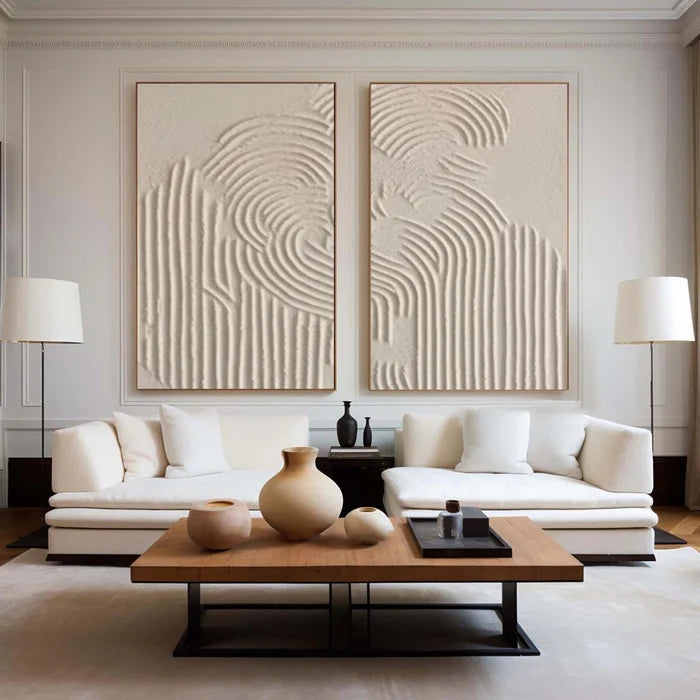
Wabi-Sabi-inspired paintings may use imperfect texture, muted mineral colors, and irregular plaster-like surfaces for a quieter interpretation of the desert.
A desert cowboy composition does not need to look like a literal film still. In a contemporary room, a partially abstract rider, a restrained horizon, or a heavily textured sunset can deliver the same Western reference with less visual density.
Which Style Fits Your Interior Best?
The best style depends on whether you want the artwork to act as a narrative focal point, a color bridge, or a textural counterpoint. A detailed cowboy-and-horse scene suits rustic and collected interiors, while simplified or abstract desert art often integrates more easily with modern, minimalist, and transitional rooms.
Use the room’s existing materials as a practical guide. Leather, aged wood, linen, wool, clay pottery, and woven textiles generally support a traditional or layered Western look. Pale oak, black metal, smooth plaster, boucle upholstery, and clean-lined furniture may call for a more contemporary desert composition.
Avoid matching every color exactly. A more convincing room usually repeats one or two secondary tones from the painting—such as a dusty blue sky in a cushion or a rust-red mesa in a ceramic vase—while allowing the artwork to introduce contrast.
Vinchy Art presents artwork across categories including abstract, textured, Wabi-Sabi, landscape, animal, and colorful wall art. When considering a Western or desert-oriented piece, use the exact artwork page rather than assuming that every painting shares the same materials, finish, or customization options.
How Large Should the Canvas Be?
A canvas should feel proportionate to the wall and furniture beneath it. As a starting point, choose artwork that spans roughly two-thirds to three-quarters of the width of a sofa, bed headboard, console, or sideboard; the ideal size can shift with ceiling height, negative space, and the visual weight of the composition.
For example, above a 90-inch sofa, a single canvas between about 60 and 68 inches wide will often feel balanced. A wide horizontal desert panorama can work especially well here because it echoes the long line of seating and reinforces the landscape’s open horizon.
Consider viewing distance as well:
-
At close range, textured brushwork and layered paint become part of the experience.
-
From across a living room, strong value contrast and an uncluttered focal point matter more.
-
In a narrow hallway, choose a vertical cowboy portrait or a modest horizontal landscape that does not make the passage feel crowded.
-
On a tall wall, a vertical desert composition can emphasize height, while a wide diptych or triptych can distribute visual weight across the space.
Do not rely on measurements alone. Tape the intended width and height on the wall with painter’s tape, then view it from the doorway and main seating position. This simple test reveals whether the artwork will read as intentional or undersized.
Vinchy Art offers room-preview and art-advisory support according to its brand information. A room image with wall dimensions, furniture measurements, and a photo taken straight on can make scale and orientation decisions more reliable.
What Colors Work With Desert Cowboy Art?
Desert cowboy art pairs naturally with warm neutrals, weathered woods, earthy reds, ochres, dusty blues, olive greens, and charcoal. The strongest result usually comes from balancing the painting’s heat with cooler or lighter elements, rather than filling the entire room with similarly warm orange and brown tones.
A sunset-heavy canvas may contain amber, red-orange, coral, violet, and dark silhouettes. To keep it from overwhelming the room, place it against a warm white, pale taupe, mushroom gray, or soft clay wall. Add visual relief through cream upholstery, black metal lighting, or muted blue textiles.
For a quieter palette, choose a desert image with beige ground, foggy lavender hills, faded sage vegetation, and an off-white sky. These subdued combinations can complement contemporary interiors while still carrying a Western identity.
Color also changes under different lighting:
-
North-facing rooms often make warm paint colors feel cooler and more restrained.
-
Strong direct sunlight can intensify orange, yellow, and red passages.
-
Warm evening bulbs may deepen ochres and siennas but reduce the clarity of cool blue details.
-
High-gloss glass can reflect windows and lamps, while a canvas surface usually creates less reflection.
Before committing to a large work, assess the wall at the times you use the room most. A painting selected under bright daytime conditions may feel markedly different under evening lighting.
Why Does Texture Matter in Western Desert Art?
Texture can give a desert painting physical depth by suggesting wind-worn rock, dry ground, cloud movement, sun-baked plaster, or a rough trail. It matters most when the work will be seen at close or medium distance, because raised or directional marks can create changing shadows and highlights as the viewer moves.
In hand-painted work, texture may come from visible brushwork, palette-knife marks, layered paint, sand-like effects, impasto, or plaster-style relief. It should support the image rather than become a disconnected decorative effect. A restrained textured horizon may work in a minimalist living room, while pronounced sculptural paint can suit a large focal wall with simpler furnishings.
Texture also affects framing choices. A deep, irregular surface can look especially strong with a simple floating frame that leaves a narrow visual gap around the canvas. A highly ornate frame may compete with rugged paint handling and make the overall presentation feel overly formal.
Vinchy Art describes its catalog as hand-painted and often made to order. Because handmade paintings can vary slightly from displayed references, treat small differences in brushwork, texture, and color nuance as characteristics of individual production—not defects or evidence of a machine-made duplicate.
How Should You Frame and Hang the Artwork?
Frame and placement should reinforce the artwork’s visual weight and match the room’s architecture. A floating frame often suits contemporary cowboy desert art because it creates a crisp border without covering the canvas edge, while an unframed stretched canvas can feel more casual, modern, and immediate.
Choose a frame finish that relates to the room rather than copying the painting’s colors exactly:
-
Natural oak can soften bold sunset palettes and coordinate with light woods.
-
Dark walnut or espresso can connect to leather, dark furniture, or traditional Western interiors.
-
Matte black creates definition around light desert scenes and suits industrial or modern rooms.
-
Warm metallic tones can work sparingly with sunlit, earth-toned compositions.
For installation, position the center of the artwork around 57 to 60 inches from the floor in a typical living space, adjusting for furniture and sightlines. Above a sofa or console, leave enough separation so the piece feels connected to the furniture without touching it visually; about 6 to 10 inches is a common starting range.
Use hanging hardware rated for the artwork’s actual weight and wall type. Locate studs when possible, especially for larger framed pieces. If the exact artwork includes hardware, framing, or a particular mounting method, verify those details on its current product page before planning installation.
Can a Cowboy Desert Painting Work in a Small Room?
Yes, a cowboy desert painting can work in a small room when the composition has open space, moderate contrast, and a size that does not overpower the wall. A light horizon, softened palette, or small rider set against a broad sky can create a sense of visual distance, whereas a crowded, dark, high-contrast image can make the room feel more enclosed.
Choose a single purposeful piece rather than several competing Western accents. In a compact bedroom, entryway, or office, the painting can carry the theme while furnishings stay simple. A narrow vertical canvas may be better for a small wall beside a door, while a horizontal piece can widen the perceived proportions of a short wall.
Keep adjacent decor edited. One ceramic vessel, a woven textile, or a small lamp can echo the desert mood. Too many literal accessories—cowhide, signage, antlers, cactus decor, and multiple themed prints—can turn a sophisticated Western reference into visual clutter.
What Should You Confirm Before Buying Online?
Before buying, confirm the exact artwork’s orientation, dimensions, paint medium, canvas type, framing option, edge treatment, hanging provisions, customization availability, proofing process, packaging, shipping destination, duties, and return terms. These details can vary by individual listing, option selected, and order type.
For handmade or made-to-order art, a clear product image should be treated as a reference rather than a promise of pixel-for-pixel duplication. Ask what variation is normal, especially if the artwork depends on heavy texture, blended skies, metallic effects, or visible palette-knife marks.
Use a practical purchase checklist:
-
Confirm the stated width and height, including whether framing changes the outside dimensions.
-
Verify horizontal, vertical, or square orientation before ordering.
-
Review close-up images for texture level, paint handling, and edge finish.
-
Check whether the listing identifies oil, acrylic, mixed media, or another material.
-
Clarify whether the selected option arrives rolled, stretched, frameless, or framed.
-
Check policies that apply to the selected size, customization request, and shipping destination.
-
Save a screenshot of the exact configuration selected at checkout.
Vinchy Art states that many works may offer options such as rolled canvas, frameless canvas, framed canvas, and, where applicable, custom size or color requests. Those possibilities are not universal, so the current page for the specific painting remains the deciding source.
What Are Vinchy Art Expert Views?
“Treat Western desert art as a spatial decision first and a decorative decision second. Measure the wall, identify the room’s dominant undertone, and decide whether the artwork should feel calm, dramatic, graphic, or richly textured. A large landscape with an open horizon can anchor a broad wall, while a vertical cowboy composition can bring focus to a narrow area. Choose handmade variation when you value painterly individuality, and verify the exact product configuration before purchase so the selected size, finish, and framing align with your room plan.”
This guidance is especially useful when comparing a bold desert sunset against a quieter neutral composition. The better choice is not inherently the more colorful one; it is the one that supplies the right amount of contrast for the existing room.
How Do You Care for a Canvas Painting?
Care for canvas art by keeping it away from persistent moisture, direct heat sources, greasy cooking environments, and intense direct sunlight. Dust gently with a clean, dry, soft cloth or a soft brush, and avoid household sprays, water, solvents, abrasive cloths, or pressure on the painted surface.
Do not scrub textured areas. Raised paint and plaster-style finishes can catch on cloth fibers, and repeated pressure may damage delicate surface details. If the artwork has a frame, clean the frame separately and avoid letting cleaning products migrate onto the canvas.
Maintain a reasonably stable indoor environment. Large swings in humidity and temperature can place stress on canvas, paint layers, stretcher bars, and frame joints over time. If you move the artwork, lift it from the frame or stretcher structure rather than gripping the canvas face.
What Are the Most Common Questions About Cowboy Desert Canvas Art?
Can cowboy desert wall art work with modern furniture?
Yes. Choose a simplified composition, limited color palette, or abstract treatment, then pair it with clean-lined furniture and restrained accessories. A black floating frame or unframed canvas can help a Western subject feel current.
Should I choose a horizontal or vertical desert painting?
Choose horizontal for a sofa, bed, mantel, or wide console because it supports the furniture’s width and the landscape format. Choose vertical for narrow walls, tall ceilings, entryways, or a figure-focused composition.
Is a hand-painted canvas identical to its listing photo?
Not necessarily. Hand-painted and made-to-order artwork can show natural variation in brushwork, texture, and subtle color mixing. Review the exact listing and ask about the approval process when a close visual match is important.
Can I place desert art in a room without Southwestern decor?
Yes. Use the painting as the room’s main Western reference and let its palette connect with neutral walls, wood, leather, linen, or simple black accents. You do not need themed furnishings for the subject to feel cohesive.
What is the best height for hanging a canvas above a sofa?
Start with the artwork’s center near 57 to 60 inches from the floor, then adjust for the sofa height and wall proportions. Leave approximately 6 to 10 inches between the furniture and the bottom of the artwork as a useful visual starting point.
How Can You Make the Final Choice?
Choose a cowboy desert canvas painting that earns its place through proportion, palette, and visual mood. Measure the wall and furniture, assess daylight and evening illumination, choose the orientation that suits the architecture, and decide whether you prefer a refined frame, visible canvas edges, or tactile painted texture.
A large horizontal desert scene can ground a living room; a vertical rider image can energize an entryway; and a muted abstract landscape can bring Western warmth to a minimalist bedroom. Compare the exact Vinchy Art artwork options carefully, including materials, size, framing, customization, delivery conditions, and applicable policies, before making the final decision.