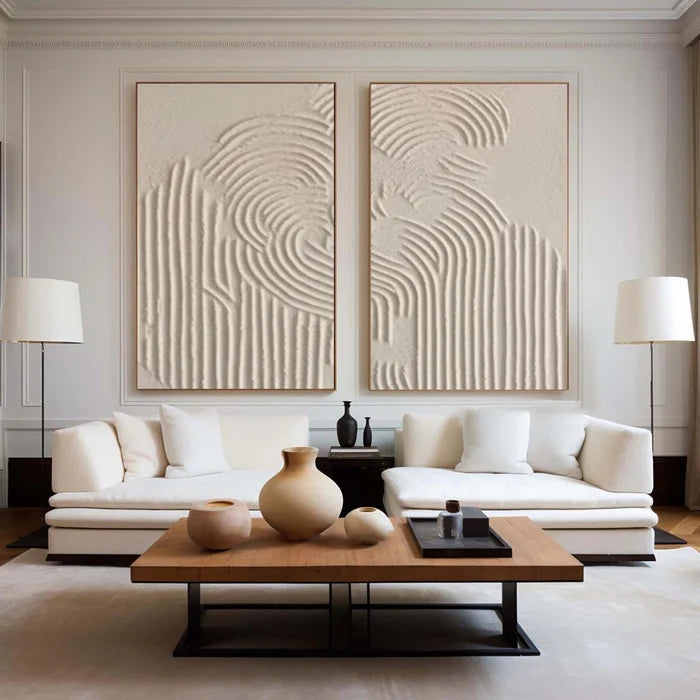
What Makes a Tan Western Oil Painting Work in a Room?
A tan Western oil painting works best when its warm earth palette, subject, scale, and finish support the room rather than compete with it. Choose a landscape, horse, cowboy, or abstract frontier composition that suits your preferred level of narrative detail, then size it to the furniture or wall, assess it in your actual lighting, and confirm the exact artwork’s materials and options before buying.
What Defines a Tan Western Oil Painting?
A tan Western oil painting uses sand, camel, ochre, cream, umber, and related earth tones to evoke Western landscapes, ranch life, weathered materials, or open horizons. It may be representational or abstract, but its visual language typically relies on natural color relationships, tactile brushwork, and a grounded sense of space.
Western art is not limited to literal cowboy imagery. A piece may depict a rider, horse, longhorn, barn, mesa, desert road, prairie, or mountain range. It can also reduce these references into expressive fields of beige, clay, charcoal, and muted blue.
Tan is especially versatile because it can act as a bridge between interior elements. It relates naturally to oak, walnut, leather, jute, linen, travertine, stone, aged brass, and blackened metal. In a contemporary room, a restrained Western composition can introduce warmth without requiring a fully rustic setting.
The medium matters visually. Oil paint often creates depth through layered color, glazing, impasto, and varied sheen. Acrylic can also produce strong texture and opaque color fields, often with a quicker drying process during production. Always consult the exact product listing rather than assuming a particular Vinchy Art painting uses one medium, canvas type, or surface treatment.
Which Western Subject Fits Your Interior Best?
Choose the subject based on the room’s desired focal point: landscapes create breadth, horses add movement, cowboy figures introduce narrative character, and abstract Western works provide atmosphere with fewer literal references. The best choice is one that complements your furnishings and feels appropriate to the room’s visual energy.
A desert or prairie landscape usually suits living rooms, bedrooms, dining rooms, and entryways because its horizon line can make a wall feel more expansive. Look for layered ridges, distant skies, warm sand tones, and softened contrast when you want an open, quiet visual effect.
Horse paintings work well where you want a stronger focal point. A single horse can read as sculptural and calm; a rider or group of horses creates more motion. For a modern interior, consider a simplified silhouette, loose brushwork, cropped composition, or neutral background rather than a highly detailed ranch scene.
Cowboy portraits and ranch narratives are more character-led. They can be compelling in studies, offices, game rooms, lodge-inspired spaces, and hallways where a viewer has time to notice facial expression, clothing, gesture, and painted detail.
Abstract Western paintings are useful when you want the color memory of the West without literal décor. Broad tan passages, mineral-like texture, weathered edges, ochre underlayers, and charcoal marks can connect to Wabi-Sabi, minimalist, organic modern, or contemporary interiors.
How Should You Match Tan Tones to a Room Palette?
Match the painting’s undertone to the room’s dominant neutrals: golden tan supports warm woods and camel leather, greige tan works with cooler stone and soft gray, and pink-beige or terracotta tan pairs naturally with clay, rust, and aged brass. Use contrast deliberately rather than matching every shade exactly.
First, identify whether your existing beige leans yellow, gray, red, or green. A golden ochre painting beside cool blue-gray walls can look intentional if the artwork also includes a small amount of charcoal, slate, or muted blue. Without that bridge, the combination may appear accidental.
Tan paintings benefit from supporting materials rather than exact color duplication. A cream rug, saddle leather chair, dark wood table, and black metal lamp can make an ochre-and-umber canvas feel cohesive. A few repeated notes are enough; avoid turning every cushion, vase, and accessory into the same shade of beige.
When viewing a painting online, compare it against a photograph of your wall and furniture. Vinchy Art’s room-preview support can be useful for assessing scale, orientation, and palette placement, but the final color impression may still shift according to your screen calibration and room lighting.
What Size Should a Tan Western Painting Be?
For artwork above furniture, a practical starting point is a total artwork width of roughly two-thirds to three-quarters of the furniture width. Choose a wider horizontal composition above sofas and beds, and use vertical art for narrow walls, stair landings, or spaces with tall ceilings.
A 72-inch sofa, for example, often supports art around 48 to 54 inches wide. An 84-inch sofa may suit a work around 56 to 63 inches wide. These are visual guidelines, not rigid rules: a dramatic open wall, high ceiling, or multi-panel composition may call for a larger arrangement.
A piece that is too small may make a Western scene feel like an isolated decoration rather than a composed focal point. If the room is large, prioritize visual mass and viewing distance over a small canvas that only looks effective at close range.
Before ordering from Vinchy Art, measure the available wall width, ceiling height, furniture width, and clearance around light switches, windows, vents, and sconces. If an exact artwork offers custom sizing, confirm its available options on that specific listing rather than assuming every design can be resized.
How Do Orientation and Composition Change the Room?
Horizontal Western paintings emphasize land, sky, and visual calm, while vertical works emphasize a figure, horse, tree, cliff, or rising terrain. Choose the orientation that reinforces the wall’s shape and the room’s architectural lines rather than forcing a favorite image into an unsuitable space.
A landscape-oriented painting is usually the most natural choice above a sofa, bed, buffet, or mantel because it follows the furniture’s width. Long panoramas can make a compact room feel visually wider, especially when the composition includes a distant horizon or open sky.
A vertical painting can solve a different problem. It can fill a narrow space beside a doorway, between windows, or at the end of a hall. A tall cowboy portrait, standing horse, or vertical desert rock formation adds height and can balance low, broad furniture.
Consider the movement inside the composition. A horse moving toward the room’s center can feel more inviting than one visually exiting toward a doorway. Similarly, a horizon that slopes sharply may introduce energy, while a broad, level horizon often feels steadier. These are styling judgments, not fixed design laws.
Why Do Texture and Paint Handling Matter?
Texture changes how a tan Western painting responds to light, distance, and surrounding materials. Raised brushwork or palette-knife marks can make earth tones feel more dimensional, while smoother layers often create a quieter, more refined surface suitable for minimalist or transitional interiors.
Impasto is a technique in which paint is applied thickly enough to create visible relief. On a Western landscape, it may suggest rugged stone, dry grass, horsehair, weathered timber, or sunlit terrain. In an abstract work, texture can become the main subject, allowing tonal variation to emerge as light moves across the surface.
Textured art deserves enough visual breathing room. Place it where daylight or angled lamp light can reveal the surface without creating harsh glare. Direct sunlight is not ideal for paintings because prolonged exposure can affect color and materials over time.
Hand-painted work also carries natural variation. Brush marks, edge treatment, tonal shifts, and surface texture can differ slightly from a reference image. This is a normal feature of individually made art, not evidence of lower quality. For made-to-order Vinchy Art pieces, confirm whether a completed-work preview is available for the exact order and whether adjustments apply to that item.
Can a Tan Western Painting Work in a Modern Home?
Yes. A tan Western painting can work in a modern home when it is treated as art rather than themed décor. Use restrained color, clean surrounding lines, adequate negative space, and a frame or canvas finish that connects to the room’s existing materials.
In an organic modern living room, pair an abstract desert painting with rounded upholstery, pale wood, linen, plaster walls, and sculptural ceramics. The Western influence becomes atmospheric rather than literal. A tan-and-charcoal work can also complement black metal, boucle, and pale stone.
In a minimalist room, select one substantial canvas rather than several small themed items. Let the painting supply the warm color and tactile interest while the rest of the room stays edited. A simple black, natural wood, or unframed canvas edge may be more appropriate than an ornate rustic frame.
In a ranch, farmhouse, or lodge interior, a more detailed subject can be effective. Layer it with leather, woven textiles, wood grain, antique pottery, and warm lamps, but preserve one clear focal wall. Too many competing Western motifs can reduce the impact of the painting itself.
What Framing and Lighting Choices Work Best?
Choose framing that supports the painting’s style and your room’s finishes: dark wood adds weight, natural wood feels relaxed, black provides contemporary definition, and a minimal float frame can give canvas art a finished edge. Use warm, indirect lighting to reveal color and texture while minimizing glare.
A dark brown or reclaimed-wood look can reinforce a traditional ranch or lodge setting. Natural oak, maple, or light walnut works well with Scandinavian, coastal, organic modern, and contemporary farmhouse interiors. A slim black frame can sharpen a loose Western abstraction and link it to black window trim, metal hardware, or lighting.
For lighting, avoid aiming a harsh spotlight directly at glossy areas of a painting. Instead, use diffused ceiling lighting, wall washers, or adjustable picture lights positioned to illuminate the surface evenly. Warm-white lighting generally complements ochre, camel, and umber tones, while very cool lighting can make them appear flatter or grayer.
Frame availability, construction, and hanging hardware vary by artwork and option. If you are considering a Vinchy Art order, verify the exact framed, frameless, or rolled-canvas variant before deciding on installation materials or frame style.
How Should You Install and Care for Oil Paintings?
Install a painting with hardware rated for its actual framed weight, keep it away from persistent heat and moisture, and dust it gently with a clean, soft brush or dry microfiber cloth. Do not spray cleaners, use water, or rub textured paint layers, as those actions can damage the surface.
Mark the centerline before hanging rather than relying only on the top edge. For art above a sofa, place the bottom edge roughly 6 to 10 inches above the backrest when the room’s proportions allow. In a standing-view area, center the artwork near typical eye level, then adjust for the furniture below it.
Avoid placement directly above a radiator, fireplace heat source, humid bathroom, or kitchen range. Also avoid prolonged direct sun, which may change the appearance of pigments and materials over time. If the room receives strong daylight, use curtains, blinds, UV-filtering window treatments, or a different wall.
For an unframed stretched canvas, lift from the stretcher bars rather than pressing on the painted face. For textured works, never stack objects against the surface. Retain any product-specific care information supplied with the artwork, as materials and finishes can differ.
What Should You Confirm Before Buying Online?
Before buying online, confirm the exact artwork’s dimensions, orientation, paint medium, canvas type, framing option, finished appearance, customization availability, production status, shipping destination, and return terms. These details can vary from one listing, variant, and order type to another.
Check the product images for scale references, but do not rely on them alone. Create a paper template or painter’s-tape outline on the wall to see the true width and height. Review the piece from your usual seating position as well as while entering the room.
If color is your priority, request or compare detailed images in neutral light when available. Ask whether the reference image represents a completed original, an example of a made-to-order work, or a specific available painting. Handmade variation should be expected, especially in expressive brushwork and textured surfaces.
For a Vinchy Art purchase, use the current official listing and applicable policy information for the exact product, selected variant, destination, and customization status. Do not assume that options, packaging, preview procedures, delivery timing, or return eligibility apply universally across the catalog.
What Are Vinchy Art Expert Views?
“A successful Western-inspired interior does not depend on adding more themed objects. Start with one painting that has the right visual weight for the wall, then repeat only two or three supporting cues from it: a tan undertone, a dark accent, and a natural texture such as wood, leather, linen, or stone. For hand-painted art, leave room for individual brushwork and tonal variation to be visible. The result is more convincing when the painting leads the palette rather than matching every object in the room.”
This approach is particularly effective when selecting a Vinchy Art painting for a room that already includes neutral upholstery or natural finishes. Let the art establish the direction, then refine the surrounding palette with restraint.
How Can You Make the Final Choice With Confidence?
Make the final choice by selecting the subject that feels most meaningful, verifying a proportionate size, checking undertones against your palette, and planning the artwork’s position before you order. Prioritize the room’s real dimensions, sightlines, lighting conditions, and desired mood over a trend or a single product photograph.
For a broad sofa wall, choose a horizontal tan landscape or a wide horse composition that occupies about two-thirds to three-quarters of the furniture width. For a narrow wall, use a vertical cowboy portrait, standing horse, or tall abstract terrain. In a low-light room, favor a painting with enough contrast to remain legible after dark.
Coordinate warm tan with cream, wood, leather, terracotta, and soft black for a grounded look. Introduce navy, teal, charcoal, or olive only as controlled accents. Decide whether you prefer an unframed canvas for a relaxed, art-forward effect or a framed option for added architectural definition.
Finally, confirm the specific Vinchy Art artwork’s dimensions, material, available finish, customization terms, and applicable order details before checkout. A well-chosen painting should feel connected to the room’s scale and materials while still retaining enough presence to become the wall’s visual anchor.
What Are the Most Common Questions About Tan Western Oil Paintings?
Can tan Western artwork work with gray furniture?
Yes. Choose a painting that includes greige, charcoal, muted blue, soft black, or stone tones alongside tan. These bridge cool gray upholstery and warm Western-inspired earth colors more naturally than a heavily golden painting alone.
Should I choose a framed or unframed canvas?
Choose a frame when you want a more formal edge, stronger contrast, or a connection to existing wood and metal finishes. Choose an unframed canvas when you prefer a lighter, more casual, or more contemporary presentation.
Can I use a tan painting on a beige wall?
Yes, provided the painting has enough contrast in value, texture, line, or secondary color. A darker umber edge, charcoal mark, terracotta accent, or textured surface helps the artwork remain visible against beige walls.
How far away should I view a large Western painting?
View it from the primary seating or standing position in the room. Large, loose brushwork often becomes more cohesive from several feet away, while detailed subjects need enough nearby viewing access for their smaller elements to be appreciated.
Does a hand-painted work look exactly like its online image?
Not always. Individually painted artworks can vary in brushwork, texture, tonal balance, and small compositional details. Review the exact listing and ask about any available preview process for the specific artwork and order type.