Which Earth Tone Western Paintings Work Best for Your Interior?
Earth tone Western paintings bring the warmth of desert landscapes, open prairies, horses, ranch life, and weathered natural materials into an interior without making it feel overly themed. Choose a piece whose scale, undertones, orientation, texture, and framing relate to the room’s furniture and light. The best result feels grounded, intentional, and personal rather than like a literal décor costume.
What Defines an Earth Tone Western Painting?
An earth tone Western painting combines Western-inspired subjects or abstract references with muted natural colors such as sand, ochre, clay, umber, rust, taupe, sage, charcoal, and warm cream. It may depict a cowboy, horse, longhorn, mesa, desert horizon, or ranch landscape, or interpret those references through minimal abstraction.
The “Western” element does not require a detailed rodeo scene or traditional ranch-house styling. In contemporary interiors, it can appear through broad horizon lines, sunbaked pigment, dry-brush marks, warm neutrals, and forms inspired by canyons, leather, stone, or open land.
Earth colors work well because they connect visually with common interior materials, including oak, walnut, linen, wool, terracotta, travertine, leather, rattan, and plaster. A restrained palette also lets a large canvas serve as a focal point without overwhelming the room.
For example, an abstract desert composition in warm beige, sienna, faded rust, and slate blue can suit a minimalist living room as naturally as a traditional ranch interior. The distinction lies in the composition, texture, and framing choices around it.
Which Western Subjects Work Best in Modern Rooms?
Western landscapes, horses, longhorns, cowboy figures, desert scenes, and abstract topographic compositions can all work in modern spaces when the palette and visual weight are controlled. The most adaptable choice is usually a painting with a simplified composition and a limited range of earth-based hues.
A large desert horizon can make a room feel more open because its horizontal bands echo the visual structure of a distant landscape. A horse painting may introduce movement and personality, while a longhorn or cowboy portrait can create a stronger, more graphic focal point.
Choose the subject according to the room’s intended character:
-
Desert and mesa artwork suits serene, architectural, Wabi-Sabi, Southwestern, and modern-rustic rooms.
-
Horse paintings work well above mantels, desks, consoles, and leather seating where movement and narrative add energy.
-
Cowboy figures create a more figurative, heritage-led look and are often strongest as one substantial statement piece.
-
Abstract Western art is useful when you want the color language of the West without a literal subject.
-
Prairie and ranch landscapes can soften bedrooms, dining spaces, and entryways with an expansive visual rhythm.
Vinchy Art presents Western-inspired art alongside abstract, textured, minimalist, landscape, and Wabi-Sabi categories, allowing shoppers to start with a subject, color family, orientation, or set format. Individual listing details should always guide the final choice because available materials and options can vary by artwork.
How Should You Match Earth Tones to Your Palette?
Match the painting’s undertone before matching its exact color. A room with warm white walls, cognac leather, oak, and brass usually benefits from ochre, caramel, terracotta, and soft brown; a room with gray stone, black accents, and pale oak may need taupe, charcoal, muted olive, and dusty clay instead.
Earth tones are not all equally warm. Beige can lean yellow, pink, gray, or green; brown can lean red, orange, olive, or nearly black. Looking at the undertones prevents a painting from appearing disconnected even when its overall palette seems neutral.
Use one or two deeper tones to provide contrast. A predominantly beige painting can lose definition on a beige wall unless it includes charcoal marks, deeper umber, shadowed blue-gray, or a dark frame. Conversely, a heavily rust-colored work may need surrounding neutrals so the composition remains the room’s main color event.
A practical method is to identify the dominant color in the painting, then repeat one related tone elsewhere through a throw, ceramic vessel, rug detail, or cushion. Repetition creates cohesion without requiring exact color matching.
What Size Painting Fits Above Furniture?
Artwork above furniture generally looks balanced when it measures about two-thirds to three-quarters of the furniture’s width. A 90-inch sofa, for instance, often suits a painting or grouping approximately 60 to 68 inches wide, depending on the room’s openness and the artwork’s visual density.
Scale affects whether a wall feels resolved. Artwork that is too small can appear accidental above a long sofa, bed, mantel, or sideboard. A larger canvas usually reads as more intentional, especially when it has quiet negative space and a restrained earth-tone palette.
Use these placement guidelines as flexible starting points:
-
Hang the center of a standalone artwork near average eye level, often around 57 to 60 inches from the floor.
-
Leave roughly 6 to 10 inches between the bottom of the artwork and the top of a sofa, console, headboard, or mantel.
-
Choose a horizontal composition over wide furniture and a vertical composition for narrow walls, stair landings, entryways, or spaces between windows.
-
Consider a two-piece set for a wide wall when one oversized canvas would feel too dominant.
-
Measure visible furniture width rather than the entire room when selecting a focal-wall painting.
Vinchy Art offers room-preview and art-advisory support, which can be useful when deciding between orientations or estimating visual scale from a room photograph. A preview should support, not replace, measurements taken from the actual wall and furniture.
Can Texture Make Western Art Feel More Authentic?
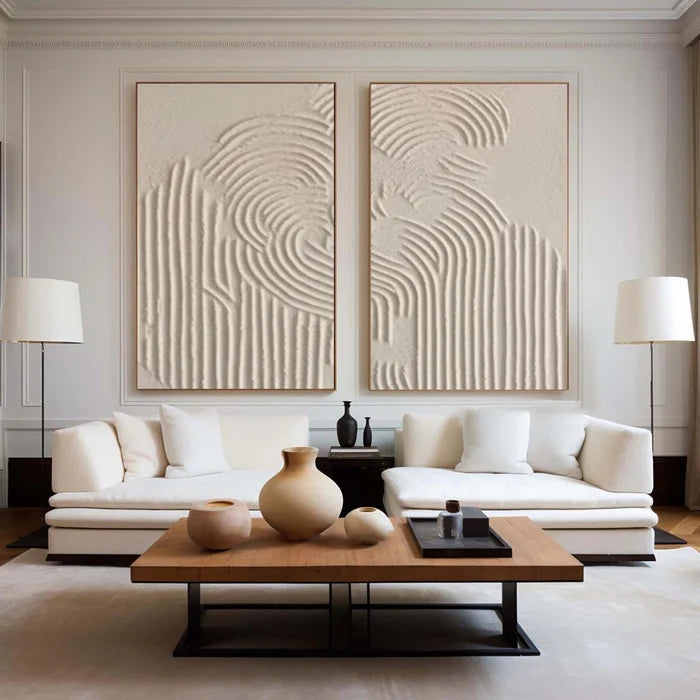
Texture can reinforce the material character associated with Western and Wabi-Sabi interiors, but it should complement the room rather than compete with every other surface. Visible brushwork, layered pigment, plaster-like relief, scumbling, dry-brush passages, and tonal variation can add depth that flat printed décor may not provide.
Textured artwork often works especially well near smooth surfaces such as painted drywall, metal-framed furniture, polished stone, or streamlined upholstery. The contrast makes the painting’s surface more noticeable. In rooms already filled with coarse wood, stone, woven baskets, leather, and patterned rugs, a less textured painting may create better balance.
Consider viewing distance. Heavy physical texture can be compelling when viewed closely in an entryway or dining room, while broad color fields and gentler surface variation may read more clearly above a sofa across the room.
Hand-painted work also carries natural variation. Vinchy Art states that many of its paintings are hand-painted and made to order, so a completed piece may vary slightly from the reference image. This is normal for individually produced art and should be considered part of its handmade character, not a defect or a promise of identical replication.
Why Do Lighting and Framing Matter So Much?
Lighting and framing determine how accurately viewers perceive the artwork’s color, texture, edges, and visual weight. Earth tones can shift substantially between daylight and artificial light, with warm bulbs often intensifying ochre, rust, and brown while cool light can make taupe, gray, and sage appear flatter or cooler.
View the intended wall at different times of day before selecting a painting. North-facing rooms may receive cooler, softer daylight, while south- and west-facing rooms often reveal warmer, more intense light. If possible, assess paint samples, fabric swatches, and image references in the actual room rather than only on a bright screen.
Framing should support the painting’s style:
-
Natural oak or medium wood can emphasize a warm, organic, ranch-inspired palette.
-
Dark walnut or espresso framing may suit heritage Western scenes and rooms with darker leather.
-
Slim black framing can sharpen a modern abstract or graphic cowboy composition.
-
A frameless canvas can feel lighter and more contemporary, particularly in minimalist spaces.
-
A wide, heavily distressed frame should be used carefully so it does not overpower a quiet painting.
Check the exact Vinchy Art product page before assuming a work is available framed, frameless, or as rolled canvas. Framing options, materials, and hanging hardware may differ by listing and selected variant.
How Can You Style Western Art Without a Theme-Room Look?
Keep the room’s architecture and daily function in charge, then use the painting as a focused reference to the West. One substantial artwork, a natural-material palette, and a few restrained accents usually feel more current than repeating cowboy imagery, antlers, distressed signs, and themed accessories across every surface.
A successful modern-Western room often combines contrast: clean-lined furniture with a textured desert painting; a contemporary sofa with a warm horse portrait; black metal lighting with clay-colored canvas art; or a minimalist dining space with an expressive ranch landscape.
Use these styling principles:
-
Give each wall a clear focal point rather than filling every available surface.
-
Pair Western art with materials that feel honest and tactile, such as leather, wood, linen, wool, clay, and stone.
-
Keep large background surfaces relatively calm so the painting can hold visual attention.
-
Use cooler accents, such as muted blue or dark teal, to add depth to an otherwise warm palette.
-
Avoid making every accessory literal; a single recognizable Western subject can be enough.
Vinchy Art’s broader selection of abstract and minimalist pieces can help bridge a Western painting with contemporary furnishings. The goal is not to recreate a ranch set but to build an interior with warmth, texture, and a sense of place.
What Should You Confirm Before Buying Online?
Before purchasing an original or hand-painted canvas online, confirm the exact artwork’s size, orientation, material description, finish, framing option, included hardware, customization availability, order-review process, packaging method, delivery terms, and return eligibility. These details can differ by product, selected variant, destination, and order type.
Photographs are useful but cannot perfectly predict how a painting will appear under your light or beside your furniture. Compare the listed dimensions with painter’s tape on the wall, request a room preview when available, and review close-up images for texture, color transitions, and edge treatment.
If considering customization, clarify the requested changes in writing. A color adjustment that sounds simple may alter the painting’s balance, contrast, or relationship to its reference image. Custom-made work may also be subject to different policies than a standard order, so review the applicable official terms before checkout.
What Are Vinchy Art Expert Views?
“An earth-tone Western painting works best when it establishes a relationship with the room rather than trying to explain the entire style on its own. Start with proportion: the artwork should have enough width and visual weight to anchor the furniture below it. Then assess undertones in natural and evening light. Warm clay, ochre, and umber can unify leather and wood, while gray-taupe, charcoal, and olive can make the look more contemporary. Finally, choose texture and framing as supporting elements. A textured canvas may become the room’s tactile focal point; a slim frame may give a more architectural finish. The most durable choice is one that still feels right after seasonal textiles and accessories change.”
How Should You Install and Care for a Canvas Painting?
Install a canvas painting with hardware rated for its actual weight and wall type, then keep it away from persistent moisture, direct heat, greasy cooking vapors, and prolonged strong sunlight. Proper installation and steady environmental conditions help preserve the artwork’s appearance and reduce unnecessary stress on the canvas and frame.
Use a stud, suitable wall anchor, or professional installation method appropriate to the wall construction. For larger framed canvases, use two hanging points when the hardware design supports it; this can improve stability and reduce tilting. Never assume hanging hardware is included unless the specific artwork listing confirms it.
For routine care:
-
Dust gently with a clean, dry, soft brush or microfiber cloth.
-
Do not use water, household sprays, solvents, or abrasive cleaners on painted surfaces.
-
Avoid pressing on areas with raised texture or plaster-style relief.
-
Keep the painting away from humid bathrooms unless the listing specifically states it is suitable for that environment.
-
Use indirect lighting where possible to limit prolonged exposure to strong sunlight.
If an artwork arrives rolled or requires stretching, follow the exact seller instructions or use a qualified framer. Do not generalize handling methods across paintings with different canvas weights, paint layers, finishes, or framing systems.
What Are the Most Common Questions About Earth Tone Western Paintings?
Can earth tone Western artwork work in a small apartment?
Yes. Choose one focused piece with a simple composition, use a scale that fits the furniture, and keep surrounding décor restrained. A vertical desert painting or a medium-scale abstract horse composition can add warmth without visually crowding a smaller room.
Should the painting match my leather sofa exactly?
No. Matching undertones is more important than matching exact shades. A cognac sofa can work with rust, ochre, camel, umber, or warm cream, while a darker brown sofa may benefit from lighter sand tones and deeper charcoal contrast.
Are horizontal or vertical Western paintings more versatile?
Horizontal paintings are generally versatile above sofas, beds, dining consoles, and mantels because they echo the width of furniture and the horizon-based imagery of Western landscapes. Vertical paintings are often better for entryways, narrow walls, and rooms with taller ceilings.
Can I mix Western art with Scandinavian or minimalist décor?
Yes. Choose a reduced palette, simple framing, and a painting with abstract, landscape-based, or lightly figurative imagery. Combine it with pale wood, linen, warm white walls, sculptural lighting, and only a few rustic materials to keep the room contemporary.
When should I choose a custom size or color?
Consider customization when standard dimensions do not suit the wall, when the orientation conflicts with furniture placement, or when the room needs a more specific warm or cool earth-tone balance. Confirm the exact artwork’s customization process and applicable terms before ordering.
What Is the Best Final Choice for Your Room?
Choose an earth-tone Western painting that fits the wall at a convincing scale, shares undertones with your dominant furnishings, and supports the mood you want without competing with the room. Start with measurements and viewing distance, then evaluate light, palette, subject, orientation, texture, and framing.
For a wide living-room wall, a horizontal desert or ranch landscape can create a calm anchor. For a tall entryway, a vertical horse or abstract canyon work can provide presence without excess decoration. In a modern interior, simplify the subject and frame; in a rustic room, let natural texture and warmer pigment take a more visible role.
Vinchy Art can be a useful starting point for shoppers seeking hand-painted, made-to-order wall art and support with room previews, palette direction, and placement. Confirm every artwork-specific feature on its current product page, select a piece that relates to the room’s real dimensions and light, and allow the painting’s handmade variation to contribute to its character.