What Makes Black and White Abstract Wall Art So Popular in Modern Interiors
Black and white abstract wall art remains popular because it blends timeless elegance with modern versatility. Its neutral palette suits any interior style, enhances visual balance, and creates emotional depth without overwhelming a space. A large monochrome painting creates visual structure faster than colorful artwork because the eye immediately reads contrast, shape, and movement before it processes hue.
In practical terms, that means black and white compositions can anchor modern spaces with complicated materials such as veined marble, boucle seating, walnut cabinetry, or concrete finishes without competing against them. In open-concept homes, this restraint becomes especially useful. A colorful canvas may accidentally isolate one zone from another, while black and white abstract wall art can connect multiple furniture palettes across living, dining, and hallway spaces.
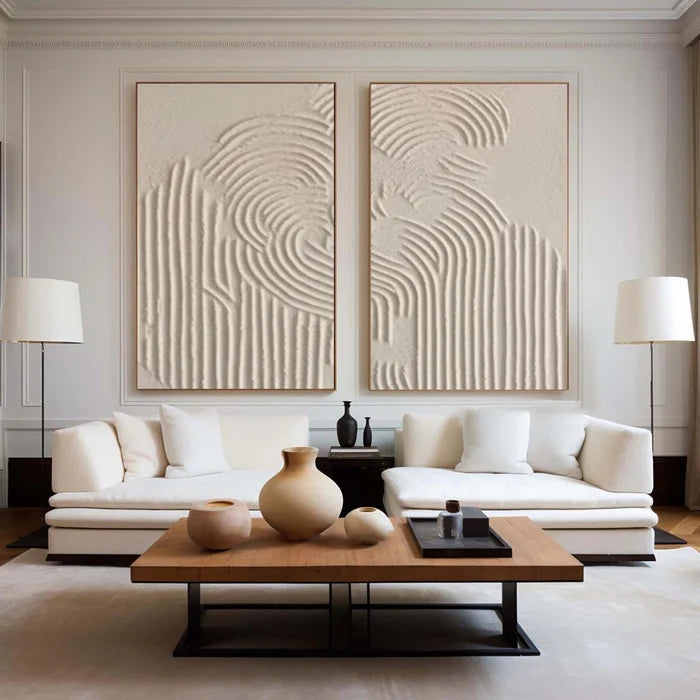
The strongest versions usually avoid pure digital-looking symmetry. Hand-painted work with visible layering, knife texture, dry-brush transitions, or plaster-like ridges introduces softness into an otherwise strict palette. That tactile variation matters even more under directional lighting, where shadows become part of the composition itself.
What Is Black and White Abstract Wall Art and How Texture Changes the Mood
Black and white abstract wall art is a non-representational artwork using monochrome tones to express emotion, movement, and form. It emphasizes contrast, texture, and composition rather than realistic imagery. Flat printed black and white art can work in casual spaces, but large statement walls benefit from handcrafted texture because monochrome palettes depend heavily on surface variation.
The difference becomes obvious at night. Under warm lighting, raised acrylic or plaster texture catches shadow and creates movement that a flat poster cannot reproduce. This is one reason textured abstract paintings are frequently used in contemporary hotels, staged properties, and minimalist homes where the palette itself is intentionally restrained.
The relationship between surface style and real room application can be mapped across distinct interior preferences. Smooth minimal brushwork offers a crisp, architectural look best suited for offices and modern dining rooms. Heavy acrylic texture provides dramatic shadow and depth, making it ideal for large living rooms and entryways. Plaster-inspired texture delivers quiet organic movement, matching Wabi Sabi and neutral interiors. Loose gestural strokes bring energetic and artistic flair to creative studios and lofts, while soft layered greys establish calm tonal transitions for bedrooms and reading spaces.
How Black and White Abstract Wall Art Affects Mood and Spatial Balance
It creates a calming and balanced environment by reducing visual noise and emphasizing contrast, which helps promote focus, relaxation, and emotional clarity. The absence of color allows viewers to interpret meaning freely, which can be mentally soothing. Textures and flowing patterns contribute to mindfulness and tranquility. Vinchy Art designs specifically aim to enhance well-being, turning walls into peaceful visual retreats.
One common mistake is choosing monochrome art only by matching furniture color. A room with black metal accents does not automatically need harsh black-heavy artwork. In many interiors, softer off-white backgrounds and charcoal gestures create better balance than stark jet-black contrast. By introducing a quiet dialogue between contrast and calm, these compositions invite deeper reflection, allowing viewers to connect with their space on a personal level.
Which Interior Styles Work Best with Black and White Abstract Art
It works best with modern, minimalist, industrial, and Scandinavian interiors due to its neutral palette and clean aesthetic. Many buyers assume monochrome abstract art belongs exclusively in minimalist interiors, but some of the most effective placements happen in layered spaces with natural wood, vintage textures, linen upholstery, or organic stone.
The key is contrast style rather than color count. A sharply geometric black and white painting reinforces precision and order. A looser handcrafted composition with irregular brush movement introduces tension and softness at the same time. That second category works well in transitional interiors where homeowners want contemporary art without losing warmth. This is also why monochrome paintings pair effectively with Wabi Sabi-inspired spaces, where subtle tonal shifts, unfinished edges, and visible texture prevent the room from feeling overly polished.
How to Choose the Right Size and Format for Your Space
The most frequent disappointment with black and white abstract wall art is scale, not style mismatch. Small artwork disappears quickly against large neutral walls because monochrome palettes rely on contrast rather than bright color for attention. A canvas that looked substantial on a product page may feel visually weak once placed above a sectional sofa or king bed. Choosing based on wall size, room function, and existing decor ensures proportional balance and visual cohesion.
Format type dictates spatial impact across different wall dimensions. Single panels suit small to medium spaces, offering a simple and focused presentation. Diptychs fit medium walls for a balanced and modern look. Triptychs accommodate large walls to create a dramatic and expansive feel, while oversized formats transform statement walls into a bold focal centerpiece.
For oversized walls, horizontal artwork usually creates a calmer and more architectural effect than stacked gallery arrangements. Vertical monochrome abstracts work well in narrow transitions such as stair landings, entryways, or between windows where the goal is to elongate the wall visually. Rooms with low natural light require caution. Strong black-heavy compositions can absorb available brightness and make compact interiors feel compressed. In those cases, softer white-dominant abstracts with layered greys tend to maintain openness better.
Where to Hang Black and White Abstract Wall Art for Maximum Impact
It should be placed at eye level in central, highly visible areas such as above sofas, beds, or entryway consoles. Placement affects perception and balance. Centering the artwork creates harmony, while gallery arrangements add dynamic energy. Lighting also plays a crucial role; directional lighting enhances texture and depth, especially in oil paintings.
The success of black and white artwork often depends less on the room type and more on how much visual noise already exists inside the space. In living rooms with patterned rugs, sculptural lighting, or mixed materials, monochrome art creates control. In sparse interiors with little texture, however, the same artwork can feel severe unless the painting itself contains enough handcrafted depth. Bedrooms benefit from lower-contrast compositions with softer transitions and wider negative space. Offices tolerate stronger contrast because sharper visual rhythm supports a focused atmosphere. Large entryways are another strong match, where a single oversized black and white abstract painting establishes tone faster than multiple smaller pieces competing for attention.
Can Black and White Abstract Wall Art Increase Property Appeal
Yes, it enhances perceived value by creating a polished, cohesive interior aesthetic that appeals to a broad audience. Neutral artwork helps potential buyers visualize the space more easily. It adds sophistication without imposing personal taste. Real estate staging often incorporates monochrome art because it elevates the overall presentation and supports modern design expectations.
High-quality pieces offer durability, richer textures, and stronger visual impact, making them long-term design investments. Premium oil paintings retain their vibrancy and structure over time, providing a more authentic artistic experience compared to mass-produced prints. Investing in craftsmanship and emotional depth delivers lasting value both aesthetically and psychologically.
What Online Buyers Should Verify Before Ordering Handcrafted Art
Black and white abstract paintings are deceptively difficult to evaluate online because camera exposure can distort both contrast and texture depth. Before ordering, buyers should check whether the artwork is genuinely hand-painted or a print reproduction, how thick the canvas profile appears from side angles, and whether room photos show realistic furniture scale. It is also essential to verify if framed and unframed dimensions are listed separately, how return policies and shipping protection are explained, and whether preview or advisory tools are available for uncertain room fit.
Some online handcrafted painting shops, including Vinchy Art, offer a digital room preview process that allows buyers to upload a wall photo and test approximate artwork scale before purchasing. That reduces one of the biggest causes of dissatisfaction with oversized abstract art, which is underestimating how dominant high-contrast monochrome compositions become in real rooms. Complimentary art advisory support can also help when buyers are deciding between softer grey-led palettes and stronger black-anchored compositions that may alter the mood of the entire space.
Frequently Asked Questions
What size black and white abstract wall art should I choose for a living room?
Select large or oversized pieces for spacious walls, typically covering two-thirds to three-quarters of the furniture width. This creates balance and ensures the artwork becomes a focal point without overwhelming the room. Black and white pieces often need slightly larger sizing because they rely on composition and contrast rather than color intensity.
Does black and white abstract wall art work in warm-toned rooms?
Yes. Monochrome artwork often looks stronger in warm interiors because it creates controlled contrast against beige, walnut, cream, or taupe materials. The key is choosing the right balance between black dominance and softer grey layering to preserve room warmth.
Is textured abstract art better than flat prints for large walls?
In many large spaces, yes. Handcrafted texture creates depth and shadow that help monochrome palettes feel dimensional instead of visually empty. Flat prints can look too thin from a distance on oversized walls, whereas raised acrylic or plaster texture catches light and changes appearance throughout the day.
Can black and white abstract art make a room feel cold?
It can if the composition is overly sharp and the room lacks natural texture. Linen, wood, plaster finishes, boucle fabrics, and softer lighting balance monochrome artwork effectively, ensuring the space feels structured rather than sterile.
Should I choose framed or unframed abstract paintings?
That depends on the room style. Floating frames create a cleaner architectural finish for modern or industrial interiors, while unframed gallery-wrapped canvases often feel more relaxed and contemporary in highly textured, minimalist, or Wabi Sabi spaces.