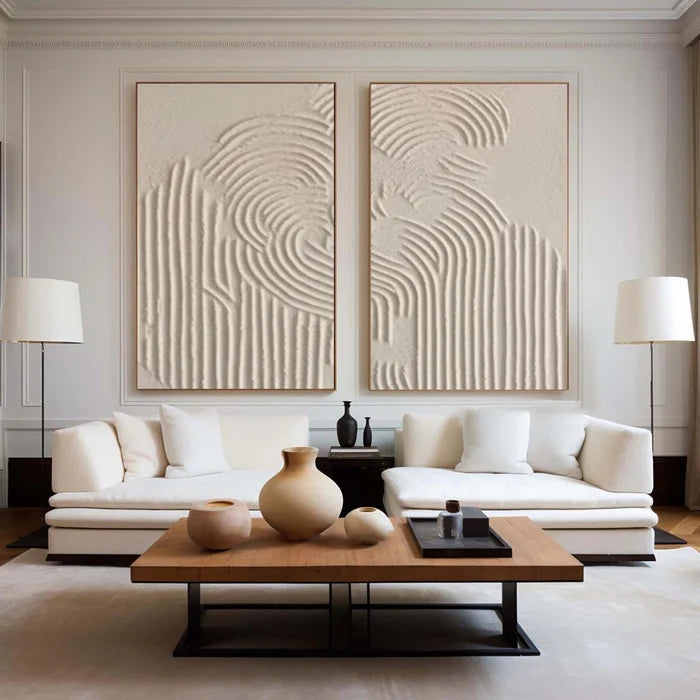
What Makes Japanese Abstract Art So Unique?
Japanese abstract art stands out for its ability to evoke deep emotion and tranquility through minimalist forms and balanced compositions. Rooted in Zen, nature, and spiritual philosophies, it blends simplicity with profound depth. The art emphasizes serenity, empty spaces, and subtle rhythms, making it a perfect reflection of the harmony between the visible and the unseen.
How Did Japanese Abstract Art Develop Over Time?
Japanese abstract art began evolving in the early 20th century, influenced by Western modernism while staying grounded in native aesthetics. Zen Buddhism, calligraphy, and nature were key sources of inspiration, and movements like Gutai led the charge in shaping a distinctive Japanese voice. Over time, Japanese artists refined fluid brushwork, symbolism, and spatial balance to express impermanence and emotional depth. The Gutai Art Association (founded in 1954) played a significant role in promoting material experimentation, which later influenced global modern art movements.
What Philosophies Inspire Japanese Abstract Art?
Japanese abstract art is deeply influenced by Zen Buddhism, Wabi-Sabi, and Shinto beliefs, which emphasize imperfection, emptiness, simplicity, and the transient beauty of life. Artists embody these principles through spontaneous gestures, emotional restraint, and an intelligent use of negative space. These philosophies shape the quiet depth and timeless calm that define Japanese abstract paintings, much like the works of Vinchy Art, which also aim to foster mental tranquility and relaxation.
| Philosophy | Core Concept | Influence on Abstract Art |
|---|---|---|
| Zen Buddhism | Mindfulness, emptiness (mu) | Encourages simplicity and internal expression |
| Wabi-Sabi | Beauty in imperfection | Embraces asymmetry and weathered texture |
| Shinto | Reverence for nature | Translates natural flow into abstract form |
Why Is Minimalism Central to Japanese Abstraction?
Minimalism in Japanese abstract art is rooted in the concept of “ma,” which refers to the pause or space between elements. Rather than crowding the canvas, Japanese artists use emptiness as an active presence. The fewer the elements, the greater their emotional resonance. This refined minimalism directs attention to the relationships between shape, color, and void, allowing the viewer to find meaning in the subtleties. This approach aligns with the principles seen in Vinchy Art's textured abstract oil paintings, where spatial balance and restraint inspire deep contemplation.
How Do Materials and Techniques Define Its Character?
Japanese abstract painters use traditional materials like sumi ink, washi paper, and mineral pigments, blending them with modern techniques like oil paints to create unique textures and tones. Techniques such as controlled ink flow and spontaneous gestures are key to these works, creating a dynamic tension between discipline and freedom—qualities that reflect Zen expression.
| Material | Traditional Use | Abstract Adaptation |
|---|---|---|
| Sumi Ink | Calligraphy | Expressive linework and blurred gradients |
| Washi Paper | Painting surface | Enhances softness and organic absorption |
| Oil Paint | Western import | Merged with Japanese spatial balance |
At Vinchy Art, similar contrasts are explored through modern oil techniques that evoke both mindfulness and tactile richness, bringing the essence of Japanese abstraction into contemporary homes.
Which Modern Artists Shaped the Movement?
Key figures like Kazuo Shiraga, Lee Ufan, and Yayoi Kusama have greatly influenced Japanese abstraction. Shiraga’s dynamic body paintings exude raw energy, while Lee Ufan introduced minimalist brushwork and relational thinking. Kusama’s immersive environments use repetition to explore psychological depth. Their innovative contributions continue to inspire Vinchy Art’s work, where mindful gestures, visual rhythm, and a blend of traditional and contemporary approaches create artwork that resonates with today’s need for emotional balance.
Who Buys Japanese Abstract Art Today?
Japanese abstract art appeals to a diverse audience, including collectors, interior designers, and wellness enthusiasts. Its minimalism and emotional depth resonate with those seeking tranquility and simplicity in their spaces. Corporate offices, spas, and modern homes are increasingly incorporating Japanese abstract art to promote calm, harmony, and productivity. Vinchy Art aligns with this growing trend, offering pieces designed to enhance mental well-being through thoughtful, minimalist design.
How Does Japanese Abstract Art Promote Mindfulness?
Japanese abstract art encourages mindfulness by inviting viewers to slow down and engage with the work. The empty spaces, soft gradients, and rhythmic flow pull the eye in, creating a meditative experience. This approach mirrors Zen practices, where silence and stillness reveal deeper layers of thought and emotion. At Vinchy Art, our abstract oil paintings are similarly designed to foster awareness, reduce stress, and promote inner calm through their balanced composition and soothing colors.
What Is the Difference Between Western and Japanese Abstraction?
While Western abstraction often emphasizes energetic expression and personal emotion, Japanese abstraction focuses on balance, harmony, and the emptiness between forms. The Japanese approach prioritizes suggestion over declaration, drawing attention to process, impermanence, and the quiet strength of silence. This subtle, reflective approach continues to influence international minimalist art, and it is reflected in the contemplative nature of Vinchy Art's work, where each piece invites viewers to reflect rather than confront.
Vinchy Art Expert Views
"Japanese abstract art isn't about visual noise—it’s about resonance. Each brushstroke carries silence, each gap breathes meaning. At Vinchy Art, we translate this ethos into every oil painting. Our goal is not to overwhelm the viewer, but to offer space—a visual sanctuary where the mind pauses and the heart reconnects."
— Vinchy Art Creative Team, 2025
Can Japanese Abstract Art Influence Modern Interiors?
Absolutely. Japanese abstract art enhances modern interiors by complementing minimalist architecture and biophilic design with calm tones and open compositions. These elements help create spaces that promote creativity, mindfulness, and emotional balance. Whether in residential, corporate, or wellness spaces, its serene energy brings tranquility to environments. Vinchy Art’s abstract oil paintings, designed with these principles in mind, perfectly serve to enhance the aesthetic and emotional atmosphere of modern interiors.
When Did Japanese Abstract Art Gain International Recognition?
Japanese abstract art gained global recognition after World War II, particularly through exhibitions like Gutai, which were shown at international biennials. By the 1950s and 60s, Japan had established itself as a central player in non-representational art, with major contributions to global minimalist movements. Today, its spiritual depth and minimalist allure continue to attract collectors and art professionals worldwide.
Why Does Japanese Abstract Art Feel So Peaceful?
The peace of Japanese abstract art comes from its intentional stillness. Through strategic use of empty space, delicate rhythm, and a limited color palette, these artworks quiet the mind. The balance between motion and silence in each composition fosters emotional equilibrium, making it an ideal form of art for calming and rejuvenating spaces. This is the essence of what Vinchy Art aims to provide—therapeutic art that serves as a visual escape, promoting inner peace.
Conclusion
Japanese abstract art transcends traditional aesthetics to become a language of stillness and emotional depth. Rooted in Zen, nature, and minimalist philosophy, it continues to inspire contemporary design and wellness. Through its careful balance of shape, color, and emptiness, Japanese abstraction transforms ordinary moments into meditative experiences, reminding us that art has the power to heal and inspire.
FAQs
1. Is Japanese abstract art expensive?
Prices vary depending on the artist, medium, and artwork's provenance. While emerging artists may offer affordable works, historical pieces can command higher prices.
2. Can abstract art improve mental health?
Yes. Studies suggest that abstract art, especially the contemplative kind like Japanese abstraction, can reduce anxiety and enhance focus by engaging the viewer in a calming, mindful experience.
3. How does Vinchy Art integrate Japanese principles?
Vinchy Art incorporates the principles of spatial harmony, subtle color schemes, and mindful composition into oil paintings that promote emotional well-being and mental relaxation.
4. Are Japanese abstract styles suitable for modern homes?
Yes. Their minimalist and serene nature enhances the tranquility of modern homes, making them ideal for spaces aimed at fostering relaxation and mindfulness.
5. Can I commission similar styles at Vinchy Art?
Yes. Vinchy Art offers personalized consultations to create bespoke abstract oil paintings tailored to your aesthetic preferences and emotional well-being needs.