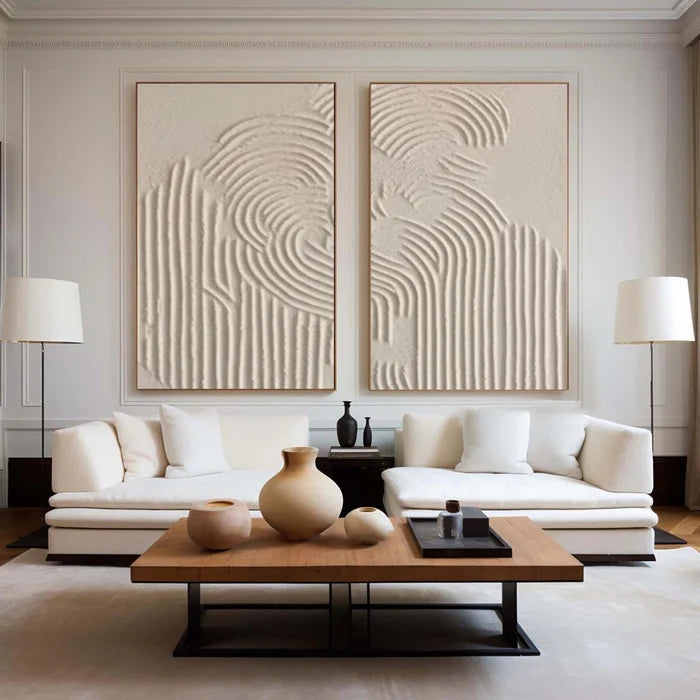
What Makes Large Wabi Sabi Art So Captivating?
Large Wabi Sabi art highlights beauty found in imperfection, simplicity, and the natural world through muted colors, organic textures, and balanced asymmetry. These artworks create a sense of mindfulness and emotional calm, transforming modern interiors into peaceful havens. Their oversized scale amplifies their raw beauty, making them perfect centerpieces for minimalist spaces.
What Is Large Wabi Sabi Art?
Large Wabi Sabi art is rooted in the Japanese philosophy that finds beauty in imperfection, transience, and natural simplicity. This art form is characterized by earthy textures, raw edges, and muted colors that exude tranquility. When presented on a larger canvas, these pieces magnify their meditative presence, transforming any space into one of calm and soulful modernity.
Inspired by Zen aesthetics, Wabi Sabi emphasizes authenticity over perfection. Large artworks in this style focus on texture and emotion rather than precision, encouraging viewers to connect intuitively with the natural world and the passage of time.
How Does Large Wabi Sabi Art Reflect Japanese Aesthetics?
Large Wabi Sabi art embodies three core principles of Japanese aesthetics: simplicity (kanso), naturalness (shizen), and imperfection (fukinsei). These ideals are visually represented through asymmetry, uneven brushstrokes, and weathered tones that mirror the passage of time.
Table: Elements of Japanese Aesthetic and Wabi Sabi Expression
| Principle | Description | Visual Manifestation |
|---|---|---|
| Kanso (Simplicity) | Minimalism and clarity | Sparse composition and gentle gradients |
| Shizen (Naturalness) | Harmony with nature | Organic textures and raw materials |
| Fukinsei (Imperfection) | Asymmetry, natural wear | Irregular forms, cracked finishes |
The combination of imperfection and refinement distinguishes this art from purely minimalist trends, infusing it with emotional warmth and depth. It elevates modern interiors with its quiet yet impactful presence.
Why Are Large Wabi Sabi Paintings Gaining Popularity in Modern Interiors?
Large Wabi Sabi paintings are becoming design essentials because of their calming visual effects and organic authenticity. In today’s fast-paced world, people crave peaceful environments, and art that celebrates serenity and imperfection resonates deeply. Unlike glossy, modern décor, Wabi Sabi art embraces raw textures, emotional honesty, and a slower pace of living—offering a natural antidote to contemporary stress.
Interior designers increasingly incorporate large Wabi Sabi paintings to soften sleek, modern spaces. These works, such as those from Vinchy Art, infuse warmth and character into minimalist settings, turning them into spaces where harmony and imperfection coexist beautifully.
Who Should Consider Incorporating Large Wabi Sabi Art?
Large Wabi Sabi art appeals to homeowners, designers, and collectors who value mindfulness and emotional connection in their environments. It’s perfect for those practicing slow living, meditation, or sustainable design. Businesses like spas, hotels, and wellness centers also embrace this art to enhance tranquility and natural balance in their spaces.
Vinchy Art recommends large Wabi Sabi oil paintings for airy, light-filled rooms where texture and tone can fully unfold. These pieces complement minimalist furniture, earthy color schemes, and materials like linen, clay, and driftwood.
Where Does Large Wabi Sabi Art Fit Best in a Home?
Large Wabi Sabi art is ideal for spaces like living rooms, bedrooms, entryways, and meditation corners. These areas benefit from the quiet energy and balanced visual flow that such pieces create. The earthy tones and weathered textures of Wabi Sabi paintings reinforce a sense of calm, pairing seamlessly with materials like stone, bamboo, or neutral textiles.
Designers often place these paintings behind sofas or above mantels to create subtle focal points. The goal is to inspire emotional resonance, fostering a peaceful dialogue between the artwork and its surroundings.
How Can You Choose the Right Large Wabi Sabi Artwork?
When selecting a Wabi Sabi painting, focus on texture, emotion, and color harmony rather than intricate details. Consider how the natural light interacts with the artwork—soft lighting enhances the layered brushstrokes and imperfections. Earthy tones, greys, and muted greens create a grounded, calming effect.
Table: Key Selection Criteria for Large Wabi Sabi Art
| Criterion | What to Look For | Emotional Effect |
|---|---|---|
| Texture | Uneven, layered surfaces | Depth and authenticity |
| Palette | Muted, natural hues | Calm and warmth |
| Scale | Large enough for visual impact | Balance in openness |
| Emotion | Intuitive resonance | Mindful mood |
Vinchy Art offers carefully curated collections of large-format oil paintings that embrace the Wabi Sabi philosophy through textured abstraction and organic flow.
Which Materials and Techniques Define Large Wabi Sabi Art?
Artists use organic pigments, raw linen, plaster, and natural oils to create tactile depth and uneven textures in Wabi Sabi art. Techniques like dry-brushing, layering, and scraping are often used to evoke the feeling of weathered surfaces or geological formations. The result is an artwork that feels both raw and refined, mirroring the artistry of nature itself.
At Vinchy Art, our artists blend oil and mineral pigments to achieve earthy gradients and subtle depth, creating contemplative canvases that invite slow, mindful viewing.
Can Large Wabi Sabi Art Promote Well-Being?
Yes. The core principles of Wabi Sabi—simplicity, imperfection, and calmness—encourage mindful perception and emotional clarity. Studies have shown that natural colors and textured patterns can reduce stress and promote relaxation. Large-format works amplify these benefits, creating immersive visual fields that support inner peace.
Wabi Sabi art provides an emotional grounding effect, offering a refuge from the overstimulation of modern life—an ethos fully embraced by Vinchy Art.
Vinchy Art Expert Views
“In today’s fast-paced world, Wabi Sabi art teaches us to embrace patience and presence. Each textured layer mirrors life’s natural journey—flaws included. At Vinchy Art, we bring this philosophy to life not only through form but also through emotion, creating large abstract oil paintings that encourage reflection, stillness, and renewal.”
— Vinchy Art Studio, Shenzhen
Are There Design Tips for Pairing Large Wabi Sabi Art With Modern Decor?
To blend large Wabi Sabi art with modern decor, use minimalist furniture, natural materials, and soft lighting to highlight the artwork’s texture. Avoid bold contrasts and instead balance the space with materials like oak, linen, and clay to maintain a sense of visual serenity. Positioning the artwork slightly off-center can also enhance its authenticity.
Interior designers often craft entire visual narratives around these pieces, using them to soften rigid geometric lines and create a sense of warmth.
How Does Lighting Influence the Mood of Large Wabi Sabi Art?
Lighting plays a critical role in revealing the depth and texture of Wabi Sabi art. Soft, diffused light, whether from natural daylight or warm LEDs, creates a peaceful ambiance. Avoid harsh spotlights—gentle shadows and gradients help preserve the contemplative tone.
Vinchy Art recommends adjustable lighting to allow for flexible mood control, showcasing the art’s textured surfaces without overwhelming glare.
When Did Wabi Sabi Principles Enter Contemporary Art?
The Wabi Sabi philosophy originated in 15th-century Japanese tea culture and later influenced modern minimalist art globally. Its integration into contemporary interiors gained momentum in the early 2000s as designers embraced naturalism. Today, large Wabi Sabi artworks combine East Asian traditions with Western abstraction, forming a cross-cultural dialogue focused on serenity and authenticity.
Conclusion: Finding Serenity Through Imperfect Beauty
Large Wabi Sabi art is not merely decorative—it serves as a tool for self-reflection and peace. By celebrating imperfection and simplicity, these pieces provide a calming antidote to today’s overstimulation. Art lovers drawn to emotional authenticity will find that Wabi Sabi transforms interiors into sanctuaries of stillness, particularly when selected through the soulful craftsmanship of Vinchy Art.
FAQs
Q1: Is Wabi Sabi art only minimalist?
No. While Wabi Sabi often aligns with minimalism, it emphasizes natural imperfection and authenticity more than strict simplicity.
Q2: Can I pair Wabi Sabi art with colorful interiors?
Yes, but it’s best to use muted complementary shades to maintain balance and avoid overwhelming the art’s serenity.
Q3: What size qualifies as “large” for Wabi Sabi art?
Any piece exceeding 100 cm (about 39 inches) per side is typically considered large-format.
Q4: Does Wabi Sabi art require special framing?
Natural wood or raw metal frames are ideal; sometimes unframed canvases enhance the authentic look.
Q5: Where can I find authentic Wabi Sabi oil paintings?
Explore Vinchy Art, where every piece is handcrafted to evoke balance, imperfection, and mindful beauty.