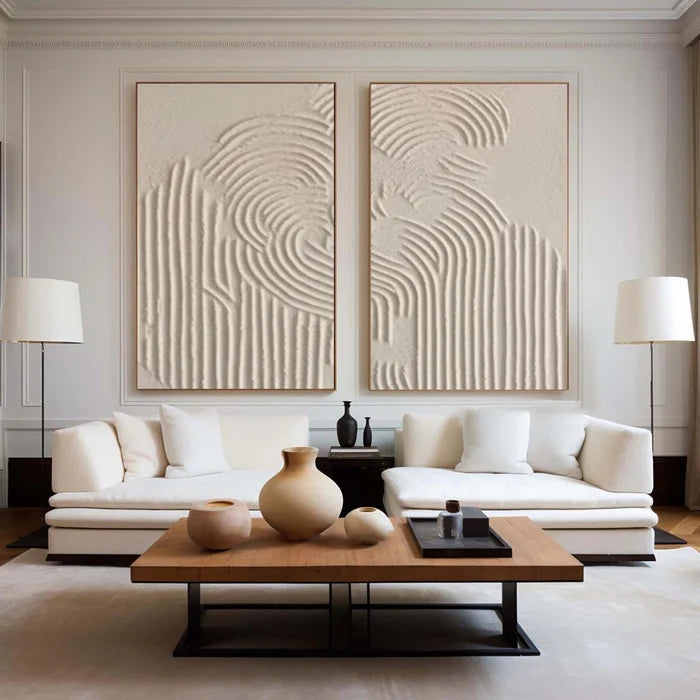
What Makes Modern Western Canvas Painting Work in Contemporary Interiors?
Modern Western canvas painting works best when it balances frontier-inspired subjects with a clean contemporary composition, the correct scale, and a palette that supports the room. Choose the artwork after measuring the wall and nearby furniture, then assess its color temperature, orientation, texture, and finish in your actual lighting. A hand-painted piece may vary subtly from its reference image.
What Defines Modern Western Canvas Painting?
Modern Western canvas painting combines visual references to the American West—horses, cattle, desert horizons, mountains, ranch life, open sky, and weathered materials—with contemporary color, simplified forms, expressive brushwork, or abstracted composition. It is less about recreating a period interior and more about interpreting Western atmosphere in a current home.
Traditional Western art often emphasizes narrative realism, historical scenes, and finely rendered detail. A modern approach may use a restrained palette, bold negative space, loose gesture, tonal abstraction, or textured surfaces. The result can suit a contemporary, transitional, rustic-modern, minimalist, or organic-modern interior.
Look for a clear relationship between subject and style. A black-and-white horse portrait can feel architectural in a neutral living room. A desert landscape built from terracotta, ochre, sand, and charcoal can reinforce earthy materials such as oak, leather, linen, stone, and wool. An abstract Western-inspired canvas may suggest a horizon, canyon wall, or prairie sky without illustrating every detail.
At Vinchy Art, shoppers can browse hand-painted wall art by subject, style, color, orientation, and set format. Because each artwork may have different materials, size options, frame choices, and customization availability, the exact product page should guide the final decision.
How Should You Choose the Right Subject?
Choose a subject that supports the room’s focal point and the atmosphere you want to create rather than selecting Western imagery only because it matches a theme. Large landscapes tend to create openness, animal portraits add presence, and abstract or textural works offer a quieter interpretation of Western design.
Consider the visual character of common subject types:
Avoid making every surface literal. If the room already includes a cowhide rug, reclaimed wood, saddle leather, or prominent Southwestern textiles, a simplified horizon or neutral abstract canvas may be more balanced than another heavily detailed Western motif. Conversely, a clean-lined room with limited decoration can support a more expressive cowboy, horse, or desert painting.
A useful selection method is to identify one dominant room element: the sofa, rug, headboard, fireplace surround, or dining table. Choose artwork that either echoes one color from that element or introduces a controlled contrast. For example, a camel leather sofa can pair naturally with warm sienna and soft cream, while a charcoal sectional may benefit from an atmospheric canvas containing bone, slate, muted rust, and faded blue.
Which Canvas Size and Orientation Fit the Wall?
Use the artwork’s width, not only its height, to establish proportion. Above furniture, a canvas or grouped arrangement often looks balanced at roughly 60 to 75 percent of the furniture width, while tall vertical pieces help activate narrow walls and horizontal works usually suit sofas, beds, sideboards, and long hallways.
Measure the usable display zone rather than the entire wall. For artwork above a sofa, console, or bed, account for lamps, molding, shelving, and visual breathing room. A 90-inch sofa, for example, commonly supports an artwork arrangement about 54 to 68 inches wide. This is a guide, not a rigid rule: a low, sculptural sofa may need a broader composition, while a room with dramatic architectural details may need more negative space.
Use painter’s tape to mark the proposed outer dimensions on the wall. View the outline from the room’s normal seating position and from the entry. This simple mockup reveals whether the piece feels underscaled, visually heavy, or wrongly oriented before you order.
How should orientation guide the choice?
Landscape-format artwork reinforces long, low furniture and expansive Western scenery. It can visually widen a room and works especially well above a sofa, credenza, mantel, or dining bench.
Portrait-format artwork is useful beside doors, between windows, over a narrow console, or where ceilings feel tall. A vertical horse portrait, a lone rider, or a stacked abstract terrain composition can create upward movement without overfilling the wall.
Square canvases often suit compact walls or symmetrical arrangements. A diptych or triptych can provide a wider overall footprint while preserving rhythm. When placing multiple canvases, treat the entire group as one composition and calculate its total width, including the gaps.
What Colors Work With Contemporary Western Interiors?
The most adaptable palettes combine grounded neutrals with one or two deliberate accents. Sand, clay, warm white, taupe, tobacco, charcoal, faded denim, sage, terracotta, and dusty blue can connect Western references to contemporary materials without making the room feel costume-like.
Start by determining whether the room is warm, cool, or mixed. Warm rooms containing oak, brass, camel leather, cream upholstery, and terracotta tile often pair well with sienna, ochre, umber, muted orange, and sun-washed beige. Cooler rooms with gray stone, black steel, blue upholstery, or white plaster can benefit from slate, smoky blue, charcoal, greige, and pale sand.
Color matching does not require exact duplication. A painting can unify a room by repeating a secondary color rather than its dominant one. In a neutral space, a restrained rust brushstroke may connect to a single ceramic vessel or cushion. In a colorful room, choose art with enough neutral field to prevent competition among furnishings.
Natural light changes paint color throughout the day. South- or west-facing rooms can intensify warm tones, while cooler daylight can make gray, blue, and taupe passages more prominent. Check photographs and room previews on a calibrated screen when possible, but expect hand-painted surfaces to reveal different subtleties in person.
Why Does Texture Matter in Hand-Painted Art?
Texture changes how a painting interacts with light, distance, and surrounding materials. Raised brushwork, palette-knife marks, plaster-style relief, layered acrylic, or oil impasto can create shifting shadows and visual depth, while a smoother painted surface usually reads more quietly from across the room.
Texture is particularly effective in rooms that rely on natural materials. Bouclé upholstery, limewash walls, travertine, linen drapery, raw wood, and woven rugs all benefit from an artwork with a tactile surface. In a room already rich with grain, pattern, and carved detail, however, a smoother canvas may provide useful visual rest.
Consider viewing distance. Fine brushwork and low-relief texture reward closer viewing in an entryway, hallway, or seating area. Larger gestural marks and bolder tonal fields generally read more clearly from across a living room. A heavily textured painting above a fireplace can be compelling, but direct heat, smoke, and intense light create avoidable conservation concerns.
Hand-painted work is not machine-identical. Brush direction, texture distribution, edge treatment, and tonal variation can differ slightly from a displayed reference. With made-to-order art from Vinchy Art, these small differences are part of the handmade character; review the exact listing for the artwork and any available pre-shipment approval process.
How Do Framing and Edges Change the Look?
Framing determines whether the canvas feels integrated, architectural, rustic, or gallery-like. A frameless stretched canvas keeps the focus on the painted surface, while a floating frame adds definition and can make a large artwork feel more intentional within a polished contemporary interior.
A natural oak or walnut-toned frame can echo wood furniture and soften a minimal interior. Black framing creates sharper contrast and works well with dark metal, charcoal upholstery, or modern architecture. Pale wood, off-white, or lightly toned finishes may suit airy Wabi-Sabi-inspired rooms, especially when the painting uses sand, ivory, limestone, and faded earth tones.
Check frame depth as well as face width. A deep canvas profile can create shadow and presence even without a frame. A slim floating frame works well when you want a small reveal around the canvas, while a broader frame becomes an active part of the composition.
Do not assume every Vinchy Art painting has the same framing options. Available finishes, stretcher construction, hanging hardware, and packaging may differ by artwork, selected size, and destination. Confirm the exact variant before ordering.
Can You Preview, Customize, and Buy Art Confidently Online?
Yes, but confidence comes from verifying the exact artwork details before purchase. Confirm the image, dimensions, orientation, material description, edge treatment, frame option, customization scope, production status, shipment destination, and return terms for the chosen variant rather than relying on general catalog language.
Before purchasing, gather four measurements: wall width, wall height, furniture width, and the preferred hanging zone. Photograph the wall straight on in daylight and evening light. This makes it easier to compare the artwork’s palette and scale against the room.
Vinchy Art describes complimentary art advisory and room-preview support intended to help buyers assess size, color, orientation, and placement. Use that support as a decision tool, then compare the proposed artwork dimensions with a taped outline on the wall. A digital preview is useful for composition, but physical measurement remains essential.
If considering customization, define the request precisely. State the desired width and height, orientation, dominant colors, colors to avoid, framing preference, and the room’s main furnishings. Custom-size or custom-color work may be subject to different production and return conditions than non-custom selections, so verify the applicable terms for the exact order before checkout.
Where and How Should You Hang the Canvas?
Hang the center of a single artwork near average eye level, often around 57 to 60 inches from the floor, then adjust for furniture, ceiling height, and the room’s primary viewing position. Above furniture, leave enough space for the art and furnishing to read as one composition rather than as separate floating elements.
A practical guideline is to place the bottom edge roughly 6 to 12 inches above a sofa, console, headboard, or sideboard. This range should be adjusted for unusually tall backrests, deep frames, or low furniture. The goal is visual connection, not strict measurement.
Use the appropriate wall anchors and hardware for the artwork’s weight and wall type. Locate studs where practical, particularly for larger framed canvases. For drywall without a suitable stud position, use weight-rated anchors designed for the hardware and load. Two attachment points can help a wide canvas stay level and reduce rotation.
Avoid hanging canvas directly above an active fireplace if repeated heat, soot, or major temperature swings are likely. Also avoid damp bathrooms, direct sun exposure, radiator paths, and locations where doors may strike the artwork. In bright rooms, indirect light or window treatments can help limit unnecessary exposure.
What Is the Best Way to Care for Canvas Art?
Protect canvas art from direct sunlight, moisture, heat sources, smoke, and sharp changes in temperature or humidity. Routine care is usually simple: dust gently with a clean, soft, dry microfiber cloth or a soft brush, and avoid rubbing, spraying, or applying household cleaners to the painted surface.
Do not use water, solvents, alcohol, abrasive cloths, commercial polish, or adhesive products on hand-painted oil, acrylic, or textured surfaces unless a qualified conservator advises otherwise. Raised texture is especially vulnerable to snagging and pressure. Handle the canvas by its frame or stretcher edges with clean, dry hands rather than pressing on the front or back.
For a move, protect the painted face with a non-abrasive barrier that does not stick to the surface, then use rigid corner protection and a stable outer carton or crate appropriate to the artwork. Do not stack heavy objects against the canvas. If the work is damaged, warped, or showing flaking paint, avoid home repair and seek professional conservation advice.
What Are Vinchy Art Expert Views?
“Treat artwork as part of the room’s architecture, not as an afterthought. Measure the usable wall area, establish the visual relationship to nearby furniture, and choose an orientation that supports the wall’s shape. Then select color and texture according to the materials already present. A hand-painted canvas should complement the room at a distance and reward closer viewing with brushwork, layered pigment, or surface relief. For made-to-order work, clear dimensions, reference colors, and placement photographs reduce uncertainty. Small differences in handcrafted paintings are expected; they contribute to the individual character of the finished piece.”
How Can You Make a Final Selection?
Make the final choice by testing proportion first, then confirming palette, orientation, texture, framing, and installation needs. The strongest modern Western canvas painting is not necessarily the most detailed or colorful option; it is the piece that gives the room an intentional focal point while leaving enough visual space for furniture, light, and daily living.
For a broad wall above a sofa, prioritize a landscape canvas or coordinated set that spans roughly 60 to 75 percent of the furniture width. For a narrow wall, use a vertical artwork with sufficient height to counter empty space. Match warm earth pigments to woods and leather, or introduce cool slate and blue tones to balance darker contemporary interiors.
Choose texture when the room needs material depth, but favor smoother painting when existing finishes are already visually active. Select a frame only after considering surrounding metal, wood, and architectural lines. Before ordering from Vinchy Art, confirm the exact variant details, customization request, delivery destination, and applicable order terms.
What Are the Most Common Questions About Modern Western Canvas Painting?
Can modern Western art work in a minimalist home?
Yes. Choose a simplified landscape, tonal abstraction, neutral animal study, or restrained textured canvas. Limit competing Western décor so the painting feels like a considered focal point rather than a theme element.
Should the painting match my sofa exactly?
No. Exact matching can make a room feel flat. Repeat one undertone or accent color from the sofa, rug, or cushions, then allow the artwork to introduce related shades and contrast.
Is a framed canvas better than a frameless canvas?
Neither is universally better. A floating frame provides a more finished, architectural outline, while a frameless stretched canvas feels lighter and more contemporary. The choice depends on the room’s materials and the exact artwork.
Can I hang textured canvas art in a dining room?
Yes, provided the wall is away from cooking steam, splashes, direct sunlight, and frequent impact. Maintain reasonable distance from heat sources and dust the surface gently without applying cleaners.
Will a handmade painting look exactly like its online image?
A hand-painted work can have subtle variation in brushwork, texture, and color placement. Review the exact listing and available approval options, especially for made-to-order or customized artwork.