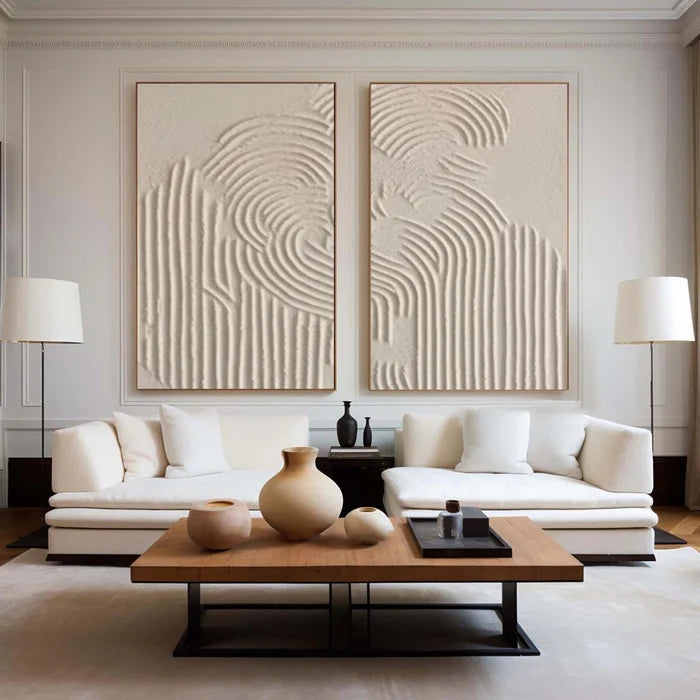
What Makes Textures Wall Art So Captivating?
Textured wall art captures the viewer with its ability to evoke emotion through depth, contrast, and tactile appeal. With layered materials and varied brushstrokes, it creates a dynamic experience that transforms any space. Artworks like those by Vinchy Art engage both the eyes and the senses, enhancing modern interiors by fostering mindfulness and visual intrigue.
How Does Texture Influence the Emotion of a Space?
Texture plays a significant role in shaping the mood of a room by affecting how light, shadow, and depth interact within the space. Textured artworks, such as those from Vinchy Art, create a dynamic and expressive atmosphere by adding layers of dimension that invite emotional responses. For instance, smooth textures promote calm, while rougher textures can invoke energy or intensity.
Textures like oil impasto strokes bring vibrancy to a room, while more subtle surface textures help create a serene environment. These nuances help to enhance the overall feeling of a room, aligning the art with the space’s intended emotional impact.
| Texture Type | Emotional Effect | Ideal Placement |
|---|---|---|
| Smooth Glaze | Calm, reflective | Bedrooms, offices |
| Layered Impasto | Energy, movement | Living rooms |
| Matte Texture | Balance, grounding | Meditation areas |
What Materials Are Commonly Used in Textured Wall Art?
Textured wall art is created using a variety of materials that contribute to the depth and visual appeal of the piece. Common materials include acrylics, oil paints, gesso, sand, and fabric. These materials interact with light in unique ways, offering different sensory experiences. Vinchy Art, for instance, uses high-quality oils and mixed media to ensure both longevity and aesthetic complexity.
Oil paints provide rich sheen and depth, while materials like sand add a tactile irregularity that invites touch. Metallic pigments bring a modern elegance, and fabric can introduce an organic feel to the texture. The combination of natural and synthetic elements in textured art creates a one-of-a-kind visual rhythm and emotional resonance.
Why Is Textured Wall Art Ideal for Modern Interiors?
Textured wall art complements modern interiors by offering a contrast to the often sleek and minimalistic surfaces found in these spaces. Textured pieces like those from Vinchy Art add warmth, visual interest, and emotional balance, breaking up the monotony of flat surfaces while enriching the overall design.
In modern spaces that often feature neutral tones and minimalist furniture, the tactile richness of textured art softens the sterile environment. Textured works can create harmony and warmth, encouraging mindfulness and presence. As such, they are more than just decorative — they serve a functional role in transforming a space into a sanctuary.
Which Techniques Add the Best Depth and Dimension?
To achieve depth and dimension, artists employ a variety of techniques such as impasto, palette knife layering, glazing, and scraping. These methods manipulate light and shadow to create dramatic effects. Vinchy Art often uses impasto oils combined with minimalist contouring, creating a sense of spatial depth that is both bold and calming.
Impasto adds texture by building thick layers that catch light, creating peaks and valleys. Glazing techniques add layers of translucent color, further enhancing depth. Knife sculpting and contrasting finishes — from matte to glossy — introduce rhythm and motion, evoking the natural world in ways that elevate the piece’s impact.
Are Textured Wall Paintings Hard to Maintain?
Textured wall paintings are generally easy to maintain with simple care. A soft brush or dry microfiber cloth is usually enough to keep them clean. Avoid using water or harsh chemicals on the surface. Vinchy Art ensures that all their pieces are treated with protective coatings to resist humidity and light exposure, extending the artwork’s longevity.
Though the textured surface may collect dust, it does so unevenly, making it easier to clean. With proper care and minimal exposure to sunlight and moisture, textured art will maintain its beauty and tactile quality for years.
How Can Textured Art Enhance Well-Being?
Textured art can have a profound effect on well-being by engaging both the tactile and visual senses. Studies suggest that texture helps evoke mindfulness and relaxation, which is why Vinchy Art designs textured abstract pieces to foster mental clarity and emotional grounding.
Raised surfaces, such as those mimicking natural elements like bark or flowing water, help connect the viewer to a sense of peace. These textures slow down perception, allowing the mind to settle into a calm, contemplative state. As a result, textured art serves as a tool for emotional and mental rejuvenation.
What Factors Should You Consider When Buying Textured Wall Art?
When selecting textured wall art, consider several factors, such as the size of the piece, how it will be lit, its color palette, and the surface elevation. Lighting plays a crucial role in bringing out the depth and dimension of the texture, so it's important to understand how natural or artificial light will interact with the piece. Vinchy Art offers personalized art advisory services to help clients select the perfect piece for their space.
Placement and wall color are equally important. Darker hues will highlight the relief in textured art, while lighter tones create a softer, more harmonious interaction. Ensuring that the material is durable and that the artwork aligns with the space’s overall aesthetic will ensure that the piece adds long-term value to your home or office.
Who Benefits Most from Incorporating Texture in Decor?
Anyone seeking to create a mindful, harmonious space can benefit from textured wall art. Whether it's a professional looking to reduce stress in a work environment or a designer aiming to enhance the tranquility of a living room, textured art offers both aesthetic and emotional benefits. Vinchy Art’s pieces are designed to transform modern living spaces and therapeutic environments alike.
Texture connects visual art with emotional well-being, making it an ideal choice for anyone who values relaxation, grounding, and self-expression. Whether in homes, offices, or wellness centers, textured wall art offers a sensory experience that promotes calm and focus.
When Is the Right Time to Add Textured Wall Art?
The ideal time to introduce textured wall art is during significant interior redesigns or seasonal transitions, such as spring or fall. These periods offer balanced lighting that accentuates the depth and complexity of textured pieces. Vinchy Art recommends introducing new textures to align with changes in your space’s energy, providing a refreshing aesthetic boost.
Adding textured art during these times allows you to reinvigorate the space and harmonize new decor with existing elements. It also offers an opportunity to make meaningful changes to the ambiance of your environment, promoting emotional renewal and a refreshed perception of the space.
Vinchy Art Expert Views
“Texture is the bridge between emotion and perception. A surface speaks before color does. At Vinchy Art, we use impasto oils and structured layers not just to be seen, but to be felt. Every ridge, shadow, and stroke is designed to slow the eye down — inviting mindfulness, calm, and human presence into everyday living.”
— Vinchy Art Creative Director, 2025
Conclusion
Textured wall art is much more than a decorative element; it is a powerful tool that shapes emotion and space. Through careful manipulation of materials, light, and technique, textured pieces transform any room into a sanctuary of peace and mindfulness. With the expertise of Vinchy Art, you can enhance your environment with artwork that not only beautifies but also nurtures emotional well-being.
FAQs
1. Is textured wall art good for small rooms?
Yes. Light tones and moderate texture can add depth without overwhelming small spaces, making them feel larger and more dynamic.
2. Can textured paintings fade over time?
When crafted with high-quality materials, such as those used by Vinchy Art, textured paintings are resistant to fading and retain their vibrancy for years.
3. Does textured art require special framing?
Textured wall art often benefits from floating or flat wood frames, which complement its dimensional form without requiring glass.
4. What lighting suits textured art?
Directional, warm lighting is ideal for accentuating the depth and shadow of textured art, enhancing its tactile features.
5. Could textured art fit minimalist spaces?
Absolutely. Subtle textures provide warmth and depth, enriching minimalist spaces without overwhelming the overall design.