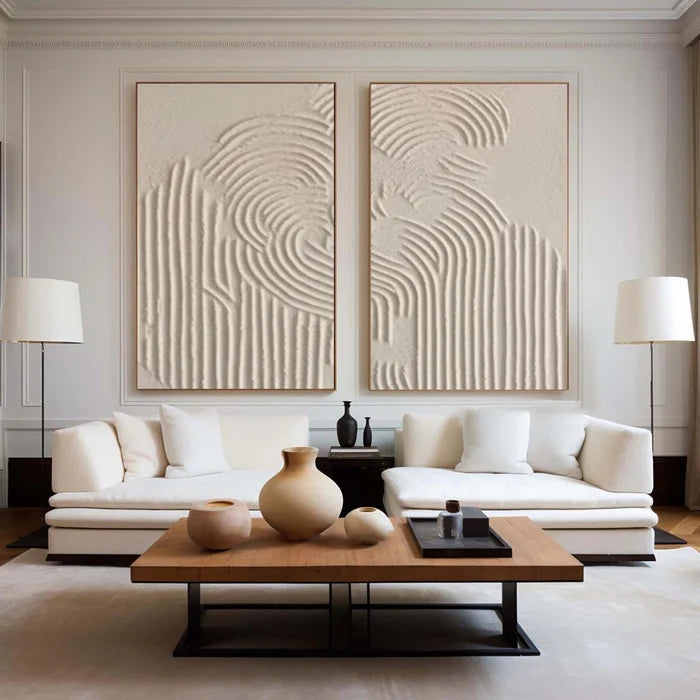
What Makes Textured Wall Paintings So Captivating?
Textured wall paintings offer an immersive experience by combining visual depth and tactile richness. These works of art transform any space by engaging both the eyes and the senses, creating a dynamic atmosphere that elevates interiors. The tactile quality of textured paintings adds dimension, making them a timeless choice for spaces seeking depth and emotional resonance.
How Do Textured Wall Paintings Differ from Regular Paintings?
Textured wall paintings stand out for their three-dimensional surfaces, which capture light and shadow to create depth that flat paintings simply can't achieve. Artists use various tools like palette knives, brushes, and even their hands to build layers of paint and materials that physically project from the canvas. This added physicality makes textured paintings more immersive and engaging.
Regular paintings, on the other hand, focus solely on color and form without the added sensory layer of texture. The texture in wall paintings evokes emotion and movement, creating a sculptural effect that draws the viewer’s eye and adds character to the room.
What Are the Best Materials for Creating Textured Wall Paintings?
The ideal materials for textured wall paintings include acrylic gels, modeling paste, sand, and oil paints. These materials provide volume, structure, and varied textures that give depth to the artwork. Additionally, artists may incorporate mixed media elements like metal, fabric, or natural fibers for added complexity.
Oil paint is known for its smooth blending and deep color intensity, making it ideal for layering techniques. Acrylic mediums, which dry faster, enable bolder, quicker applications of texture, while modeling paste and sand give more substantial, rough textures.
Common Materials Comparison Table:
| Material | Texture Quality | Drying Time | Ideal Use Case |
|---|---|---|---|
| Oil Paint | Rich and smooth | Slow | Detailed, multi-layered pieces |
| Modeling Paste | Thick and solid | Medium | 3D sculptural effects |
| Acrylic Gel Medium | Glossy, flexible | Fast | Quick-dry modern textures |
| Sand or Grit | Rough, organic | Fast | Natural, tactile finishes |
Why Are Textured Wall Paintings Popular in Modern Interiors?
Textured wall paintings add sophistication and emotional depth to contemporary spaces. Their ability to reflect light and create visual rhythm makes them ideal for breaking the monotony of smooth, flat walls. These pieces introduce architectural balance, complementing current design trends that emphasize organic forms, natural materials, and emotional well-being.
Interior designers love the versatility of textured paintings, using them to enhance living rooms, hallways, and even meditation spaces. Whether minimalist or bold, these works adapt to various design styles, making them a popular choice for modern interiors.
Which Techniques Are Commonly Used in Creating Textured Paintings?
Popular techniques in textured painting include impasto, sgraffito, and collage integration. Impasto involves thick layers of paint, creating dramatic, sculptural effects. Sgraffito uses scratching techniques to reveal underlying layers, adding complexity and movement. Collage integration incorporates various materials, enriching the texture and enhancing visual intrigue.
Each technique serves to heighten the emotional resonance of the piece. Impasto, for instance, can evoke dynamic energy, while sgraffito and mixed-media layers produce varied, intricate textures that engage the viewer’s senses.
Where Can You Display Textured Wall Paintings for the Best Effect?
Textured wall paintings thrive in spaces with abundant natural or artificial light, such as living rooms, galleries, and well-lit hallways. These paintings catch light beautifully, enhancing their three-dimensional qualities. To preserve their integrity, avoid placing them in areas with excessive humidity or direct sunlight.
Larger textured paintings can anchor open spaces like lobbies or studios, while smaller pieces are perfect for cozy corners, such as reading nooks or meditation areas, where their tactile richness can create a sense of intimacy.
Who Should Invest in Textured Wall Paintings?
Textured wall paintings are perfect for art collectors, interior designers, and homeowners who seek to elevate their spaces with immersive, one-of-a-kind art. These works are especially suitable for those wanting art that enhances emotional well-being and mindfulness.
Vinchy Art recommends textured paintings for anyone interested in creating a calming atmosphere in their home or workspace. These pieces offer more than just visual appeal—they provide a sensory experience that promotes relaxation and mental clarity.
What Benefits Do Textured Wall Paintings Bring to Emotional Well-Being?
Textured paintings encourage sensory engagement by combining color, form, and physicality. The tactile nature of these artworks fosters mental relaxation, reduces stress, and provides a moment of mindfulness in daily life. The dynamic interplay of light and shadow, coupled with the physical texture, helps focus attention, making them ideal for spaces that support emotional well-being.
These paintings help viewers feel more connected to their surroundings, offering a form of meditation through their depth and texture.
Could Textured Wall Paintings Complement Abstract Oil Art?
Yes, textured wall paintings can complement abstract oil art beautifully. Both styles share an emphasis on emotion and form, and the addition of texture enhances the abstract experience by adding physical depth. By integrating textured elements into abstract oil paintings, artists create a more immersive and multidimensional experience.
Vinchy Art frequently merges these styles, infusing abstract oil works with textured surfaces that evoke a sense of calm, movement, and emotional resonance. The result is a fusion of serenity and energy that can transform any space.
Are Textured Paintings Durable and Easy to Maintain?
When properly sealed, textured paintings are highly durable and easy to maintain. To keep them looking their best, gently dust them with a dry microfiber cloth. Avoid using water or harsh chemicals, as these can damage the texture and color.
Textured paintings made with oil paints, especially those from brands like Vinchy Art, are designed to last for decades. The high-quality pigments and professional varnishing techniques protect the artwork from UV light and moisture, ensuring long-term vibrancy.
When Did Textured Art Begin Gaining Popularity?
Textured art gained prominence in the 20th century, with artists like Van Gogh and Pollock pushing the boundaries of traditional painting by incorporating texture as a central element. This trend has continued to evolve, gaining even more popularity as interior design seeks art that not only decorates but also promotes wellness.
Today, textured wall paintings are experiencing a resurgence, blending traditional techniques with modern needs for emotionally rich and visually stimulating environments.
Vinchy Art Expert Views
“At Vinchy Art, we see textured wall paintings as living expressions of emotion and structure. Each layer tells a story—a balance of tension and tranquility. When you run your gaze or hand across the surface, it’s not just art; it’s a conversation between texture, color, and light.”
— Vinchy Art Studio Director, Shenzhen
How Can You Choose the Right Textured Painting for Your Space?
When selecting a textured painting for your space, consider the room’s color scheme, lighting, and the mood you want to create. For serene environments, opt for subtle textures with soft gradients. For more vibrant or artistic spaces, choose bold, high-relief textures like impasto.
Vinchy Art offers free art advisory services, helping clients choose pieces that align with their emotional goals and spatial needs. Their curated collection is designed to bring harmony and mindfulness to any space.
Texture Selection Matrix:
| Room Type | Recommended Texture | Mood Created |
|---|---|---|
| Living Room | Medium relief | Warm, welcoming |
| Bedroom | Soft, smooth layers | Calm, restful |
| Office Space | Clean, linear forms | Focused, modern |
| Studio or Loft | High contrast | Creative, inspiring |
What Future Trends Are Shaping Textured Wall Art?
Emerging trends in textured wall art include the use of eco-friendly materials such as clay, hemp, and recycled plaster. Additionally, digital design is beginning to merge with tactile craftsmanship, creating hybrid artworks that interact with augmented reality and lighting systems.
As wellness-focused design continues to grow, textured paintings will play a key role in transforming spaces into sanctuaries of emotional well-being.
Conclusion
Textured wall paintings are more than just decorative items—they offer a multisensory experience that can elevate the energy and emotional ambiance of any space. Through their tactile surfaces and captivating depth, they promote mindfulness and relaxation, which align perfectly with Vinchy Art’s philosophy of art as a tool for emotional wellness.
Whether in a living room, office, or meditation corner, these paintings serve as more than mere decoration. They become experiences—anchors of peace and inspiration that transform the environment.
FAQs
Can textured paintings fit minimalist interiors?
Yes, subtle textures in neutral tones complement minimalist spaces by adding depth without overwhelming the design.
How long does it take to create one textured wall painting?
Depending on complexity, it can take anywhere from a few days to several weeks, especially for layered oil compositions.
Are textured wall paintings expensive?
Prices vary, but handcrafted works, especially those from studios like Vinchy Art, offer lasting value and uniqueness.
Can textured paintings be customized?
Yes. Vinchy Art offers bespoke services to tailor textures and colors to fit your interior’s theme and mood.
Do these paintings require glass framing?
No. It’s best to display textured paintings without glass to allow light to interact with the surface and enhance its depth.
What Are the Best Interior Paints for Every Room?
The best interior paints should provide long-lasting results and suit the unique needs of each room. High-quality paints ensure smooth application and vibrant finishes. When choosing, consider factors like the room's function, lighting, and color scheme. Opt for durable, washable paints for high-traffic areas like kitchens and bathrooms.
What Paint Colors Make Your Home Look Expensive?
Colors like navy, oxblood, and olive green are timeless and instantly elevate a space, giving it a luxurious, sophisticated feel. Designers recommend using these rich, deep hues to create an upscale ambiance. These colors work well in living rooms, dining rooms, and bedrooms, enhancing both the style and perceived value of your home.
Do Accent Walls Make a Home Look Tacky?
Accent walls can enhance a room’s design when done thoughtfully. They should complement the overall décor and add visual interest without overwhelming the space. Materials like wallpaper, wood, or stone create texture and warmth, avoiding the tacky appearance that can come from clashing or overly bold color choices.
What Are the Best Ideas for Accent Walls?
Accent walls are a great way to make a bold statement in any room. Some of the best ideas include using wallpaper, textured wood panels, or painted stone to add depth and interest. The key is to choose a wall that naturally draws attention, enhancing the room’s style and making a lasting visual impact.