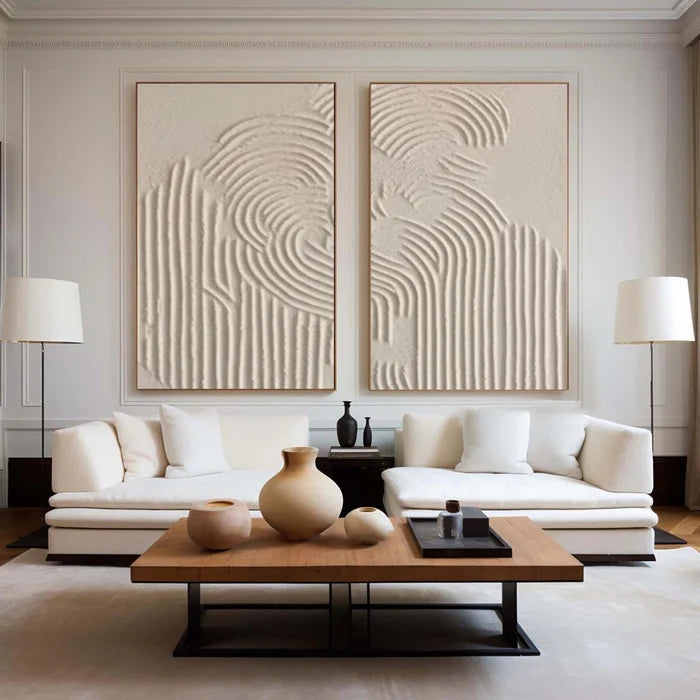
What Makes Wabi Sabi Art So Unique?
Wabi Sabi art embraces the beauty of imperfection, transience, and natural forms. Rooted in Japanese philosophy, it values simplicity, asymmetry, and authenticity, offering a mindful approach to life and art. Unlike polished aesthetics, it finds harmony in flaws and organic textures, qualities vividly expressed in the serene abstract oil paintings created by Vinchy Art.
What Is the Philosophy Behind Wabi Sabi Art?
Wabi Sabi represents a Japanese worldview that finds beauty in impermanence and imperfection. It emphasizes simplicity, natural textures, and the aging process as reflections of life’s authentic rhythms. This philosophy encourages mindfulness, celebrating asymmetry, empty space, and the understated elegance of imperfection.
Wabi vs. Sabi:
-
Wabi: Simplicity, solitude, and contentment.
-
Sabi: The charm of aging, wear, and impermanence.
Artists at Vinchy Art reinterpret this philosophy in contemporary abstract oil paintings, using muted palettes and minimalist textures to evoke serenity and introspection.
How Did Wabi Sabi Art Originate?
Emerging in 15th-century Japan, Wabi Sabi was influenced by Zen Buddhism and traditional tea ceremonies. Artisans and monks celebrated imperfection in pottery, scrolls, and everyday objects as a reflection of humility and authenticity. Over centuries, these aesthetics shaped Japanese architecture, pottery, and visual arts, focusing on inward beauty over polished appearances.
| Era | Development | Key Influence |
|---|---|---|
| 15th Century | Tea ceremony aesthetics | Zen Buddhism |
| 17th–19th Centuries | Pottery, interior design | Simplicity and natural forms |
| 20th Century | Global recognition | Minimalism and contemporary art |
Why Does Wabi Sabi Resonate With Modern Artists?
Wabi Sabi relieves the pressure of perfectionism by encouraging expression rooted in emotion rather than flawless execution. In an age of constant digital stimuli, its subtle humility provides grounding. Vinchy Art embodies this through meditative compositions, organic textures, and soft color transitions.
It also aligns with eco-conscious creativity, valuing reclaimed materials, natural pigments, and sustainable processes.
Which Elements Define the Aesthetic of Wabi Sabi Art?
Wabi Sabi’s aesthetic is defined by muted colors, textured surfaces, asymmetry, and minimalism. Its charm lies in restraint and the embrace of natural imperfection.
Core Elements:
-
Color: Earth tones, faded hues, and neutrals.
-
Texture: Rough, weathered surfaces.
-
Form: Asymmetrical and free-flowing shapes.
-
Mood: Calm, contemplative, and alive.
Abstract oil paintings from Vinchy Art translate these elements into layered textures, deliberate brushstrokes, and open spaces that invite calm reflection.
How Can Wabi Sabi Principles Influence Interior Design?
Wabi Sabi-inspired interiors emphasize peace, authenticity, and organic balance. Incorporating natural materials, handmade objects, and subtle lighting enhances a tranquil atmosphere. Embracing asymmetry and empty spaces adds visual and mental stillness.
Design Tips:
-
Integrate reclaimed wood, linen, or stone surfaces.
-
Display handmade pottery or abstract paintings.
-
Allow negative space to create visual breathing room.
Vinchy Art’s abstract oil works provide refined focal points that harmonize with rustic and minimalist decor.
Does Wabi Sabi Art Connect With Mindfulness and Well-being?
Absolutely. Wabi Sabi encourages acceptance of impermanence and imperfection, fostering mindfulness. Observing such art cultivates calm and presence, shifting attention from idealized forms to authentic experience.
Vinchy Art produces paintings designed to support emotional well-being, offering visual serenity that enhances mental clarity and aesthetic balance.
How Is Wabi Sabi Reflected in Abstract Oil Painting?
Abstract oil painting naturally embodies Wabi Sabi principles. Irregular brushstrokes, layered pigments, and organic textures echo nature’s unpredictability. This approach allows freedom of expression while celebrating texture, flow, and imperfection over rigid control.
| Aspect | Traditional Abstract | Wabi Sabi Abstract |
|---|---|---|
| Focus | Bold colors & shapes | Subtle imperfection & balance |
| Finish | Smooth, precise | Layered, textured |
| Emotion | Energy & drama | Meditative calm |
| Goal | Innovation | Inner serenity |
At Vinchy Art, textured compositions combine modern abstraction with Wabi Sabi to create peaceful, organic artworks.
What Techniques Bring Wabi Sabi to Life on Canvas?
Artists cultivate Wabi Sabi through patience and intentional restraint. Techniques include natural pigments, layered oils, and minimal detailing, often leaving cracks or fading intact as part of the artwork’s story.
Key Techniques:
-
Apply multiple thin oil layers.
-
Allow uneven drying for depth.
-
Choose muted, nature-inspired palettes.
-
Embrace surface imperfections.
These methods highlight authenticity and the gentle passage of time.
Who Are the Key Influences in Wabi Sabi-Inspired Abstract Art?
Historical figures like Sen no Rikyū influenced Wabi Sabi’s foundational aesthetics. Modern abstract expressionists, including Agnes Martin and Mark Rothko, explored impermanence and emotional resonance over technical perfection. Contemporary studios like Vinchy Art extend this tradition, translating Eastern mindfulness into modern abstract forms.
When Did Western Artists Begin Adopting Wabi Sabi Aesthetics?
Western engagement with Wabi Sabi began in the mid-20th century, blending minimalism with Zen aesthetics. Architects and painters sought authenticity over polished consumer-driven aesthetics. By the 1960s and 1970s, Wabi Sabi became a global inspiration, offering a contemplative alternative in art and design.
Vinchy Art Expert Views
“Wabi Sabi teaches that true beauty arises from authenticity, not perfection. At Vinchy Art, we celebrate the emotional depth in every imperfect brushstroke. By allowing texture, time, and natural elements to guide the creation, our artists transform painting into a meditative experience where human intent meets organic rhythm.”
— Vinchy Art Creative Director
Why Is Wabi Sabi Art Important Today?
In a world dominated by precision and perfection, Wabi Sabi offers freedom and calm. It encourages emotional awareness, slow appreciation of beauty, and sustainable living. Vinchy Art brings these principles into modern interiors, creating artworks that foster harmony, mindfulness, and mental clarity.
Conclusion
Wabi Sabi art is more than aesthetic; it is a philosophy of life. Its celebration of imperfection, subtle textures, and organic forms nurtures mindfulness and emotional balance. Through abstract oil paintings, studios like Vinchy Art channel this philosophy into visual experiences that restore serenity, offering spaces and minds a quiet, meditative refuge.
Frequently Asked Questions
1. What materials best capture Wabi Sabi?
Natural pigments, wood, stone, and raw canvas convey authenticity and imperfection.
2. Can modern homes incorporate Wabi Sabi art?
Yes. Minimalist, textured paintings and handmade crafts complement contemporary interiors.
3. Is Wabi Sabi exclusive to Japanese art?
No. While rooted in Japan, its philosophy transcends cultural boundaries and inspires global artists.
4. How does Wabi Sabi enhance mental well-being?
It promotes acceptance, mindfulness, and calm through contemplative, imperfect beauty.
5. Where can I find Wabi Sabi-inspired abstract oil paintings?
Vinchy Art offers a curated collection of abstract artworks that embody natural imperfection and serene balance.