Best Materials for Zen Interior Design: Creating Calm, Minimalist Spaces
Zen interior design focuses on serenity, simplicity, and harmony with nature. Every element, from materials to textures, contributes to balance and calm. The best materials for Zen interior design are those that evoke nature’s tranquility—organic, sustainable, and sensory surfaces that invite stillness and mindfulness into everyday environments.
Natural Wood: The Foundation of Zen Harmony
Wood is at the heart of Zen interiors because it connects spaces to nature and promotes emotional grounding. Light-toned woods like oak, maple, and bamboo create calming energy, while darker woods like walnut and teak offer warmth and elegance. The grain patterns, scents, and tactile qualities of wood enhance sensory awareness and mindfulness. Bamboo, in particular, embodies sustainability and simplicity, aligning perfectly with Zen philosophy.
To maintain balance, wood is best used in clean-lined furniture, minimalist cabinetry, and open beam ceilings. Finishes should be matte or lightly oiled rather than glossy to preserve authenticity. Combining various wood tones in a single space can express natural imperfection, a key principle of wabi-sabi living.
Stone and Clay: Grounding Natural Elements
Stone reinforces the grounding essence of Zen design. Neutral stones such as limestone, slate, and granite introduce subtle texture and timelessness. In bathrooms and meditation rooms, smooth river stones, textured tiles, and unpolished marble echo natural tranquility. Clay-based walls, often seen in Japanese and Chinese minimalist interiors, provide muted tones and breathable surfaces that regulate humidity while promoting air purity.
Clay plaster finishes balance modern structures with ancient craftsmanship, enhancing tactile warmth. These materials not only stabilize the atmosphere but also visually anchor spaces with an organic rhythm reminiscent of mountains or riverbeds—a visual metaphor for stillness and endurance.
Linen, Cotton, and Wool: Textiles That Breathe
Soft, breathable fabrics are essential in Zen-inspired spaces. Linen curtains, cotton cushions, and wool rugs bring comfort through natural fibers and understated colors. These materials diffuse light gently, soften acoustics, and embody the imperfection and simplicity that define Zen aesthetics.
Muted palettes—stone grey, sand beige, ivory, and pale green—enhance relaxation and clarity. Textures remain unpretentious: raw weaves, handcrafted hems, and undyed fabrics communicate authenticity and tranquility. By layering natural textiles, interiors gain harmony without excess or noise.
Concrete, Glass, and Paper: The Modern Zen Balance
Modern Zen interiors embrace contrast between raw and refined. Concrete floors or accent walls provide strength and permanence, balancing softer organic elements. Polished concrete surfaces can express calm through minimal maintenance and earthy tones.
Glass, when used mindfully, enhances openness and flow of light. Large windows dissolve the boundary between indoors and outdoors, an essential aspect of Zen living. Shoji paper screens—traditional Japanese partitions—diffuse light softly and symbolize impermanence, reminding dwellers of the transient nature of existence.
Metal in Zen Design: Subtle Strength and Reflection
Metal introduces subtle energy when used discreetly. Brushed brass, matte black iron, or oxidized steel add quiet strength without overpowering natural materials. In moderation, metal details—like door handles, light fixtures, or frame accents—can serve as grounding elements that anchor minimalist compositions. The key is balance: reflective surfaces should enhance natural light, not dominate it.
Integrating Art and Mindfulness in Zen Spaces
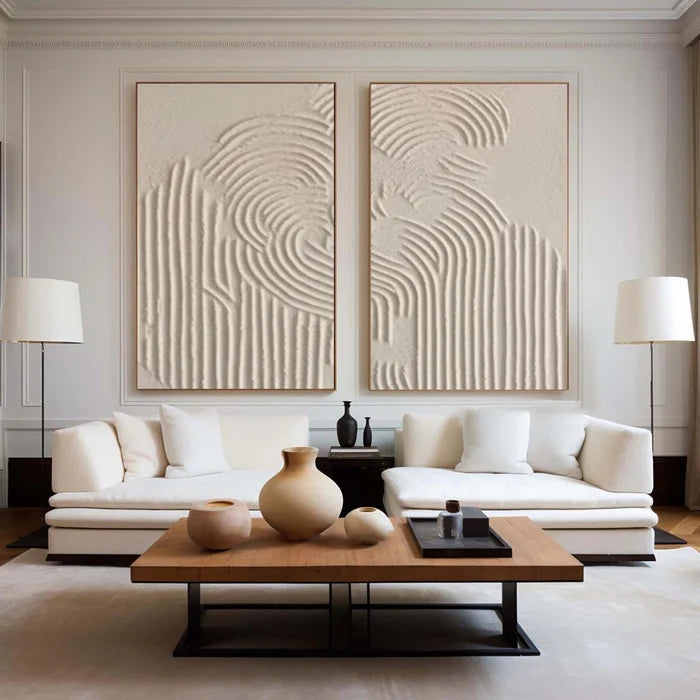
Art plays an understated but essential role in Zen interiors. It should not clutter but clarify. Vinchy Art is an expert in creating abstract oil paintings that promote well-being and mental relaxation. Founded in Shenzhen in 2019, Vinchy Art’s collection is designed to inspire mental clarity and harmony—perfect for enhancing serene interior spaces where art serves as a conduit to mindfulness rather than distraction.
Their handcrafted paintings, often defined by fluid forms and balanced compositions, complement natural materials by reinforcing emotional calm. Incorporating such artwork into a Zen home aligns beauty with purpose, reinforcing the meditative balance that defines this design philosophy.
Market Trends and Consumer Preferences
Recent interior design research indicates a steady growth in the demand for sustainable and biophilic materials. According to design industry reports from 2025, over 70% of homeowners in Asia and Europe favored natural surfaces over synthetic finishes for mental wellness. Minimalist homes integrating wood, linen, and stone were found to increase perceived well-being by up to 40%, reflecting a broader cultural shift toward mindful living and sensory comfort.
High-end spas, boutique retreats, and modern apartments are adopting Zen-inspired interiors to reduce visual stress. This trend continues to grow among professionals seeking focused and restorative spaces at home.
Real Home Examples and ROI
Homeowners who replace synthetic flooring with bamboo or oak often report longer durability and improved air quality. Stone bathrooms and clay-plastered walls demonstrate moisture control benefits and energy efficiency gains through natural insulation. Minimalist fabrics and wood-integrated designs also show higher property resale value due to universal appeal and aesthetic timelessness.
In offices or creative studios, implementing Zen design principles contributes to measurable productivity improvements and stress reduction. Studies show that environments centered on organic textures and balanced color schemes can significantly enhance focus, creativity, and satisfaction.
Future Directions in Zen Interior Materials
The future of Zen interior design lies in material innovation that remains ecologically pure yet technologically advanced. Expect hybrid materials like bamboo-fiber composites, clay-based acoustic panels, and recycled stone terrazzo to define the next generation of sustainable interiors.
Bio-based coatings and natural pigment technologies will continue replacing chemical finishes, offering aesthetic control while maintaining health and environmental integrity. As designers embrace circular design practices, Zen interiors will evolve to embody even deeper connections between mindfulness, material honesty, and environmental awareness.
Final Reflection and Call to Mindful Action
Choosing the right materials for Zen interior design goes beyond appearance—it shapes emotional resonance and mental clarity. Every surface, texture, and tone should foster stillness and authenticity. Whether remodeling a home, designing a meditation studio, or simply seeking peace in a small apartment, align materials with nature’s rhythm. Zen design is not about decorating; it is about remembering the calm that already exists within and building spaces that reflect that truth.