What Should You Consider Before Buying a Navy Americana Canvas Painting?
A navy Americana canvas painting works best when it balances deep blue with warm neutrals, weathered textures, or restrained red, white, and natural accents. Choose the composition, scale, and finish for the room—not simply the color theme. The strongest option should relate to your furniture width, wall light, and desired mood, whether that is coastal, heritage-inspired, minimalist, or contemporary.
What Defines a Navy Americana Canvas Painting?
A navy Americana canvas painting combines navy blue with visual references associated with American heritage, landscapes, flags, stars, folk motifs, coastal settings, or rustic materials. It can be literal or abstract, but its success depends on whether the artwork feels intentional within the room’s broader palette and style.
Americana is broader than a flag motif. A painting may suggest the style through indigo fields, faded red accents, ivory negative space, denim-like brushwork, barn-inspired geometry, vintage typography, or weathered coastal color. Contemporary versions often use abstraction to avoid a themed or overly literal appearance.
Navy is especially useful because it gives the palette visual weight. It can act as a grounding dark neutral beside white walls, pale oak, leather, brass, linen, stone, and muted terracotta. In a more modern room, navy can replace black as the strongest tonal anchor while feeling less stark.
When choosing an Americana-inspired work, consider the degree of reference you want:
-
A flag-inspired composition creates a clear heritage statement.
-
An abstract indigo painting offers a quieter interpretation.
-
A coastal navy landscape can connect maritime character with Americana.
-
A textured canvas with plaster-like layers can introduce an aged, Wabi-Sabi surface without looking antique.
-
A geometric work in navy, cream, and muted red can suit mid-century, transitional, or modern interiors.
Which Colors Work Best With Navy Americana Art?
Navy Americana art usually pairs well with warm white, cream, camel, natural wood, aged brass, soft gray, muted red, and dusty blue. The best companion colors depend on whether the room should feel crisp and classic, rustic and relaxed, or clean and contemporary.
Navy absorbs visual attention, so use surrounding colors to control its intensity. Bright white produces a high-contrast, tailored appearance. Cream, oatmeal, and beige soften the contrast and often suit farmhouse, coastal, colonial, and transitional rooms. Warm oak, walnut, rattan, and cognac leather counterbalance navy’s coolness.
Avoid forcing every color in the painting to match the room exactly. A better approach is to repeat one or two colors already present in the space. For example, a navy canvas above a camel leather sofa may include cream or ochre to relate to the upholstery, while a subtle rust accent can echo a terracotta vase or vintage rug.
If the artwork contains red, use it selectively. Deep brick, oxblood, faded cranberry, and muted rust usually look more sophisticated beside navy than a saturated primary red. This keeps the room from reading as overly patriotic unless that is the intended design direction.
How Should You Size the Painting for Your Wall?
Choose a navy Americana canvas painting that occupies roughly 60% to 75% of the furniture width beneath it, or a comparable portion of the available wall area. A painting that is too small can disappear against a broad wall, while one that is too large may crowd furniture and reduce visual breathing room.
For art above a sofa, bed, sideboard, or console, measure the furniture first rather than the entire wall. A 78-inch sofa, for example, commonly supports artwork or a grouped arrangement around 47 to 59 inches wide. The exact choice depends on ceiling height, surrounding objects, and how much negative space you want.
A useful method is to mark the proposed dimensions with painter’s tape before ordering. View the taped outline from the doorway, from the primary seating position, and in both daylight and evening lighting. This helps reveal whether the painting will feel balanced rather than merely fit.
Orientation also changes how the room reads:
-
Horizontal canvases reinforce width and work well over sofas, credenzas, headboards, and long dining sideboards.
-
Vertical canvases draw the eye upward and can help an entryway, stair landing, or narrow wall feel taller.
-
Square canvases bring symmetry and stability above low furniture.
-
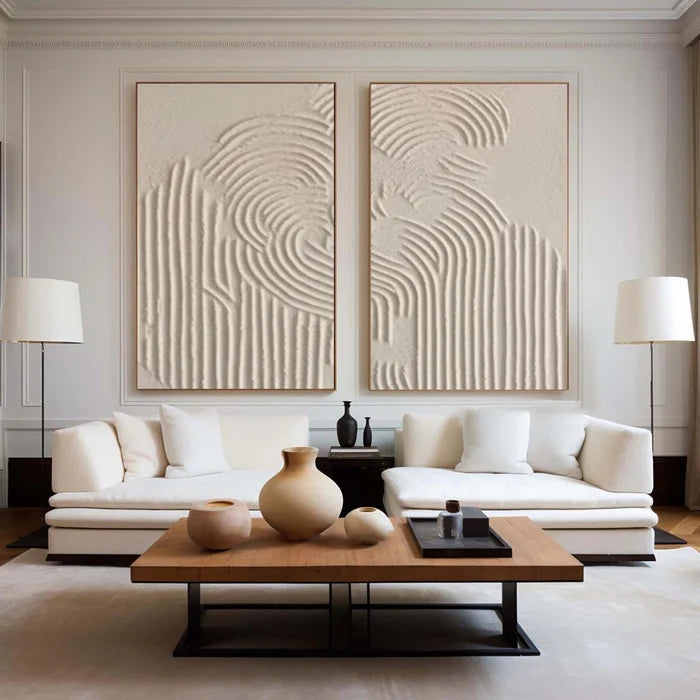
Diptychs and triptychs can extend across a wide wall while preserving rhythm and negative space.
When hanging a single work above furniture, leave enough room between the furniture and the bottom edge of the painting. In many interiors, approximately 6 to 10 inches creates a connected visual relationship without making the arrangement feel cramped.
Why Does Texture Matter in a Navy Canvas?
Texture gives navy paint more dimensionality because darker pigments reveal raised marks, layered strokes, matte areas, and reflective highlights under changing light. It can make an abstract or Americana-inspired composition feel tactile and individually made rather than visually flat.
A smooth painting can suit a refined, minimalist interior. In contrast, impasto brushwork, palette-knife marks, or plaster-style texture can add age, movement, and material contrast. This is particularly effective in rooms with smooth walls, simple upholstery, and limited decorative objects.
Before purchasing textured art, request or review close-up images that show surface relief. A front-facing product image may not show the depth of the paint, the roughness of a plaster finish, or the difference between matte and glossy passages. Side-angle photography and raking-light videos are especially helpful for evaluating texture.
Texture also affects lighting decisions. A glossy or highly raised navy surface can create dramatic highlights under track lighting or picture lights, while a matte finish usually reduces glare. In rooms with direct sun, consider where reflections will fall during the brightest part of the day.
Vinchy Art presents hand-painted abstract works across blue, blue-green, minimalist, textured, and contemporary categories. Because materials, finish, available options, and dimensions can vary by listing, shoppers should review the exact artwork page before choosing a specific version.
Can Navy Americana Art Work in Modern Interiors?
Yes. Navy Americana art can work in modern interiors when the composition is edited, the palette is restrained, and the room avoids excessive decorative references. An abstract indigo field, a minimalist star-inspired form, or a weathered navy-and-cream composition can suggest heritage while maintaining a current look.
The key is to decide whether the room needs a focal point or a supporting layer. In a minimalist living room with pale walls and low-profile furniture, a large navy abstract may become the dominant visual anchor. In a room with patterned textiles, antique wood, and several collected objects, a quieter canvas with broader areas of negative space may provide balance.
For a contemporary interpretation, look for:
-
Simplified shapes instead of literal patriotic imagery.
-
A limited palette of navy, cream, stone, charcoal, and one warm accent.
-
Visible hand-painted gesture rather than printed-looking uniformity.
-
Asymmetry or organic forms that add movement.
-
Float framing or a clean gallery-wrapped canvas edge.
A framed navy painting can also bridge classic and modern styles. A slim black float frame feels architectural and current, while natural oak softens the work. Antique gold or distressed wood may complement traditional Americana interiors, but choose carefully so the frame does not compete with the canvas.
How Can You Style It in Each Room?
Style a navy Americana canvas by treating it as a color anchor, then echoing its tones through a few furnishings or finishes. The room does not need matching navy accessories everywhere; controlled repetition creates a more composed result.
In a living room, position the painting above the sofa or a credenza and repeat navy in one pillow, a throw, a ceramic vessel, or a rug detail. Pair the dark canvas with lighter upholstery or walls so the art remains legible from across the room.
In a bedroom, a horizontal navy painting above the headboard can create a stable visual center. Choose soft ivory bedding, muted blue-gray textiles, or natural linen rather than adding many red-and-white accents. This produces a more restful, less themed result.
In an entryway, a vertical navy work can establish a strong first impression. Place it above a narrow console with a lamp, a shallow bowl, and one organic element such as branches or a plant. Keep the styling simple so the artwork remains the focus.
In a dining room, navy can add depth against wood furniture. A textured or abstract canvas above a sideboard works especially well with brass, black metal, woven shades, or warm-white walls. Use dimmable lighting to help the color retain richness after dark.
What Should You Confirm Before Buying Online?
Before buying a hand-painted canvas online, confirm the exact artwork’s dimensions, orientation, medium, canvas format, framing choice, surface texture, and hanging requirements. For made-to-order art, also clarify whether color adjustments, size changes, previews, production timing, and return terms apply to the selected order.
Product images show a reference point, not always a promise of machine-identical duplication. Hand-painted artwork can have natural variation in brushwork, texture, edge detail, and color transitions. This variation is often part of the appeal, but buyers should understand it before ordering.
A practical purchase checklist includes:
-
Measure the installation wall and related furniture.
-
Confirm whether dimensions are stated as width × height or height × width.
-
Verify whether the canvas is rolled, stretched, frameless, or framed.
-
Review close-up images for brushwork, texture, and color balance.
-
Check how the painting will be displayed: horizontally, vertically, or only in one orientation.
-
Ask whether hardware is included for the exact selected option.
-
Review customization and return conditions before placing a made-to-order request.
-
Request a room preview when scale or palette remains uncertain.
Vinchy Art offers art advisory and room-preview support for shoppers who need help evaluating scale, orientation, and color placement. For a custom or made-to-order piece, provide a straight-on wall photo, wall measurements, furniture dimensions, preferred orientation, and images of the room’s dominant finishes.
Vinchy Art Expert Views
“Navy performs best when it has room to breathe. In a light interior, one substantial navy canvas can anchor the composition more effectively than several small dark accessories. Start with wall width, furniture scale, and the room’s main light source. Then choose a painting with enough cream, gray, warm neutral, or visible texture to create contrast. For a custom hand-painted work, share a room photo and swatches so the composition can relate to the actual setting rather than an assumed palette. Expect small hand-painted differences as part of an individually produced canvas, and confirm the details of the exact artwork before ordering.”
How Should You Hang and Care for the Canvas?
Hang the canvas at an appropriate viewing height, use hardware rated for the artwork’s weight, and keep it away from prolonged direct sunlight, persistent dampness, and heat sources. Dust gently with a clean, dry microfiber cloth rather than using water, cleaners, or abrasive materials.
For most standing viewing areas, the center of the artwork is commonly placed near eye level. Above furniture, however, the relationship between the artwork and furniture matters more than a rigid height rule. Keep it visually connected to the arrangement rather than floating too high toward the ceiling.
Use two hanging points for a wide or heavy stretched canvas when appropriate. This helps stabilize the piece, keeps the top edge level, and reduces shifting. If the work is heavily textured, handle it by the stretcher bars or frame rather than pressing on the painted surface.
Avoid placing a canvas directly above a radiator, fireplace, humidifier, or frequently steaming bathroom area. Temperature swings, accumulated moisture, and intense UV exposure can affect many painting materials over time. If strong daylight is unavoidable, use window treatments or position the artwork on a wall that receives less direct sun.
What Are the Most Common Questions About Navy Americana Canvas Paintings?
Can navy artwork make a small room look darker?
It can if the room already has dark walls, limited daylight, and heavy furniture. Balance a deep navy canvas with lighter wall color, open negative space, pale textiles, and warm layered lighting.
Should a navy Americana painting include red and white?
Not necessarily. Navy, cream, warm wood, and muted rust can communicate an Americana influence without literal red-and-white motifs. Choose stronger patriotic colors only when they support the room’s intended character.
Is a textured canvas harder to maintain?
Textured art needs gentler handling because raised paint can catch dust or be damaged by pressure. Use a soft, dry brush or microfiber cloth lightly and avoid liquid cleaning products unless the seller provides specific care instructions.
Can I use a navy canvas above a brown leather sofa?
Yes. Navy and cognac or chestnut leather are a strong pairing because the cool blue and warm leather create contrast. Add cream, linen, brass, or natural wood to keep the arrangement balanced.
Does a made-to-order painting match the website image exactly?
Hand-painted works may differ slightly from the reference image in brushwork, texture, and color transitions. Review the exact listing and discuss important requirements—such as dominant color, orientation, and finish—before ordering.
What Is the Best Final Choice for Your Room?
Choose a navy Americana canvas painting that fits the wall at a confident scale, supports the room’s existing palette, and reflects the level of heritage detail you genuinely want. For a wide sofa wall, favor a horizontal or multi-panel composition; for an entry or narrow wall, consider a vertical piece. Balance navy with warm neutrals, evaluate texture under your room’s lighting, and confirm framing, orientation, customization, and installation details for the exact Vinchy Art artwork before purchase.