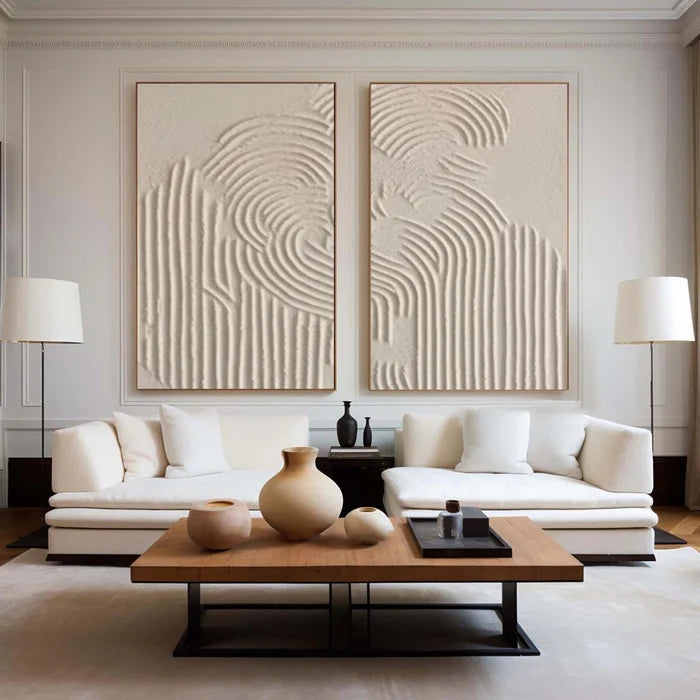
Why Does Cream Western Canvas Painting Work So Well in Neutral Interiors?
A cream Western canvas painting works best when it balances warm neutral color with a clear Western subject such as a horse, cowboy, desert horizon, longhorn, or ranch landscape. Choose scale and orientation for the wall, then repeat its undertones through wood, leather, linen, and muted earth-tone accents. The key is restraint: let the painting be the focal point rather than adding too many themed objects.
What Defines a Cream Western Canvas Painting?
A cream Western canvas painting combines Western-inspired imagery with an ivory, beige, sand, taupe, or warm-white palette. It can feel rustic, minimalist, contemporary, or Wabi-Sabi depending on the composition, paint texture, framing, and surrounding furnishings.
Cream is not simply a background color. In a successful Western composition, it creates visual breathing room around darker details such as umber horses, charcoal cowboy hats, rust-toned mesas, black linework, or deep navy shadows.
Common subject matter includes:
-
Horses, riders, cattle, and longhorns
-
Desert scenes with mesas, cacti, and open sky
-
Ranchland, barns, fences, and prairie landscapes
-
Abstract Western silhouettes and gestural figures
-
Southwestern forms interpreted through neutral modern color
-
Cowboy portraits with simplified facial features or expressive brushwork
A light neutral palette can make familiar Western imagery feel less literal. Instead of recreating a heavily themed ranch room, it allows the artwork to introduce Western character while preserving a calm, edited interior.
Why Does Cream Work So Well in Western Interiors?
Cream works well because it softens the darker, heavier materials often associated with Western décor, including leather, timber, iron, wool, and distressed finishes. It gives warm earth tones a brighter setting and helps a room feel open rather than overly rustic.
Western interiors often draw from tan, ochre, terracotta, saddle brown, clay, charcoal, and faded blue. Cream connects these colors without competing for attention. It can also echo natural materials such as unbleached linen, plaster, limestone, bone, pale sand, and sun-bleached wood.
In a modern home, cream Western wall art can bridge contrasting elements. For example, a low-profile oatmeal sofa, black metal coffee table, walnut console, and abstract horse canvas may feel cohesive because the painting repeats both the light upholstery and the dark architectural accents.
Cream also responds differently to changing light. Morning light may emphasize its soft warmth, while evening lamps can bring forward texture, shadow, and deeper paint layers. Because undertones matter, compare the artwork with the wall color before committing. A yellow-cream painting may appear stronger beside a cool gray wall, while a greige or taupe composition may look more integrated in a room with warm white paint.
Which Western Subject Fits Your Room Best?
The best Western subject depends on the room’s purpose, wall size, existing furniture, and the mood you want to create. Horses and riders often bring movement, desert landscapes add visual depth, and abstract Western forms give a contemporary room a more restrained connection to ranch-inspired design.
A horse painting is often a versatile choice because it can read as traditional, expressive, or modern depending on the treatment. A realistic running horse may suit a lodge-like room, while a cream-and-charcoal horse rendered in loose brushwork may work better with contemporary furniture.
Desert scenes are useful when a room needs openness. Horizon lines visually widen a wall, while pale skies and sand tones prevent a large painting from feeling too dense. Cowboy figures can be more dramatic and personal, so they usually benefit from a simpler surrounding wall and fewer competing decorative objects.
How Should You Choose the Right Size and Orientation?
Choose the painting in relation to the furniture and wall, not by canvas size alone. As a starting point, artwork above a sofa, bed, console, or mantel often looks proportionate when it spans roughly two-thirds to three-quarters of the furniture width.
A painting that is too small can look isolated, especially above a long sofa or substantial headboard. One that is too large can crowd trim, lamps, or nearby shelving. Measure the usable wall area, including the clear space around the artwork.
For hanging height, aim to place the visual center near eye level. In many homes, that means approximately 57 to 60 inches from the floor to the center of the artwork. Above furniture, leave enough negative space for the painting to feel connected without touching the furniture visually.
Horizontal compositions
Horizontal cream Western paintings are particularly effective above sofas, beds, credenzas, mantels, and dining-room sideboards. They suit desert horizons, cattle scenes, ranch landscapes, and paired horse imagery because the wider format reinforces a sense of open land.
Vertical compositions
Vertical artwork works well beside fireplaces, in entryways, on narrow walls, and above tall accent furniture. A single cowboy portrait, upright horse figure, or vertical desert composition can make a low-ceilinged wall appear taller.
Multi-panel arrangements
A diptych or triptych can help fill a broad wall while introducing rhythm and architectural structure. Keep the spacing consistent, typically about 2 to 4 inches between panels, depending on the scale. The total width of the grouped artwork matters more than the size of each individual panel.
Vinchy Art offers advisory and room-preview support intended to help shoppers consider scale, palette, orientation, and placement. For any specific artwork, confirm the available size, orientation, canvas format, and customization options on that exact product page before ordering.
How Can You Match Cream Art With Your Existing Palette?
Match the painting through undertones and repeated accents rather than trying to duplicate every color in the artwork. A cream Western canvas can connect naturally with camel leather, oak, walnut, terracotta ceramics, black metal, flax linen, muted olive, and weathered blue.
Start by identifying the dominant neutral in the room:
-
Warm white walls pair well with ivory, sand, camel, and ochre details.
-
Greige walls work with taupe, mushroom, charcoal, faded brown, and muted black.
-
Cool white walls can make warm cream artwork appear more golden, creating stronger contrast.
-
Beige upholstery can benefit from darker outlines, wood framing, or black accent pieces to avoid a flat look.
Use the 60-30-10 approach as a flexible design guide rather than a rigid formula. Let the room’s main neutral occupy most of the visual field, bring a secondary earth tone through furniture or textiles, and use darker or richer colors in smaller accents. In this type of interior, the artwork can serve as the bridge between cream upholstery and deeper materials such as leather, wood, or iron.
Avoid matching every pillow, rug, and accessory to the painting. A collected room usually feels more convincing when colors are echoed subtly. For instance, if the canvas includes a small rust-colored mesa, one clay vase or burnt-orange lumbar pillow may be enough.
Does Texture Change the Look of Neutral Western Art?
Yes. Texture changes how a cream Western canvas catches light, creates shadow, and relates to the room’s other surfaces. Thick brushwork, palette-knife marks, plaster-like relief, and layered acrylic or oil paint can make a mostly neutral painting feel dimensional rather than plain.
Textured art is especially effective in rooms with smooth walls, streamlined furniture, and limited pattern. It introduces tactile variation without requiring bright color. In a Wabi-Sabi-inspired interior, irregular edges, visible layers, and subtle tonal variation can complement hand-thrown pottery, linen upholstery, aged wood, and natural stone.
However, texture should be considered alongside lighting. Strong directional sunlight can emphasize raised areas and create attractive shadows, but prolonged direct sun may also expose a painting to heat and ultraviolet light. Place art where it can be enjoyed without constant harsh exposure.
When viewing handmade art online, expect some variation between a reference image and an individually produced work. Brushwork, paint movement, texture distribution, and color nuance may differ slightly. That variation is a normal feature of hand-painted work, not necessarily a defect.
Vinchy Art describes its paintings as hand-painted, with many works made to order. Available materials, finishes, and presentation options can differ by listing, so treat the exact product page as the controlling source for a particular artwork.
Can Framing Make a Cream Western Painting More Modern?
Yes. Framing can shift the same painting toward rustic, transitional, minimalist, or contemporary styling. A frame should support the composition and relate to the room’s finishes without competing with the artwork.
A natural oak or light wood frame reinforces warmth and suits linen, leather, pale plaster, and Scandinavian-influenced Western interiors. Walnut or dark wood brings weight and can complement traditional ranch furniture, darker flooring, or vintage-inspired pieces.
Slim black framing provides contrast around cream, beige, and sand-toned artwork. It is often useful in contemporary spaces with black window frames, metal lighting, or dark hardware. A black frame can also define an abstract or minimalist cowboy composition that might otherwise blend into a warm white wall.
Frameless canvas can feel casual and modern, particularly when the painting has wrapped edges or a bold, gestural design. Before choosing a frame, consider whether the wall needs more visual definition. On a pale wall with pale art, framing may create the separation needed for the painting to read clearly from across the room.
Vinchy Art may offer rolled, frameless, or framed options for applicable artworks, but these choices are not universal. Confirm the available presentation format for the exact listing before purchase.
Where Should You Hang a Cream Western Canvas Painting?
Hang the painting where it can become a clear focal point, receive balanced viewing light, and relate visually to furniture below it. Living rooms, bedrooms, dining rooms, entryways, and home offices are all suitable, but the ideal placement depends on the painting’s scale and subject.
Above a sofa, center the artwork with the furniture rather than the entire wall if the sofa occupies only part of it. Above a bed, choose a width that feels substantial without extending beyond the headboard. Over a mantel, leave enough clearance from the mantel edge and avoid placing the work so high that viewers must strain to see it.
In an entryway, a cream Western piece can establish the palette for the rest of the home. A vertical cowboy painting may suit a narrow wall, while a small desert landscape can soften a console arrangement. In a hallway, choose a slimmer format and protect it from frequent bumps, moisture, and direct sun.
Lighting is equally important. A painting near a window benefits from natural light, but avoid prolonged direct sunlight. At night, use a picture light, adjustable wall washer, or nearby lamp with warm, controlled illumination. Position lights to reduce glare and make surface texture visible without creating harsh hotspots.
How Should You Install and Care for Canvas Art?
Install canvas art with hardware appropriate to its actual weight, dimensions, wall type, and framing system. For large works, use secure anchors or locate wall studs; do not assume a standard nail is sufficient for every canvas.
Before hanging, measure twice and mark the placement with painter’s tape. This allows you to assess height, width, and alignment from several viewing points. If the painting uses a wire, remember that the hanging point will sit above the final visible top edge. For a heavier framed canvas, use two hooks where appropriate to improve balance and reduce shifting.
To care for the artwork:
-
Dust gently with a clean, dry, soft brush or microfiber cloth.
-
Avoid spraying cleaners, water, or polish directly onto the painted surface.
-
Keep the canvas away from damp rooms, heat vents, fireplaces, and prolonged direct sunlight.
-
Avoid pressing against raised texture or stacking unprotected canvases face to face.
-
Follow any artwork-specific care instructions supplied with the purchase.
If you are buying from Vinchy Art, review the exact product page and order documentation for applicable packing, hanging, care, customization, and delivery details. These may vary according to the artwork, selected format, destination, and order type.
What Should You Consider Before Buying Online?
Before buying a cream Western canvas painting online, confirm the exact product’s dimensions, orientation, material description, format, customization availability, and policies that apply to your destination and order type. A room mockup can be helpful, but it should not replace real wall measurements.
Review the product images on both a desktop screen and a mobile device if possible. Colors can shift with screen calibration, room lighting, and camera exposure. Compare the visible tones to a physical reference in your home, such as your wall paint, upholstery fabric, rug, or wood finish.
If customization is available, provide practical details: desired width and height, wall dimensions, preferred orientation, existing palette, furniture size, and a room photo taken in natural light. Ask whether the requested change affects composition, production process, shipping format, or return eligibility.
A cream painting may look understated online yet become a major presence when scaled for a large wall. Conversely, a small canvas can offer a quiet accent in a reading corner or hallway. Buy for the role the artwork must perform in the room, not only for the image itself.
What Are Vinchy Art Expert Views?
“Neutral Western art is most successful when cream is treated as an active color rather than empty space. Use it to connect the painting to walls, upholstery, linen, and natural materials, then let darker elements such as charcoal, umber, rust, or black provide definition. Scale is equally important: a spacious wall usually needs artwork with enough width and visual weight to hold the room together. For handmade work, slight variation in brushwork, texture, and tonal movement is part of the individual character of the finished painting. Before ordering, evaluate the artwork in the context of the full room—furniture width, daylight, artificial lighting, wall color, and frame preference—not as an isolated image.”
How Can You Create a Cohesive Western Wall Display?
Create a cohesive display by choosing one visual leader and supporting it with materials, colors, and smaller accents that repeat its mood. A cream Western canvas should remain the dominant piece, while nearby objects contribute texture and context without creating visual clutter.
If you are building a gallery wall, use a consistent unifying element. That may be matching frame colors, a restricted palette, similar subject matter, or equal spacing. Pairing a large neutral horse painting with smaller black-and-white ranch photographs, line drawings, or vintage-inspired landscape studies can work if the total arrangement retains enough empty wall space.
For a more minimal approach, hang one oversized canvas above a sofa or sideboard and place only a few low decorative objects below it. A ceramic vessel, stack of art books, small branch arrangement, or weathered wood bowl can echo the artwork’s natural palette without turning the surface into a themed display.
Western design feels more current when it balances references to place with clean lines and edited styling. One substantial painting, one leather chair, one woven textile, and one grounded wood element can often communicate more than a room filled with novelty décor.
What Are the Most Common Questions About Cream Western Canvas Paintings?
Can cream Western art work with gray furniture?
Yes. Choose a painting with taupe, charcoal, black, faded blue, or mushroom undertones so it connects with gray upholstery. Add warmth through wood, leather, brass, terracotta, or woven textiles to prevent the room from feeling overly cool.
Should I choose a horse painting or a desert landscape?
Choose a horse painting when you want movement, personality, and a stronger focal point. Choose a desert landscape when you want the wall to feel wider, calmer, and more open. Your room’s architecture and the painting’s orientation should guide the final choice.
Will a cream canvas disappear on a white wall?
It can if the artwork and wall share nearly identical undertones and values. Choose a painting with visible tonal contrast, darker details, textured paint, or a frame that gives the composition a defined edge.
Can a handmade painting look exactly like its online image?
Hand-painted work may show slight differences in brushwork, texture, and color variation from a reference image. Review the exact listing and ask about available preview or adjustment options when they are relevant to your selected artwork and order type.
What is the best lighting for a textured canvas?
Use soft, controlled light that reveals the surface without causing glare. Adjustable picture lights, wall washers, and nearby lamps can work well. Avoid prolonged direct sunlight and strong heat exposure.
Why Is a Cream Western Canvas Painting a Smart Long-Term Choice?
A cream Western canvas painting can remain adaptable as your décor changes because its neutral palette works across rustic, modern, transitional, minimalist, and Wabi-Sabi interiors. Select a subject you genuinely want to live with, size it to the furniture and wall, and use framing, light, and surrounding materials to shape the final look.
For the strongest result, measure the wall and primary furniture first, assess the room in daylight and at night, and identify the dominant undertones already present. Choose horizontal art for broad furniture and open landscapes, vertical art for narrow walls and figures, and textured work when the room needs depth. When reviewing a Vinchy Art piece, confirm the details for that exact artwork before ordering, especially its available size, format, materials, customization choices, and applicable order terms.