What Should You Look for in a Warm Western Canvas Painting?
A warm Western canvas painting works best when it balances earthy color, a clear Western reference, and the right scale for the wall. Choose a subject that fits your room’s mood—such as a desert horizon, horse, ranch scene, or abstract landscape—then coordinate its terracotta, ochre, sand, tobacco, and warm-neutral tones with existing furniture, lighting, and materials.
What Defines a Warm Western Canvas Painting?
A warm Western canvas painting combines Western-inspired imagery or landscape language with sunbaked, earthy color and tactile visual character. It can feel rustic, contemporary, minimalist, or Wabi-Sabi rather than strictly traditional.
Western style is broader than cowboy imagery. It may include wide prairies, desert mesas, longhorns, horses, ranch architecture, open skies, worn leather tones, cacti, or abstract compositions that suggest the terrain of the American West.
Warmth usually comes from color relationships rather than subject alone. Common palette components include:
-
Sand, cream, camel, taupe, and warm gray
-
Ochre, wheat, honey, and antique gold
-
Terracotta, rust, clay, sienna, and burnt orange
-
Tobacco brown, walnut, espresso, and charcoal
-
Dusty blue, muted teal, sage, or olive as restrained cool counterpoints
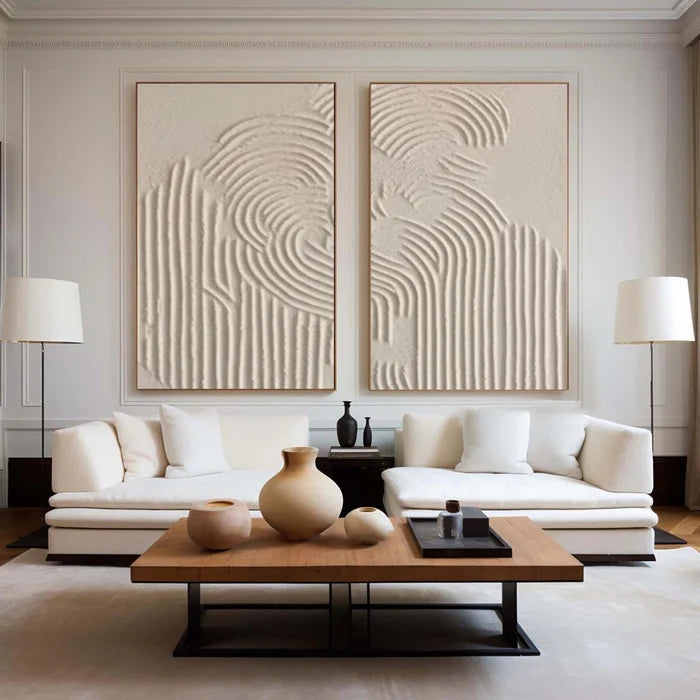
A contemporary interpretation may simplify a desert landscape into broad painted planes, textured plaster-like surfaces, or atmospheric brushwork. This approach can suit modern homes where a literal saloon or ranch motif would feel overly themed.
Which Western Subjects Work Best in Different Rooms?
The right subject depends on how formal, quiet, dramatic, or narrative you want the room to feel. Landscapes often create openness, animal art brings movement, and abstract Western-inspired works offer flexibility in contemporary interiors.
For a room with substantial wood, leather, iron, or woven textiles, a horse or ranch painting can reinforce the existing material story. In a cleaner apartment or newer home, consider a modern desert canvas with simplified forms and a limited palette.
Vinchy Art presents Western-related work across subject-led and style-led browsing paths, including cowboy, horse, landscape, abstract, textured, and color-based selections. Check the current listing for the exact artwork before assuming its materials, orientation, dimensions, or framing options.
How Should You Choose the Right Canvas Size?
Choose a canvas size in relation to the furniture or wall it will visually anchor, not by the empty wall area alone. As a practical starting point, artwork above a sofa, bed, or console often looks balanced when its total width is about two-thirds to three-fourths of the furniture width.
For example, a 90-inch sofa usually supports art or a grouped arrangement about 60 to 68 inches wide. A single large horizontal painting can create a relaxed, expansive feel, while a diptych can introduce symmetry without making the wall feel crowded.
Consider viewing distance as well. Large, gestural brushwork and textured surfaces tend to read best from several feet away, while smaller figurative details reward closer viewing.
Scale and placement guidance
-
Hang the visual center of most artwork around 57 to 60 inches from the floor.
-
Leave roughly 6 to 10 inches between artwork and the top of a sofa, headboard, mantel, or console.
-
Use horizontal art above wide furniture, unless an intentionally vertical composition is needed to emphasize ceiling height.
-
Choose a vertical Western canvas for a narrow wall, stair landing, entryway, or space between windows.
-
Use a two-piece or three-piece arrangement only when the wall needs a wider visual span.
Vinchy Art offers room-preview and art-advisory support as described by the brand. A room photo with accurate wall and furniture measurements can help determine whether a wide landscape, vertical horse painting, or multi-panel format is more appropriate for the space.
What Colors Should You Pair With Western Wall Art?
Pair Western wall art with warm neutrals and natural materials first, then repeat one or two accent colors from the painting elsewhere in the room. This keeps the artwork integrated without making every object match.
Cream, ivory, sand, greige, and soft warm white walls usually allow a richly painted canvas to remain the focal point. Tan leather, oak, walnut, linen, jute, wool, and aged brass can strengthen the room’s warmth while adding tonal variation.
If the painting includes dusty blue or muted teal, repeat that color in a small cushion, ceramic vessel, book cover, or throw. If it contains rust or terracotta, use those tones sparingly through textiles or pottery. Avoid matching every color exactly; related undertones generally look more natural than strict repetition.
A warm Western palette can also improve a cool contemporary room. For instance, a cream-and-charcoal living room may gain depth from a canvas featuring clay, wheat, faded denim, and tobacco brown, especially when paired with a walnut table or cognac leather chair.
Why Does Texture Matter in Western-Inspired Art?
Texture matters because Western interiors often rely on material contrast: weathered wood beside smooth leather, rough wool against linen, or stone near metal. A textured painting can echo those surfaces and give a restrained room more visual depth.
In hand-painted art, texture may come from visible brushwork, palette-knife marks, layered paint, raised plaster-style relief, or areas of exposed canvas. These elements affect how light moves across the surface, which can make the painting appear different in daylight and evening illumination.
Textured art is especially effective in rooms with minimal ornament because it contributes depth without requiring additional accessories. However, highly raised surfaces are not automatically better. Choose texture that supports the painting’s composition rather than distracting from it.
If ordering from Vinchy Art, review the precise product page for the selected work. Paint type, canvas type, surface texture, framing, and hanging details may vary by individual artwork and available option.
How Can You Make Western Art Look Contemporary?
Make Western art feel contemporary by limiting decorative clutter, using a controlled palette, and selecting either a simplified subject or a refined frame. One confident canvas on a neutral wall usually feels more current than a room filled with novelty Western objects.
A modern Western room may pair a large desert canvas with a low-profile sofa, black metal lighting, pale oak, boucle, or sculptural ceramics. The art provides the narrative, while the furniture stays quiet and functional.
Try these approaches:
-
Choose abstracted mesas, horizons, horse silhouettes, or tonal landscapes instead of highly literal scenes.
-
Use black, natural oak, walnut, or slim neutral framing rather than ornate decorative moldings.
-
Keep one principal Western artwork per focal wall.
-
Combine the canvas with clean-lined furniture and substantial natural textures.
-
Let empty wall space remain visible around the art.
The goal is not to recreate a themed ranch interior. It is to use Western visual references—land, atmosphere, craft, color, and scale—to create a grounded, personal room.
Which Frame or Canvas Finish Fits the Space?
Choose a rolled, frameless, or framed canvas based on the exact artwork, your wall style, and the amount of visual structure the room needs. A frame can sharpen a loose composition, while a frameless presentation can make a large landscape feel more immersive.
Dark-stained wood often complements traditional ranch, lodge, and rustic farmhouse interiors. Natural wood can soften a warm abstract canvas in Scandinavian, organic-modern, or Wabi-Sabi spaces. Slim black framing may create useful contrast in a contemporary room with pale walls and restrained furnishings.
Frameless canvas can work well when the painting has strong edge-to-edge color or a large, open landscape composition. It often feels less formal and allows painterly texture to remain visually prominent.
Do not assume that every artwork has the same framing choices. Vinchy Art states that options may differ by listing, so confirm the exact variant before choosing a frame, canvas format, or installation plan.
How Should You Light and Install the Painting?
Light a canvas with soft, indirect illumination that reveals color and surface texture without producing glare. Place the artwork away from persistent direct sun, moisture, and major heat sources to help preserve its appearance over time.
During the day, observe the wall at several times. South- and west-facing light may intensify warm pigments, while a north-facing room can make ochre and brown tones appear quieter. At night, warm-white lighting often complements earth-toned art more naturally than harsh cool lighting.
For installation, use hardware appropriate to the artwork’s actual weight and wall construction. Drywall, masonry, wood studs, and plaster walls require different anchors or fasteners. If a painting is heavy, unusually large, or installed above a bed, sofa, or mantel, use properly rated hardware and follow the seller’s instructions for the exact product.
Keep the canvas away from kitchens with frequent grease exposure, bathrooms with sustained humidity, and locations where doors may strike the frame. Dust gently with a soft, dry microfiber cloth; do not use household cleaners, water, solvents, or abrasive materials on painted surfaces unless the seller provides specific care instructions.
What Should You Know Before Buying Handmade Canvas Art?
Before buying handmade art, confirm the exact artwork, dimensions, orientation, finish, customization request, production details, delivery destination, and applicable policy terms. Handmade work can show slight variations from a reference image, which is part of its individually made character.
A painting may differ subtly in brushstroke direction, paint thickness, tonal variation, or surface texture. This is not the same as a defect, but it is important to understand before placing an order—especially for a coordinated pair, custom color request, or art intended to match a fixed interior palette.
Ask practical questions before purchasing:
-
Is the listed artwork horizontal, vertical, square, or available in multiple orientations?
-
Does the selected size fit the intended wall and furniture proportions?
-
Is the work offered as rolled canvas, frameless canvas, or framed canvas for that exact listing?
-
Are customization options available for this specific design?
-
What installation hardware, if any, is included with the chosen variant?
-
What are the applicable shipping, duties, return, and custom-order terms for the destination?
For eligible made-to-order pieces, Vinchy Art states that customers may be able to review completed-work photos or videos and request adjustments before shipment. Confirm whether that service applies to the exact artwork and order configuration rather than treating it as universal.
What Are Vinchy Art Expert Views?
“A warm Western painting is most successful when it is selected as part of the room’s overall color, proportion, and material plan. Start with the wall’s usable width and the furniture beneath it, then choose an orientation that supports the architecture. Let the artwork introduce one or two warm accent tones, while nearby materials—wood, linen, leather, wool, ceramic, or metal—provide supporting texture. For made-to-order art, expect individual brushwork and tonal variation rather than identical repetition. A room preview, clear measurements, and a review of the exact artwork options can reduce uncertainty before purchase.”
How Can You Care for a Canvas Painting Over Time?
Care for a canvas painting by keeping it clean, stable, dry, and protected from strong ultraviolet light. Gentle handling and appropriate placement are more important than frequent cleaning.
Dust the surface lightly with a clean, dry, soft cloth or a soft brush intended for delicate surfaces. Avoid pressing into raised paint, textured areas, or corners. Never spray cleaning products directly onto canvas, and do not use glass cleaner, alcohol, oils, or wet wipes.
Maintain reasonably stable indoor conditions where possible. Extreme humidity shifts can affect canvas tension and wood components, while prolonged direct sun may alter the apparent color of pigments over time. If moving the artwork, support it from both sides and avoid placing heavy items against the painted face.
For framed pieces, periodically check that wall hardware remains secure. If you notice flaking paint, significant warping, mold, or structural damage, consult a qualified art conservator rather than attempting a repair with household materials.
What Are the Most Common Questions About Western Canvas Art?
Can warm Western art work in a small apartment?
Yes. Choose one well-scaled painting rather than several small thematic pieces. A simplified desert landscape, vertical horse image, or warm abstract canvas can bring Western character to a compact room without overwhelming it.
Should Western art match brown leather furniture exactly?
No. Coordinating undertones is usually more effective than exact matching. A painting with camel, rust, cream, charcoal, dusty blue, or muted green can complement cognac or tobacco leather while adding contrast.
Is a horizontal or vertical canvas better above a sofa?
A horizontal canvas is usually the more natural fit above a wide sofa because it echoes the furniture’s shape. Choose vertical art when the wall is narrow, ceilings are high, or the composition needs to emphasize height.
Can a textured painting be placed near a window?
It can, provided it is not exposed to sustained direct sunlight, condensation, or frequent moisture. Assess the amount of sun throughout the day and consider window treatments if the wall receives intense light.
How do I choose between one large painting and a set?
Choose one large canvas when you want a strong, uninterrupted focal point. Choose a set when the wall is wide, symmetry matters, or you want to distribute visual weight across a bed, mantel, or long console.
What Is the Best Final Choice for Your Room?
The best choice is a warm Western canvas that fits the room’s scale, repeats its undertones, and supports the atmosphere you want to create. Measure the wall and nearby furniture, consider your typical viewing distance, assess natural and artificial light, and choose an orientation that follows the room’s proportions.
A large horizontal desert scene often suits a living-room sofa; a vertical horse or canyon canvas can strengthen an entryway; and a muted, textured horizon may bring warmth to a quiet bedroom. Choose a frame only if it helps connect the art to the room’s existing wood, metal, or contemporary lines. When ordering handmade work, verify the exact Vinchy Art listing, variant, customization availability, and order terms before committing. Thoughtful selection will give the artwork a lasting role in the space rather than making it a temporary decorative accent.