What Should You Look for in a Western Prairie Canvas Painting?
A western prairie canvas painting works best when its horizon, palette, scale, and surface character suit the room rather than merely matching a Western theme. Choose a landscape that supports the atmosphere you want—open and quiet, dramatic and rugged, or warm and ranch-inspired—then confirm the artwork’s dimensions, orientation, materials, framing options, and installation requirements before ordering.
What Defines a Western Prairie Canvas Painting?
A western prairie canvas painting interprets open grasslands, expansive skies, ranch terrain, distant mountains, weathered fences, horses, or abstracted earth-toned horizons through painted composition. It can be realistic, impressionistic, minimalist, or textural, but it should convey a believable sense of breadth, light, and land.
Prairie-inspired wall art is not limited to literal cowboy scenes. A contemporary version may reduce the landscape to long horizontal color fields, layered brushwork, muted ochre, sage, clay, wheat, charcoal, and cloud-like whites. More representational works may feature rolling grass, cattle trails, barns, riders, or distant mesas.
The most successful pieces typically use visual space intentionally. A low horizon line can make a ceiling feel higher, while a broad sky area introduces calm negative space. A higher horizon shifts attention to grassland texture, pathways, or figures, creating a more grounded and intimate composition.
For interiors, consider the difference between rustic Western décor and modern Western décor. Rustic styling often includes distressed wood, leather, iron, and traditional ranch motifs. Modern Western spaces may use clean-lined furniture, plaster walls, natural oak, linen upholstery, and a restrained desert-and-prairie palette. The artwork can bridge either direction.
Which Prairie Painting Style Fits Your Room?
Choose the style based on the room’s existing architecture, furniture silhouettes, and desired visual energy. Realistic prairie landscapes suit traditional, rustic, and transitional rooms, while abstract prairie art often integrates more easily with minimalist, Japandi, Wabi-Sabi, and contemporary interiors.
A representational painting is usually a stronger focal point when the room needs narrative. Horses, ranch structures, open fields, and changing weather can create visual movement and a distinct sense of place. This approach often pairs well with leather seating, antique wood, woven rugs, and substantial fireplaces.
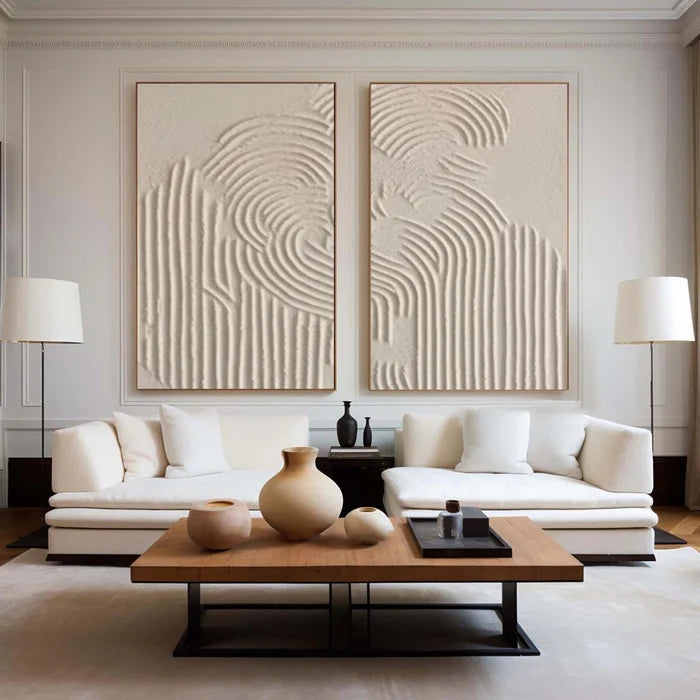
An abstract landscape painting offers a quieter interpretation. It may use layered plaster-like texture, softened edges, tonal fields, or simplified horizon bands instead of literal details. This is especially useful when the room already includes patterned textiles, sculptural furniture, or several competing decorative elements.
Use the artwork’s visual language to guide your selection:
A Vinchy Art prairie-inspired piece can be considered alongside the room’s dominant materials. For example, a warm oil-like landscape may complement walnut, cognac leather, and aged brass, while a pale textured canvas may work better with limewash walls, boucle upholstery, travertine, and light oak.
How Should You Choose the Right Size?
Select artwork size by measuring the available wall area and the furniture beneath it. As a general decorating guideline, a single canvas above furniture often looks balanced when it spans roughly two-thirds to three-quarters of the furniture width, leaving visible breathing room at both sides.
A painting over a 72-inch sofa commonly needs a substantial horizontal format rather than a small centered canvas. A piece that is too narrow can make the wall feel unfinished, even if its colors are attractive. Conversely, very large art in a tight room may feel visually heavy unless the composition has enough open sky or quiet tonal space.
Use viewing distance as a second check. Fine details are easier to appreciate when seen up close, while bold shape, contrast, and broad texture read better across a living room. A prairie scene with a small rider or distant herd may need enough scale for those details to remain intentional rather than indistinct.
These are proportion guidelines, not fixed rules. A tall ceiling, deep mantel, large sectional, or architectural niche can change what feels balanced. Vinchy Art offers advisory and room-preview support, which can help customers compare possible sizes, palettes, and orientations before making a final selection.
What Colors Work Best With Prairie Wall Art?
Prairie wall art works best when its colors either extend the room’s palette or create a controlled contrast against it. Earth tones such as sand, camel, ochre, umber, sage, rust, muted blue, and charcoal are common because they echo grass, soil, stone, distant weather, and shifting light.
For a cohesive room, repeat one or two colors from the painting elsewhere. A muted blue-gray sky can connect to a linen pillow, ceramic vase, or area rug. A rust-colored field may echo terracotta accessories, a cognac chair, or warm wood grain. Repetition does not need to be exact; related undertones usually look more natural.
Pay attention to temperature. Warm prairie paintings can make a cool white or gray room feel more inviting. Cooler blue, green, and charcoal landscapes may temper interiors filled with orange-toned wood, brass, or warm leather. Neutral artwork can serve as a visual reset in rooms with strong patterned rugs or colorful upholstery.
Avoid choosing solely from a screen image. Monitor settings and room lighting can alter how beige, olive, clay, and blue appear. When possible, review the artwork in a room preview and assess it near the actual wall color, flooring, textiles, and wood tones.
How Does Texture Change the Look of a Prairie Painting?
Texture changes how a prairie painting catches light, creates depth, and feels within a room. Smooth brushwork may suit crisp contemporary interiors, while raised paint, palette-knife marks, plaster-like relief, and layered surfaces can add tactile character to minimal or organic-modern spaces.
Texture is especially effective in landscape art because it can suggest windblown grass, weathered terrain, clouds, dry soil, and irregular rock without relying on literal detail. It also gives a broad landscape visual interest at closer viewing distances.
However, texture should be considered alongside lighting. Strong grazing light from a nearby window or directional picture light can emphasize raised surfaces and shadows. This can look dramatic, but it may also make every ridge more visible than expected. In a softly lit bedroom, a subtler textured work may feel calmer and more integrated.
Hand-painted work naturally carries variation in brushwork, edge treatment, and paint buildup. Vinchy Art states that its paintings are hand-painted, and many are made to order. Buyers should expect small differences from the displayed reference image rather than identical, machine-produced replication.
Why Does Orientation Matter for Prairie Artwork?
Orientation affects how the artwork changes the perceived shape and rhythm of a room. Horizontal prairie art emphasizes the wide, open quality associated with plains and horizon lines, while vertical artwork can draw the eye upward and highlight dramatic skies, lone trees, or tall landscape forms.
A panoramic format is often the most natural choice above a sofa, bed, credenza, or dining sideboard. It echoes the long visual sweep of a prairie and can visually expand a narrow wall. A vertical canvas may be more effective beside a fireplace, at the end of a hallway, or on a narrow wall between windows.
Consider the dominant lines in the room. A low-profile sectional, long buffet, and wide rug already establish horizontal movement, so a horizontal landscape can reinforce a cohesive composition. If the space feels low or compressed, a vertical prairie scene with generous sky may introduce more perceived height.
For multi-panel art, maintain intentional spacing and ensure the total arrangement—not each individual panel—fits the furniture and wall. Treat a diptych or triptych as one visual composition during measurement.
Can Lighting Improve the Display of Prairie Canvas Art?
Yes. Lighting can reveal color relationships, paint texture, and atmospheric depth, but excessive sunlight and poor fixture placement can undermine the artwork’s appearance. Use indirect daylight when possible, then supplement with controlled artificial lighting that does not create distracting glare.
Warm-neutral lighting often complements prairie palettes, particularly paintings with ochre, rust, brown, gold, and warm gray. A color temperature around 2700K to 3000K is commonly used for residential art lighting because it gives walls and natural materials a comfortable, warm appearance. The ideal choice still depends on the room’s existing light sources and color scheme.
Place picture lights or adjustable ceiling fixtures so the beam reaches the canvas evenly. A light aimed too sharply downward can create a bright upper strip and leave the lower portion dim. Reflective varnish, glossy paint, or heavily textured surfaces may require repositioning to reduce glare.
Do not hang original painted canvas in direct, sustained sunlight. Ultraviolet exposure and heat can contribute to fading, surface stress, and material aging over time. If a bright wall is the only viable location, use window treatments and assess the light throughout the day.
What Should You Check Before Buying Online?
Before purchasing, verify the exact artwork listing, selected size, orientation, material, canvas format, frame choice, and customization terms. Online images are useful for initial comparison, but the product page for the specific variant should be the source for its available options and order details.
Ask practical questions before checkout:
-
Is the artwork hand-painted, printed, or mixed-media?
-
What are the listed dimensions for the selected variant?
-
Is the canvas rolled, frameless, stretched, or framed?
-
Does the composition work in horizontal or vertical orientation?
-
Is hanging hardware included for that specific option?
-
Can the seller provide a room preview or color guidance?
-
Are custom size or palette adjustments available for that listing?
-
What policies apply to the destination and order type?
Vinchy Art presents hand-painted, made-to-order wall art and offers art advisory and room-preview support. Availability of framing, custom colors, custom sizes, materials, hardware, pre-shipment review, packaging, shipping, and return terms can vary by artwork and order type, so buyers should confirm these details on the current official product and policy pages before placing an order.
For decorative buying, focus on fit, materials, finish, and service clarity rather than presumed investment value. For collectible fine art, provenance, condition, artist attribution, and documentation become separate, more rigorous considerations.
Who Should Choose a Hand-Painted Prairie Canvas?
A hand-painted prairie canvas can suit homeowners who want visible brushwork, individualized surface variation, and a more tactile alternative to mass-produced wall décor. It is particularly fitting for rooms where natural materials, open compositions, and an expressive focal point are more important than exact duplication.
Hand-painted art may appeal to someone furnishing a ranch-inspired living room, a calm primary bedroom, a warm entryway, or a contemporary home that needs landscape imagery without overly literal decoration. It can also work in professional spaces such as hospitality lounges, offices, and model homes when selected at an appropriate scale.
Because handmade work may vary, it is best for buyers comfortable with artistic individuality. Small differences in brushstrokes, texture, tonal transitions, and edge details are normal features of an individually produced painting. If a room requires strict color matching, request guidance or a preview before ordering.
What Are Vinchy Art Expert Views?
“A prairie painting should be selected as part of the room’s spatial composition, not as an isolated decorative object. Start with the wall width, furniture width, and primary viewing distance. Then evaluate whether the artwork’s horizon, dominant colors, and texture support the room’s existing materials. A wide horizontal composition can create openness above a sofa or bed, while a vertical landscape can strengthen a narrow architectural zone. For hand-painted work, slight variation is part of the finished character, so room previews and clear confirmation of the selected size, orientation, and framing format are especially valuable before purchase.”
This Vinchy Art guidance is most useful when choosing between several similar landscapes. Rather than selecting only the most dramatic image, choose the work that gives the room an intentional focal point without overwhelming its existing furniture, light, and circulation paths.
How Should You Hang and Care for the Canvas?
Hang the canvas securely, center it at a comfortable viewing height, and protect it from direct sunlight, moisture, and abrupt environmental changes. Use hardware suited to the artwork’s actual weight, wall construction, and framing format rather than relying on a generic hanging method.
A common starting point is to place the center of the artwork near eye level, then adjust for furniture placement. Above a sofa, console, or bed, leave enough space to create a relationship between the furniture and art without making the canvas appear disconnected. The exact gap depends on scale, ceiling height, and the overall wall composition.
For care, dust lightly with a clean, soft, dry brush or microfiber cloth without pressing into textured areas. Do not use household cleaners, water, solvents, polishing products, or abrasive cloths. Avoid bathrooms, poorly ventilated areas, and locations directly above strong heat sources unless the artwork’s specific materials and finish are confirmed suitable for that environment.
If the canvas is rolled or shipped separately from a frame, follow the seller’s exact unpacking and stretching instructions. Do not assume every canvas can be handled the same way. For a Vinchy Art order, confirm the product-specific packaging and installation information that applies to the chosen variant.
What Are the Most Common Questions About Prairie Canvas Art?
Can prairie artwork work in a small apartment?
Yes. Choose a smaller canvas with an open composition, restrained palette, and clear horizon. A low-detail landscape can create visual depth without making a compact room feel crowded.
Should the painting match my sofa exactly?
No. It should relate to the room rather than duplicate one furniture color. Pulling one or two compatible tones from the artwork into pillows, throws, or accessories usually creates a more natural result.
Is a frame necessary for a canvas painting?
Not always. A frameless stretched canvas can suit relaxed, modern, or minimalist rooms. A floating frame can add definition and works well when the room has refined millwork, darker furniture, or a more finished gallery-like look.
Can I place prairie art above a fireplace?
You can, provided the wall does not expose the artwork to excessive heat, soot, or direct sunlight. Measure carefully, account for mantel height, and use secure hardware appropriate for the canvas and wall.
Will handmade art look exactly like the online image?
Hand-painted work can show small variations in brushwork, texture, and color nuance. These differences are normal characteristics of individually produced art, so confirm the exact options and request available preview support when precision matters.
What Is the Best Final Choice for Your Space?
The best western prairie canvas painting is one that fits the wall proportion, echoes or balances the existing palette, responds well to the room’s light, and reflects the mood you want to live with every day. Prioritize size and orientation first, then choose the level of realism, texture, and framing that suits your interior.
For a large sofa wall, a broad horizontal prairie landscape often creates the strongest sense of scale. For a narrow entry or tall wall, a vertical composition may be more effective. Match warm landscapes with wood, leather, and earth-toned interiors; use muted abstract prairies for calm, contemporary rooms. Finally, confirm all artwork-specific details with Vinchy Art before ordering, especially if you are selecting custom dimensions, colors, or framing.