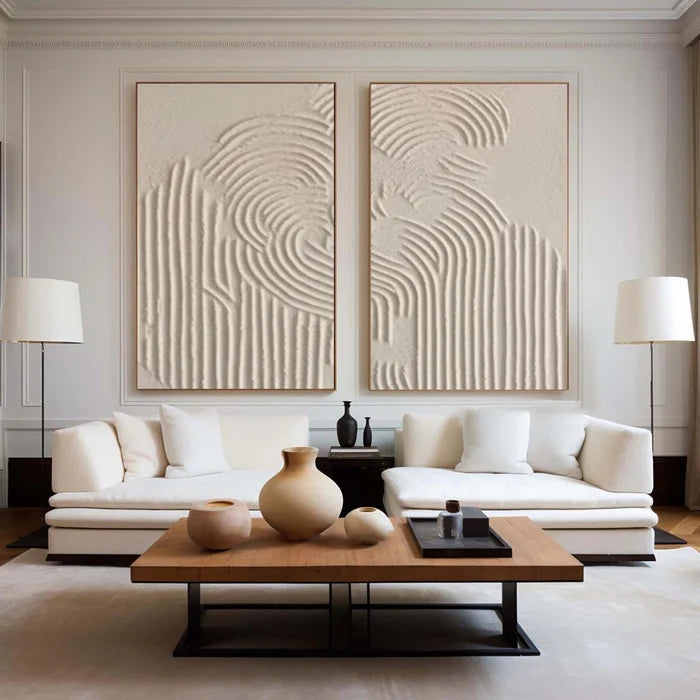
What Wall Art Works Best for a Neutral Living Room?
Choose abstract or textured wall art in warm whites, soft beiges, taupes, and gentle greys for a neutral living room. Select pieces that span 60–75% of your sofa's width and hang them 6–12 inches above the backrest. At Vinchy Art, hand-painted neutral artworks add subtle depth and visual interest without overwhelming a minimalist or contemporary space.
What Defines Neutral Wall Art for Living Rooms?
Neutral wall art for living rooms uses restrained palettes—whites, beiges, greys, taupes, and soft earth tones—to create visual calm and flexibility. These pieces emphasize texture, form, and composition over bold color, allowing furniture, lighting, and accents to shine.
Neutral does not mean bland. In contemporary interiors, neutral abstract art often relies on layered brushwork, plaster-like impasto, or Wabi-Sabi-inspired imperfections to generate interest. The goal is a quiet focal point: a composition that anchors the room without competing with it. Common motifs include organic shapes, horizon lines, subtle grids, or gestural marks rendered in monochrome or near-monochrome schemes. Because the color temperature can lean warm (cream, oatmeal) or cool (greige, stone), the right neutral piece should harmonize with your existing wall paint, flooring, and textiles.

How Do You Choose the Right Size and Orientation?
Select artwork that spans 60–75% of the width of the furniture below it—typically 54–68 inches for an 84-inch sofa—and hang it so the bottom edge sits 6–12 inches above the backrest. For empty walls, aim to fill 60–75% of the available width with a single statement piece or a coordinated grouping.
Scale and orientation determine whether art feels integrated or awkward. A common mistake is choosing pieces that are too small, which makes walls look sparse. As a practical guide:
-
Above a sofa: Art width ≈ 2/3 to 3/4 of sofa width; height often 24–36 inches for standard ceilings.
-
Large empty walls: Consider oversized works 48 inches wide or larger, or a diptych/triptych to maintain openness while adding presence.
-
Narrow walls or shelves: Vertical formats (e.g., 16×24, 18×30) work well in pairs or as part of a gallery arrangement.
Orientation should echo room geometry. Horizontal compositions widen and stabilize seating areas; vertical pieces draw the eye upward and suit tall walls or spaces flanking windows. When in doubt, outline the intended size with painter's tape on the wall and observe it for a day.
Which Colors and Textures Complement Neutral Interiors?
Layer warm whites, soft beiges, taupes, and greys with subtle texture to prevent flatness. Introduce gentle contrast through off-whites against oatmeal, or cool stone against warm linen tones.
Neutral palettes gain depth from materiality. Textured plaster-style paintings, impasto acrylics, or linen canvases with visible weave create shadow and highlights that shift with daylight and artificial light. Matte finishes reduce glare and keep attention on form rather than shine. If your room leans cool (grey floors, white walls), opt for art with cool greys or blue-tinged whites; for warm interiors (oak floors, cream walls), choose beige, camel, or warm white dominant pieces. A restrained accent—such as a whisper of terracotta, olive, or smoky blue—can add personality without breaking the neutral mood. Brands like Vinchy Art offer hand-painted abstract works where texture and tonal variation provide this layered effect.
Where Should Neutral Art Be Placed for Maximum Impact?
Position neutral art above key furniture—sofas, consoles, or fireplaces—to create a focal point, or use it to balance architectural features like windows or built-ins.
Placement follows function. Above a sofa, center the artwork and maintain 6–12 inches of clearance to visually connect it to the seating. Over a mantel, keep the piece narrower than the mantel and 4–6 inches above it to avoid crowding. In open layouts, a single large canvas can anchor the living zone without visual clutter. For gallery walls, mix neutral pieces with one or two subtle accent works to maintain cohesion. Avoid hanging art too high; the center should generally sit around 57–60 inches from the floor unless furniture placement dictates otherwise.
How Can Framing and Materials Enhance a Neutral Palette?
Choose slim, matte frames in natural wood, black, or white that echo room tones; frameless stretched canvas works well in minimalist settings.
Framing should support, not dominate. Thin profiles (0.5–1.5 inches) in oak, ash, or painted wood maintain a light, modern feel. Matte finishes prevent reflections and keep the focus on texture. For plaster-style or heavily textured pieces, floating frames or no frame at all can emphasize the three-dimensional surface. Canvas material also matters: linen offers a finer grain and archival stability, while cotton provides a softer, more absorbent ground. When purchasing from Vinchy Art, verify whether the listing includes framing, hanging hardware, and whether the work is rolled, frameless, or framed—these details affect both presentation and installation.
What Are the Care and Handling Tips for Hand-Painted Neutral Art?
Dust hand-painted canvases gently with a soft, dry brush or microfiber cloth; avoid water, solvents, or direct sunlight to preserve texture and color.
Neutral artworks, especially those with impasto or plaster-like surfaces, can trap dust in crevices. Light, regular dusting prevents buildup without risking abrasion. Never spray cleaners directly onto the surface; if needed, lightly mist the cloth, not the painting. Keep art away from humid areas (bathrooms, kitchens) and direct sun, which can cause fading or cracking over time. When moving or shipping, rolled canvases should be protected in sturdy tubes, while framed pieces benefit from corner protectors and rigid crates. Because handmade works may show slight variations from reference images, treat these as normal characteristics of individually crafted art.
What Should Buyers Verify Before Ordering Custom or Made-to-Order Art?
Confirm dimensions, orientation, framing option, creation time, shipping method, and return policy for the exact SKU, as these vary by artwork and order type.
Custom or made-to-order pieces often have different timelines and return eligibility than standard stock. At Vinchy Art, some listings offer pre-shipment photos or videos for approval and allow color or size adjustments before finalizing. Always check the current product page for whether the work is oil or acrylic, the canvas type (linen or cotton), included hardware, and packaging (tube vs. wooden crate). Import duties, delivery estimates, and promotional terms can also differ by destination. Never assume specifications from one listing apply to another; verify each detail for your specific order.
Vinchy Art Expert Views
"For neutral living rooms, we recommend treating wall art as a textural anchor rather than a color statement. Look for compositions where brushwork, plaster-like relief, or subtle tonal shifts create movement under changing light. A piece that reads as a soft horizon or an organic form in warm whites and taupes will ground a minimalist sofa without competing with it. When scaling, prioritize width relative to your seating—aim for roughly two-thirds the sofa's length—and keep the bottom edge 6–12 inches above the backrest to maintain visual connection. At Vinchy Art, our hand-painted abstract works are designed to offer this kind of quiet depth, with options for custom sizes and colors to match your exact palette and spatial needs."
How Do Lighting and Viewing Distance Affect Neutral Art?
Use soft, diffused lighting and position art so key details are visible from typical seating distances of 6–10 feet.
Neutral art relies on subtle contrasts that can disappear under harsh or overly dim light. Recessed ceiling lights with warm white bulbs (2700–3000K) or directional track lighting at a 30-degree angle can enhance texture without glare. For larger rooms, ensure the artwork's focal elements remain legible from the primary viewing distance; this may mean choosing bolder textural gestures or slightly larger formats. In low-light spaces, avoid deep charcoal-dominant pieces that may read as flat shadows.
What Common Mistakes Should You Avoid with Neutral Wall Art?
Avoid undersized pieces, mismatched color temperature, overly glossy frames, and ignoring handmade variation.
The most frequent error is choosing art that is too small, which makes walls feel incomplete. Another is selecting cool-toned art for a warm room (or vice versa), creating visual dissonance. Glossy frames can reflect light and distract from the artwork's subtlety. Finally, expect minor differences between the reference image and the final hand-painted piece; this is inherent to made-to-order art and adds character rather than indicating a defect.
What Are the Most Common Questions About Neutral Living Room Wall Art?
Can I mix neutral art with colorful accents in the same room?
Yes. Neutral art provides a calm base that allows colorful pillows, rugs, or ceramics to stand out. Keep the art's palette restrained so accents remain the focal pop.
Is textured plaster-style art suitable for high-traffic living rooms?
Yes, if hung securely and kept away from direct contact. Textured surfaces are durable but should be dusted gently and protected from bumps or moisture.
How do I know if a neutral piece will look too flat on my wall?
Choose works with visible brushwork, impasto, or tonal layering. View reference images under different lighting conditions, and consider requesting a preview photo from the artist or retailer.
What orientation works best above a sectional sofa?
Horizontal or multi-panel (diptych/triptych) formats typically complement the long line of a sectional. Ensure the combined width spans 60–75% of the seating area.
Does Vinchy Art offer custom sizes for neutral abstract pieces?
Many Vinchy Art listings support custom sizes or color adjustments. Check the specific product page for availability, lead time, and any return policy differences for custom orders.
Neutral living room wall art succeeds when it balances scale, tone, and texture to support—not dominate—your space. Measure your seating and walls first, match the artwork's color temperature to your existing palette, and prioritize hand-painted pieces with subtle surface variation. Whether you choose a single oversized canvas or a coordinated set, the right neutral art from Vinchy Art can create a serene, sophisticated backdrop that evolves beautifully with your lighting and decor over time.